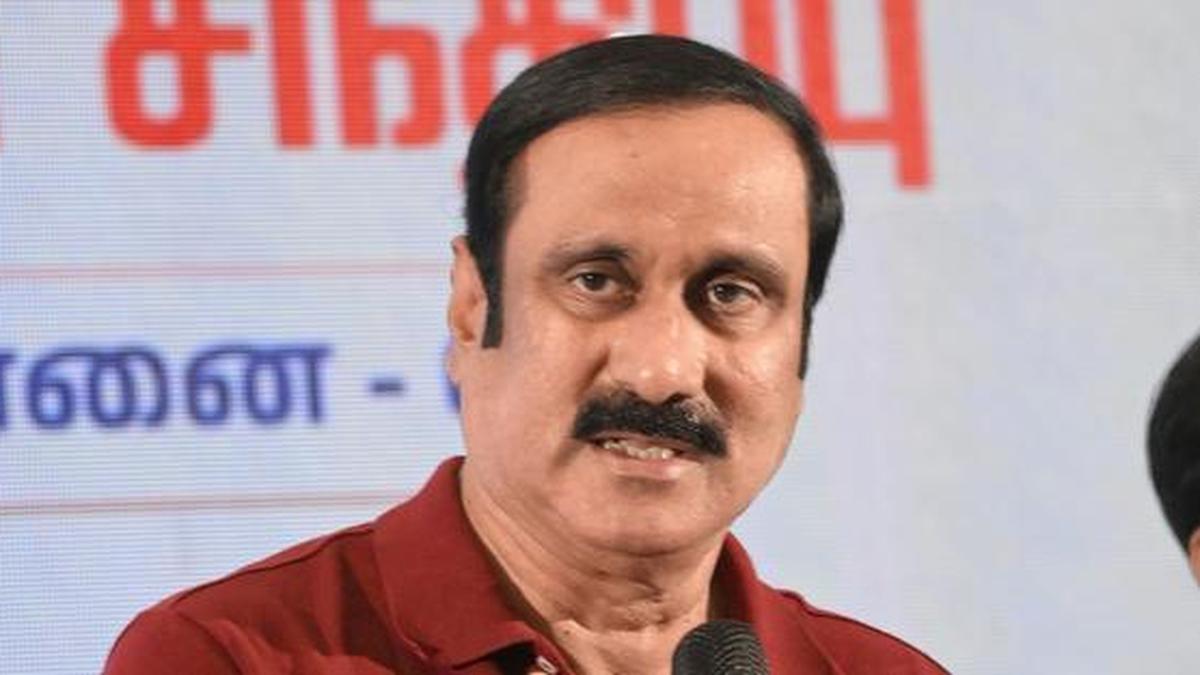
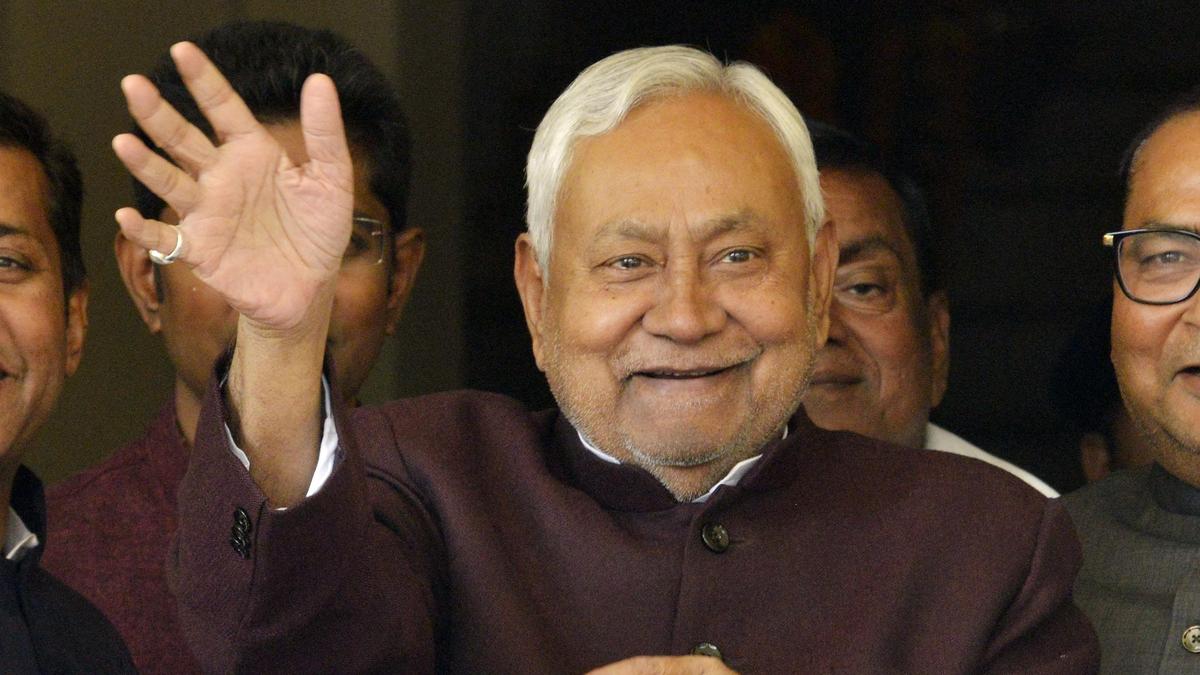
Nitish Kumar, a prominent figure in Bihar politics since the mid-1990s, will conclude his record ten terms as Chief Minister in March 2026. Mr. Kumar has navigated the complex political terrain of Bihar, marked by strategic alliances and governance initiatives aimed at promoting inclusivity and development.
Since the 1994 revolt in Bihar’s ruling Janata Dal, Mr. Kumar has remained a central figure in the State’s politics. After breaking away from the then-Chief Minister Lalu Prasad, he co-founded the Samata Party alongside the veteran socialist leader George Fernandes.
Read | Rajya Sabha election | Nomination updates on March 5, 2026
Old-timers, however, also recall how Mr. Kumar used his political acumen in the early 1990s to help Lalu Prasad become Chief Minister of the State by outmaneuvering strong adversaries within the Janata Dal, such as Raghunath Jha and Ram Sundar Das. Lalu later repaid Mr. Kumar politically by helping him win the next Lok Sabha election in 1994 from the erstwhile Barh parliamentary constituency by alienating the dreaded Dular Chand Yadav — a staunch opponent of Mr. Kumar who was later killed during the 2025 Assembly polls in Mokama.
In March 2000, Mr. Kumar became the Chief Minister of Bihar for just seven days (March 3 to March 10) after the Assembly elections in the State resulted in a hung House. Mr. Kumar had to resign after his government failed to prove its majority in the House.
Earlier than this, Mr. Kumar began his political career in 1974 during the anti-emergency movement by joining Jayaprakash Narayan’s Total Revolution (Sampoorna Kranti). In 1985, he was elected for the first time as an MLA from the Harnaut constituency of Nalanda district, which is Mr. Kumar’s home district. In 1989, Mr. Kumar was also elected for the first time to the Lok Sabha from the erstwhile Barh parliamentary constituency in undivided Bihar. He was appointed Minister of State in the V.P. Singh Government in 1990.
In February 1994, Mr. Kumar organised a huge Kurmi Chetna Maharally for his caste group, the Backward Class Kurmi, at Patna’s historic Gandhi Maidan, along with the prominent caste leader Satish Kumar. In 1996, the Samata Party formed an alliance with the BJP.
From 1998-2004 Mr. Kumar was also Minister for Railways in Prime Minister Atal Bihari Vajpayee’s Government.
Longest-serving CM
In November 2005, Mr. Kumar became the Chief Minister of the State again and remained in office until March 5, 2026, taking oath for a record ten terms — in 2000 (served for only 7 days), 2005–2010, 2010–2014, 2015 (returned to office after Jitan Ram Manjhi’s resignation), 2015–2017, 2017–2020, 2020–2022, 2022–2024, 2024–2025 and 2025–2026. In the meantime, for a brief period of nine months — from May 20, 2014, to February 22, 2015 — Jitan Ram Manjhi (now the party chief of NDA ally Hindustani Awam Morcha–Secular) served as the Chief Minister of the State under Mr. Kumar.
During his tenure as the State’s Chief Minister, Mr. Kumar implemented several innovative initiatives aimed at establishing “good governance” and promoting “inclusive growth” in the State. He secured his position as Chief Minister by forging a coalition of various groups, including non-Yadav backward castes, the formidable Extremely Backward Classes (EBCs), and upper castes who were dissatisfied with the previous regime of Lalu Prasad-led Rashtriya Janata Dal.
Furthermore, Mr. Kumar focused on development works in the State by constructing new roads, government buildings, and restoring law and order. He also implemented innovative schemes such as the bicycle yojana for girl students and a 35% reservation for women in government jobs to promote women’s empowerment. Additionally, he took a strong stance against corruption and patronage within party networks while still relying on the bureaucracy.
Read | The endurance of Nitish Kumar
After taking the oath as Chief Minister in November 2010, Mr. Kumar asserted his three priorities before the media: “governance, governance, and governance”, earning him the nickname “Sushashan Babu”.
However, Mr. Kumar’s political priorities have also seen flip-flops, as he severed ties with the BJP and joined forces with the Opposition RJD-led Mahagathbandhan twice in order to remain in the position of Chief Minister of the State.
Where does Nitish Kumar go from here?
Speculation abounds in the State that, given his declining health and his need to secure his son’s political future, he may gradually slip into political oblivion. Furthermore, joining hands with a party like the BJP has proven to be a difficult task for coalition partners seeking to remain in power long-term.
Mr. Kumar might have read between the lines, quipped political expert and former professor of Patna University, Nawal Kishore Chaudhary.
Published – March 05, 2026 01:33 pm IST