Wardle had tried cryptic crosswords when he was younger, but found them to be impenetrable. “I didn’t know how to begin,” he told me. The rules could seem arcane, almost impossible to deduce. A clue containing the word “radio” could signal that “am” or “fm” belongs somewhere in the answer; “book” could imply “ot” or “nt” (Old and New Testament); “sailor” could require the letters “ab,” for “Able Bodied.” Anagrams were flagged by a bewildering range of indicators: “mixed,” “scrambled,” even “microwaved.” These codes often exhaust newcomers, who may feel as though they have arrived at the door of a private club, ignorant of its customs and wearing the wrong trousers. As P. G. Wodehouse wrote of the Times’s daily cryptic in 1945, “the humiliation of only being able to fill in about three words each day is too much for me.” Everyone needs a guide.
Wardle found his while listening to the podcast “Scriptnotes.” In one episode, the showrunner, Craig Mazin, of HBO’s “Chernobyl” and “The Last of Us,” enthused that “everybody should do cryptic crosswords,” and explained some of the form’s underlying logic. “It really stayed with me,” Wardle said. Conversance led to discernment. He became a devotee of the Toronto-based mathematics teacher and puzzle constructor Fraser Simpson, whose clues struck Wardle as contemporary and enviably taut, without the usual “fodder” used to make a clue legible. “Every word in the clue is either definition or wordplay; there are no connector words,” he said. “I was stunned when I saw that.”
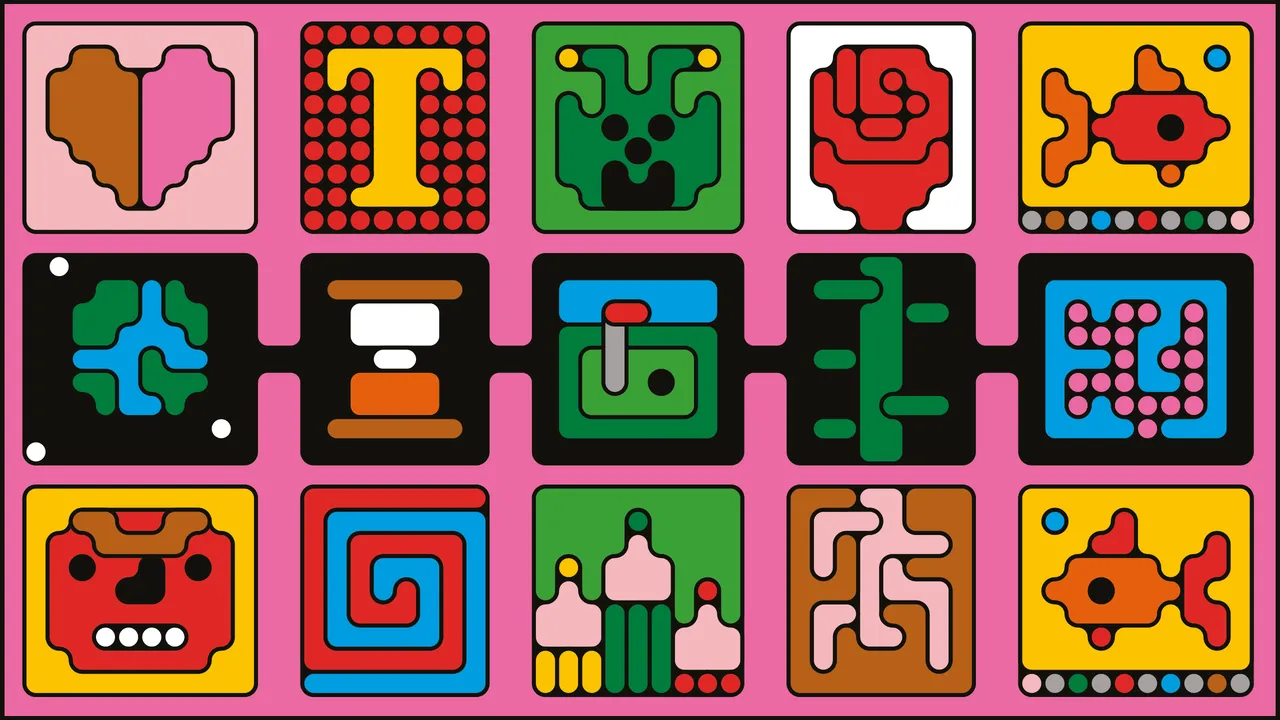
Wardle wanted to make a game that could teach the rules of cryptics, just as Mazin had taught him. The idea was vague, germinal; the prospect of actually releasing a follow-up to Wordle felt “paralyzing,” he said, and for a time he worked as a consultant, helping others on game prototypes, which freed him creatively. Then he began to sense an appetite. Cryptics seemed to be experiencing a modest revival; the Australian YouTube channel Minute Cryptic, for example, had drawn tens of thousands of viewers to short videos that unpacked a single clue at a time. Wardle enlisted the support of Chris Dary and Matt Lee, two longtime collaborators from Reddit, and their new game, Parseword, is now available, with a title that came from Wardle’s partner, Shah.
Neither Dary nor Lee had been familiar with cryptics before development began, and Wardle believes this strengthened the game. They felt comfortable questioning conventions, pressing him on assumptions a veteran solver might take for granted. The result, Wardle hopes, is a way to introduce newcomers to the joys and agonies of the cryptic, whose curious but finally comforting logic had been, for him, a salve.
Others have tried this before. In 1968, the composer and lyricist Stephen Sondheim published an essay in New York explaining the rewards of the cryptic crossword. In his view, the form was superior to the American crossword, full of “cleverness, humor, even a pseudo-aphoristic grace.” Sondheim began publishing his own cryptics in the magazine, complete with rules, examples, and prizes (copies of “Chambers Twentieth Century Dictionary,” then priced at around five dollars). The experiment didn’t take. After forty-two puzzles, Sondheim retired the column, and cryptics remained—with occasional exceptions, including at this magazine—largely a British preoccupation.
The central premise of Parseword’s approach is to treat the cryptic not as a riddle to be intuited but as an equation to be solved. On “Scriptnotes,” Mazin had suggested that most cryptic clues contain a conceptual dividing line: on one side is the definition, on the other the wordplay. This led Wardle to consider how each clue might be broken into components; once one fragment was resolved, it might be substituted back into the whole, reducing the remaining complexity.