At the time, there was speculation that tensions between the U.S. and Iran could spiral into military conflict—Mike Pompeo, then Trump’s Secretary of State, had described one of Iran’s attacks on Aramco facilities as an “act of war.” The Columbia report considered various scenarios, including small-scale hostilities in the Gulf and a major war that closed the Strait of Hormuz and drew in other countries in the region. In the latter scenario, the price of a barrel of crude could spike up from sixty-five dollars to “$110–$170 after one month, $95–$125 after six months,” the report said. The good news, it went on, was that “none of the parties are interested in pursuing massive escalation and have shown little will to do so even as the crisis in the region has worsened.”
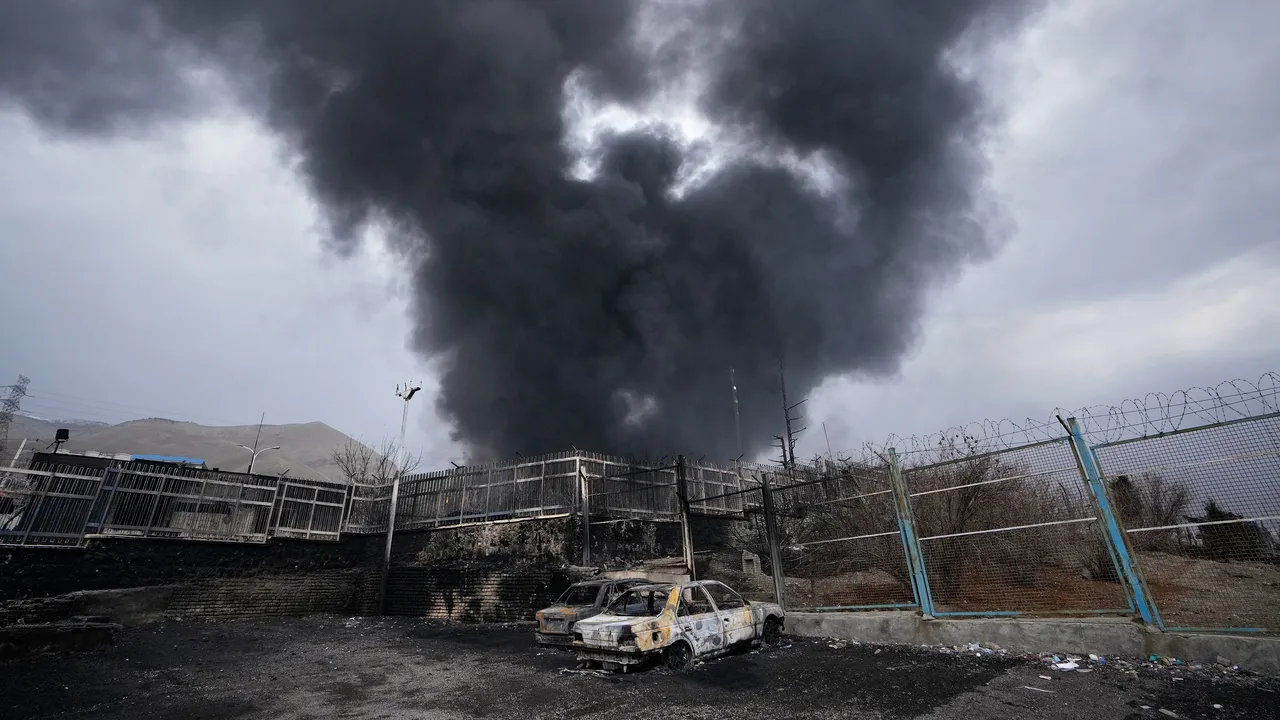
Enter Trump 2.0, whose addled mind seems to have difficulty keeping a thought in place for a few days, let alone for the six years that have passed since the previous showdown in the Gulf. A few weeks ago, in his State of the Union address, Trump pointed out how the price of a gallon of gasoline “reached a peak of over six dollars a gallon in some states under my predecessor—it was, quite honestly, a disaster.” Three days later, Trump signed the order for Operation Epic Fury, with eminently predictable results. Having survived the initial U.S.-Israeli onslaught, the Iranian regime rolled out an expanded version of its playbook from 2019, exploiting its choke hold on the Strait, while launching missile and drone attacks on U.S. bases and energy infrastructure in the Gulf states.
With the Strait effectively blocked and hundreds of tankers stranded, many millions of barrels of oil are stuck at sea. And as onshore storage facilities have filled up Saudi Arabia, Iraq, and Kuwait have shut off some of their wells because they have nowhere to put the oil they produce. In volume terms, the hit to global supply is now the largest ever, energy analysts say, and, the longer the conflict goes on, the worse it will get. On an corporate earnings call last week, Amin Nasser, the chief executive of Aramco, said that a lengthy closure of the Strait would have “catastrophic consequences” for the world’s oil markets. Gas prices haven’t hit six dollars yet, but in parts of California they have come close. At a national level, the average price has risen from $2.94 a month ago to about $3.60, according to the American Automobile Association.
Last week, Trump floated the idea of the U.S. government providing insurance contracts to vessels to sail through the Strait—a proposal that seems to be in limbo. On Wednesday, the Paris-based International Energy Agency announced that its members, which include the United States, other Western nations, and their allies, would release more than four hundred million barrels of oil from emergency stocks to alleviate supply disruptions—the biggest such release ever seen. In the circumstances, this was a sensible move, but if the White House had been hoping that it would immediately bring down oil prices it was disappointed. Despite the announcement from the I.E.A., the price of crude closed the day up nearly five per cent.
The previous time that Trump almost blundered into an economic catastrophe was on “Liberation Day,” nearly a year ago, when, from the Rose Garden, he announced punitive tariffs on dozens of U.S. trading partners. Financial markets, including the U.S. bond market, which lies at the heart of the global financial system, promptly went into a tailspin. Fortunately for Trump, two of his top economic aides—Treasury Secretary Scott Bessent and Commerce Secretary Howard Lutnick—were able to persuade him to back down and pause the tariffs before the cracks in the bond market developed into a full-blown crisis. Subsequently, many of the levies were modified. Thus, the legend of “TACO”—“Trump Always Chickens Out”—was born. (Robert Armstrong, a journalist at the Financial Times, came up with the phrase.) On Wall Street, TACO still has many believers, and not without reason. Trump remains obsessed with the markets. And with the midterms on the horizon the last thing that he and other Republicans want to talk about is higher gas prices.