
So you see a continuity of the policy of the past thirty years, but you also have a break with the policy. This is where it’s important to understand that these settlements are a government-led program. From the mid-nineteen-nineties, more or less, Israel had formally approved and established only a handful of settlements through 2022. This government came to power in December of 2022. From 2023 to 2025, the Israeli government approved nearly seventy settlements.
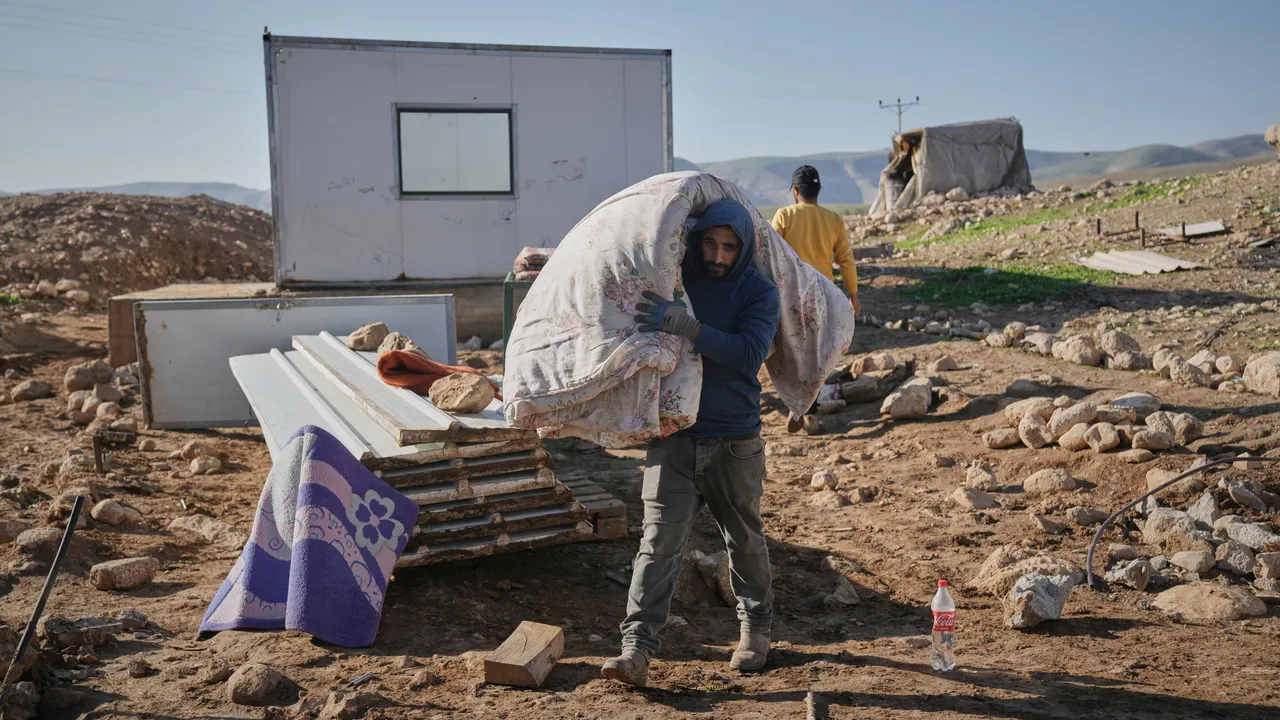
Then, from the early nineties through 2022 the Israeli government largely supported the establishment of a hundred and eighty-seven unauthorized outposts. These are settlements which are built even in violation of Israeli planning regulations, but, again, the vast majority of them are fully supported by the government. Under the current government, since 2022, we had about a hundred and eighty of them being built, according to Peace Now. We’re talking about a peak in the advancement of housing units in the West Bank. We’re talking about a peak of demolitions of Palestinian communities, Palestinian housing structures. We’re talking about a peak in so-called declarations of state land by Israel since Oslo. When the U.N. started tabulating settler violence in 2006, it recorded a hundred and seventeen incidents of settler violence against Palestinians that caused casualties and/or damaged property. In 2018, there were more than three hundred. In 2022, there was a new peak of more than eight hundred. In 2025 alone, we’re talking about 1,828 incidents. That is more than a tenfold increase. So, is settler violence new? No, but we are at a peak, and at a certain point quantity becomes quality.
Putting aside morality and international law for a second, how much of what is being done by the Israeli government is in line with Israeli domestic law? And how much of this is done separately?
Even the majority of what is done “outside of the law” is orchestrated and supported by Israeli institutions and by the state. When we talk about a hundred and eighty outposts being built, most of them are herding farms, where you take over a hilltop. These are often one family, two families, max, with ten or fifteen youngsters. They are small numbers of people taking a huge amount of land. And you go over and basically beat Palestinian farmers and shepherds off their land. And, today, large parts of the West Bank are inaccessible to Palestinians because of violence from settlers living in these herding farms. The scale of this is like nothing else since the 1967 war.
Now, you can say these settlements are not officially sanctioned, but people show up on a hilltop and quickly acquire a paved road, running water, electricity in a house, and three hundred cows. Someone pays for this, someone builds the infrastructure. And that someone is often the settlement division of Israel’s World Zionist Organization, which is helping manage the so-called state land of Israel and the West Bank, and which was given responsibility by the state for the settlement enterprise that functions with a hundred per cent Israeli-government funding. So is this outside of the law?
Then, we just had the Cabinet decide to restart the so-called Settlement of Land Title registration process in the West Bank, which had been halted in 1968, and which raises the bar for Palestinians to establish ownership over land. This puts the burden of proof on Palestinians to show original documents from the Jordanian, British, and Ottoman times, and any parcel which is not proved private likely becomes public and goes to the state. We’re talking about sixty per cent of Area C that is now up for grabs because of this process. The Cabinet also gave an order to allow Israel to work against construction in areas A and B on the basis of environmental, archeological, or water-access concerns. Again, this is formal and official.
You mentioned how much of this is happening openly and being stated forthrightly by the government. How different is that from when settlements grew in the years after Oslo?
Well, there is another element that is revolutionary, which is the scale of the extension of Israeli civilian state authorities into the West Bank. This is an act of annexation, with certain powers over civilian affairs in the West Bank being taken away from the military and given to what is called the Settlements Administration, a civilian-led force within the Ministry of Defense, under the control of the Finance Minister, Bezalel Smotrich. So you basically have the civilian authority of Israel in direct control over the West Bank, expanding settlements. That is also a revolutionary element. And you have an Israeli government whose guidelines, from December, 2022, are basically saying that the Jewish people have an exclusive and indisputable right to all the land of Israel. So, yes, we have a government that is not only saying the quiet part out loud but is actually bragging about it. That’s also something that the political conditions didn’t allow to happen in the nineties and the early two-thousands but which is happening today.
How would you describe the violence against Palestinians that’s been happening, over the past year or so, from both Israeli soldiers and settlers, and how has their sense of impunity changed or not changed?
There is complete impunity for settlers committing violence against Palestinians, but we’ve seen a development here, which is the development inside the I.D.F. It used to be that, for many, many years, we would see clips of settlers attacking Palestinians while I.D.F. soldiers stood idly by, doing nothing to stop it. Now, it’s important for you to understand that doing nothing in that scenario is O.K. When I say “O.K.,” I don’t mean morally O.K. I mean “O.K.” according to the rules of the I.D.F. The orders I received as a soldier, and the orders many soldiers receive on the ground, define our job in the West Bank as protecting the settlers, not the Palestinians. When we saw settlers attacking Palestinians, it wasn’t our job to intervene. That was the job of the Israeli police. So standing idly by while Palestinians are being beaten up by settlers is actually soldiers following orders.
And, again, this is where it gets very difficult to say “the state is involved” or “the state is not involved.” If the official order of soldiers on the ground is that your job is not to protect Palestinians, how do you make that call? But we’re not there anymore.
Several years ago, we started moving into a phase where, every once in a while, we would see soldiers joining the settlers and attacking Palestinians. And that is partially because, sometimes, the settlers in the videos were also soldiers on a weekend leave. Let’s say you come back to your house in the outpost, on a Saturday afternoon, and your neighbors are going down to beat up the Palestinian community below you. So you take your gun and you join the crowd, while still half dressed in your I.D.F. uniform. This is one example of how it happens.