The following Christmas, Santa brought Nicky, a miniature poodle with wicked smarts. Poor Nicky, my beloved friend, died horribly when his snout was crushed under the wheel of a horse-drawn carriage my father was driving, his teeth scattered over the asphalt road. Then came another mutt, Mach, who ran away, followed by our genial golden retriever, Kubla (embarrassingly named by me), who had hip dysplasia, a developmental disease some have linked to breeding dogs for conformation standards.
In 2006, my wife, Lisa, and I adopted Foxy from an organization in Larchmont that rescues dogs from high-kill shelters in the South and brings them north. Thanks to a dog-DNA test, a novelty back then, when asked about Foxy’s heritage, I could say she was a bulldog-Pomeranian-Labrador-Mexican-hairless cross. A rare breed, indeed. She was the family dog for sixteen years, until her liver failed and we had her euthanized at home in Vermont, in August, 2022. A long dogless period followed that dreadful day. I missed having a buddy, but Lisa wasn’t ready.
Then one day, in the summer of 2024, as Lisa was browsing the classifieds in the Vermont Standard, she said, “There’s an ad here for goldendoodle puppies.” I looked at her. Had the mourning period finally ended?
The ad gave a phone number for the breeder, who was in Bethel, twenty minutes away. “No harm in looking,” I said, disingenuously. “We could take the kids and make a family outing of it.”
The puppies were first-generation crosses between the breeder’s own dogs—a golden retriever named Amy and a standard poodle named Bumper. First-generation, or F1, doodles combine equal parts of their parents’ DNA in a random combination. Some get the low-shedding genes; some don’t. Second-generation (F2) doodles, which are doodle-to-doodle crosses, are even more of a crapshoot: some littermates may have poodle coats, others retriever coats. Many breeders backcross their F1 doodles with an unrelated poodle or a “multi-gen” doodle, to get puppies with the preferred doodle coat. Some now use DNA testing to select for the favored coat traits. Eventually, through selective breeding, you get multi-gen-doodle-to-multi-gen-doodle crosses that result in relatively predictable-looking offspring.
Our decision, if there ever was one, was made the moment we saw the litter. The goldendoodle puppy has been designed for maximum cuteness. No standard-English word comes close to encapsulating the feeling of seeing one; thankfully, the Oxford English Dictionary added the word “gigil” (pronounced “ghee-gill”) last year. In Philippine English, “gigil” signifies “a feeling so intense that it gives us the irresistible urge to tightly clench our hands, grit our teeth, and pinch or squeeze whomever or whatever it is we find so adorable,” according to an O.E.D. bulletin.
I picked up a puppy with slightly redder fur than the others, and tightened my grip a bit. Lisa captured the moment with her phone; the photo is now her lock screen. She says it’s the happiest she’s ever seen me.
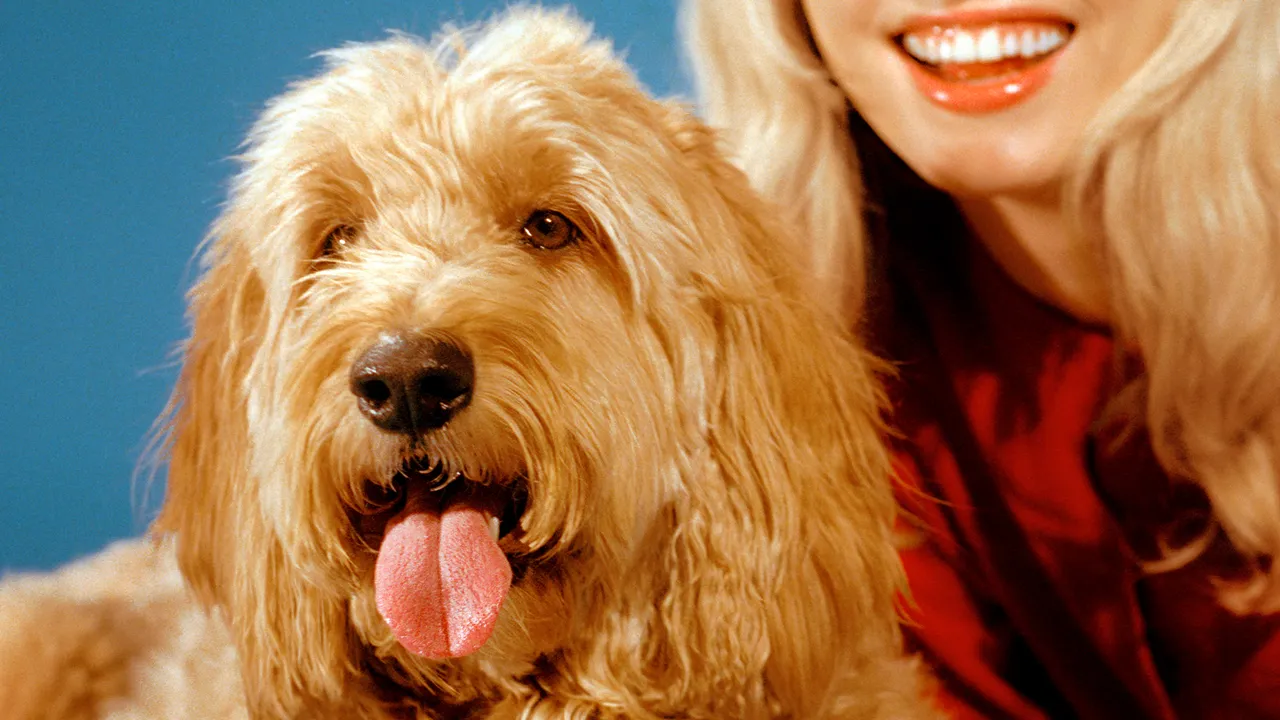
The “creature,” as we sometimes refer to him, joined our family in the fall of 2024, as a nine-week-old puppy. After much debate, we named him Herman (as in Munster, not Melville). He quickly grew much larger than either of his parents, topping out at seventy-five pounds. He looks like a retriever and a poodle were disassembled and put back together carelessly. His coat, made of soft, wavy curls, is like a poodle cake with retriever frosting. He has retriever ears and a poodle’s pointy occiput, topped by a mushroom cap of blond curls with a reddish tinge that jiggle daftly when he moves. His sinewy poodle legs end in retriever’s feet, with webbed toes, and his beaky poodle snout is partly hidden by his splendid “furnishings”: the eyebrow-mustache-and-beard combo that signals that a doodle carries at least one copy of the RSPO2 gene, which results in reduced shedding. Herman has proved to be remarkably “biddable”—that is, keen to take instruction, and almost always eager to please—but with a mysterious aloofness and a dignified reserve. From an early age, he developed extraordinary social skills with other dogs, and he is unfailingly gentle with people of all ages. I have learned his vocabulary of whines, yawns, growls, barks. Because he comes from highly active dogs on both sides, Herman (“Proud, Goofy, Too Smart by Half”) requires three hours of exercise a day, or else he gets bored, and you don’t want that. His strong food drive, combined with his size and his intelligence, makes him a hazard in the kitchen. If counter surfing were a sport, he’d be an Olympian. He once ate seven enchiladas that had been left out on the kitchen counter, without disturbing the Pyrex casserole dish they were in; we thought our son had wolfed them all until we found a pinto bean on Herman’s elbow.