
Phillips is a figure for our therapy-soaked era, even if, for him, therapy feeds into and enables life, whereas we often seem to view life as feeding into and enabling therapy. He’s spent decades translating specialized concepts for general audiences—demystifying transference and projection, peeking under the hood of everyday occupations such as tickling and being bored, drawing on classic works of literature to illustrate the relevance of his field to ordinary experience. A shaman of the psychoanalytic Slate pitch, he often adopts an impish persona, issuing counterintuitive pronouncements about the benefits of quitting, pessimism, or shame. He once told The Paris Review that his adolescent study of English literature prepared him “to ironize the ambitions of grand theory.” Elsewhere, he has remarked with an unmistakable air of indulgence on how much of human endeavor—from art and prayer to political activity—is explicable as a form of attention-seeking.
In his published writing, which extends to more than twenty books, Phillips shows a love of mischief and tomfoolery. His wordplay is sporadically self-delighted; his pose of guileless receptivity caused Joan Acocella to compare him, in this magazine, to a child wondering what would happen if he pushed a pencil up his nose. He believes that we are incorrigibly self-defeating, that we constantly obstruct our own knowledge because we fear being in a position to sate our wayward desires. Hence, perhaps, the contrarianism, a commitment to reversing whatever expectation the reader might be imagined to hold, in an attempt to disarm and deprogram, possibly even cure her.
Phillips is a Freudian, but a selective and partial one, preferring to emphasize his predecessor’s sensitive, more literary aspects. The Austrian doctor was interested “in sentences, in the fact that language is evocative as well as informative,” Phillips told an interviewer, after he was tapped to edit a volume of the Penguin Modern Classics edition of Freud. In “Becoming Freud,” a slender, circumlocutory biography, Phillips conjures a “champion” for patients, “someone who, like a good parent, or a good art critic, could appreciate what they were up to.”
He can be flippant about psychoanalysis, in one essay describing the analyst’s interpretation of the analysand as a “sophisticated form of interruption” undertaken to make the analyst feel “important.” In “Irreverence,” an essay from the new book, he depicts the titular concept as a way of testing authority (whether your target can withstand such shot-taking) and also a love test (whether your target will want to remain on reasonably good terms with you). If “the irreverent are wholly dependent on those they mock,” he writes, irreverence is also, potentially, “a sign of growing up.”
By that standard, the most recent work, animated by the question of what therapy should be and how it might help you get the life you want, is pretty mature. With nose-thumbing insouciance, Phillips recruits the pragmatic philosopher Richard Rorty—or an imagined version of him—to vocalize his discontent with the strictures of his discipline. Rorty used the phrase “God terms” for ideas, such as human nature or objective reality, that alienate us from our agency by appealing to a higher truth. Phillips, a Londoner, takes him as a stand-in for American optimism about the power of positive thinking. “The Life You Want” sets out to shape Freud into a more amenable ancestor, someone better suited to Phillips’s purposes. It’s what Rorty would call a creative “redescription” of the goals of psychoanalysis, redescription being the quintessential pragmatic activity, a flexible trying out of different stories or perspectives until you find one that works for you. As Phillips freely admits, this redescription—and perhaps redescription in general—might be naïvely wishful, not a bending of reality but a flight from it.
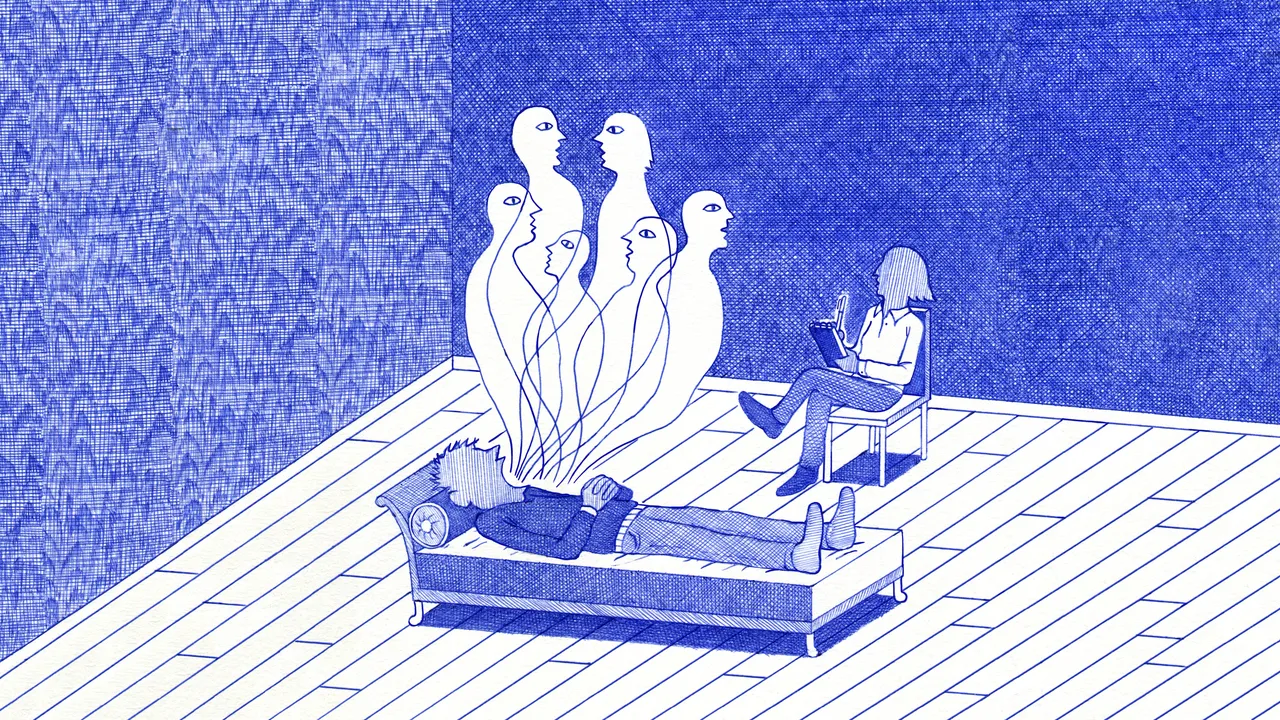
Freud’s biggest contribution to psychoanalytic thought might be his portrait of a persecutory, enigmatic, and disturbing unconscious. For Rorty, the Freudian id is another God term, a bad-faith bid to “delegate and outsource our purposes and our imagination and our intelligence to something beyond ourselves,” as Phillips puts it. Rorty, he writes, prefers to envision the unconscious as a team of partners or interlocutors, all of them “really useful, helpful and informed.” The prospect delights Phillips, but he’s skeptical: Does pragmatism’s redescription merely baffle our efforts to understand and transform our darker impulses? It’s when we refuse to face what we really want, he worries, that we grow pliant and manipulable, vulnerable to the lure of instant gratification and denied the chance to make something tonic out of our frustration.