Vermont has long been a haven for idealists and iconoclasts, from the Putney Perfectionists of the nineteenth century to Depression-era homesteaders like Helen and Scott Nearing to the prickly Brooklynite who became the state’s most famous senator. In a 2009 book called “The Town That Food Saved,” Ben Hewitt, a northern-Vermont native, chronicled the arrival of a new cohort. By the early twentieth century, the Northeast Kingdom town of Hardwick had become a hub of granite production, so populated by hardworking, hard-drinking laborers that it was briefly said to have more bars per capita than any other American town. When granite fell out of fashion, after the First World War, the local economy entered a decades-long decline. Then, in the early two-thousands, a wave of young farmers, cheese-makers, and craft brewers set up shop in the area, buoyed by righteous fury at the indignities of Big Ag, hoping to create a conscientious and sustainable local food system that might serve as a model nationwide. If, twenty years on, this movement has not fully transformed American agriculture, it at least put the Northeast Kingdom on the map as a mecca for the C.S.A. set.
Vermont may be the Green Mountain State, but in the dead of winter the N.E.K. shows particularly well. On the afternoon I arrived, I stopped by the Genny—a nineteenth-century general store in Craftsbury that was taken over by a group of young women in the early twenty-tens—where I was one of few patrons not wearing cross-country ski boots. The store, which sells natural wine and cultured butter alongside hand warmers and lighter fluid, is linked by trail to the Craftsbury Outdoor Center, where aspiring Olympians and more casual athletes carve paths through the woods. Overnight stays at the center include three hearty meals a day in the cafeteria, prepared largely from local ingredients. After a blissful morning of skiing, I helped myself to a pulled-pork sandwich, baked beans, and a creamy ginger-clove sweet-potato mash, beneath a hand-painted sign that gently admonished, “Though you may be Feeling Hollow, Don’t take More than you can Swallow.”
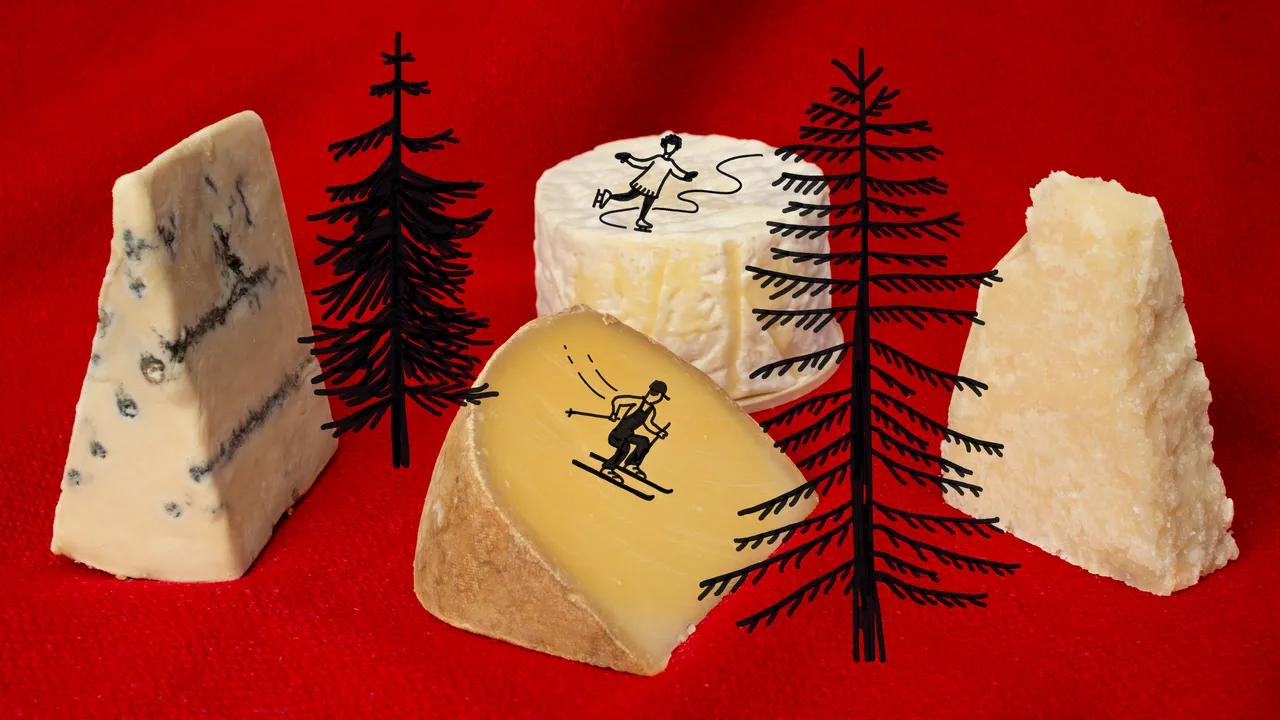
I might have gone for seconds if not for my next stop: the fourth annual Curds & Curling tournament, organized by Jasper Hill Farm, in Greensboro. On a pop-up ice rink, players for teams like Havarti Party and This Is the Whey flung hefty wheels of Alpha Tolman, an Alpine-style raw-milk cheese, in place of curling stones. It was a thoroughly amateur affair, though Mateo Kehler, one of a pair of brothers who founded Jasper Hill, told me that avid curlers trek down from Canada every year in the hope of recruiting serious players. “They don’t realize that cheese curling has nothing to do with actual curling,” he said. As competitive as the game were the lines for poutine, mac and cheese, hot toddies, and, especially, raclette: thick shavings of nutty yellow Jasper Hill Whitney, draped oozing over roasted fingerling potatoes.
As we stood rinkside, Kehler described the farm’s marketing strategy: extract cash from far-flung epicures to reinvest back home. Making “outrageously delicious cheese,” he said, “is one way of securing a future for the landscape that we love.” I’d met Kehler through Annie Myers, the founder and owner of Myers Produce, a company that trucks the Northeast Kingdom’s wares to grocers and restaurants in New York and Boston. It was because of Myers, I realized, that I had regular access to Vermont’s finest vegetables and dairy when I lived in Brooklyn. It’s difficult for a farmer to earn a living selling only locally, and supplying a major grocery chain might mean keeping up with high-volume demand for crowd-pleasing items like romaine or mild cheddar. Myers’s aim is to help sustain small farms by getting city people hooked on more niche items, like fermented black garlic from Pete’s Greens, in Craftsbury.
One night while I was in town, Myers hosted a dinner party for some of the area’s artisan farmers. Myers had pressed her own tortillas and braised a chicken raised by her friend Hannah Pearce, who was in attendance; the feta was made by Paul Lisai, of a dairy farm called Sweet Rowen, who was there, too. The conversation turned to the unique challenges of farm life. Pearce complained, good-naturedly, about a pair of goats she’d gotten as companions for her dog; they were driving her so crazy that she couldn’t wait to butcher them. Seth Johnson, who grows beans, marvelled at the fact that heirloom varieties have become so popular he needs to persuade venders to relieve him of the more pedestrian kidneys and pintos. As snow began to fall, Cody Thompson, who raises cows for Wagyu-style beef, began to bounce around a little nervously. “I can’t be here really late,” he said—as the operator of one of Craftsbury’s snowplows, he’d have to be up before 4 a.m.