Category: Movie Review

  • Constituency Watch: Erode (East) Assembly Constituency

    Constituency Watch: Erode (East) Assembly Constituency

    [ad_1]

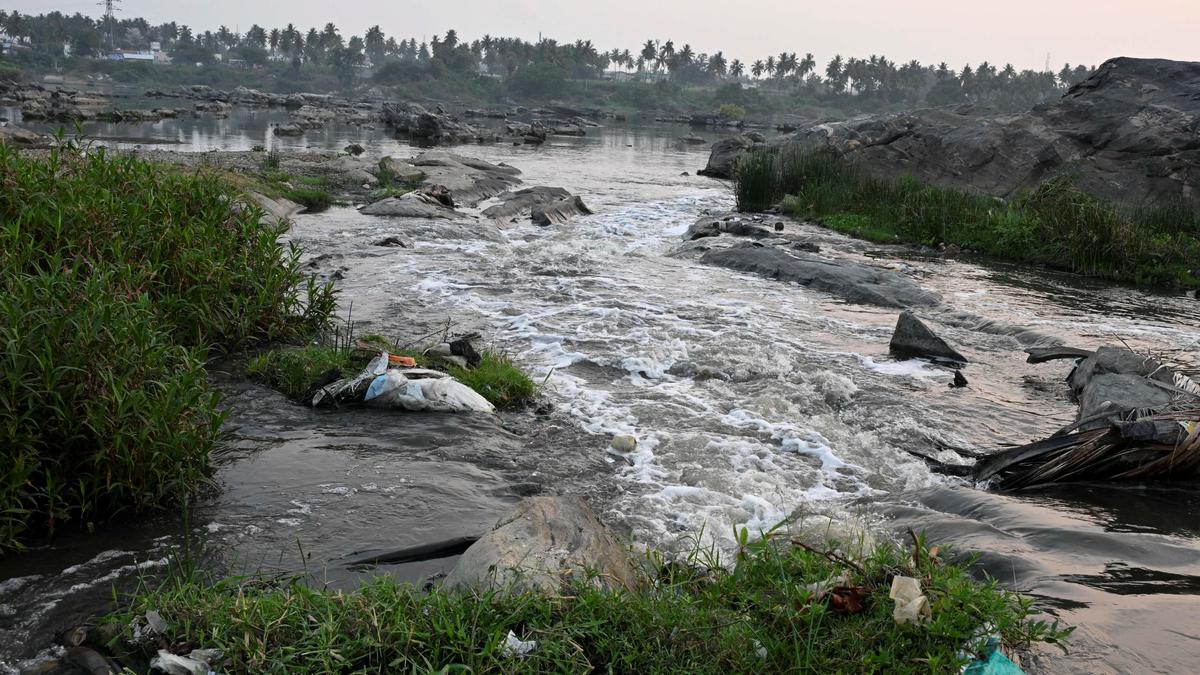
    Untreated sewage from households and textile processing units entering Cauvery River in Erode.
    | Photo Credit: M. Govarthan

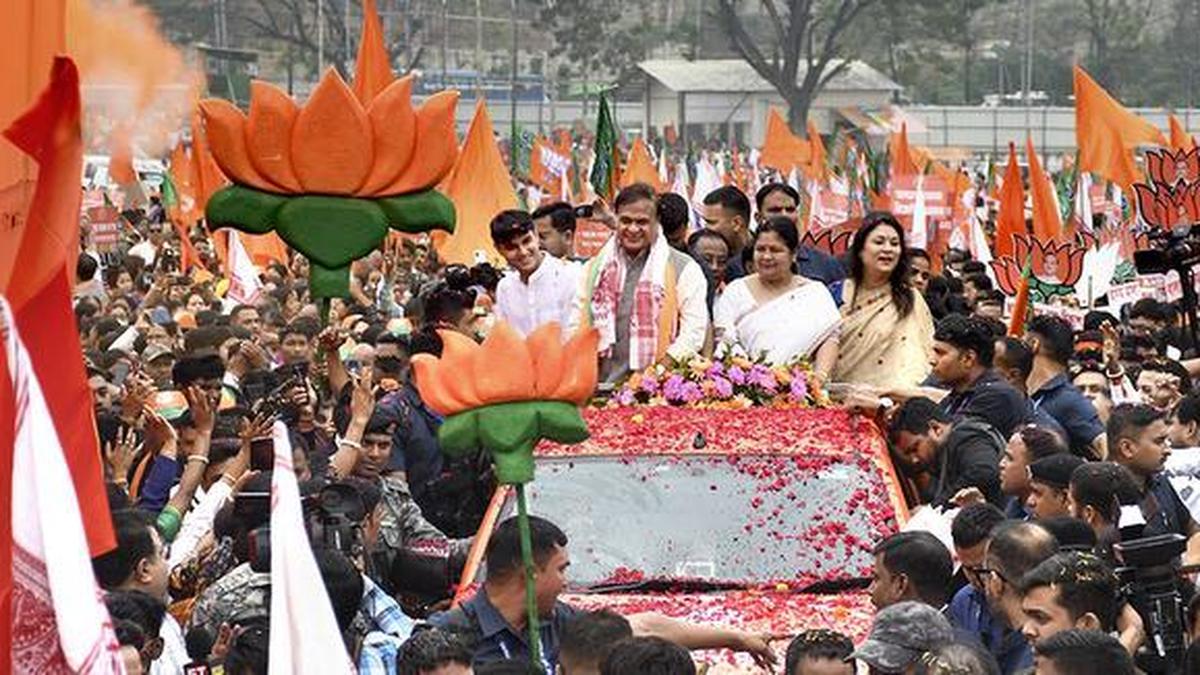
    A Constituency that has witnessed two by-elections in the last three years, Erode (East) is a predominantly urban seat, with nearly two-thirds of its areas falling within the Corporation limits.

    A major commercial centre, it reflects both the economic activity and civic pressures of a fast-growing city.

  • Kerala Assembly polls 2026: T.K. Govindan meets K. Sudhakaran, secures assurance of full backing

    Kerala Assembly polls 2026: T.K. Govindan meets K. Sudhakaran, secures assurance of full backing

    [ad_1]

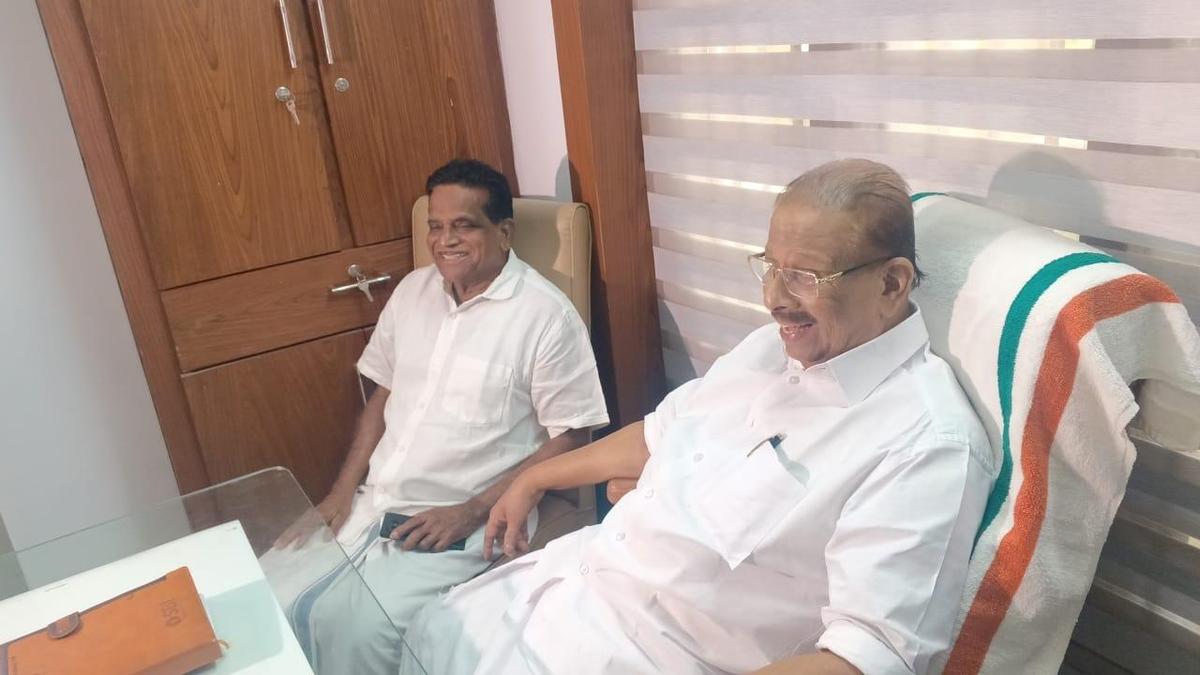
    UDF-backed Independent candidate T.K. Govindan meet senior Congress leader K. Sudhakaran at his residence in Nadal in Kannur on Friday seking support for his candidature in the Taliparamba Assembly constituency.
    | Photo Credit: S.K. MOHAN

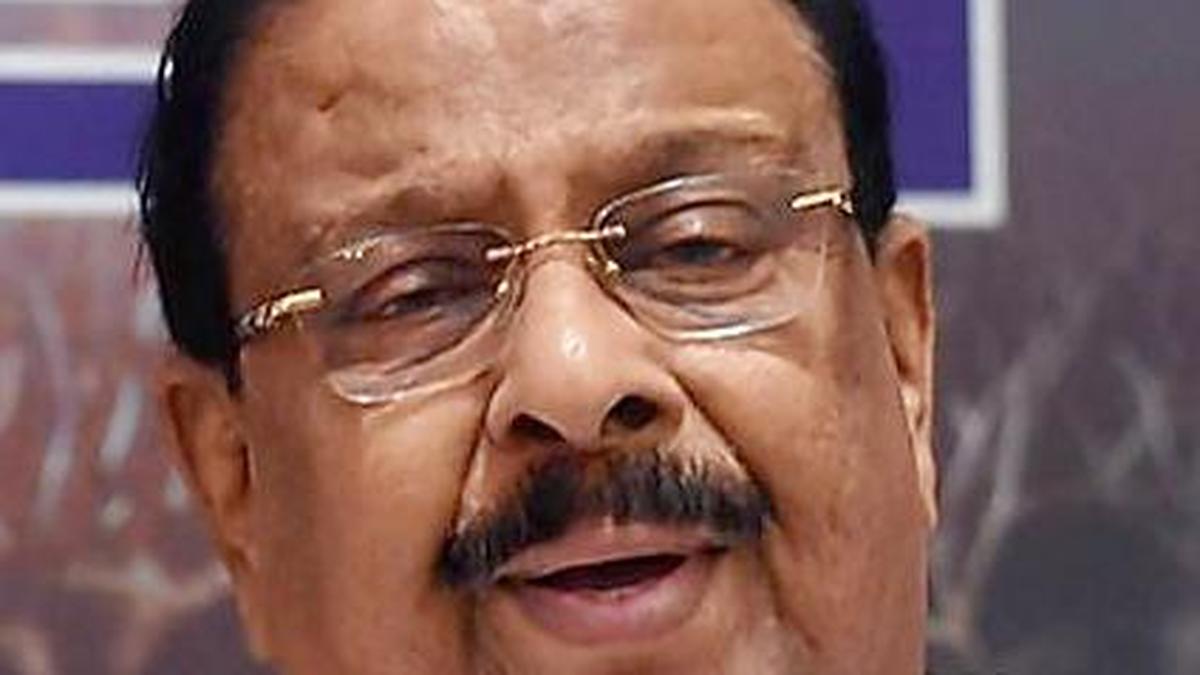
    United Democratic Front (UDF)-backed Independent candidate T.K. Govindan on Friday met senior Congress leader K. Sudhakaran, seeking his support for his candidature in the Taliparamba Assembly constituency, with the latter expected to campaign actively for him in the coming days.

    Mr. Govindan called on Mr. Sudhakaran at his residence in Nadal in the afternoon, where the senior leader assured full backing and pledged to do whatever was necessary to ensure his victory.

    “As an Independent candidate backed by the UDF, I met Mr. Sudhakaran, a very senior Congress leader. He has assured me all support in the elections,” Mr. Govindan told The Hindu.

    Also read| Kerala Assembly polls 2026: LDF seeks third term, UDF readies to end 10-year drought

    Responding to questions on dissent within the Congress over the decision to support him, including demands to field Youth Congress leader Vigil Mohanan from Taliparamba, Mr. Govindan said Mr. Sudhakaran had assured that the issue would be addressed and that he need not worry.

    The UDF had earlier extended support to Mr. Govindan, a CPI(M) dissident, following a decision by the State leadership, which also led to the Congress refraining from fielding its own candidate in the constituency.

  • Cow vigilante’s death in Mathura: Protest by locals trigger tension

    Cow vigilante’s death in Mathura: Protest by locals trigger tension

    [ad_1]

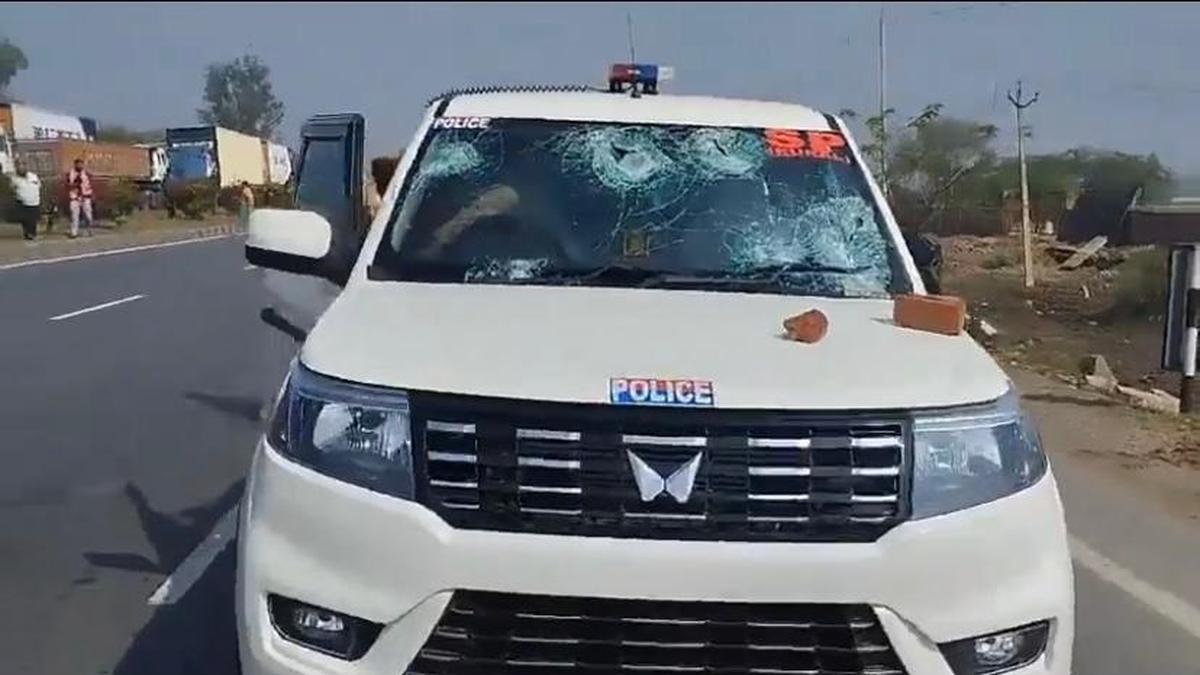
    A police vehicle is being damaged during a protest by locals after a cow vigilante was allegedly run over by suspected cattle smugglers on the Mathura national highway on March 21, 2026. Photo: Special Arrangement

    Locals blocked the national highway in the Kosi Kalan area of Mathura and protested against the death of a cow vigilante on Saturday (March 21, 2026), who was allegedly run over by suspected cattle smugglers.

    The protesters clashed with police, alleging that Chandrashekhar, a cow-protection activist and saint in the Braj region popularly known as ‘Farsa Wale Baba,’ died in the incident, which they claim was a deliberate act carried out by cattle smugglers, triggering tension in the locality.

    Taking cognisance of the incident, Uttar Pradesh Chief Minister Yogi Adityanath directed officials to ensure strict action against the perpetrators.

    “The accused will not be spared under any circumstances,” an official statement read, underlining the State’s commitment to accountability and law enforcement.

    Heavy police force has been deployed in the area to control the situation.

    “Chandrashekhar alias Farsa Baba, stopped a vehicle on suspicion in the Kosi police station area between 3:00 and 4:00 a.m. last night, he was tragically killed when struck by a truck coming from behind due to dense fog. The vehicle which the deceased had stopped was found to contain grocery items and the truck coming from behind was loaded with wires. This is a road accident – ​​it has nothing to do with cow smuggling. The situation has been brought under control by using necessary force against those creating law and order situations. Further legal action is being taken,” official statement from Mathura police reads.

  • The rising tide of eco‑anxiety among India’s youth: a call for climate resilience

    The rising tide of eco‑anxiety among India’s youth: a call for climate resilience

    [ad_1]

    Over a decade ago, my journey toward climate consciousness began almost unintentionally. What started as casual sustainability courses and environmental surveys gradually deepened into a personal commitment to reduce my carbon footprint. As someone who advocates passionately for the planet, I cannot overstate the importance of more individuals embracing environmentally responsible actions—small steps that collectively pave the way for monumental change. Yet, even as awareness grows, India’s climate emergency is no longer unfolding at the margins of public attention; it has entered the emotional and psychological core of an entire generation.

    Significant amount of research indicates that the attitude towards a societal concern, directly influences a person’s engagement in remedial social reforms. Extensive awareness campaigns have compounded awareness amidst people, positively influencing their attitude and consequent behavioural manifestations. However, in the last few years, over-consumption of information around being planet friendly has led to psychoterratic syndromes or ‘eco-emotions.’ The terminology eco-anxiety amidst the many other eco-emotions has gained significant traction, across social media platforms, eco-experts and planet advocates. Despite their popularity, the concept and terminologies remain under-researched.  

    What is eco-anxiety?

    The term eco-anxiety, coined by philosopher Glenn Albrecht, refers to the incessant, intrusive rumination an individual experiences fearing environmental doom. Broadly, it has come to encompass mental distress in response to worsening environmental conditions or witness of ecological crisis. With rapid urbanisation reshaping the skylines of the world, contemporary architectural designs have gained extensive materialisation. This in turn drives the greenhouse effect with solar radiation becoming trapped inside glazed windows. With this now increasing regulatory focus, people who spend over 60 hours in their corporate towers experience mental distress specific to their setting. This, defined as solastalgia, is the distress that takes over people’s mental clarity as a response to their immediate living or working environment getting affected due to global warming.

    Maslow’s motivational theory enlists safety needs and stability as one of the basic human needs. When individuals are faced with planet fragility, with slow desolation of places they once loved, their sense of stability is threatened. They often develop eco-angst, grappling with this unsettling feeling of instability and unpredictability.

    These elements are further exacerbated in a very densely populous country like India. India is now faced with significant vulnerability in terms of an escalating cascade of enviro threats including heatwaves, landslides, flooding, air pollution, decline of biodiversity and reduction in overall quality of life driven by these factors. With frequent and recurrent exposures to unexpected environmental catastrophes, the Indian population is now plagued with pervasive hypervigilance. This is particularly high within the agricultural sector. Intensified research is currently underway to identify and understand the links between climate volatility and farmer suicides in the past two decades, in relation to the economic precarity that ensues this as well.

    Climate uncertainty

    The cultural fabric in India promotes intergenerational family systems: grandparents, aunts, uncles, cousins, siblings often living within walking distance, forming dense networks of care, obligation, a strong sense of shared community and identity. Could this in turn also lead to more eco-anxiety in India? An intriguing question that can only be answered with more socio-science research.

    Planet-conscious activities are far from universal within the Indian community. A heightened emphasis on traditional, cultural practices too, may not always align with sustainable planet-friendly activities. Resource-intensive micro-community celebrations for instance, may sit very uneasily with younger generations. The generational gap also brings a gap in understanding risk and reforming attitudes towards enviro-friendly activities.

    The younger generation, navigating generational divergence, is often faced with a dual allegiance of morally adhering to familial practices and responding ethically to the global planet crisis. This means that the younger generation could be facing more eco-guilt whilst trying to stay aligned with traditional practices. When inhibited from engaging and promoting sustainability due to societal hierarchies, internal conflicts can lead to eco-depression.

    What young people feel

    A group of researchers at Christ (Deemed to Be) University, Bengaluru, conducted a study in 2024, which was published in The International Journal of Indian Psychology. This study found that young adults aged between 18-24 were often quite vocal about eco-emotions. They were heard describing various forms of negative emotions including anticipatory grief and anxiety and existential dread linked to environmental degradation. Another study echoing this is in The Lancet Planetary Health, backed by the UN indicated that about 70% of Indian youth are worried to some extent due to climate change, often leading to feelings of hopelessness, inadequacy, and dismay. More environmental psychologists are increasingly recognising these as symptoms of eco-anxiety.

    The data points neither an indictment of Indian families, nor a sign of diminished resilience. They just highlight the intricate social and cultural terrains that interact with the concept of climate distress in India.

    Eco anxiety and decisions

    The human process of decision-making is shaped by information stored through experience, conversations with people, as well as conventional and unconventional sources of wisdom. When these cognitive inputs are then enriched, entangled, and entwined with associated emotions, this can shape or distort the precision of the decision in either direction, leading to consequent behavioural manifestations. A study published in Frontiers in Psychology speaks about eco-anxiety as a practical anxiety that leaves people worried about the right thing to do. Whilst this mostly includes reactions or responses to ecological threats, it can also find its way into other areas of decision making.

    Some of the questions this study highlights are – Should I have a child given the risk that climate change poses to my child’s future? Is my current profession or line of work working against the planet? Should I change careers and would this still sustain me financially? Am I meant to be engaging in more pro-social activities such as raising awareness in the community? Would this mean less time with my family? Does this make me selfish?

    Can eco-anxiety help?

    Both psychology and philosophy converge on a well-known universal principle, human beings worry about things they deeply care about. Thus, eco-anxiety can be a very positive indication and evidence for profound planetary concern. This level of moral and emotional investment from people towards the planet’s future is promising. Like other forms of anxiety, eco anxiety can cause departure from one’s baseline, which in turn can cause discomfort. However, research is growing to indicate that this can trigger people to think of the bigger picture, promoting moral attunement, reformative behaviours and agency. This can also compound compliance with sustainable development goals, as well as help people sustain this motivation even when it’s hard.

    Many climate activists describe their endurance as stemming from eco-anxiety. Even when old habits crept in, this anxiety helped climate activists remain loyal to the new ones, despite the cognitive exhaustion.

    Eco‑anxiety, then, is not solely a marker of distress. It is also a psychological engine capable of driving sustained, values‑aligned action—an emotional force that, when understood and supported, can help individuals and communities navigate the moral terrain of a rapidly warming world.

    (Rashikkha Ra. Iyer is a multidisciplinary clinician working in the U.K., specialising in the delivery of clinical interventions in forensic settings. Rashikkha.RaIyer@outlook.com)

    Published – March 21, 2026 12:24 pm IST

  • AP cadre IAS officer A. Vani Prasad reallocated to Telangana cadre

    AP cadre IAS officer A. Vani Prasad reallocated to Telangana cadre

    [ad_1]

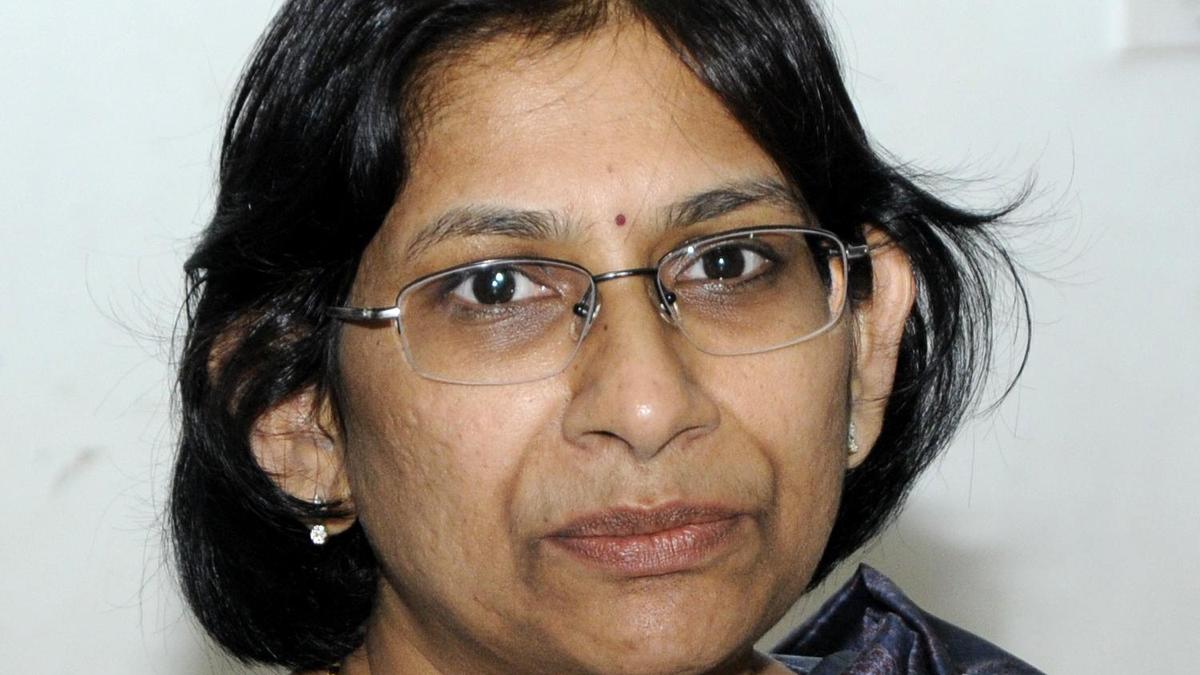
    Senior IAS officer A. Vani Prasad. File
    | Photo Credit: G_KRISHNASWAMY

    The Department of Personnel and Training (DoPT) has directed the Andhra Pradesh government to immediately relieve senior IAS officer A. Vani Prasad for her reallocation to the Telangana cadre, in compliance with an order of the Telangana High Court. The DoPT directive follows the High Court’s ruling that the officer, who originally belonged to the combined Andhra Pradesh cadre before bifurcation, be shifted from the Andhra Pradesh cadre to the Telangana cadre, according to a statement. The communication further emphasises that she must be directed to join the Telangana government without delay.

  • Magius Casino Review: Schnelle Gewinne & Hochintensives Slot-Spiel

    Wenn Sie bei der Suche nach dem nächsten großen Gewinn im Handumdrehen sind, bietet Magius eine Umgebung, die für adrenalingeladene Momente geschaffen wurde. Der Name der Plattform allein deutet auf Magie und schnelle Vermögen hin—perfekt für Spieler, die auf kurze Spannungsphasen stehen.

    Der Puls von Magius

    Stellen Sie sich eine lebendige Neon-Arcade vor, in der jedes Spiel bereit ist, sofort zu starten, sobald Ihr Finger den Spin-Button berührt. Magius fängt dieses Gefühl mit einer Oberfläche ein, die in Sekunden lädt und die Action am Laufen hält. Das Design bleibt sauber; keine überladenen Menüs, die Entscheidungen verzögern. Stattdessen sorgt ein minimalistisches Layout dafür, dass die beliebtesten Titel direkt erreichbar sind.

    • Schnelle Ladezeiten auf Desktop und Mobile
    • Intuitive Navigation mit einer „Quick Play“-Seitenleiste
    • Echtzeit-Benachrichtigungen für Spin-Ergebnisse

    Diese Elemente arbeiten zusammen, um das Tempo hoch zu halten und den Fokus des Spielers scharf zu machen.

    Spiele, die den Rhythmus halten

    Im Zentrum jeder Hochgeschwindigkeits-Session steht eine Auswahl an Spielen, die schnelles Spielen belohnen. Mit mehr als elftausend Titeln von über hundert Anbietern—darunter Riesen wie NetEnt, Microgaming und Betsoft—bietet Magius eine schwindelerregende Vielfalt an Slots, die in weniger als einer Minute gedreht werden können.

    Neben Slots sind schnelle Klassiker wie Roulette und Blackjack in „Turbo“-Formaten verfügbar, bei denen Runden fast sofort beendet werden. Die „Fast Mode“-Funktion für Video Poker ermöglicht es, fünf Hände hintereinander zu spielen, ohne zwischen den Aktionen zu pausieren.

    • Turbo Roulette: 30‑Sekunden-Runden
    • Speed Blackjack: Einzel‑Deal-Hände
    • Sofortiges Video Poker: Fünf Hände hintereinander

    Diese Optionen stellen sicher, dass Sie auch bei nur wenigen Minuten Spielzeit den Nervenkitzel spüren können.

    In Sekunden drehen – Slot-Dynamik

    Slots sind das Herzstück des Kurz‑Session-Erlebnisses bei Magius. Jeder Reel dreht sich mit äußerst flüssiger Animation und liefert Ergebnisse fast sofort—oft innerhalb von zwei Sekunden nach dem Klick auf „Spin“. Dieser schnelle Feedback‑Loop hält die Spieler engagiert und reduziert Leerlaufzeiten.

    Hochvolatilitätstitel wie „Dragon Blaze“ oder „Celtic Fortune“ sind bei dieser Zielgruppe besonders beliebt, weil sie schnelle Spins mit der Chance auf große Auszahlungen verbinden, die sofort für Euphorie sorgen können.

    • Schnelle Spin-Zeiten: < 3 Sekunden pro Runde
    • Hochvolatilitäts-Slots für große Auszahlungen
    • Scatter-Symbole, die sofort Free Spins auslösen

    In der Praxis könnte eine typische Session darin bestehen, dreißig Reel in fünfzehn Minuten zu drehen—genug, um den Nervenkitzel zu spüren, ohne in einen Marathon zu geraten.

    Schnelle Roulette-Runden und Blackjack-Schnappschüsse

    Die Quick‑Play-Versionen von Roulette und Blackjack halten den Puls des Casinos konstant. Beim Turbo Roulette setzen Sie Ihren Einsatz und beobachten, wie die Kugel innerhalb einer halben Minute auf eine Zahl landet. Diese Geschwindigkeit macht es leicht, mehrere Runden hintereinander zu spielen, bevor Ihr Telefon wieder vibriert.

    Der „Speed“-Modus bei Blackjack begrenzt die Entscheidungen pro Hand, um den Fluss zu beschleunigen. Spieler setzen ihren Einsatz einmal und verlassen sich dann auf den automatisierten Dealer, der die Hand innerhalb weniger Sekunden beendet.

    • Turbo Roulette: < 30‑Sekunden-Runden
    • Speed Blackjack: maximal zwei Entscheidungsoptionen pro Hand
    • Sofortige Auszahlungen via elektronische Geldbörse

    Diese Formate eignen sich für Spieler, die ihr Glück mehrfach in einer Sitzung testen möchten, ohne lange Überlegungen anzustellen.

    Live-Spiele für die Schnell‑Paced Crowd

    Sogar Live-Dealer-Tische passen sich schnellen Sessions bei Magius an. Die „Rapid“-Tischvariante reduziert Dealer-Aufforderungen und beschleunigt das Kartenausgeben, sodass jede Runde nur etwa zwei Minuten dauert, anstatt der üblichen drei bis vier.

    Spieler können schnell Wetten platzieren, indem sie auf Bildschirmanzeigen Slider verwenden, die sich sofort anpassen, während sie entscheiden, wie viel sie setzen möchten. Die Oberfläche ist so gestaltet, dass Sie nie auf verbale Hinweise warten müssen—alles ist visuell und sofort verfügbar.

    • Rapid Live Roulette: weniger als zwei Minuten pro Runde
    • Speedy Live Blackjack: Dealer gibt schneller als üblich aus
    • Echtzeit-Chat mit minimaler Verzögerung

    Diese Live-Optionen überbrücken die Lücke zwischen dem traditionellen Casino-Gefühl und der Schnell‑Spiel-Mentalität auf Mobilgeräten.

    Mobile Meisterschaft – Spielen unterwegs

    Die mobile Optimierung von Magius ist entscheidend für Spieler, die während kurzer Pausen gewinnen möchten—ob zwischen Meetings oder während des Pendelns. Das responsive Design sorgt dafür, dass die Buttons groß genug sind, um mit dem Daumen berührt zu werden, und bietet gleichzeitig die gleiche Geschwindigkeit wie auf dem Desktop.

    Da es keine dedizierte App gibt, können Sie dennoch ein nahezu app‑ähnliches Erlebnis genießen, indem Sie die Seite auf dem Startbildschirm Ihres Telefons speichern. Von dort aus haben Sie sofortigen Zugriff auf Ihre Lieblings‑Slots, ohne durch einen App-Store navigieren zu müssen.

    • Touch‑freundliche Oberfläche mit großen Spin-Buttons
    • Energieeffizientes Design für längeres Spielen
    • Automatisches Synchronisieren des Fortschritts auf allen Geräten

    Das Ergebnis ist ein nahtloses Erlebnis, das es Ihnen ermöglicht, jederzeit in hochintensives Spiel einzutauchen, wenn eine freie Minute erscheint.

    Schnelles Banking – Schnelle Ein- und Auszahlungen

    Ein schnelles Session erfordert schnelles Geld‑Management. Magius unterstützt eine Vielzahl von e‑wallets—Skrill, Neteller, MiFinity—und Kryptowährungen wie Bitcoin und Ripple für sofortige Einzahlungen.

    Auszahlungen erfolgen ebenso zügig, wenn Sie innerhalb der täglichen Limits (€500) und monatlichen Höchstgrenzen (€7.000) bleiben. Die Nutzung eines e‑wallets kann Ihre Gewinne in weniger als einer Stunde auf Ihr Konto zurückbringen.

    • Sofortige Einzahlungen via e‑wallets und Kryptowährungen
    • Auszahlungsbearbeitung innerhalb von 24 Stunden bei e‑wallets
    • Tägliches Auszahlungslimit von €500 hält Transaktionen überschaubar

    Dieser optimierte Banking-Prozess passt zum Kurz‑Session‑Gedanken—kein Warten auf die Freigabe der Gelder.

    Bonusse, die mit dem Tempo mithalten

    Magius bietet ein Willkommenspaket, das perfekt zum schnellen Spielstil passt: eine 100%‑Match bis zu €500 plus 200 Free Spins und einen Bonus‑Crab. Während die Wettanforderungen einschüchternd wirken können, sind sie auf kurze Sessions verteilt, sodass Sie sie schrittweise erfüllen können.

    Die Plattform bietet auch wöchentliche Reload-Boni—wie einen 50%‑Bonus bis zu €500 für Sportwetten—und Free Spin‑Angebote bei kleinen Einzahlungen (z.B. 50 FS bei €20 Einzahlung). Diese Aktionen sorgen dafür, dass Spieler immer wieder für schnelle Action zurückkommen, ohne sich langfristig zu binden.

    • 100% Willkommens‑Match bis zu €500 + 200 Free Spins
    • Wöchentlicher Reload-Bonus (50% bis zu €500) für Sportwetten
    • Free Spins bei kleinen Einzahlungen (z.B. 50 FS bei €20)
    • Live Cashback bis zu €200 bei schnellen Gewinnen

    Der Fokus liegt auf sofortiger Befriedigung und wiederholter Teilnahme, anstatt auf Marathon-Gaming.

    Spielerpsychologie – Warum Geschwindigkeit gewinnt

    Kurz‑, hochintensive Sessions nutzen die Dopaminfreisetzung, die mit sofortigen Belohnungen verbunden ist. Spieler, die auf schnelle Ergebnisse stehen, bevorzugen oft Spiele, bei denen Gewinne schnell aufblitzen und sie direkt in die nächste Runde springen können, ohne Pause.

    Dieser Stil reduziert die kognitive Ermüdung; Sie jonglieren nicht mit langen Strategien oder planen mehrere Wetten über Stunden. Stattdessen reagieren Sie in Echtzeit—setzen Wetten, beobachten, wie Ergebnisse auf dem Bildschirm aufblitzen, und entscheiden Ihren nächsten Zug fast sofort.

    • Meditative Konzentration wird durch schnelle Entscheidungsfindung ersetzt
    • Vermeidet langfristige Risikoabschätzungen zugunsten des Moment‑Thrills
    • Erfüllt das Bedürfnis nach sofortigem Feedback
    • Fördert wiederholte Besuche während täglicher Pausen

    Die Kombination aus schnellen Spielen, mobiler Bequemlichkeit und schnellem Banking schafft ein Ökosystem, in dem Geschwindigkeit König ist.

    200 Free Spins sichern!

    Wenn Sie nach einem schnellen Adrenalinkick ohne große Anfangsinvestition suchen, nutzen Sie jetzt das Free Spin‑Angebot von Magius. Drehen Sie an Slots, die sofortige Auszahlungen bieten, testen Sie Ihr Glück bei Turbo Roulette oder Speed Blackjack und genießen Sie nahtloses Mobile‑Spiel—alles, während Ihre Session kurz und knackig bleibt.

    Ihr nächster Gewinn ist nur einen Klick entfernt—lassen Sie ihn sich nicht durch eine weitere geschäftige Minute entgehen.

  • Maharashtra will be at the forefront of India’s orange economy: CM Fadnavis

    Maharashtra will be at the forefront of India’s orange economy: CM Fadnavis

    [ad_1]

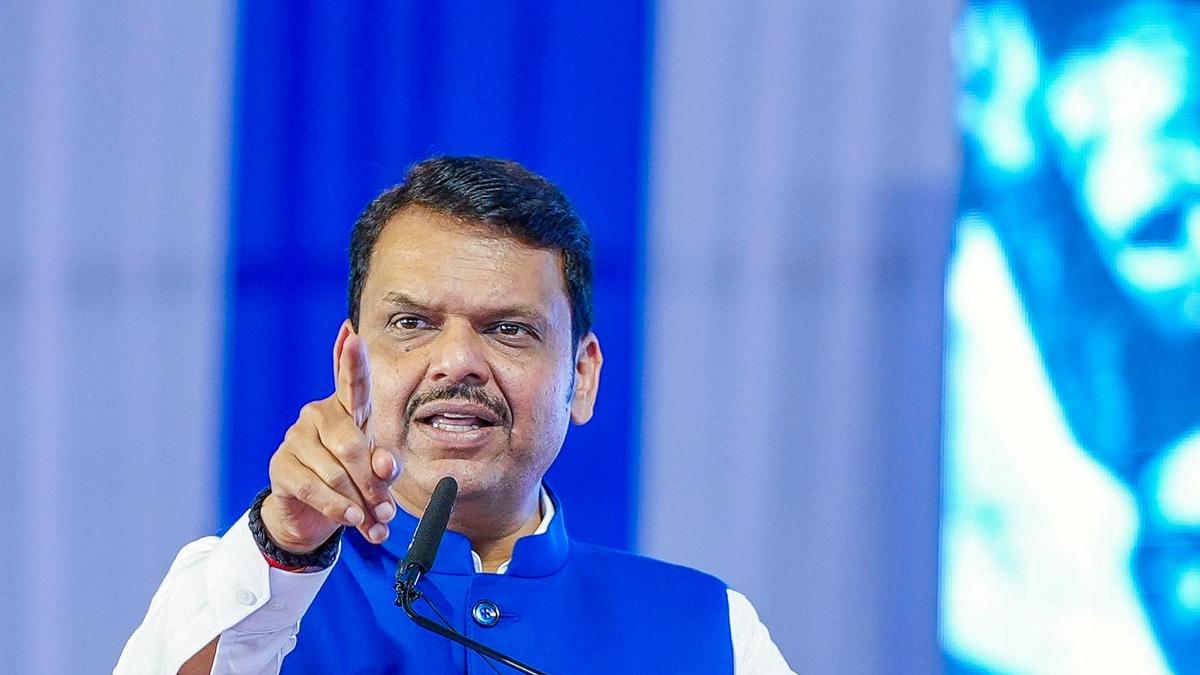
    Maharashtra Chief Minister Devendra speaks during an event in Mahad on March 20, 2026
    | Photo Credit: ANI

    Mumbai and Maharashtra have the ecosystem, talent and scale to emerge as a global hub for the AVGC sector, it will be at the forefront of India’s orange economy, Chief Minister Devendra Fadnavis said while inaugurating Gen O – Pixels & Play, a gaming festival organised in Mumbai on Friday (March 20, 2026) and highlighted that the esports is emerging as “viable” career option for youngster and does not remain mere entertainment. 

    “The gaming, digital content and the creator economy will be key pillars of Maharashtra’s next phase of economic growth,” said Mr. Fadnavis while responding the influencers attending the event. 

    He also pointed out that Chief Minister Office (CMO) will think of web-casting the decision process of the a few projects on live platform, saying “the operations of CMO is not drama but place where decisions are made and it cannot be shown live 24 hours, however, decision process of some projects can be shown live.”

    According to EFlag Corp, who hosted the Gen O – Pixels & Play’ festival at the MMRDA Grounds, BKC, aims at strong policy push to position Maharashtra as a leader in the gaming, creator economy and digital infrastructure ecosystem. The festival will be hosted for four days bringing together participants from over 23 countries and features esports and gaming showcases, AVGC-XR innovations and others.

    “The convergence of technology, creativity and entrepreneurship will unlock new economic opportunities, especially for India’s youth, reinforcing the importance of platforms like Gen O,” Mr. Fadnavis added. 


    Also Read | Maharashtra is drowning in debt, yet its leaders campaign as if the treasury is bottomless

    Shripad Ashtekar, Founder, EFlag Corp, said “Gen O is designed to bring together creators, innovators and global stakeholders on one platform. India is at the cusp of becoming a global leader in the creative and digital economy.”


    Read | Maharashtra’s sputtering economic engine

    “The initiative brings together creators, startups, technologists and cultural practitioners to explore emerging opportunities within India’s Orange Economy, while showcasing the future of digital storytelling, immersive media, creator culture and next-generation entertainment industries,” as per the organisers. 

  • Five of family from Thiruvananthapuram found dead in Kochi

    Five of family from Thiruvananthapuram found dead in Kochi

    [ad_1]

    Five members of a family, including three children, were found dead at Vaduthala in Kochi on Saturday in a suspected case of suicide-murder.

    A woman from Vilappilsala in Thiruvananthapuram, her mother, two sons aged 14 and 10 and a two-year-old daughter were found dead inside the rented house where they had been staying. The police have not revealed the identity of the deceased yet. The Ernakulam Town North police have launched a probe into the incident.

    The family was staying at Vaduthala reportedly for medical treatment at a hospital in the area.

    They were staying at the rented house owned by an NRI. The incident came to light reportedly when a relative of the landlord went to the house as the tenants were not seen outside for a couple of days.

    (Those in distress or having suicidal tendencies could seek help by calling DISHA – 1056, 0471-2552056, and Maithri – 0484-2540530)

  • Air India deployed wrong aircraft for Vancouver; plane returned to Delhi

    Air India deployed wrong aircraft for Vancouver; plane returned to Delhi

    [ad_1]

    Image used for representational purposes only.
    | Photo Credit: Reuters

    A Vancouver-bound Air India Boeing 777-200 LR aircraft, after being airborne for over seven hours, returned to the national capital on Thursday (March 19, 2026) evening after it was found that the plane was not approved for operating the flight, according to sources.

    An apparent lapse in updating the list of requirements for the operation of flights to Canada resulted in the situation, where a wrong aircraft was deployed for the particular service, sources said.

    Without providing specific details, Air India, in a statement on Friday (March 20), said the aircraft had landed safely at the Delhi airport.

    The flight was operated with Boeing 777-200 LR aircraft VT-AEI and was airborne for over seven hours. The plane turned back to Delhi when it was in the Chinese airspace, according to information available on the flight tracking website Flightradar24.com.

    “Air India flight AI185, operating from Delhi to Vancouver on 19 March, returned to Delhi due to an operational issue and in line with established standard operating procedures. The aircraft landed safely, and all passengers and crew had disembarked,” the airline said in a statement.

    The sources said the flight should have been operated only with a Boeing 777-300 ER aircraft, and there was no approval for flying the Boeing 777-200 LR plane.

    There are various approvals required for operating flights to foreign destinations, and those depend on each country. Meanwhile, Air India also said the flight departed for Vancouver with the passengers on Friday (March 20) morning.

  • Beyond the Biennale: How murals are rewriting Kochi’s streets

    Beyond the Biennale: How murals are rewriting Kochi’s streets

    [ad_1]

    Walk through Fort Kochi and Mattancherry to watch art, history and politics intersect on its walls.

    “That is the unique nature of public art — the impermanence of it combined with the interventions of public interactions with a painting. It gives the painting another, different  life,” says Jinil Manikandan, artist and member of the Trespassers. His response to the question about the ephemerality of murals in public places — their vulnerablity to heat, dust, and rain. And of course the scope for destruction which makes one wonder if the effort is worth it.  

    He illustrates his point with a previous work, a mural the collective painted in Copra Market in Kozhikode in 2021, where they drew the processes that brought a coconut to the market. “When we revisted the site some time later we noticed that coconuts were stacked against the wall we had painted, which we felt gave it a ‘lived/live’ kind of feeling,” he says.  

    The Fearless Collective mural in Fort Kochi.
    | Photo Credit:
    THULASI KAKKAT

    Coming to the present, Jinil references the mural on a wall in the compound of Cube Art Space in Mattancherry, a venue for Edam, where one of the collateral events of the Kochi Muziris Biennale is on.

    The work in question by Trespassers, the Kerala-based collective of eight artists — Jinil, Vishnupriyan, Sreerag P, Ambady Kannan, Arjun Gopi, Pranav Pranav Prabhakaran, Bashar UK, and Jatin Latha Shaji. All Fine Arts students of Sree Sankaracharya University of Sanskrit, Kalady – is on a 20×35-foot wall and bright with details. In vivid shades of pink, green, blue and yellow, it is essentially a picture of life in the area with a dash of the surreal. Cue a cable of an airconditioner, which becomes a tightrope with a ropewalker on it, which turns into a sleeping tiger’s tail.

    Their other work is on Armaan Collective’s water-facing wall inspired by the sights around — the anchored fishing boats, the people who live and work in the area with a generous dose of fantasy.

    Appupen’s painting recreated on Burgher Street, Fort Kochi
    | Photo Credit:
    THULASI KAKKAT

    “We never go to a site with a ready story or a plan. The ‘story’ comes from the area’s lore and people. The picture grows onsite as we start,” says Jinil.

    While, as part of the KMB’s The Island Mural Project, muralists/collectives from across the country like the Aravani Art Project, Osheen Siva, Munir Kabani and The Trespassers have painted the walls in and around Fort Kochi and Mattancherry, works of other artists are also adding to the ‘walls-as-a-gallery’ experience of these places. The Biennale’s stated intention with the project is to invite “everyone to experience the neighbourhood in a new light.”

    The Fearless Collective mural on the Indian Coast Guard building in Fort Kochi .
    | Photo Credit:
    THULASI KAKKAT

    Historically underground, murals are now a dominant form of public art. Often used as a tool of political and social expression, street art or public art is usually political. “Art is political, it has to be. Even when the artist claims to be apolitical, they are stating their politics,” says Jinil. 

    In 2012 anonymous artist Guesswho, called the ‘Indian Banksy,’ started painting across Fort Kochi’s walls. Over the years, he has painted Michael Jackson dancing Kathakali, Mona Lisa in a chatta-mundu, Che Guevara dressed like a coolie, and Pablo Picasso, Salvador Dali and Vincent van Gogh in lungies about to paint houses.

    Osheen Siva’s work near Aspinwall House
    | Photo Credit:
    SPECIAL ARRANGEMENT

    Out of the gallery box

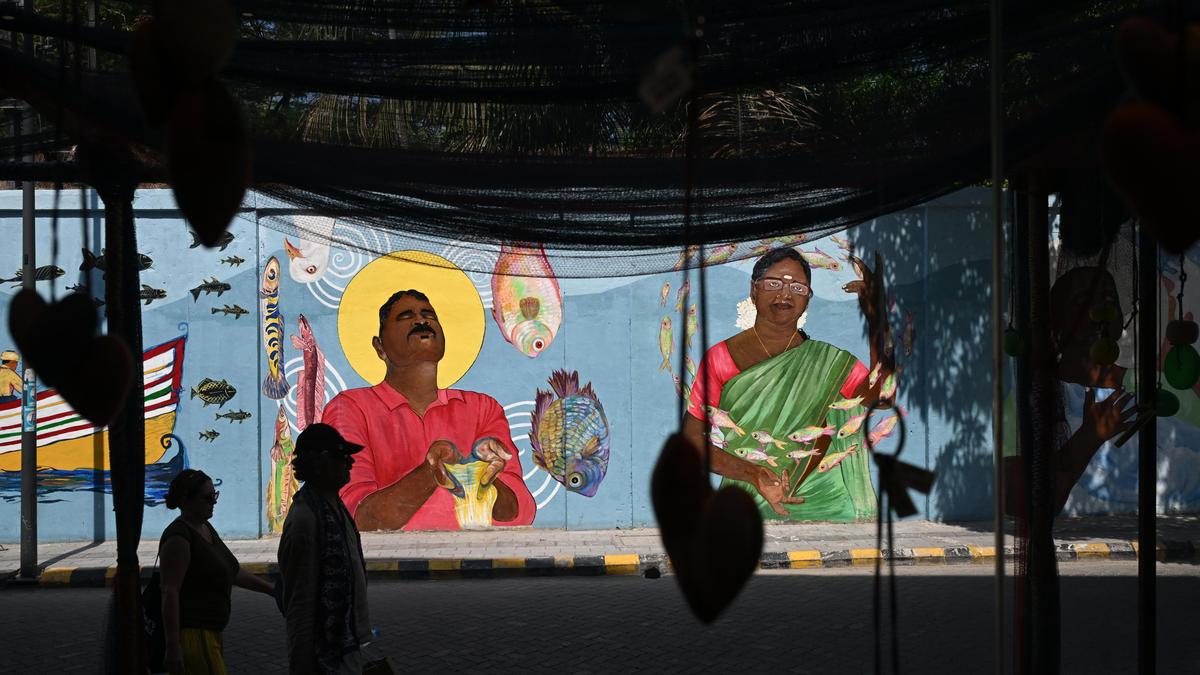
    Neelu Sengupta, Storytelling Head of the Fearless Collective says that murals make art democratic and accessible: “It moves art outside the conventional white cube space of an art gallery.” This collective of women encourages participation to create public art with women or other unrepresented communities across the globe. The Fearless Collective, started by artist Shilo Shiv Suleman in 2012 encourages dialogue.

    Though it coincided with the Biennale, this work is not part of it. Painted on the 200-metre wall of the Coast Guard office in Fort Kochi, it was done in collaboration with the local community. These works show large-scale portraits of the community — the fisherfolk, and those at the forefront of mangrove conservation.

    “Community stories are crucial, whether they are to do with climate crisis, gender identity, peace building or social change,” Neelu says. The location is also deliberate, since the Indian Coast Guard is involved in marine conservation. The 16-odd Fearless Collective artists, women and non-binary persons, who worked on this are not just Indian but also from Bangladesh, Nepal and Sri Lanka, these include members of the Ambassador Programme.  

    The mural by the Aravani Art Project at the Womens & Children Hospital in Mattancherry.
    | Photo Credit:
    THULASI KAKKAT

    Osheen Siva’s mural on the wall of Palm Fibre Pvt. Ltd on Calvathy Road, near Aspinwall House, worked in collaboration with two local artists Aslah KP and Muhammed Ali Jouhar. She says the work “engages with Dalit visuality and foregrounds caste-oppressed cultural forms and histories from Kerala and Tamil Nadu.”

    Munir Kabani’s ‘A Wall of Love’, near Artshila, a venue for the Students’ Biennale, with its yellow and green horizontal stripes giving the illusory effect of a shuttered space, it has ‘love’ written in English and ‘sneham’ (Malayalam for love) written on it. It explores the tension between language and perception — how words and images can represent thought and also shape how we see. It is a popular spot for photos with locals and tourists. Superficially simplistic — it makes us question whether what we see is real.

    The Aravani Art Project, an art collective led by trans-women and cis-women aims to create a space for people from the transgender community, has created murals in two places, the Women and Children Hospital Mattancherry and VKL Warehouse, featuring women in different stages of life going about the business of living.

    ‘Walk Past You’ near Hotel Seagull
    | Photo Credit:
    SPECIAL ARRANGEMENT

    Near Pepper House, ‘Walk Past You’ designed by US-based artist Reshidev RK, forces you to pause. While the digital art is by Reshidev, the painting is by Renjith Joseph and Arjun Ananth, who are part of Charly and the boys, the crew of Kochi-based artist Elwin Charly. “We wanted the history of Fort Kochi told visually as a mural, that is how this work came to be,” says Sandeep Johnson, who curated the piece. Intricately detailed in Reshidev’s signature style, it has nuggets of Fort Kochi’s history — Vasco Da Gama, a local woman sieving pepper, a Jewish woman in clothes typical of the period, and pillars inspired by those at St. Francis Basilica. 

    A painting, Monk, by the late artist Midhun Mohan recreated as a tribute to him in Mattancherry
    | Photo Credit:
    THULASI KAKKAT

    It is not all serious, on Burgher Street in Fort Kochi take a look at ‘Amphibian Aesthetics’, a group show on at Ishaara House (Kashi Hallegua House), Jew Town. The painting, which is a recreation of Bengaluru-based graphic novelist Appupen’s work which is on show at Ishaara House. It is part of a multiplatform narrative connecting with audiences through print and murals, marked by the artists’ signature dark humour and pop aesthetics. According to Ishara Arts, “It probes identity politics, surveillance, ecological unease and the manufactured logics of propaganda.”

    Another ‘invitation’ is painted on the wall outside Lakshmi Madhavan’s stunning installation, ‘Looming Bodies’, an exhibit of Kerala’s traditional handloom, which speaks about the handloom weavers of Balaramapuram. The mural shows what is ostensibly a weaver’s hands weaving gold kasavu.

    The mural outside the Kochi Muziris Biennale Collateral show, ‘Looming Bodies’  
    | Photo Credit:
    SPECIAL ARRANGEMENT

    And then there are some that are memorials like the one outisde Uru Art Harbour, Kappalandimukku, a recreation of a painting, Monk, by the late artist Midhun Mohan who passed away in 2023. Midhun’s works spoke of social and cultural issues prevalent in contemporary society, while some were an examination of the past, exploring stories embedded in history.

    Guesswho’s graffiti
    | Photo Credit:
    SPECIAL ARRANGEMENT

    “If I were to pin point when such public art started drawing attention, I would peg it on the first biennale in 2012 when Guesswho’s works started showing up on the walls of Fort Kochi. Then it was more underground… Today the tradition continues, and in whichever form it takes, it is still political artistic expression,” says Sasi Kumar Vallikkadan of the Uru Artist Collective.

    Even as the Kochi Muziris Biennale concludes on March 31, the murals will be around a little longer — part of our everyday life, long after the venues and warehouses empty.
  • Supreme Court quashes copyright case against Sujoy Ghosh over Kahaani 2, calls allegations baseless

    Supreme Court quashes copyright case against Sujoy Ghosh over Kahaani 2, calls allegations baseless

    [ad_1]

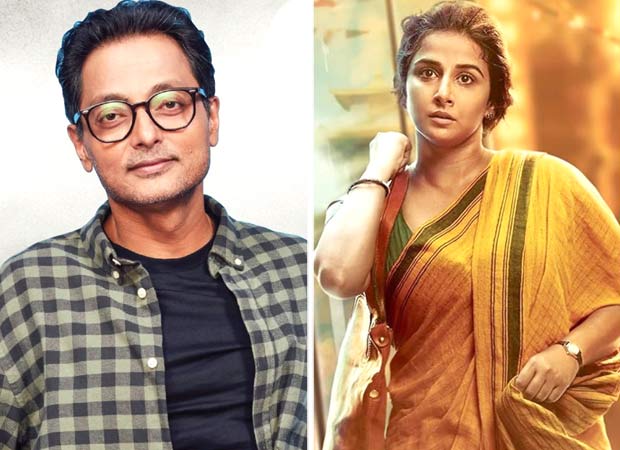
    In a significant relief for filmmaker Sujoy Ghosh, the Supreme Court of India has set aside criminal proceedings initiated against him in a copyright infringement case linked to his 2016 film Kahaani 2: Durga Rani Singh.

    Supreme Court quashes copyright case against Sujoy Ghosh over Kahaani 2, calls allegations baseless

    According to a report by Bar and Bench, a Bench comprising Justices PS Narasimha and Alok Aradhe observed that the complaint lacked substance and failed to establish even a basic comparison between the two works in question. The court noted that the allegations were vague and unsupported, with no clear indication of how the film resembled the complainant’s script.

    The case stemmed from a complaint filed by Umesh Prasad Mehta, who alleged that his script titled Sabak had been copied for the film. He claimed to have shared his work with Ghosh in 2015. Acting on this complaint, a magistrate court in Hazaribagh had issued summons in 2018 under provisions of the Copyright Act. Later, the Jharkhand High Court declined to quash the case, stating that the matter warranted trial.

    Ghosh subsequently moved the apex court, where his counsel, Senior Advocate Siddhartha Dave, argued that the complaint did not provide any material evidence demonstrating similarity between the scripts and that the proceedings were a misuse of legal process.

    The Supreme Court agreed with these submissions, pointing out that both the magistrate’s summoning order and the High Court’s decision showed a lack of proper judicial consideration. It also highlighted that witness statements presented by the complainant did not establish that any part of the script had been copied.

    A key factor in the ruling was the finding of the Screen Writers Association’s Dispute Settlement Committee, which had earlier concluded that there was no resemblance between the two works. The court noted that this crucial detail had not been disclosed to the magistrate at the time of issuing summons.

    Additionally, the Bench underscored that Ghosh’s script for Kahaani 2 had been registered well before the complainant’s script was created, making the allegation of infringement untenable.

    Reiterating that courts must guard against frivolous or malicious litigation, the apex court emphasized the need to examine surrounding circumstances in such cases to prevent misuse of criminal law. It ultimately set aside both the summoning order and the High Court’s ruling, bringing an end to the proceedings pending before the trial court.

    The case was argued on behalf of Sujoy Ghosh by Senior Advocate Siddhartha Dave, assisted by a team of advocates. As for Ghosh’s 2016 thriller Kahaani 2: Durga Rani Singh, it is a Vidya Balan-led film that revolves around a woman living under an assumed identity while protecting a child, unfolding into a layered narrative of crime, abuse, and hidden pasts. Also starring Arjun Rampal and Jugal Hansraj in key roles, the film was expected to be a spiritual sequel to the 2012 blockbuster Kahaani.

    Also Read: “No one claimed it’s original”: Sujoy Ghosh REACTS to music criticism in Dhurandhar trailer

    More Pages: Kahaani 2 Box Office Collection , Kahaani 2 Movie Review

    BOLLYWOOD NEWS – LIVE UPDATES

    Catch us for latest Bollywood News, New Bollywood Movies update, Box office collection, New Movies Release , Bollywood News Hindi, Entertainment News, Bollywood Live News Today & Upcoming Movies 2026 and stay updated with latest hindi movies only on Bollywood Hungama.

  • PM Modi, President Murmu extend Id-ul-Fitr greetings

    PM Modi, President Murmu extend Id-ul-Fitr greetings

    [ad_1]

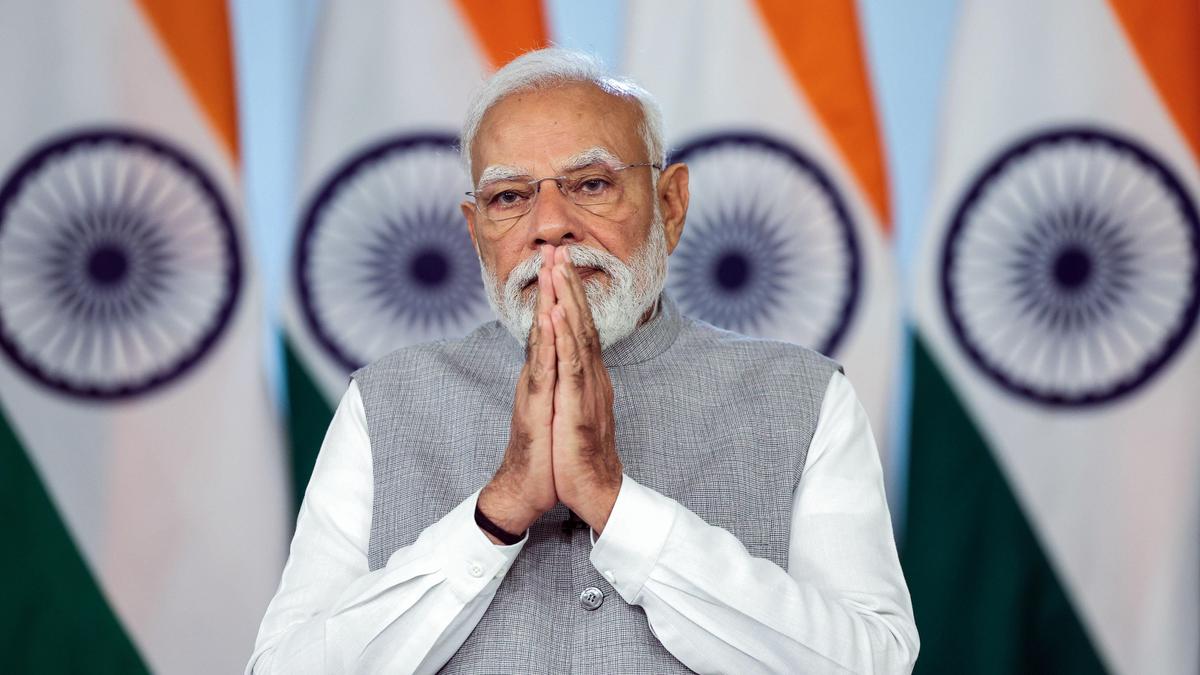
    Prime Minister Narendra Modi. File
    | Photo Credit: ANI

    Prime Minister Narendra Modi on Saturday (March 21, 2026) greeted people a happy Id and hoped for brotherhood and kindness all around. Id is celebrated in the country on Saturday.

    “Best wishes on Eid-ul-Fitr. May this day further brotherhood and kindness all around. May everyone be happy and healthy. Eid Mubarak!” Mr. Modi said on X.

    President Droupadi Murmu on Friday (March 20, 2026) greeted the public on the eve of the festival, and urged all to resolve to promote unity and harmony in society and contribute to the nation’s progress.

    Celebrated after the end of the holy month of Ramadan, the festival gives the message of self-control, charity and compassion for the underprivileged, she said. It also conveys the message of love, brotherhood, peace, and mutual harmony, the President said.

    Jammu and Kashmir Chief Minister Omar Abdullah extended Id greetings on Friday, and underscored the spiritual significance of Eid as a divine celebration after a month of fasting, prayers and self-discipline during Ramzan.

    Mr. Abdullah said that the festival is an occasion to offer gratitude to the Almighty and to celebrate the values of compassion, generosity and unity nurtured during the holy month.

    Among other leaders to extend Id greetings were Chief Minister M.K. Stalin, who added: “Whenever the Union BJP government brings laws against the Islamic people, we have been fighting strongly against them in the people’s forum and in the Parliament.”

    Bahujan Samaj Party (BSP) president Mayawati on Saturday greeted Muslims on Id and wished them the freedoms guaranteed under the Constitution.

    Leader of the Opposition in the Lok Sabha, Congress leader Rahul Gandhi released a video message to convey Id greetings, saying, “Wishing you and your loved ones joy, prosperity, and good health.”

    (With inputs from agencies)

  • I have been in favour of doves in West Asia or other conflicts, says Shashi Tharoor

    I have been in favour of doves in West Asia or other conflicts, says Shashi Tharoor

    [ad_1]

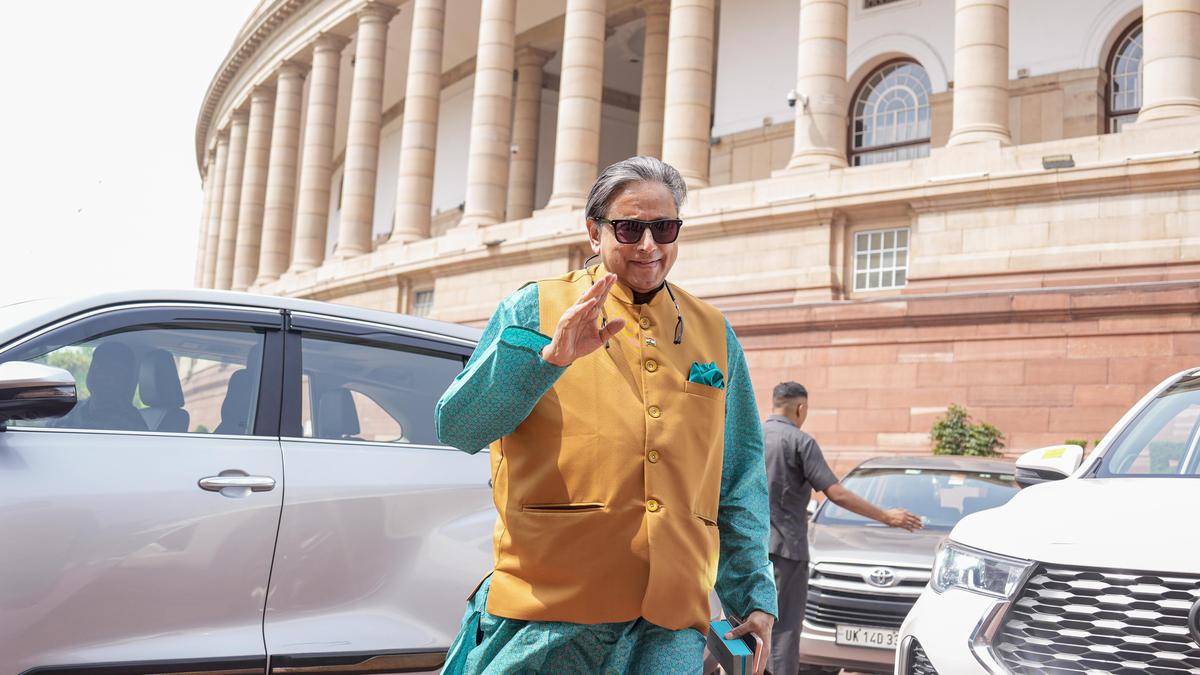
    The damage being done to the combatants, the neighbourhood, and the wider region, including to India, due to the West Asia conflict has “crossed all acceptable limits” and it must be made to stop, Congress leader Shashi Tharoor has said.

    Interacting with reporters on the sidelines of an event in New Delhi on Friday (March 20, 2026), Mr. Tharoor said that he’s been someone who has always been “in favour of the doves” in this particular conflict and most of the conflicts.


    Also Read | Iran-Israel war LIVE

    He was asked to comment on the hawkish remarks emanation from both sides when it comes to the West Asia conflict which began three weeks ago, with no end in sight.

    “This is a serious issue. This is not a small matter, it’s affecting the ordinary lives of Indians and of others everywhere. I think that we should be part of (efforts), and ideally we should lead an international effort to bring this war to an end. There are many countries that will join us. No one wants to see this war continue,” he said.


    Read | ​Fire and fury: On the ill-conceived war on Iran

    Mr. Tharoor said the conflict was “hurting a lot of us” who have nothing to do with it.

    “And I think the time has come now to get both sides to climb down from their positions. They need our help, they need our encouragement and that of other countries. I hope we will play our part,” the former Union Minister of State for External Affairs said.

    He said there was a need to see this conflict end.

    “If you saw the appeal from the Omani foreign minister, very, very important gesture. I think many, many countries are saying that we absolutely have to bring this war to a close. It is doing far too much damage and it’s not clear at all what good it’s doing to anybody,” he underlined.

    He was also asked if in this environment of “hawks”, there was a need some “doves” who want to see de-escalation.

    “I’ve been obviously somebody who has been in favour of doves, in this particular conflict and in most conflicts. War is a futile activity. In fact, I spent a lot of years in peacekeeping at the UN, and I can tell you soldiers are the last ones who want to see wars. They know how much horror, how much suffering, how much true loss is involved. No one wants to see war continue,” he asserted.

    When you talk to soldiers who have lived through fighting and killing, they will share with you the anguish it means, the Congress MP said.

    “I think that it’s one thing to be forced to defend your country. It’s something else to go on prosecuting a war in which people are dying every day, innocents are dying, school children have been killed, all sorts of innocent people are losing their lives for frankly, for what,” he asked.

    “I think at this point the damage being done everywhere, both to the combatants, to the neighbourhood, and then to the wider region including to India, has crossed all acceptable limits. It must be made to stop,” Mr. Tharoor said.

    The conflict is affecting India, it’s affecting many other countries in the region and beyond because now, as oil prices go up and gas supplies go down, you’re looking at problems facing everybody, he said.

    He was also asked about fellow Congress leader Shama Mohamed post on X on Friday (March 20) on less number of tickets being given to women candidates.

    “I have been for some time very much in favour of greater women’s representation,” he said.


    Read | The war in West Asia: What it means for India

    “And I’m sorry to say, I do agree that when when women are half the population that they get only 9.8 per cent of the seats, is not fair. But again, those who made these decisions, and I’m not one of them, I’m not part of the selection process for candidates. But all I can say is that those who’ve done that must have taken all factors into account. And they claim that ultimately they were guided by winnability and that’s a principal thing,” Mr. Tharoor said.

    “But when women’s reservation comes, I think that’ll be an end to these debates and we will see a fair opportunity to more hard working women leaders,” he added.

    Published – March 21, 2026 09:14 am IST

  • BTS are back: central Seoul locks down for K-pop supergroup's first show in years

    BTS are back: central Seoul locks down for K-pop supergroup's first show in years

    [ad_1]

    South Korea shut down the heart of Seoul on Saturday (March 21, 20260 for a comeback concert by K-pop supergroup ‌BTS, as authorities prepare for an estimated 260,000 fans to flood the city’s streets and millions more ​to watch the show live on Netflix.

    The one-hour-long concert, set to be held in the capital’s historic Gwanghwamun ⁠Square, marks the release of the seven-member group’s first new album in more than three years, and the start of a global tour in April.

    BTS made their debut in 2013 and have since gone on to global superstardom, becoming the most-streamed K-pop artist globally on Spotify, with ‌its members invited to the White House and partnering with the UN General Assembly. In 2022, the group went on hiatus so the members could complete South Korea’s mandatory military service.

    “The City of Seoul will do its ‌best to make it flexible – to make [the performance] both safe and enjoyable,” said Seoul mayor Oh Se-hoon on Thursday as ‌he ⁠checked safety measures put in place.

    Seoul is staging the event nearly four years after a crowd crush killed Halloween ⁠revellers in the city’s Itaewon nightlife district. Memories of the disaster still linger, amplifying pressure on South Korean authorities to ensure the safety of what is expected to be one of its largest-ever public gatherings.

    Seoul police have shut streets and erected fences as well as metal detectors around the square, which sits to ​the south of the Gyeongbokgung Palace. They have also said ‌they will jam signals of any unauthorised drones. The Seoul government, BTS’s management agency HYBE and other organisations involved in the event have also deployed a combined 8,200 personnel to manage the crowds who had already begun to gather on Friday (March 210 2026).

    The Seoul government also said it had set up medical stations and secured 2,551 toilets open to the public including in nearby buildings.

    Organisers ‌of the concert, which will start at 8 p.m. local time (1100 GMT), gave away 22,000 free tickets, but ​the area is open to non-ticket holders who will be able to watch the performance on Netflix via giant screens. It will also be streamed live on the platform to 190 countries.

    Netflix and HYBE on ⁠Saturday (March 21, 2026) relaxed restrictions on media coverage of the show, allowing longer audio or video footage of the performance to be shown but still imposed a ban on live-streaming by the media.

    A ‘TRILLIONS OF WON’ COMEBACK BTS’ world tour will last into 2027 and is set to ‌be the biggest global K-pop tour of all time as well as the largest of their career to date, spanning 34 regions and 82 shows as of this week according to the tour website.

    Analysts are projecting blockbuster revenues for the group’s return to the global stage, with some estimates pointing to total tour earnings of as much as 2.7 trillion won ($1.81 billion), potentially approaching or overtaking past top-grossing tours such as Taylor Swift’s Eras Tour and Coldplay’s Music of the Spheres World Tour.

    Seoul-based analysts also estimated that it could bring in total ticket revenue of at least 1.5 trillion won and total attendance of between 5 and 6 million fans ‌across the whole tour. On Friday (March 20, 2026), South Korea’s Finance Minister said on X that the direct economic effect of the Saturday (March 21, 2026) comeback concert alone was in the “trillions ​of won”.

    “The number of shows could reach 100 once dates to be added next year are included,” said Hwang Ji-won, analyst at iM Securities. “Assuming only 50,000 attendees per show, that comes to 5 million – and actual ⁠attendance could be higher given the 360-degree stage.”

    A 360-degree, central stage means the audience completely surrounds the group as they perform. Analysts ⁠say such a set means there are no obstructed views and also increases audience capacity, boosting sales.

    Roughly half the shows are expected to be in North America and Europe where ticket prices are generally higher, Mr. Hwang added.

    Kim Yu-hyuk of IBK ‌Investment & Securities forecast total tour revenue of 2.7 trillion won and operating profit of 487 billion won including merchandise, expected to be a major additional revenue driver.

    Spending estimates on merchandise range from 100,000 won to 140,000 won per fan, while prices ​of the new “ARMY Bomb” light stick that the audience use to cheer BTS at concerts have soared on secondhand sites.

    Published – March 21, 2026 09:14 am IST

  • Odisha-bound bus catches fire near Rambhadrapuram, all passengers safe

    Odisha-bound bus catches fire near Rambhadrapuram, all passengers safe

    [ad_1]

    About 37 passengers on a bus had a miraculous escape when the bus they were travelling in was engulfed in fire after a tyre burst near Tarapuram in the Ramabhadrapuram mandal of Vizianagaram district in the early hours of Saturday (March 21, 2026).

    According to the police, the bus was travelling from Bhubaneswar to Malkangiri in Odisha. The driver made all the passengers get off the bus as it caught fire after the tyre burst. The bus was completely gutted in the incident.

    A few public representatives of Odisha were also reportedly travelling in the bus.

    Police officials of Vizianagaram district rushed to the spot and helped the passengers contact their family from the accident spot.

    The travel agency arranged another bus for the passengers to reach the destination of Malkangiri.

  • ​Chandrababu opts for general queue at Tirumala

    ​Chandrababu opts for general queue at Tirumala

    [ad_1]

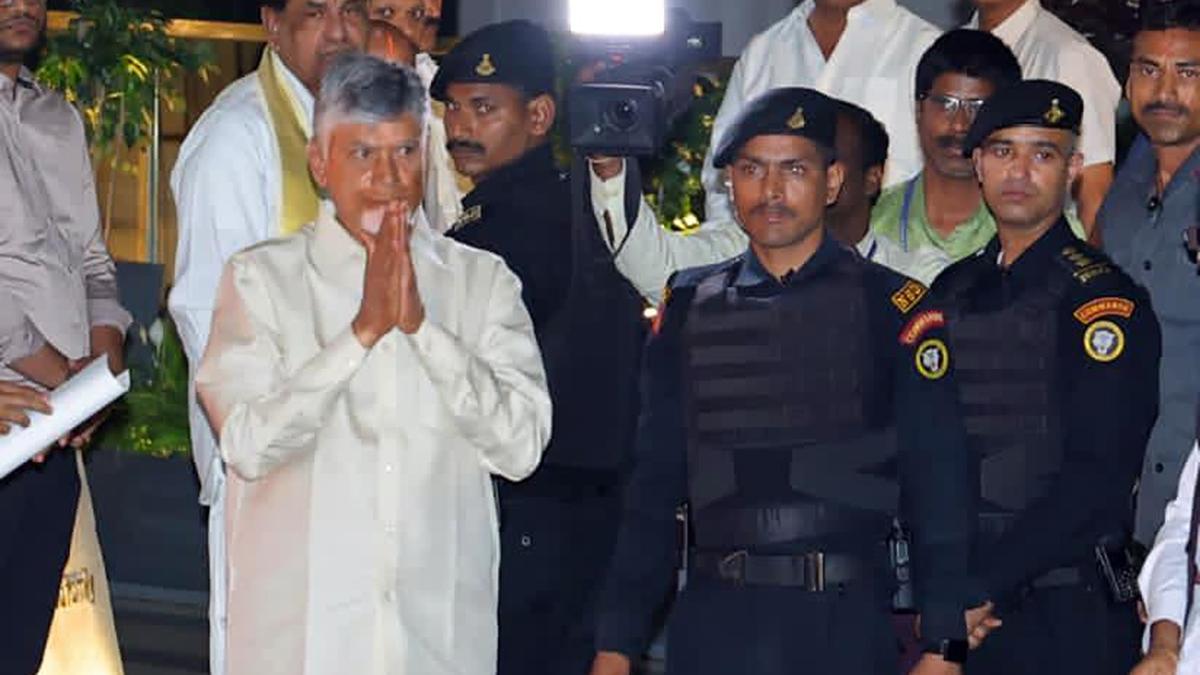
    Chief Minister N. Chandrababu Naidu arrives at Tirumala on March 20 as part of his two day visit to the sacred shrine
    | Photo Credit: Special arrangement

    l​n spite of having the VVIP privilege of Maha Dwara Darsanam, Chief Minister N. Chandrababu chose to have darshan of Lord Venkateswara at Tirumala through the queue complex on Saturday (March 21, 2026), along with his family, on the occasion of his grandson Devaansh’s birthday. 

    As he has done in the past, Mr. Naidu has set aside the protocols and went for darshan along with the devotees through the queue complex, according to an official release, which said the CM has often expressed his indebtedness to the Lord of Seven Hills, his Ilavelpu, for saving him in the bomb blast at Alipiri. 

    He considered surviving the attack as a rebirth and attributed it to the immense faith his family has in the Lord, and hence had darshan along with the common devotees whom he saw as equals before the God. 

    Except for the formal presentation of Pattu Vastrams (silk clothes) during the Brahmotsavams, Mr. Naidu has been visiting the shrine with his family through the regular queue system, which allows him to see for himself the amenities provided to the devotees. 

    On the occasion of Devaansh’s birthday, Mr. Naidu’s family donated ₹44 lakh to Tarigonda Vengamamba Annadanam Trust.

    After Darshan, the family members went all the way from the temple to Matrusri Tarigonda Vengamamba Annaprasada Complex by foot and served meals to the devotees.

    Mr. Naidu and his son and HRD Minister Nara Lokesh personally walked through the aisle to serve food to the devotees seated for breakfast.

    Earlier, Mr. Naidu walked towards the cheering devotees and shook hands with some, keeping the security protocol aside. The devotees also conveyed their birthday wishes to Devaansh.

  • Will G. Sudhakaran throw a spanner in the Left’s electoral prospects?

    Will G. Sudhakaran throw a spanner in the Left’s electoral prospects?

    [ad_1]

    G. Sudhakaran, one of the most formidable CPI(M) faces in Alappuzha, has finally snapped his 63-year-old political ties with the party and stepped into the fray as an Independent from his home turf, Ambalappuzha, a move that is now certain to receive backing from the Congress-led United Democratic Front (UDF). His decision has instantly stirred the waters, raising a larger question: is this a one-off rebellion or the first visible crack in a deeper fault line within the party?

    Much now hinges on whether Mr. Sudhakaran’s enduring grassroots connect can fuse with the UDF’s electoral machinery. If it does, the veteran could turn the contest on its head. A victory here would not just be personal redemption, but a symbolic dent in the Left’s grip over a seat for two decades.

    The 79-year-old leader, a two-time Cabinet Minister and four-time MLA, has shown no signs of retreat. Standing firm, he has framed his exit as a matter of principle rather than politics. He insists that continuing in the CPI(M) was no longer possible in a climate that, according to him, stifles fearless and honest political work. His decision to contest, he says, is rooted in his “stand against corruption” and what he describes as “the growing influence of criminal mafia elements in politics’’.

    When contacted, Mr. Sudhakaran’s response pointed to a sense of personal and political alienation, despite his long proximity to the CPI(M)’s top leadership. His remark that the Chief Minister Pinarayi Vijayan failed to “understand who I am,” even after three decades of close association, underscores what he sees as a breakdown in internal political recognition and trust.

    On ties with Pinarayi

    “Even after I worked as the Chief Minister’s right-hand man, he made certain remarks about me at a press conference. I have always held him in high regard, and I will not speak against him personally,” Mr. Sudhakaran told The Hindu, adding that the present CPI(M) leadership risks drifting into political isolation.

    He alleged that the CPI(M) in Alappuzha had come under the dominance of “political criminals”. By framing his Independent candidature as an effort to uphold “communist values,” Mr. Sudhakaran seeks to position himself within an ideological continuum rather than outside it, while tapping into what he portrays as growing disillusionment among genuine cadres.

    His emphasis on development, alongside a campaign against political criminalisation, corruption, and the targeting of senior leaders within the party, indicates an attempt to recast the electoral contest as both a local development plank and a broader political intervention.

    While murmurs of dissent from second rung leaders have become more frequent in the CPI(M) in recent years, the confrontation between Mr. Sudhakaran and the CPI(M) is unusually large by any standards. The sharp and public war of words between him and the party signals a rupture that runs deeper than personality clashes.

    A costly hesitation?

    Political commentator J. Prabhash cautions that similar episodes could have wider political ramifications. With Assembly elections looming and whispers of anti-incumbency already in the air, Mr. Prabhash warns that internal discords could blunt the CPI(M)’s ability to go on the offensive against the Congress-led UDF.

    “When Mr. Sudhakaran flagged that he was being sidelined, the party’s State leadership had a window to step in and defuse the situation. That moment passed. What we are seeing now is the consequence of that hesitation,” Mr. Prabhash notes.

    He contrasts the current situation with the late Kodiyeri Balakrishnan’s tenure, suggesting that his political management skills might have contained such flare-ups. In Kannur, Palakkad, and Alappuzha, he argues, signs of strain are becoming harder to ignore, pointing to a leadership that is struggling to contain internal contradictions.

    Part of a broader churn

    Political scientist K.M. Seethi, Director, Inter University Centre for Social Science Research and Extension, MG University, reads Mr. Sudhakaran’s move as part of a broader churn in Kerala politics. Senior leaders across parties, he observes, are increasingly unwilling to fade quietly into the background. “There is a visible impatience among veterans who feel edged out,” he says.

    Mr. Seethi says the old centres of control are not as cohesive as before. “Even within the CPI(M), what was once seen as a tightly knit power bloc is beginning to show signs of strain,” he notes, alluding to the ruptures within the so-called ‘Kannur lobby’.

    Yet, he tempers expectations. Mr. Sudhakaran’s stature alone, he argues, may not be enough to swing the electorate decisively. “The CPI(M) will go all out to contain the damage. For Mr. Sudhakaran, the path to victory depends on something larger falling into place, a strong anti-incumbency wave,” he says.

    Published – March 20, 2026 09:09 pm IST

  • ‘Undemocratic’ politics in Great Nicobar over land

    ‘Undemocratic’ politics in Great Nicobar over land

    [ad_1]

    On January 18 this year, a Great Nicobar Island based online news portal, www.nicobartimes.com, published an important news item related to the mega-infrastructure project on the island that has been headline news across the country for many months now. This particular issue has, however, barely been noticed, leave alone creating anything close to even a ripple.

    The report, “DEF-GNI Objects to Low Minimum Circle Rates Fixed for Villages of Campbell Bay Tehsil, Seeks Revision Ahead of Airport Land Acquisition”, highlighted the grievances of the Great Nicobar’s settler (non-tribal) community in the matter of the compensation being awarded for their land that is being acquired for the mega-project under the Right to Fair Compensation and Transparency in Land Acquisition, Rehabilitation and Resettlement (RFCTLARR) Act, 2013. About 300 families of ex-servicemen were settled in Great Nicobar between 1969 and 1975 for which about 40 square kilometres were de-notified from the Tribal Reserve. The descendants of these settlers now form the majority of the population here. “The Dependents and Ex-Servicemen Forum for Equitable Negotiation, Compensation & Entitlements – Great Nicobar Island (DEF-GNI)”, the report noted, “has raised strong objections to the minimum circle rates fixed for villages under Campbell Bay Tehsil, terming them unreasonably low and unjust.”

    Inadequate compensation

    At the heart of the matter is the low rates of compensation, ranging from ₹113 to ₹180 per square metre, they are being offered as against the ₹11,370 – ₹20,500 per square metre offered in the Andaman islands when land is acquired for tourism projects. The forum requested that the rates be fixed in a manner that ensures a minimum compensation of not less than ₹1 crore per acre of agricultural land to affected landowners.

    The matter has also been raised regularly by the lone Member of Parliament (MP) from the Andaman and Nicobar Islands, Bishnu Pada Ray of the Bharatiya Janata Party (BJP). In December, he had written to the Prime Minister and the Home Minister making a number of related points: that the land was being acquired from ex-servicemen settler families who were originally brought here by the government to serve strategic and national security purposes; these families had already faced two major displacements, one during the initial settlement and then again after the 2004 Indian Ocean tsunami; there were major procedural violations in the land acquisition process; there were serious deficiencies in the social impact assessment carried out for this land, and that compensation being offered should be ₹32 lakh per hectare as against ₹9 lakh being offered currently.

    There are two things that stand out: first the claim makers — the MP included — are explicit that they, the settler families, are not opposing the project. Their only request is adherence to due process and ensuring that no family is left without land or livelihood.

    The second is the deep contradiction at the heart of (un)democratic representation and politics here: the settler community and their representatives, while seen seeking fairness and justice over their own land, are also collaborating with the same authorities in alienating land, livelihood and the resources of Great Nicobar’s tribal communities (the Shompen and the Great Nicobarese) to make it available for the same project.

    Alienating tribal lands

    In a process marked by serious substantive and procedural impropriety, nearly 84 sq.km of legally notified tribal reserve is sought to be denotified and handed over to project authorities. Everyone from local agencies such as the Andaman and Nicobar Tribal Welfare Department, to the local settler communities, to national level bodies such as the Union Ministries of Environment and of Tribal Affairs have been complicit.

    Evidence of this can be seen in the near-complete absence of the Shompen in discussions, the pressure being exerted on the Nicobarese to ‘voluntarily’ surrender their lands for the project, the public and vociferous support expressed by settlers and authorities, and the explicit violation of provisions of the Forest Rights Act, in which representatives of the settler community have signed documents freeing up tribal reserve land for the project.

    Pertinent issues being ignored

    No one can deny the right of the settlers to adequate compensation. But what about the original islanders such as the nomadic hunter gatherer Shompen that is notified as a particularly vulnerable tribal group, a PVTG? They may not want compensation because they have no use for the money we offer. What about the Nicobarese who wish to return to their traditional pre-tsunami lands and settlements but are not being provided the means to do so? And what of the impact on lives, livelihoods and cultures of these communities that are completely dependent on the sea and the forests? What also of the pristine forests and unique biodiversity that will be lost forever?

    This situation underlines multiple things at the same time. On the ground it highlights the stark nature of (un)democratic local politics as adjacent communities are forced into competition and conflict over land and resources. At the macro level, it highlights how local communities and rights to resources are only minor pawns in the larger geo-political and development agendas of the state, of its larger political economy, and indeed the rhetoric of national sovereignty and strategic autonomy.

    The contradictions might not be visible to the local settler communities or perhaps they do not have the agency or the choice. The same surely cannot be said for the state, the nation and for society at large. There is much for us to think about and ponder over.

    Pankaj Sekhsaria is the author/editor of seven books on the Andaman and Nicobar Islands, the latest being ‘The Great Nicobar Betrayal’ (Frontline Magazine, 2024) and ‘Island on Edge – The Great Nicobar Crisis’ (2025). The views expressed are personal

    Published – March 21, 2026 12:08 am IST

  • Assembly election LIVE: 116 candidates, including CM, Speaker, LoP file nominations in Assam
 till Friday

    Assembly election LIVE: 116 candidates, including CM, Speaker, LoP file nominations in Assam till Friday

    [ad_1]

    Kerala Assembly Elections 2026: Women leaders raise voices of protest over denial of seat

    Congress leader Shama Mohamed has lashed out at the party leadership for overlooking women in the party’s candidate selection for the upcoming Assembly elections in Kerala.

    In a post on her Facebook page on Friday, a day after the Congress put out its list of candidates, she said that only nine out of the 92 candidates of the party are women.

    “I have been rejected, but not defeated. I request my leader Rahul Gandhi, whom I admire, respect, and adore, to help the Congress women of Kerala. In the Lok Sabha elections of 2024, only one woman was given a ticket out of the 16 persons who contested. If a woman happens to be talented, the situation is dire,” she wrote.

    Read more here

  • Premier League: Harry Maguire sees red as Man United held to 2-2 draw at Bournemouth

    Premier League: Harry Maguire sees red as Man United held to 2-2 draw at Bournemouth

    [ad_1]

    Manchester United’s Harry Maguire is sent off during a Premier League match against AFC Bournemouth, on March 20, 2026
    | Photo Credit: AP

    Manchester United defender Harry Maguire was shown a red card ​for conceding the penalty that led to Bournemouth grabbing ‌a 2-2 Premier League draw at the ​Vitality Stadium on Friday (March 20, 2026), the home ⁠side twice coming from behind to secure a point.

    Maguire, recalled to the England squad earlier in the day, ‌went from hero to villain after forcing Bournemouth’s James Hill into an own goal, ‌only to concede a spot-kick that ended ‌up ⁠costing his side two points.

    Both sides ⁠had chances in the first half but neither could find the back of the net, with United goalkeeper Senne Lammens ​and Djordje Petrovic of ‌Bournemouth pulling off several fine saves.

    With space at a premium early in the second half, Alejandro Jimenez opened the door for United by ‌pulling the shirt of Matheus Cunha to ​concede a penalty , and captain Bruno Fernandes converted to give the visitors the ⁠lead in the 61st minute.

    Ryan Christie equalised six minutes later, however, squeezing a well-placed shot beyond ‌the reach of Lammens.

    Fernandes played his part as United took the lead again, swinging in a corner that glanced off Hill and into his own net under pressure from Maguire at the back post in the 71st minute.

    Seven minutes ‌later Maguire was sent off for an impulsive tug on ​the shirt of Evanilson, and teenaged substitute Junior Kroupi confidently fired home the ⁠spot-kick.

    The visitors had to hang on through more than ⁠10 minutes of stoppage time for a draw that left them third in the ‌table on 55 points, 15 behind leaders Arsenal and six adrift of Manchester City. Bournemouth ​are 10th on 42 points.