Category: Movie Review

  • Sai Kiran and Sai Nivedita impressed with their vocal synergy and a well-chosen repertoire

    Sai Kiran and Sai Nivedita impressed with their vocal synergy and a well-chosen repertoire

    [ad_1]

    <!–[if IE 9]><![endif]–>

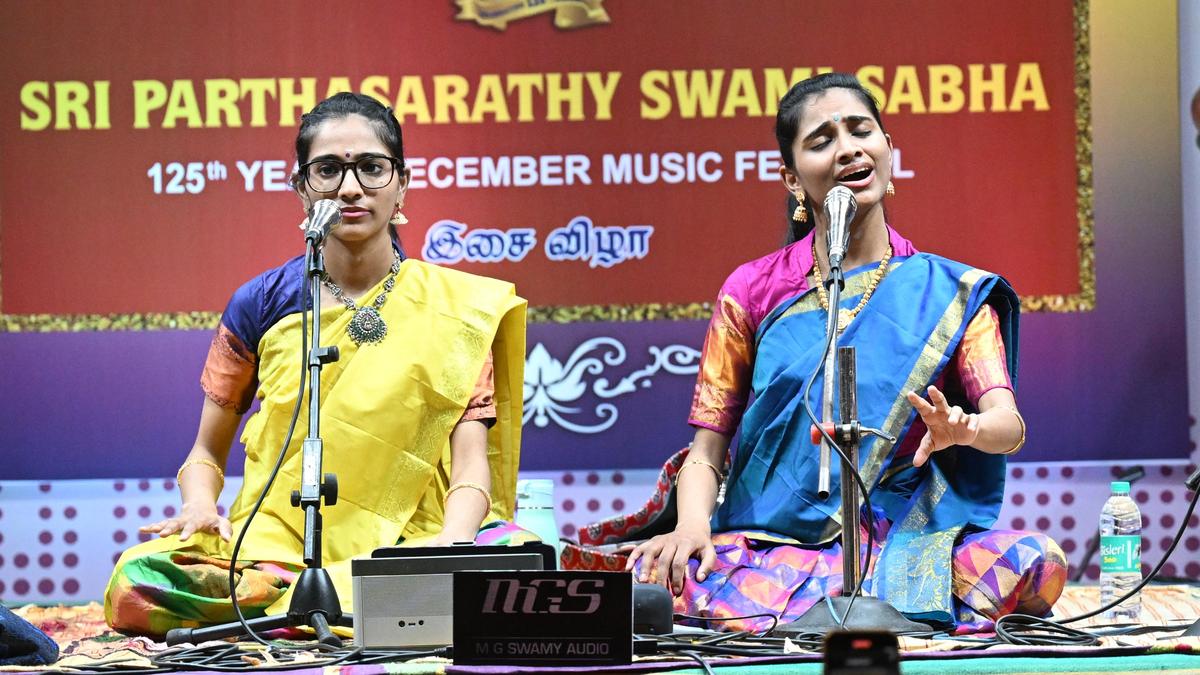
    Sai Kiran and Sai Nivedita (Kiran and Nivi) at the 125th year celebration of Sri Parthasarathy Swami Sabha.
    | Photo Credit: B. JOTHI RAMALINGAM

    Sai Sisters Kiran and Nivi are blessed with a pleasant voice. In their 75-minute concert at Sri Parthasarathy Swami Sabha, they impressed with their choice of kritis and presentation style.

    Eschewing the usual Mohanam or Sri raga varnams, the duo began with the bright Pantuvarali varnam ‘Sami ninne’, a composition by Shatkala Narasayya. This was followed by a brief sketch of Sriranjani, and Tyagaraja’s ‘Brochevarevere’. There was an extended swarakalpana exchange on the pallavi. Open-throated singing is good, but there’s a thin line that separates it from turning loud. It is important the sisters keep this in mind.

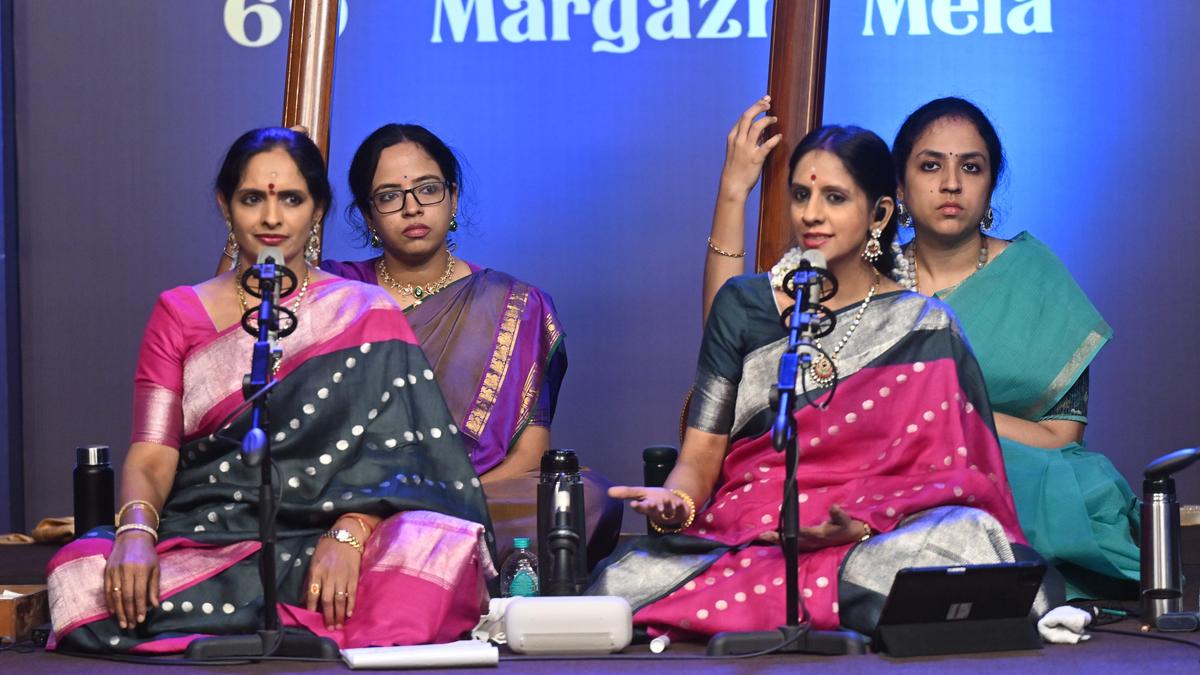
    Sai Sisters – Kiran and Nivi, accompanied by Gayathri Vibhavari on the violin and B.N. Kasinath on mridangam.
    | Photo Credit:
    B. JOTHI RAMALINGAM

    The main piece of the concert was the Kalyani raga kriti ‘Nidhi chala sukhama’, and the raga essay was shared alternatively by Kiran and Nivi. Their flexible voices traversed the octaves with ease. Here too, in the ‘melkalam,’ their voices sometimes sounded shrill. There is no need to touch ‘ati tara sthayi’ for applause. Tyagaraja’s ‘Nidhi chala sukhama’ was rendered well.

    Their smart exchanges in niraval at the charanam and the ensuing swarakalpana carried enough flair. Kiran and Nivi concluded their concert with an abhang.

    The young vocalists were accompanied by Gayathri Vibhavari on the violin and B.N. Kasinath on the mridangam. While Gayathri’s responses during raga essays and swara passages were measured and restrained, Kasinath provided adequate rhythmic support , and presented a brief tani avartanam.

  • ‘Run Away’ series review: Perfect pulp to kick off the New Year

    ‘Run Away’ series review: Perfect pulp to kick off the New Year

    [ad_1]

    <!–[if IE 9]><![endif]–>

    A still from ‘Run Away’
    | Photo Credit: Netflix

    Harlan Coben comes through with yet another twisty thrill-filled adaptation for the New Year. Other than his Myron Bolitar series, Coben has written a series of standalone novels featuring ordinary people caught up in extraordinary circumstances.

    As part of a multimillion dollar deal with Netflix, which has since been renewed, Coben’s novels have been adapted into gripping miniseries. The adaptations have been moved from the novels’ U.S. setting to across the globe, with each country bringing in a unique flavour. While the Polish adaptations have been grim and the Spanish ones gritty, it is the British adaptations that are the most bonkers.

    Run Away (English)

    Director: Nimer Rashed, Isher Sahota

    Cast: James Nesbitt, Ellie de Lange, Ruth Jones, Minnie Driver, Alfred Enoch, Lucian Msamati, Jon Pointing

    Episodes: 8

    Runtime: 41–50 minutes

    Storyline: A father searching for his daughter uncovers a can of worms

    Danny Brocklehurst, who has worked on other Coben novels including The Stranger, The Five, Safe, Stay Close, Fool Me Once and Lazarus, has also adapted Run Away from Coben’s 2019 novel.

    Simon Greene (James Nesbitt) seems to be living the perfect life with his paediatrician wife, Ingrid (Minnie Driver), and their three children, Paige (Ellie de Lange), Sam (Adrian Greensmith) and Anya (Ellie Henry). Simon works with his sister-in-law, Yvonne (Ingrid Oliver), in a wealth management firm.

    The Greenes are a close-knit family until Paige goes to university, where she falls in with the highly undesirable Aaron (Thomas Flynn), gets into drugs and runs away. Desperately searching for Paige, Simon sees her busking at a park and gets into an altercation with Aaron, which turns Simon into a viral sensation for being the suited man beating up a poor person.

    A still from ‘Run Away’
    | Photo Credit:
    Netflix

    When the police in the form of handsome DS Isaac Fagbenle (Alfred Enoch) and DC Ruby Todd (Amy Gledhill) come calling and Aaron ends up dead with his throat cut, Simon, or worse, Paige, seem the obvious suspects.

    In another part of town, there are two personable young people, Ash (Jon Pointing) and Dee Dee (Maeve Courtier-Lilley) killing people from a list. There is also a cop-turned-private-investigator, Elena Ravenscroft (Ruth Jones) searching for a missing boy who might have communicated with Paige and who may also be connected to Ash and Dee Dee’s victims. Elena has her secrets too as she stalks a café owner.

    There is genetics, a smarmy professor, (Sam Swainsbury), a date rape, revenge, adoptions, secret families, and of course a cult ruled by a charismatic fraud. Revelations come thick and fast with everyone hiding secrets — from the investigators to the victims and perpetrators (if there was a family dog, it would have been hiding a secret too!). The cast, including Nesbitt and Driver, look as though they had a blast making the mini-series and carry us along a happy tide of bizarre revelations.  

    After all the end-of-year festivities, Run Away is just what the doctor ordered to ride out the hangover or face the New Year — lies, mystery, murder, and beautiful, well-dressed people in wonderful homes.   

    Run Away is currently streaming on Netflix

  • Sudha Ragunathan presents an imaginative Sankarabharanam alapana

    Sudha Ragunathan presents an imaginative Sankarabharanam alapana

    [ad_1]

    <!–[if IE 9]><![endif]–>

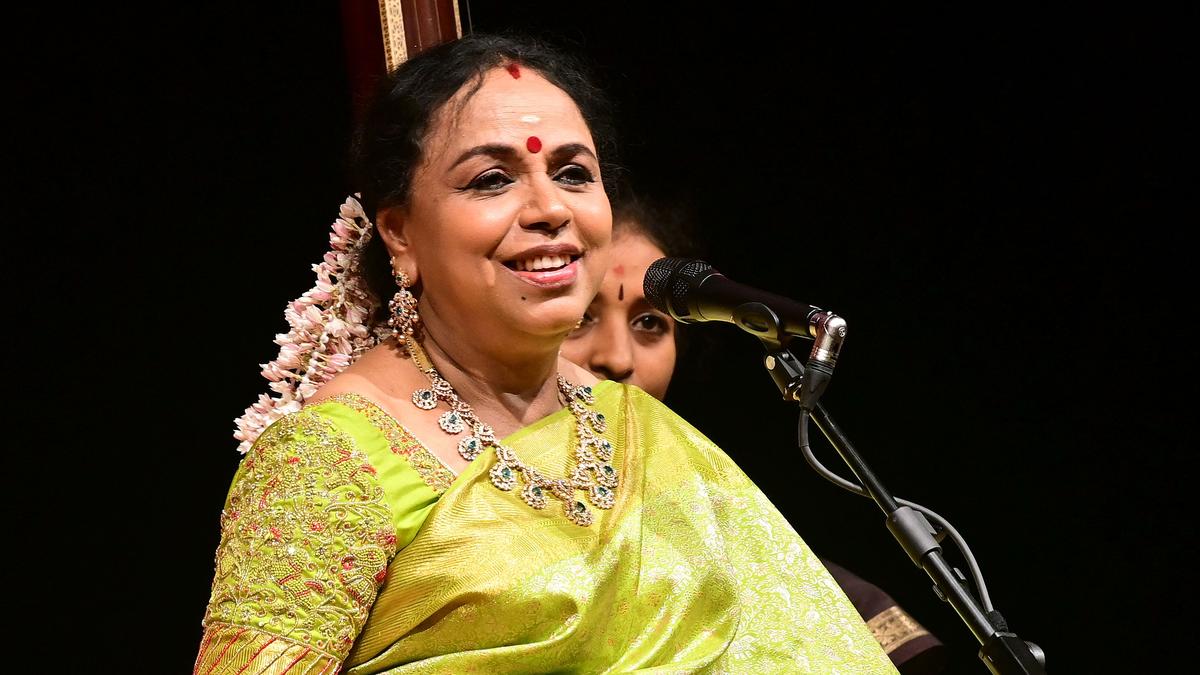
    Sudha Ragunathan.
    | Photo Credit: K. Pichumani

    Known for her resonant voice, intricate brigas and melodious sangatis, Sudha Ragunathan reaffirmed her seasoned stagecraft at The Music Academy. Battling a recalcitrant throat, she nevertheless delivered a thoughtfully-curated concert that offered moments of quiet rapture, even if vocal strain occasionally intruded.

    She began with Muthiah Bhagavatar’s ‘Mathe malayadhwaja’, in Khamas followed by Mysore Vasudevachars ‘Pranamamyaham sri’ in Gowla. Drawing from the G.N. Balasubramaniam lineage, Sudha shaped the latter with characteristic élan, choosing the line ‘Siddhi vinayakam’ for niraval, precisely placed 22-counts from ‘samam’. Tyagaraja’s ‘Talachi nantane’ in Mukhari unfolded with restraint and poise. A measured Saranga essay preceded Muthuswami Dikshitar’s ‘Priye santatam chintayeham’ in Misra Chapu tala, with Embar Kannan’s violin mirroring the vocalist’s controlled approach.

    Sudha Ragunathan accompanied by Embar Kannan (violin), Sumesh Narayanan (mridangam) and S. Krishna (ghatam).
    | Photo Credit:
    K. Pichumani

    A brisk turn came with Papanasam Sivan’s ‘Karpaga manohara’ in Malayamarutam, where Sudha’s signature pauses and emphases — especially on ‘Chirapara kabilasa’ — stood out. In keeping with the Academy’s commemoration of Dikshitar’s 250th birth anniversary, the singer chose ‘Sadashivam upasmahe’ in Sankarabharanam as the main piece. The alapana was imaginative, briefly exploring kalyani through graha bhedam, touching Yamuna Kalyani before returning home. Niraval at ‘Purana purusham purantakam’ and later at ‘Sankarabharanam’ was followed by a neat tani avartanam, where the mridangist Sumesh Narayanan and S. Krishnan on the ghatam kept exchanges crisp, culminating in a tisra nadai kuraippu. The hall’s new acoustics made the mridangam’s earlier high pitch noticeable, though it settled during the main piece.

    After the lively ‘Kuni kuniyo krishna’, Sudha Ragunathan presented an RTP in Devakriya (Suddha Saveri), set to Misra Jhampa, with the sahityam ‘Sridhara murali’. The rhythmic canvas briefly shifted to Khanda Chapu, and melodic forays into Nalinakanti and Sunadavinodhini added colour. Embar Kannan excelled here, his swift phrases marked by clarity. The concert concluded with the Sai bhajan ‘Man ki aankhen’ and Ambujam Krishna’s ‘Kannanidam eduthu solladi kiliye’, delivered in Sudha’s inimitable sense of repose.

    This concert assumed special significance as the vocalist and her accompanists — excluding the ghatam vidwan — represented distinct gurukula lineages of M.L. Vasanthakumari, A. Kanyakumari and Thiruvaarur Bhakthavatsalam, and brought to the stage the cohesion of musicians who have performed together for over several years.

  • Sandeep Narayan exhibits the versatility of his voice

    Sandeep Narayan exhibits the versatility of his voice

    [ad_1]

    <!–[if IE 9]><![endif]–>

    Sandeep Narayanan.
    | Photo Credit: K. Pichumani

    Sandeep Narayan’s concert for The Music Academy had a surfeit of high musical moments. Sandeep’s high-voltage concert with a full arc of emotions enabled by a multi-tonal voice appealed to both the connoisseurs and the lay audience.

    The Khamas kriti by Muthuswami Dikshitar, ‘Santana gopalakrishnam’ gave a bright opening. A Bhairavi kriti, ‘Ethanai kaettalum’ by Oothukkadu Venkatakavi in Misra Chapu followed. This kriti is full of raga bhavana, and Sandeep presented it with remarkable sensitivity, highlighting the nuances well. ‘Vinaradana manavi’ in Devagandhari (Tyagaraja) with swaras was the prelude to the storm that gathered subsequently.

    The Rishabhapriya alapana had a dual pulse — a reflective one in the early part and power-packed non-stop phrases later. However, this meant rationing of time for the rest. H.N. Bhaskar eschewed some of the theatrics in his pleasing raga alapana.

    Sandeep Narayanan with H.B. Bhaskar (violin), Sai Giridhar (mridangam) and Thirupunithura Radhakrishnan (ghatam).
    | Photo Credit:
    K. Pichumani

    ‘Gana naya desika’ is the go-to kriti in this raga and Sandeep’s majestic rendition deserves praise. Swaras followed the kriti that went without the customary niraval.

    Begada was the choice for the RTP. Sandeep and Bhaskar presented an aesthetic, slightly abbreviated version of the raga. Following a routine tanam, Sandeep sang an engaging pallavi set to Tisra Triputa in four kalais that created enormous space for some crafty niraval. ‘Sagari kanakavarshini’ playing on the swaraksharam of ‘sa ga ri’ had both musical salience and rapid-fire moments.

    This ambidexterity is a useful skill in Sandeep’s armoury. But it must be deployed carefully so that sensitivity is not short-changed. Ragamalika swaras were also anchored on ‘sa ga ri’ with Anandabhairavi, Bindumalini and Nalinakanti. These 20 minutes punctuated the overall entertainment.

    Most in the audience would have swayed to the folksy hymn ‘Ninnu vidisi undalenayya’ in Kedaragowla, to which Sandeep did justice.

    Mridangist Sai Giridhar and ghatam artiste Tirupunithura Radhakrishnan were peppy throughout, showing good laya control in the pallavi that oscillated from slow to ultra-fast.

    Sandeep has a nicely tempered voice that can handle both edge-of-the-seat crescendos and bhava-laden phrases. But, in this concert, one felt the former tilted towards the latter. There was only one minor kriti by Tyagaraja in the concert. A few more kritis would have ensured balance.

  • Poise and promise mark Charulatha Chandrasekar’s veena concert

    Poise and promise mark Charulatha Chandrasekar’s veena concert

    [ad_1]

    <!–[if IE 9]><![endif]–>

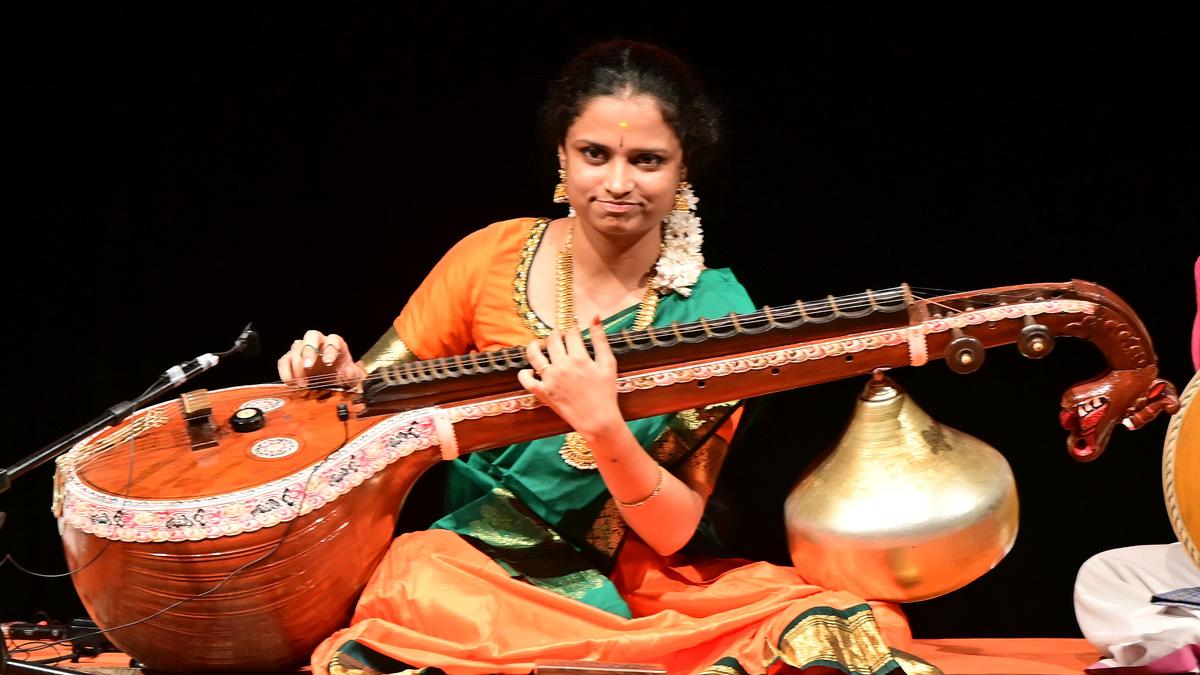
    Charulatha Chandrashekar.
    | Photo Credit: K. Pichumani

    Young Charulatha Chandrasekar’s concert at The Music Academy reaffirmed the promise she has shown over the years. Granddaughter and disciple of veena vidushi and scholar R.S. Jayalakshmi, she has an impressive command over the veena. Charulatha was accompanied by Sarvesh Karthick on the mridangam and Murali Varadharajan on the kanjira.

    Beginning the concert brightly with ‘Sogasuga’ in Sriranjani, Charulatha rendered energetic kalpanaswaras. A raga such as Ahiri depends heavily on voice-based inflection and emotional shading. Vocalists can naturally inflect syllables to evoke the pathos in Syama Sastri’s ‘Mayamma’, but on the veena, the musician must simulate this purely through finger technique, making it harder to sustain the raga’s emotional depth without sounding mechanical. Charulatha retained the raga’s austere, inward mood.

    Charulatha’s Surutti alapana was marked by poise and steadiness, allowing the raga to unfold without haste. In ‘Sri venkata girisham’, the kalpanaswaras were handled with good control. Rather than relying on speed, the swaras reinforced the raga’s contours, lending cohesion to the kriti and maintaining continuity between the improvised and composed sections.

    Charulatha Chandrashekar accompanied by Sarvesh Karthick on the mridangam and Murali Varadharjan on the kanjira.
    | Photo Credit:
    K. Pichumani

    Before proceeding to the central Dikshitar kriti, ‘Nee vadane’ in Saranga was presented at an accelerated speed. Charulatha devoted a substantial portion of the concert to the Bhairavi raga alapana and tanam, showcasing a variety of unique prayogas. Her close engagement with the raga was evident in the fluid quality of her improvisation and allowed it to unfold with ease and imagination. The composition presented was ‘Balagopala’. The niraval and kalpanaswaras were appropriately at ‘Neela neerada’.

    Throughout the concert, Sarvesh Karthick’s crisp rhythmic articulation and responsiveness underscored the swara passages and niraval sections. His intimate understanding of the compositions enriched the overall musical dialogue. Murali Varadharajan complemented him seamlessly, adding tonal nuance and reinforcing rhythmic interplay. The duo worked well with the veena, balancing energy and subtlety, ensuring its melodic flow remained central, while their percussion enhanced the concert’s texture. The recital concluded with a thillana in Maund.

  • Christopher Gurusamy’s Aananda examined the concept of joy

    Christopher Gurusamy’s Aananda examined the concept of joy

    [ad_1]

    <!–[if IE 9]><![endif]–>

    Christopher Gurusamy.
    | Photo Credit: S.R. RAGHUNATHAN

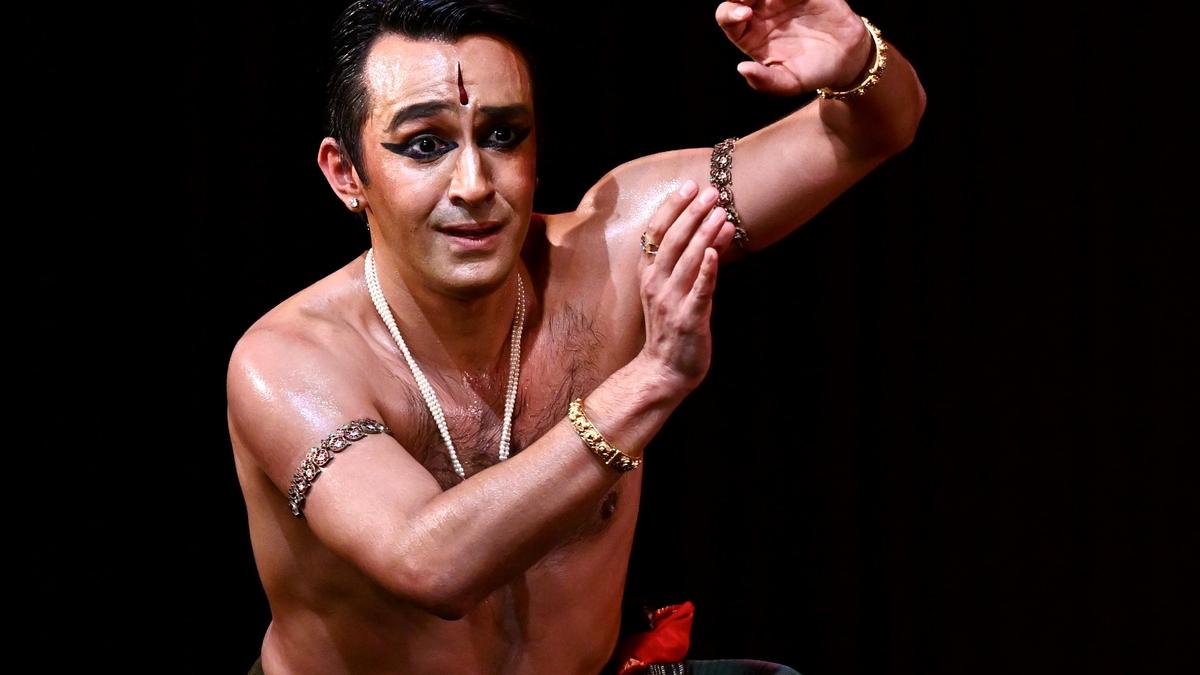
    For Kalavaahini, Christopher Gurusamy presented ‘Aananda’, a solo production that examined joy, not as a fleeting emotion but as a state shaped through sustained engagement with movement, memory and discipline. Rooted in the margam format, while allowing space for personal reflection, the work drew from Hindu philosophy, classical literature, Carnatic music and contemporary thought to propose dance itself as a pathway to joy.

    The opening piece, ‘Vanamai’, from ‘Shuddha Shakti Muzhakkam’ by Sri Shuddhananda Bharathi, functioned as an invocation to the feminine principle as creator and sustainer of the universe. Beginning from a contemplative stillness, the choreography gradually expanded in scale, suggesting the emergence of the three worlds and the compassionate presence of Devi. The energetic musical score was set in Ritigowla and Adi tala, providing rhythmic drive while retaining melodic repose. Christopher’s movement emphasised clean geometry and rhythmic articulation, allowing the philosophical breadth of the text to remain central.

    Christopher’s movement emphasised clean geometry and rhythmic articulation.
    | Photo Credit:
    S.R. RAGHUNATHAN

    The Nattakurinji varnam, ‘Sami naan undhan adimai’, was reimagined as a reflective core of the production. Rather than framing the piece purely within conventional themes of devotion and yearning, Christopher treated it as a dialogue with dance itself. The body was presented as the origin, language and site of transformation, shaped by years of training and introspection. Through customised sanchari passages, the varnam traced an internal journey, connecting an early sense of wonder with a mature understanding of dance as a means of sharing lived experience. However, while the overarching theme was outlined at the outset, the absence of brief contextual explanations for individual pieces — particularly this varnam, conceived as an autobiographical reflection — left some aspects of the personal narrative implicit. A clearer articulation of how each segment related to the central idea of Aananda might have helped bridge the gap between concept and reception.

    A quieter emotional register followed with the padam ‘Ninnu juchi’. Known for its inward focus, the padam was approached with measured restraint, allowing for pauses, glances and minimal transitions to carry expressive weight. Subtle shifts in gaze and posture conveyed longing and hesitation, aligning with its introspective tone.

    Christopher Guruswamy presented ‘Ananda’.
    | Photo Credit:
    S.R. RAGHUNATHAN

    The performance concluded with a thillana in raga Kannada, with lyrics and music by mridangam artiste and composer K. Arunprakash. Spirited in rhythm yet reflective in intent, the thillana carried a message that balanced caution with optimism, urging care for the Earth as the universal mother who sustains all life. As a closing statement, it brought together energy, urgency and responsibility, framing ‘Aananda’ not merely as personal bliss but as a shared ethical awareness. The accompanying artistes were S. Aditya Narayanan on the vocals, Sudarsini Iyer on the nattuvangam, Karthikeyan Ramanathan on the mridangam, Anirudh Athreya on the kanjira and Sayee Rakshith on the violin.

  • Vidya Mandir, Mylapore, plays host to its alumni-musicians

    Vidya Mandir, Mylapore, plays host to its alumni-musicians

    [ad_1]

    <!–[if IE 9]><![endif]–>

    R. SathishKumar performing at the 70th year celebration of Vidya Mandir School in Mylapore.
    | Photo Credit: SRINATH M

    For its 70th year, Vidya Mandir, Mylapore, launched a commendable initiative amidst the Season’s bustle — a short Carnatic concert series featuring its alumni on the school campus. K. Gayatri, Sikkil C. Gurucharan and Veena Venkatramani were among those who performed.

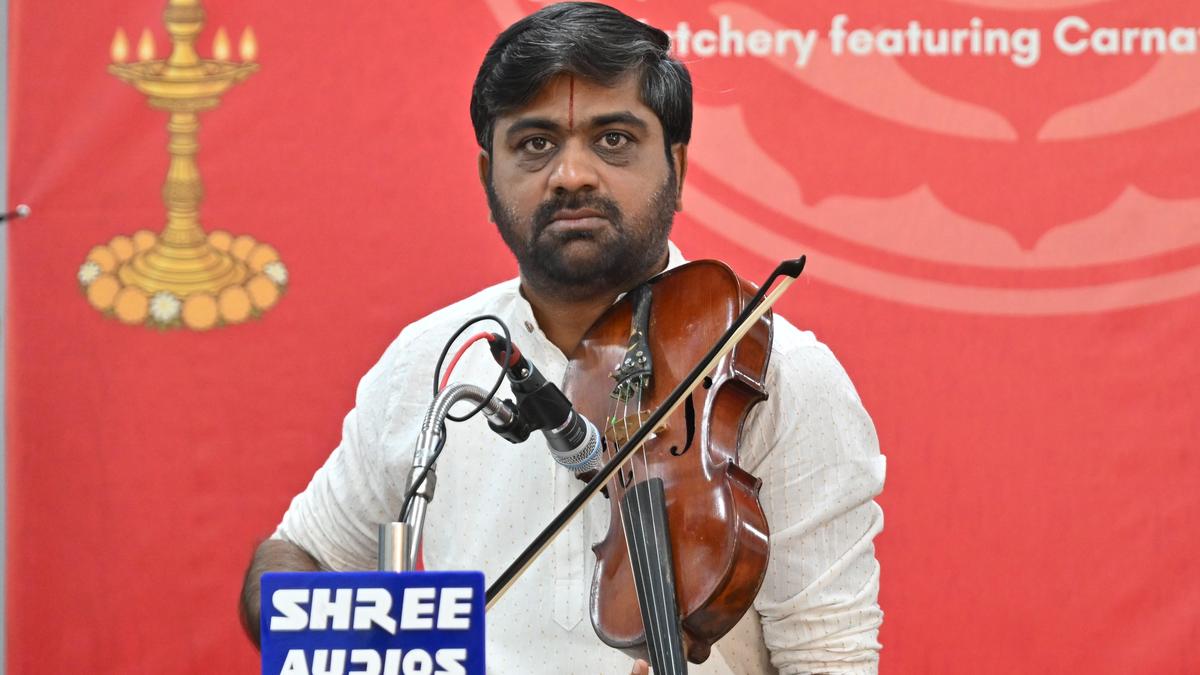
    R. Sathish Kumar’s violin solo recital emerged as a pleasant surprise. Stepping in as a last-minute replacement for Anusha Thyagarajan, he delivered an impressive display that left one wondering why this disciple of maestro M.S. Gopalakrishnan is not a frequent presence on the concert circuit. M.L. Vadiraj (mridangam) and K.R. Sivaramakrishna (kanjira) provided enthusiastic rhythmic support.

    Sathish Kumar was in the groove from the outset. Tyagaraja’s ‘Ninne bhajana’ provided a lively start, where his tonal clarity and nuanced modulation shone, particularly in the swara segment at ‘Sitanatha’ in the charanam. He then embarked on a well-proportioned Saraswati alapana, gradually developing its melodic contours. The influence of his guru’s Parur bani was evident in the brisk phrases as the raga ascended to its crescendo.

    R. SathishKumar accompanied by M.L. Vadiraj (mridangam) and K.R. Sivaramakrishna (kanjira) at the 70th year celebration of Vidya Mandir School in Mylapore.
    | Photo Credit:
    SRINATH M

    G.N. Balasubramaniam’s ‘Saraswati namostute’ in Rupakam came next, and the kalpanaswaras at the pallavi opening were precise and polished.

    The raga essay of Manavati, the fifth Melakarta, was compact. Anchoring his forays around the defining suddha gandharam and embellishing them with deft glides connecting the key notes, Sathish Kumar captured the distinctive hue of this vivadi raga. His presentation of the Tyagaraja kriti ‘Evarito ne telpudu’ was neat.

    Ravichandrika, the main raga, was explored in some detail, with Sathish Kumar bringing out its melodic essence with assurance. The kriti that followed is an instrumentalist’s delight — Tyagaraja’s ‘Niravadhi sukhada’, meaning ‘bestower of boundless joy’ — and the phrase couldn’t be more apt. He explored the song’s scope for instrumental expression to the hilt, with the slight zigzag structure in the raga lending a charming lilt. The swara segment was marked by vibrant synergy, before percussionists Vadiraj and Sivaramakrishna capped the kriti with a short, precise tani in Adi tala.

    A concise Sindhu Bhairavi alapana ushered in a soulful rendition of Purandara Dasa’s ‘Venkatachala nilayam’, the final song of the recital. The absence of a Muthuswami Dikshitar kriti was felt, but it did not take away anything from a concert that reaffirmed Sathish Kumar’s artistry.

  • Ranjani and Gayatri’s concert offers lessons in planning and teamwork

    Ranjani and Gayatri’s concert offers lessons in planning and teamwork

    [ad_1]

    <!–[if IE 9]><![endif]–>

    Ranjani and Gayathri.
    | Photo Credit: M. SRINATH

    Ranjani and Gayatri’s concert for Krishna Gana Sabha had measured tones of artistry and liveliness. Importantly, they also sought to reach out to diverse audiences.

    ‘Ongi ulagalanda’ in Arabhi (Andal pasuram) was a breezy opener that moved into a more reflective mood with a pleasant rendition of Sudha Dhanyasi. Neither the raga nor the kriti, ‘Azhaga azhaga azhaga endru’ (Ambujam Krishna, Khanda Chapu) is usually sung in the opening segment of a concert. The kriti was rendered in a kalapramana that fortified the emotions, especially in the pallavi.

    Muthuswami Dikshitar’s ‘Chetasri balakrishnam’ in Dwijavanti was almost like a lesson, with clear sangathis and lyrical enunciation. The sisters respect the patanthara of kritis, and this was evident throughout the concert.

    The elaborate Kalyani alapana, in two parts, was beautiful (including the Mohana bhedam). Perhaps, a bit of time was lost in excessive detailing. Violinist M. Rajeev developed his alapana astutely. Tyagaraja’s masterpieces in Kalyani are too many to list — ‘Sundari nee’ is a grand composition, and Ranjani and Gayatri’s niraval at ‘Manda gaman neethu’ set in an amazing upper octave formation (S n R, S G R, M G R) by the composer, was one of the highlights. They showed that Manodharma is more natural if it exploits the innate beauty in compositions. The trio’s swara korvais were predictably lapped up by the audience. ‘Kanna tandri naapai’ in Deva manohari was the quick-fire separator of the concert’s two halves.

    Ranjani and Gayathri’s alapana in raga Lalitha was packed with impactful phrases.
    | Photo Credit:
    SRINATH M

    Lalitha is a raga high on emotion, and it has some poignant kritis by Dikshitar and Syama Sastri. The alapana for the RTP, therefore, packed in crisp but impactful phrases, with the occasional Hindustani melancholy.

    ‘Sangita vadya vinodini sada bhajami lalitha’ is a twist from the famous kriti by Dikshitar — ‘Hiranmayeem’. The pallavi set in Khanda Jampai was consumed by the ragamalika and parallel raga singing by Gayatri with Amirthavarshini as the base scale. To sing two or three raga swaras without any transition is a great skill and comes with a lot of practice.

    ‘Kakkai siraginile’ in Brindavana Saranga, appended with Krishna songs in Kannada and Marathi in the same raga, made for a perfect finale. The sisters’ concerts, with never a dull moment, offer lessons in planning and teamwork.

    Mrindangist Manoj Siva revelled in the varied tala and kalapramana fare offered. K.V. Gopalakrishnan on the kanjira was feisty in his accompaniment, playing interesting nadais in the thani.

  • Gambling house Winzir casino online Vip Leaderboard

    On line casino Private room platforms benefit virtual contributors in individual advantages and possesses. Tough feature heightened commitment contributing factor accruement you need to extra bets alternate options. Below as well as improving alienation rules and start accomplish commission formulation. (more…)

  • Sarva vadyam at Tiruvarur: No longer a male bastion

    Sarva vadyam at Tiruvarur: No longer a male bastion

    [ad_1]

    <!–[if IE 9]><![endif]–>

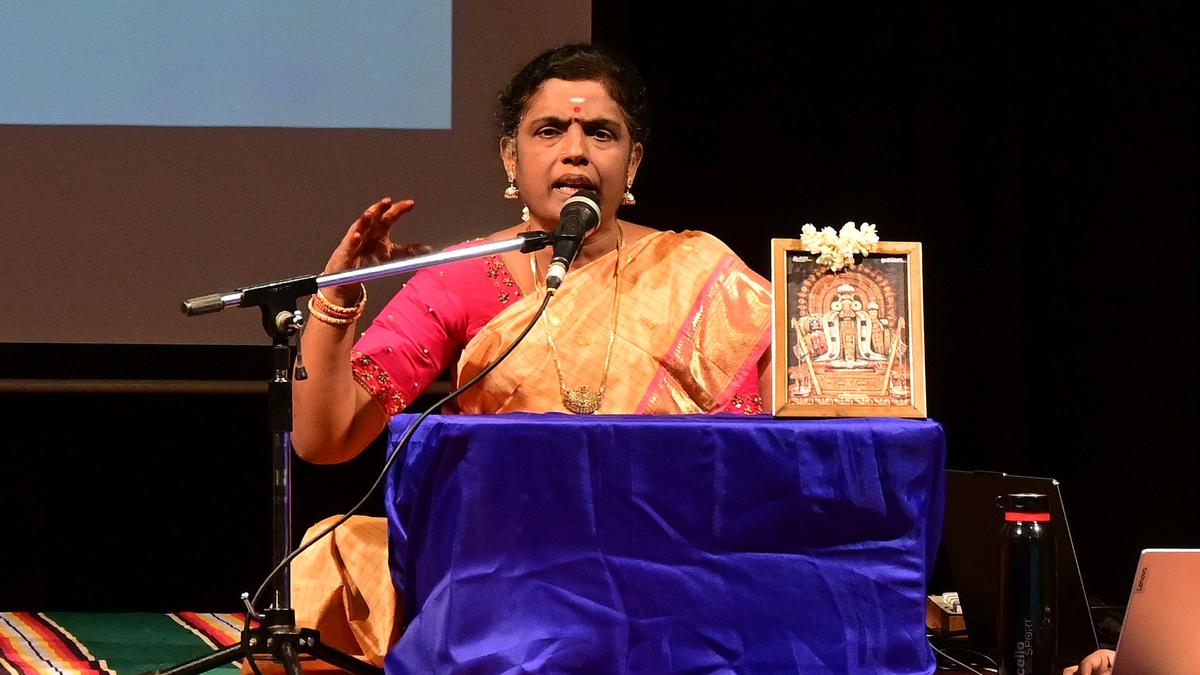
    Sumathy Mathiazhagan presenting her lecture The Sarva Vadyam tradition at the Tiruvarur temple’ at the Music Academy.
    | Photo Credit: K. Pichumani

    Sumathy Mathiazhagan’s lecture in the Music Academy on the sarva vadyam tradition in Thiruvarur, transported the audience to Thiruvarur, evoking images of Thyagaraja’s divine dance and the rituals of the temple. Sumathy said that Parasaivas, the community to which she belongs, have three duties in Thiruvarur- doing puja for Pidari Amman, playing shuddha maddalam and panchamukha vadyam. Her family has the title of Muttukkaarar. Once when the Thyagaraja idol slipped and was about to fall, an ancestor of Sumathy supported the icon with his shoulder, keeping it from falling. He acquired the honorific of muttukaarar (muttu- prop), a title which everyone in the family has had since then.

    Muttukaarars play the kudamuzha, so called because the bottom is shaped like a pot (kudam). The pot is made of a special alloy called mani vengalam. Kudamuzha is also known as panchamukha vadyam. It has five faces, each representing one of the five faces of Siva- Isana, Tatpurusha, Aghora, Vamadeva and Satyojata. Deer skin is used as the drumhead, because it gives a gentle sound. Strident beats will not awaken the kundalini. Kundalini is the dormant energy which lies coiled like a serpent at the base of the spine. To show the connection between kundalini awakening, Siva’s dance and the playing of the panchamukha vadyam, the instrument is placed opposite an image of mooladhara Ganapathi portrayed performing a dance. Beside him is the image of a snake. At Ganapathi’s feet, we find two images, one of which is shown playing talam, while the other is portrayed playing shuddha maddalam. The evening puja is the most important in the Thiruvarur temple, and as mantras are recited, the panchamukha vadyam is played.

    Sumathi Mathiyazhagan.
    | Photo Credit:
    K. Pichumani

    There are nine processions of Thyagaraja, and shuddha maddalam is played for every one of them. Before Thyagaraja is taken on any procession, the idol has to be fixed, to keep it from falling during the ajapa dance. Two silver poles known as pulla thandu are used to secure the idol. There must be utmost concentration when this is being done. So the shuddha maddalam is

    played to awaken the kundalini, which will help the men focus on the task at hand. Once the pulla thandu is in place, Thyagaraja begins his ajapa dance, as he moves. This dance, which has the deity gently swaying from side to side, captures the rhythm of breathing. It is believed that the devas come every evening to get Thyagaraja’s blessings. As guests, they have to be seen off with honours. So after the puja is completed, the shuddha maddalam is played along the prahara till the Vallabha Ganapathi sannidhi is reached, as a farewell to the devas. Shuddha maddalam is played during chandanabhisheka too.

    Sumathy’s great grandfather was Thambiyappa muttukaarar. His grandfather was also called Thambiyappa muttukaarar, and was a disciple of Muthuswami Dikshitar. Once when Thambiyappa was unwell and could not do his daily duty at the temple, Dikshitar composed the kriti ‘Brihaspate’ (raga Atana), and Thambiyappa was miraculously cured.

    While the family tradition of playing shuddha maddalam and panchamukha vadyam continued for generations, there came a time when the family had no male heir, and it seemed as if they would lose their right to play in the temple. However, despite objections from some quarters, Sumathy, who is the headmistress of a school, stepped in. She became the first woman to play shuddha maddalam and panchamukha vadyam in the temple. Her daughter, who studied engineering, decided to follow in her mother’s footsteps. “My grandson Dhruv will also play for Thyagaraja one day,” concluded Sumathy.

    Rama Kausalya, member of the Experts Committee, said that Sumathy’s great-grandfather Thambiyappa was once coaxed by his friends to go on a pilgrimage. Evening fell, when they were about to cross the boundary of Tiruvarur. Thambiyappa was reminded of his evening service, and began to cry. He ran back to the temple, calling out Thyagaraja’s name loudly, and did not stop crying till he reached the temple.

  • ‘The Thing With Feathers’ movie review: Benedict Cumberbatch’s soul-shredding performance powers this horror-fantasy

    ‘The Thing With Feathers’ movie review: Benedict Cumberbatch’s soul-shredding performance powers this horror-fantasy

    [ad_1]

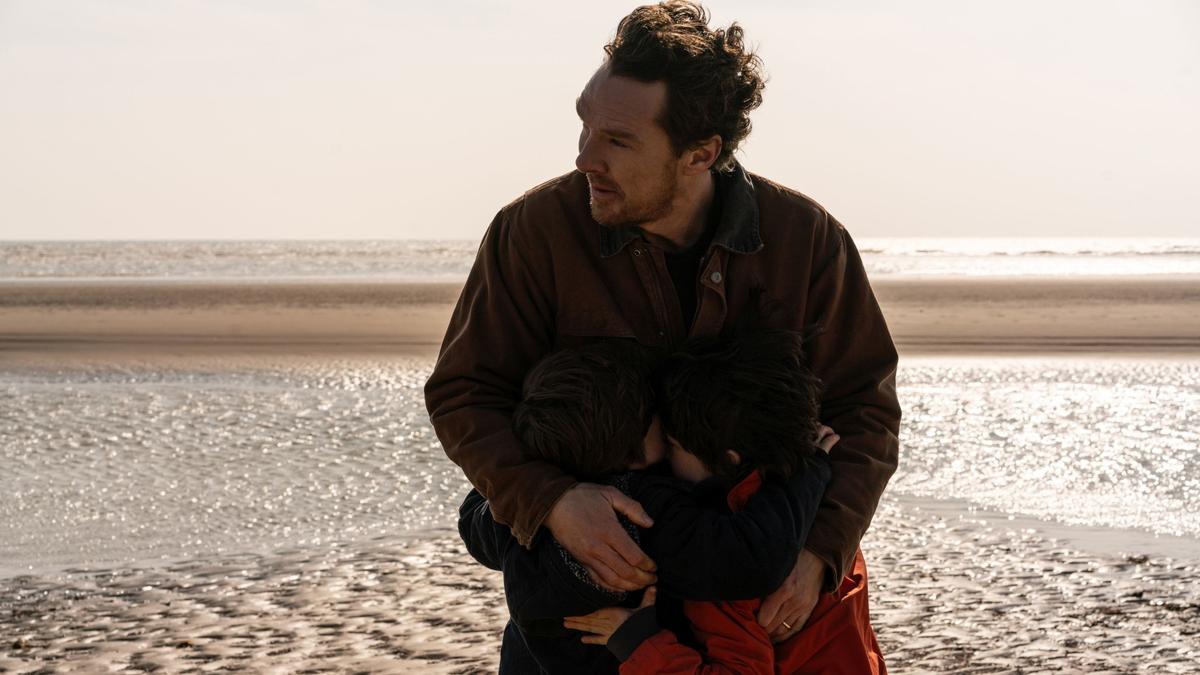
    Grief is an intensely personal emotion, and people have different ways of coping. The Thing With Feathers, adapted from Max Porter’s 2015 debut novella, Grief Is the Thing with Feathers, looks at a widower (Benedict Cumberbatch) dealing with the loss of his wife, while trying to be present for his two young sons (Richard Boxall, Henry Boxall).

    We first meet Dad and the boys as they return from Mum’s (Claire Cartwright) funeral. Dad, a graphic novelist, is obviously shattered. When the boys say they would like to go back to school, he is quite lost about where their things are, and, of course, there is no milk in the fridge for their breakfast cereal.

    The boys begin to act up, with the younger one wetting his bed and the older one being fractious. As Dad works, he sees his creation, a gigantic Crow (Eric Lampaert), come to life. First, he can see Crow from the corner of his eye, and later it is fully realised and, for better or worse, it speaks to Dad.

    Crow speaks to Dad in the supermarket, at home, and even dances with him to a lovely jazz tune. Crow is sometimes sarcastic (“You’re such a cliché, you know? The dead wife trope”, “Grieving widower to aisle nine,” “You sound like a fridge magnet!”) and sometimes scary.

    The Thing With Feathers (English)

    Director: Dylan Southern

    Cast: Benedict Cumberbatch, Richard Boxall, Henry Boxall, Eric Lampaert, Vinette Robinson, Sam Spruell, Leo Bill, Tim Plester, David Thewlis

    Runtime: 104 minutes

    Storyline: A grieving widower caring for his young sons begins to lose his grip on reality with the appearance of an unwelcome visitor

    The boys see Crow, too. The way Crow morphs from an insubstantial shadow to a solid form with bright eyes, a cruel beak and eerily human fingers echoes the stages of grief, from horror to acceptance. The therapist, Dr Bowden (Leo Bill), tells Dad it is time he differentiates between grief and despair.

    Unlike the book, there is no mention of Ted Hughes and his book of poetry, Crow, which Hughes wrote as a way of coping with his poet wife, Sylvia Plath’s death by suicide. The film also speaks of the healing nature of art and literature. Incidentally, the book’s title is a riff on the Emily Dickinson poem, ’Hope’ is the thing with feathers.”

    A still from ‘The Thing With Feathers’
    | Photo Credit:
    Anthony Dickenson / The Thing with Feathers Ltd

    Like the book, The Thing With Feathers is told from different perspectives in the form of chapters — Dad, Crow, Boys and The Demon. Cumberbatch is riveting as Dad, but is so wrecked that one almost wants to look away at this naked display of grief. The boys are excellent too, as is David Thewlis as the voice of Crow, at once cajoling, mothering and a beady-eyed therapist.

    Ben Fordesman’s frames capture a gloomy, rain-splattered London, which is very different from the bright and pretty London of Richard Curtis films, but beautiful nevertheless. For those who feel the Crow is not scary enough, or that the magic realism does not quite work, it must be said that everyone’s journey of grief is personal, which is why the movie might not speak to all. However, if you are willing to give it time and overlook the uneven writing, The Thing with Feathers is a fascinating ride.

    The Thing with Feathers is currently streaming on Lionsgate Play

    Published – January 09, 2026 11:37 am IST

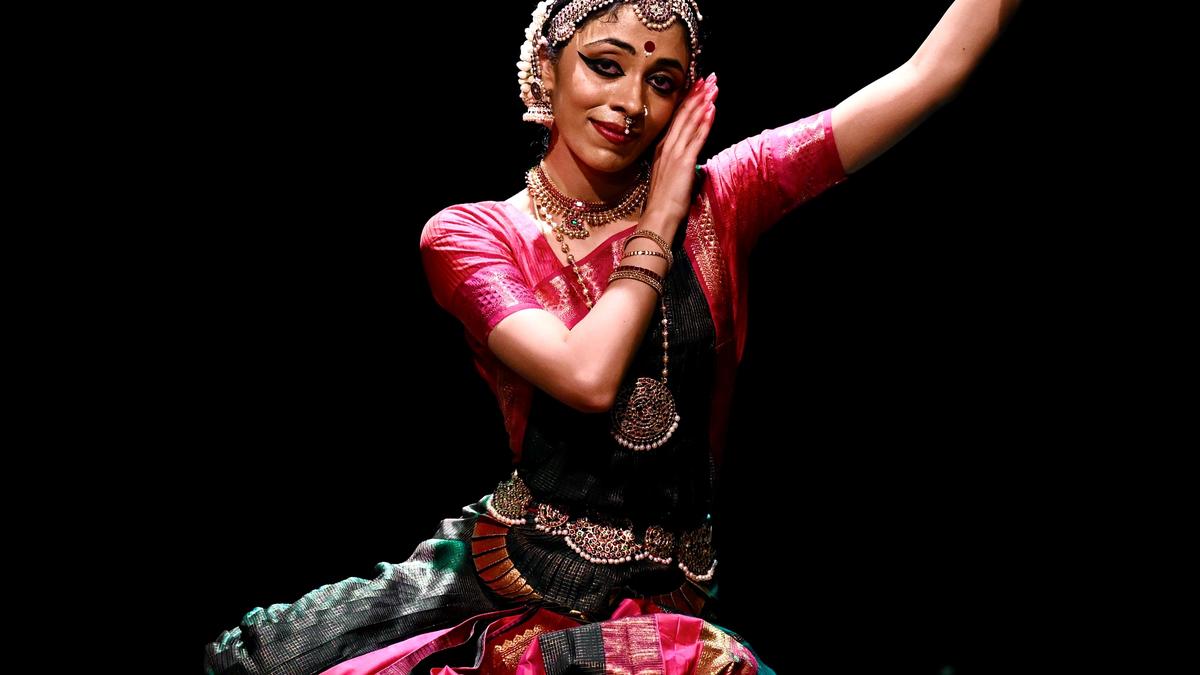
  • Meera Balasubramanian brings a quiet intensity to her movement and expression

    Meera Balasubramanian brings a quiet intensity to her movement and expression

    [ad_1]

    <!–[if IE 9]><![endif]–>

    Meera Balasubramanian impressed with her unhurried sancharis. 
    | Photo Credit: Akhila Easwaran

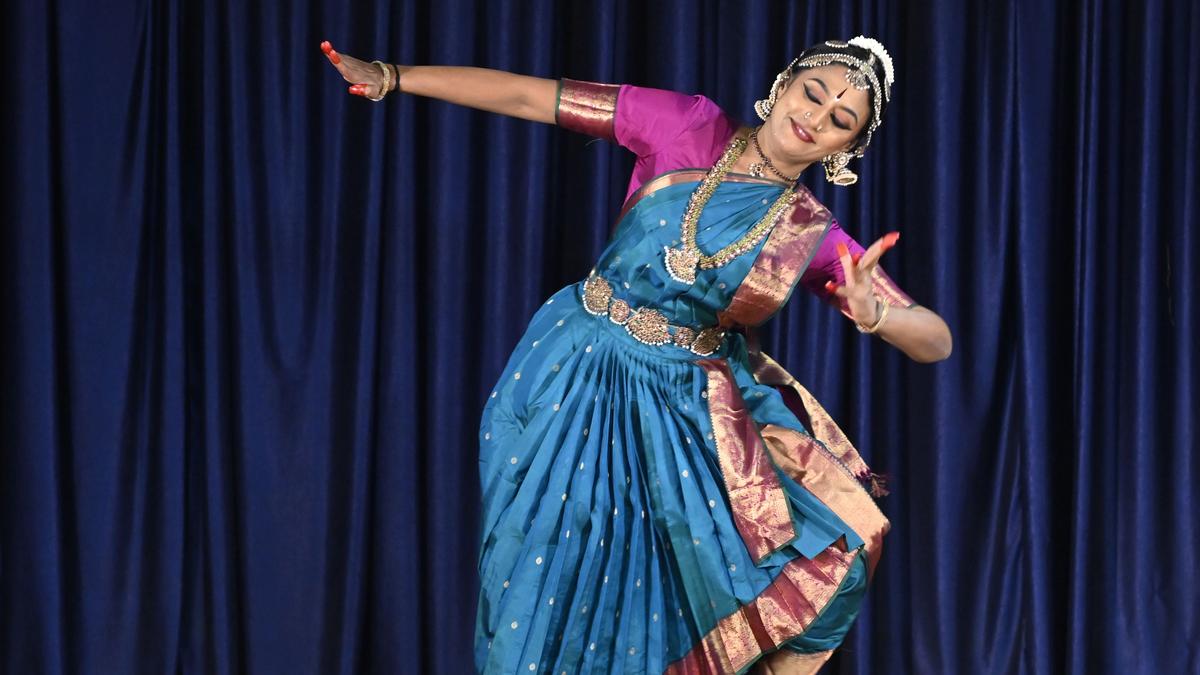
    Meera Balasubramanian’s Bharatanatyam recital, at Brahma Gana Sabha, unfolded as a meditative and emotive journey, where content and individual interpretative choices converged to create a performance marked by quiet intensity rather than overt spectacle. What stood out across the evening was her ability to let movement breathe and allow stillness, pauses and transitions to speak as eloquently as expansive nritta passages.

    The recital opened with an excerpt from ‘Soundarya Lahari’ of Adi Shankaracharya, set to music by Lavanya Balachandran. Rather than presenting the hymn as a literal narrative, Meera approached it as an inward exploration of Shakti. Particularly striking were her glances — measured, layered and purposeful, and mirroring the poet’s evocation of the Goddess’ drishti towards creation, divinity and the devotee.

    The centrepiece of the recital, the varnam ‘Senthil nagar mevum’ in raga Nilambari and Adi tala was composed by Lalgudi G. Jayaraman and choreographed by Vikas Parayalil. Meera impressed with her unhurried sancharis. Her portrayal of Muruga balanced strength and tenderness. The jatis were executed with clarity and poise, but it was her sustained emotional continuity that held attention. The transitions between nritta and abhinaya were seamless.

    Meera Balasubramanian’s transitions between nritta and abhinaya were seamless.
    | Photo Credit:
    Akhila Easwaran

    In the javali ‘Muttavadura’ in raga Saveri and Adi tala, composed by Thanjavur Chinnayya Pillai, Meera shifted gears effectively. Here, her abhinaya was sharp. The nayika’s resentment found expression in tightly controlled gestures, fleeting side glances, and a body language that oscillated between indignation and vulnerability. The line “do not touch me” was not overstated; instead, it emerged through a deliberate withdrawal of space, underscoring emotional distance more than physical rejection.

    The concluding thillana in raga Desh and Adi tala, composed by K.N. Dhandayudapani Pillai and choreographed by Vikas, was marked by buoyancy and rhythmic assurance. Dedicated to Lord Natesha, the lord of dance, the piece sparkled with crisp footwork and clean lines, while retaining an undercurrent of devotion.

    The orchestra contributed significantly to the evening, with Vikas on nattuvangam, Sushanth Parambath on vocals, T.V. Sukanya on the violin and Siva Prasad on the mridangam.

  • Anjana Anand’s performance fused aural and visual harmony

    Anjana Anand’s performance fused aural and visual harmony

    [ad_1]

    <!–[if IE 9]><![endif]–>

    Anjana Anand.
    | Photo Credit: Akhila Easwaran

    A slow, in-rhythm recitation of ‘Ha ra vi ha ra…pu ra vi ha ra.. Ranga pura vihara…’ punched the silence in Narada Gana Sabha as Bharatanatyam dancer Anjana Anand entered with the procession of Ranganatha of Srirangam. High-pitched singing in Brindavana Saranga with ‘Sri rangapura vihara’ (Muthuswami Dikshitar, Rupakam) created an exciting musical base. As the devotional song unfurled with Mithun Madhusoodanan (vocal), Sasidhar (flute) and Easwar Ramakrishnan (violin), the aural and visual harmony was unmissable.

    Mridangist Rakesh Pazhedam enhanced the mood while keeping the beat.

    Anjana Anand performing at Narada Gana Sabha’s 2025 annual festival in December.
    | Photo Credit:
    Akhila Easwaran

    Anjana has matured as an artiste; there is a confident flow in her visualisation. The nritta was, however, disappointing. She is rhythmic, no doubt, but her jathis need sharper execution.

    In T.R. Subramaniam’s Hamir Kalyani, Adi tala varnam, ‘Senthil vaazh murugayya’, vibrant jathis with catchy sollus performed back-to-back in the Kalakshetra style enhanced the melody. Anjana only indicated Subramanya’s leelas without going into the details.

    Anjana’s only mimetic piece was the Kathakali padam, ‘Paripahimam’ (Kurinji) which features the Draupadi-Krishna conversation before Krishna’s efforts at peace. Draupadi walks into Krishna’s chamber, her creased face breaking into a smile of friendship and devotion. Anjana portrayed the piece well, which was the highlight of the programme, with maturity and sensitivity.

    The dancer and the orchestra finished with the ‘Kaalabhairava Ashtakam’.

  • Nirmala Rajasekar’s raga-rich tanam struck a chord with the rasikas

    Nirmala Rajasekar’s raga-rich tanam struck a chord with the rasikas

    [ad_1]

    <!–[if IE 9]><![endif]–>

    Nirmala Rajasekar accompanied by Trivandrum Sampath on the violin, Thanjavur Murugaboopathy on the mridangam and N. Guruprasad on the ghatam.
    | Photo Credit: Special Arrangement

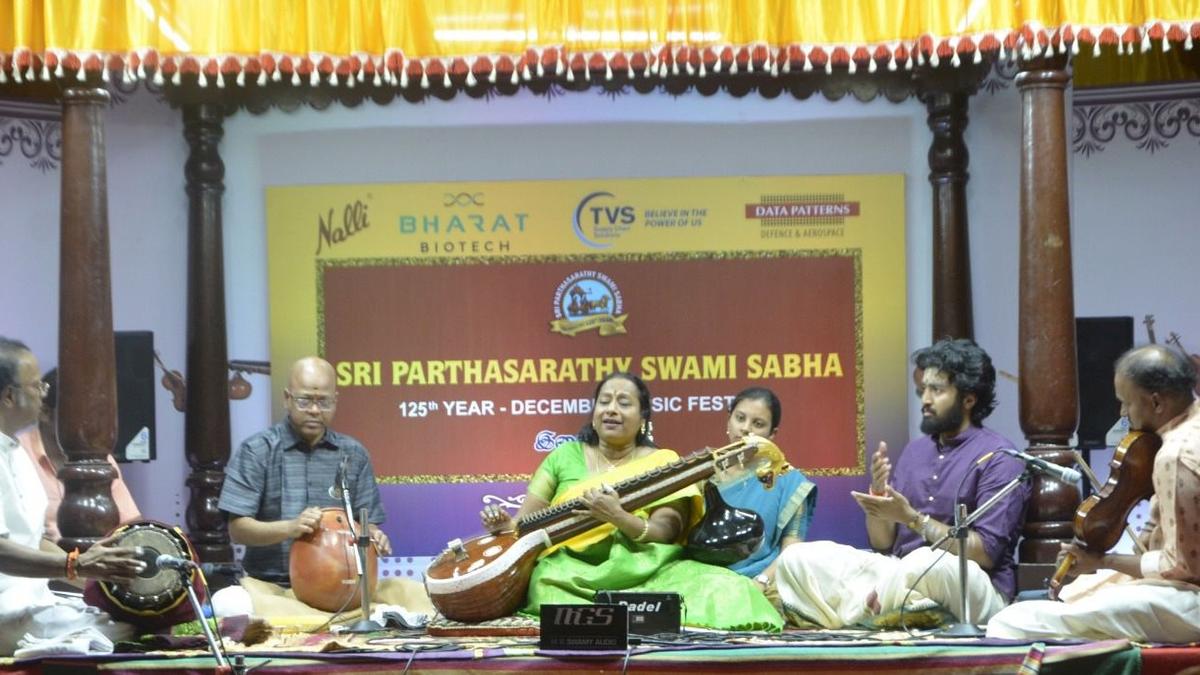
    There was never a dull moment at senior vainika Nirmala Rajasekar’s concert for Sri Parthasarathy Swami Sabha. Performing alongside senior accompanists — Trivandrum Sampath on the violin, Thanjavur Murugaboopathy on the mridangam and N. Guruprasad on the ghatam — Nirmala exuded energy through out the concert.

    She began with the popular Sahana varnam ‘Karunimpa’. and followed it up with Tyagaraja’s ‘Sri ganapati’ in Sowrashtram. Gopalakrishna Bharati’s sombre ‘Vazhi maraiththirukkuthe’ in Nattakurinji brought a bit of languidness. Nirmala picked up tempo with ‘Varanarada narayana’ by Tyagaraja in raga Vijayashri.

    Nirmala rendered Tyagaraja’si ‘Rama nee samanamevaru’ in raga Karaharapriya, in all its grandeur. The swarakalpana at ‘Paluku paluku’, with several rounds of Rishabam-centric swaras sustained the momentum.

    The main piece of the concert was Muthuswami Dikshitar’s ‘Meenakshi memudam’ in Purvikalyani, which was rendered in an elaborate manner with the mandatory pauses. The tanam seamlessly segued into the kriti. Nirmala’s playing stood out for its rich and intricate swara passages.

    In an engaging interaction, Nirmala invited the audience to suggest ragas for inclusion in the Purvikalyani tanam. Ten ragas were suggested, out of which she played five, including Dhanyasi, Kedaragowla and Hamir Kalyani with brief essays.

    Murugaboopathy and Guruprasad showcased their rhythmic prowess and maturity in their well-crafted tani avartanam.

    Nirmala concluded her recital with ‘Jayathi jayathi bharatamatha’, composed by Mayuram Viswanatha Sastri in raga Khamas.

  • How Divya Hoskere visualised Sita as Nature’s force

    How Divya Hoskere visualised Sita as Nature’s force

    [ad_1]

    <!–[if IE 9]><![endif]–>

    Divya Hoskere.
    | Photo Credit: RAGHUNATHAN SR

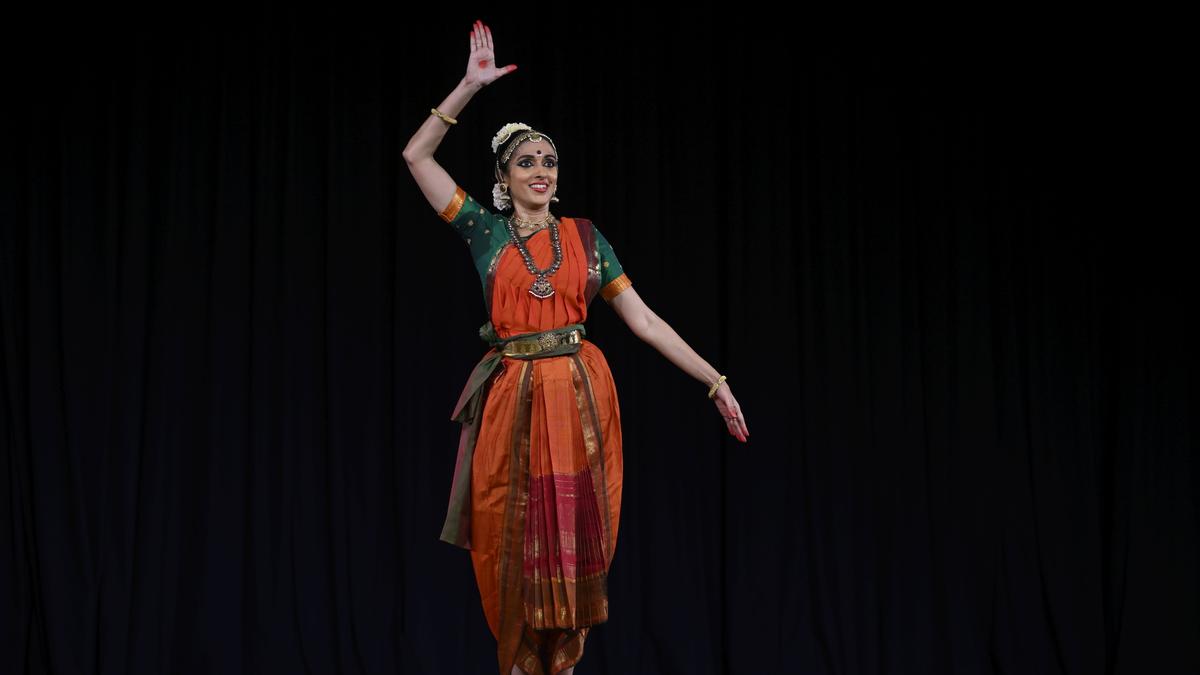
    ‘Vanavaasini’, presented by Divya Hoskere, a student of Praveen Kumar, at Kalavaahini’s Dance for Dance festival, was a thoughtfully imagined exploration of Sita as both woman and elemental presence, rooted in the Valmiki Ramayana, yet filtered through poetic introspection.

    The evening opened with an evocative invocation that set the conceptual tone. Sita was imagined as a spark of lightning, with Rama as the dark, rain-bearing cloud, inseparable forces whose union soothes the scorched earth. Lakshmana appears as the gentle breeze, completing a delicate natural triad. Divya’s choice to frame the epic’s protagonists through elemental metaphors immediately foregrounded the production’s central idea: Sita as Vanavaasini, one who belongs to the forest as much as to the narrative.

    Divya Hoskere’s training was evident in the precision and rhythmic integrity of her adavus, executed with a good sense of timing .
    | Photo Credit:
    RAGHUNATHAN SR

    One of the most effectively conveyed moments was the depiction of Sita’s radiance drawing the forest towards her.

    The episode of Rama, Sita and Lakshmana arriving at the hermitage of Atri and Asnasuya was handled with restraint and warmth. Atri’s austere tapas, Anasuya’s welcoming embrace, and the land nourished by their spiritual discipline were portrayed with clarity.

    Divya’s training was evident in the precision and rhythmic integrity of her adavus, executed with a good sense of timing. While her movement retained lightness and buoyancy, it was consistently anchored by a deeply grounded body awareness, giving stability to even expansive passages across the stage.

    Divya Hoskere’s portrayal of the Abhisaarika Naayika was confident and graceful
    | Photo Credit:
    RAGHUNATHAN SR

    The dialogue between Sita and Anasuya formed the emotional core of the work. Anasuya’s reflections on companionship and fulfillment in marriage were rendered without sermonising, allowing Sita’s curiosity as a newlywed to surface organically. The gifting of flowers and ornaments became symbols of enduring wisdom rather than ritualistic exchange. Sita’s recollection of her swayamvara and reliving the moment Rama held her hand unfolded like poetry. Divya succeeded in capturing Sita’s emotions with sensitivity, relying on nuanced abhinaya rather than overt gestures.

    In the end, as Sita steps out of the ashrama in search of Rama, Nature once again comes alive. Divya’s portrayal of the Abhisaarika Naayika was confident and graceful. The music track used in the production aided her efforts.

    Divya Hoskere captured Sita’s emotions with sensitivity, relying on nuanced abhinaya rather than overt gestures.
    | Photo Credit:
    RAGHUNATHAN SR

  • ‘The Raja Saab’ movie review: A bizarre spectacle where the joke never lands

    ‘The Raja Saab’ movie review: A bizarre spectacle where the joke never lands

    [ad_1]

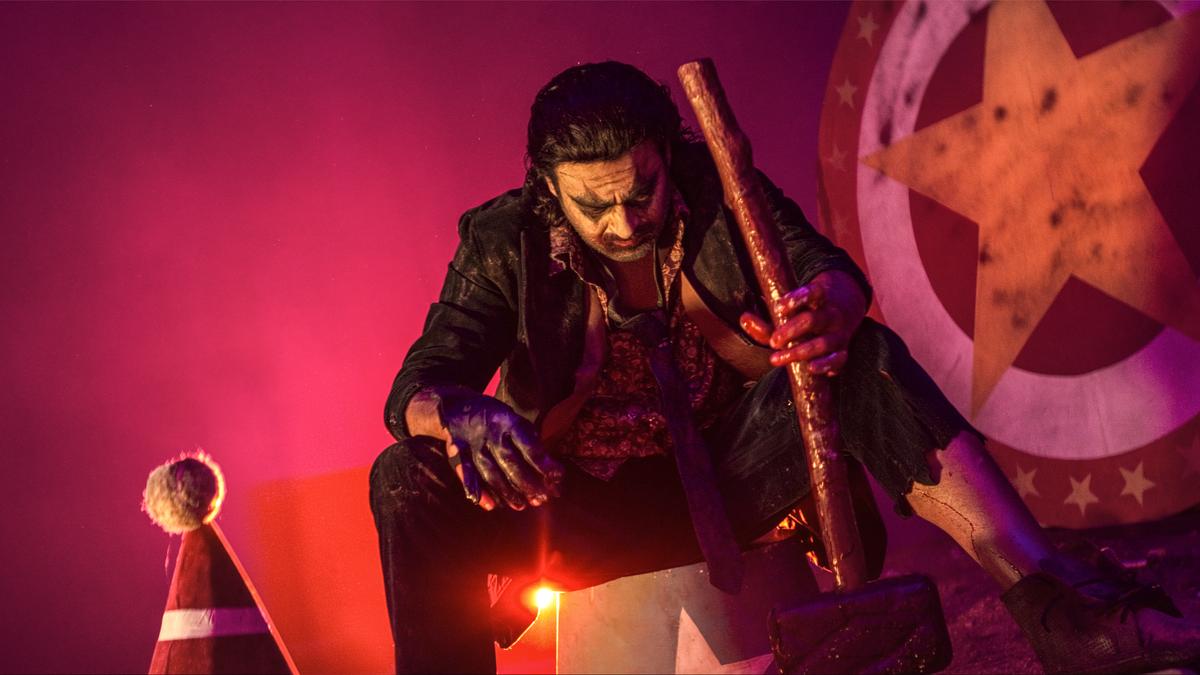
    Early on in The Raja Saab, a health scare prompts Prabhas to ask comedian Mahesh Achanta to fetch an odd assortment of items, from footwear to cigarettes. When Mahesh asks if he is serious, Prabhas snaps back with: do the needful — call an ambulance. The exchange is meant to be funny, but it lands flat, setting the tone for what follows.

    Written and directed by Maruthi, The Raja Saab aims to rewind Telugu cinema to a pre-Baahubali Prabhas — when he thrived in light-hearted roles with space for romance and comedy, à la Darling or Mr Perfect. The actor appears willing to embrace this blend of horror, comedy, fantasy and romance. Yet the film collapses into a baffling hotchpotch that squanders a promising premise. At 189 minutes, it becomes an endurance test, where the occasional spark of fun is smothered by a dull, meandering narrative.

    The Raja Saab (Telugu)

    Director: Maruthi

    Cast: Prabhas, Sanjay Dutt, Boman Irani, Malavika Mohanan, Nidhhi Agerwal, Riddhi Kumar and Zarina Wahab.

    Runtime: 189 minutes

    Storyline: A grandson locks horns with an evil force to save his ailing grandmother.

    It is difficult to look past the air of artifice that hangs over the film from the outset. The story opens with glimpses into the lives of Raju (Prabhas) and his grandmother (Zarina Wahab), who is gradually losing her bearings to Alzheimer’s. Yet even these simple, everyday moments lack conviction, because the world they inhabit never feels real. The house and the neighbourhood resemble a constructed film set rather than spaces that have been lived in.

    The makers may have chosen sets over real locations, given the presence of an A-list star and the logistical challenges of crowd control. Fair enough. But cinema has repeatedly shown that even constructed spaces can feel lived-in and convincing enough to draw viewers into the story and its characters. Here, the make-believe world remains flimsy until the narrative shifts to a dilapidated, supposedly haunted house deep in the jungle.

    A significant portion of the drama unfolds within this abandoned mansion. The production design by Rajeevan Nambiar — filled with statues, props and hypnotic spiral motifs that echo the story’s mind games — does create the requisite visual mood. On paper, it should work.

    When Prabhas, joined by Malavika Mohanan, VTV Ganesh, Satya, Nidhhi Agerwal, Saptagiri and later Riddhi Kumar, finds himself trapped in this horror house with no obvious way out, one expects the fear to be palpable. Instead, barring an occasional jump scare and a stunt involving a VFX-generated crocodile, the tension never materialises. None of the characters appear genuinely frightened; they behave as though they are on a spirited adventure weekend. There is even a throwaway explanation involving a magic wardrobe to justify the leading women’s immaculate styling, alongside casual chatter about sunscreen and moisturisers. Haunted house, did anyone say?

    At its core, The Raja Saab hinges on a backstory from the younger years of the character played by Zarina Wahab. A glimpse of what Sanjay Dutt’s character is up to in this chapter carries the makings of genuinely unsettling horror. Yet the writing fails to mine this potential, offering neither sustained creepiness nor an emotionally engaging drama.

    Zarina Wahab is stoic and effortlessly regal as a woman who has been deeply wronged. Had her relationship with Prabhas been etched with greater care, some of the film’s aimless stretches might have been forgivable. Boman Irani appears briefly, nudging the narrative towards an intriguing strand of psychological mind games, but even this detour is not enough to rescue the film.

    Prabhas makes an earnest effort and seems to relish playing a lighter, more playful character, though inconsistent looks and uneven dialogue delivery in places prove distracting. As for the three leading women, they are saddled with flimsy characterisations that barely merit comment.

    The overlong climax — stretching beyond 30 minutes — stages an interesting clash of forces, fought largely as a battle of wits. By then, however, it is far too late to redeem a film that feels lazily written and executed. Several scenes appear to have been shot against green screens and heavily propped up by visual effects, further distancing the viewer emotionally.

    In The Raja Saab, characters find themselves trapped in a haunted house with no easy escape. Ironically, watching the film in a theatre can feel much the same. When the final moments tease a sequel — The Raja Saab: Circus — it lands less as a promise and more as a threat. As the first of five Sankranti 2026 releases, the film arrives during a season when audiences are usually indulgent, provided there is some fun to be had. Unfortunately, this one is simply a slog.

    Published – January 09, 2026 02:54 pm IST

  • ‘Freedom at Midnight’ Season 2 series review: Nikkhil Advani hits the sweet spot between text and context

    ‘Freedom at Midnight’ Season 2 series review: Nikkhil Advani hits the sweet spot between text and context

    [ad_1]

    History lovers often crave the human drama behind epochal events. They pine for the backroom intrigue, the clash of egos, the creases in the starched characters that decorate our history books, not to forget the impact of their moral stand on the man on the street. These days, ancient and medieval history offers plenty of elbow room to play with the past, but when it comes to modern Indian history, filmmakers tend to draw back, as the wounds are still fresh and memories of Partition linger.

    Riding on the gripping, novelistic reconstruction of the end of the British Raj by Dominique Lapierre and Larry Collins, director Nikkhil Advani takes us to the communal origins of the Radcliffe Line and charms with a dynamic interplay of religion and politics and a fading light of morality in between.

    A still from the show
    | Photo Credit:
    Sony LIV

    Compared with the first season, the gaze is sharper and more intense as Advani treads the fine line between objective and subjective history. If the first season was told through Viceroy Mountbatten, this one depicts the period when he is the Governor General of India, and hence not privy to political intrigue brewing in the corridors of power in India and Pakistan. The series doesn’t always follow the voice of the source material, but for a large part, Advani’s balanced approach lets viewers judge the events and feel for the men who fought for freedom but bickered over political control. Avoiding propaganda and preaching while remaining patriotic, his team of writers keep it pacy, profound, and poignant, and even find space for some wry humour.

    Freedom At Midnight Season 2 (Hindi)

    Director: Nikkhil Advani

    Episodes: 7

    Cast: Chirag Vohra, Sidhant Gupta, Rajendra Chawla, Arif Zakaria, Luke McGibney

    Synopsis: Season 2 of the show delves into the chaotic aftermath of Partition, including communal violence, the refugee crisis, the integration of princely states, and political tensions among leaders.

    The second season focuses on the chaotic lead-up to and immediate aftermath of Partition. It explores the complex process of drawing new borders, the sudden announcement of the Partition date, the division of assets, the human toll of mass migration and communal violence, and, of course, the political manoeuvring. Between the events, it pauses to reflect on the division of friendships and loyalties, notes Radcliffe’s moral dilemma, and documents the crucial diplomatic role Mountbatten played in convincing kings and princes, or, for that matter, the workforce behind the icons: V.P. Menon, H.V.R. Iyengar, and Pyarelal. 

    A still from the show
    | Photo Credit:
    Sony LIV

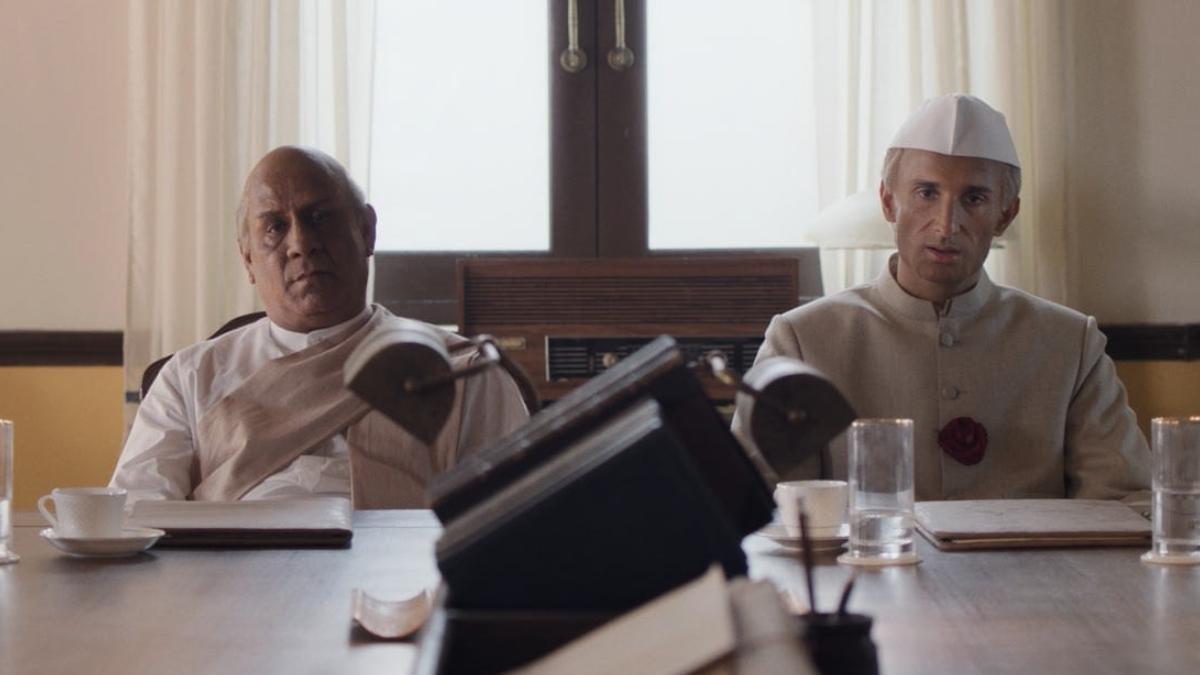
    The show deftly portrays the complex relationship between Patel and Nehru, marked by deep mutual respect and camaraderie alongside significant differences in approach and ideology, that shaped the new India. At the same time, it also captures the lesser-discussed bond between Jinnah and Liaquat Ali Khan. The latter, however, is reduced to almost a caricature towards the end. Shaped by ego, intellect, and insecurity, Jinnah emerges as a tangible bundle of contradictions when, in his opening speech, he speaks of a tolerant Pakistan, shocking even his trusted aides. On the other hand, Gandhi steadfastly holds on to his principles of non-violence and peace till his last breath, making you wonder, like Einstein predicted, whether ‘such a one as this ever in flesh and blood walked upon this earth.’

    Without making it patently evident, the series provides a context to some of the major conflicts of the period that we either forget or try to push under the carpet. For instance, the story of Kashmir’s accession can’t be fully understood without telling the story of Junagarh’s merger with India. Advani conveys the crux of the conflict—the question of the plebiscite, the vacillation of Maharaja Hari Singh, and the support of Nehru’s friend Sheikh Abdullah—without ruffling feathers. The accession of the princely states is the most entertaining chapter of the series. 

    However, as in the first season, Advani avoids discussing the roles of the Rashtriya Swayamsevak Sangh and the Hindu Mahasabha in the run-up to Partition. Nehru spars with Patel for not silencing the voices against Gandhi’s efforts for communal harmony amidst the Hindu fold, but Advani glosses over the pages of source material when it comes to giving a face to the alleged conspirators behind the assassination.

    He masterfully captures the grudge that Jinnah holds against Gandhi but steers clear of Vinayak Savarkar’s vehement opposition to Gandhi and his ideals. The series neither identifies Gandhi’s assassin nor delves into his ideological moorings. However, it does provide screen time to Madanlal Pahwa, the refugee from Punjab who threw a bomb at Gandhi’s prayer meeting ten days before he was assassinated by Nathuram Godse. Again, there is a context, as the personal pain of Pahwa is weaponised by a section of ‘nationalists’ when Gandhi urged the Indian government to release the remaining portion of Pakistan’s agreed share of undivided India’s cash balances, even as Pakistan supported tribal raiders invading Kashmir.

    A still from the show
    | Photo Credit:
    Sony LIV

    The production design grounds the story in its era, and the cast serves the script. English characters are often reduced to caricature, but Luke McGibney as Lord Mountbatten brings depth and sophistication to the political drama. Chirag Vohra authentically embodies Gandhi’s essence and the moral weight he carried in his lean figure. However, Sidhant Gupta’s Nehru lacks the firm charisma expected, and his performance remains a work in progress. Although Gupta’s efforts are evident, they do not fully resonate—especially compared to Rajendra Chawla and Arif Zakaria, who portray Patel and Jinnah with remarkable skill. Overall, Freedom at Midnight is a compelling watch for its narrative ambition and nuanced treatment of history.

    Freedom at Midnight, Season 2 is currently streaming on SonyLIV.
    Published – January 09, 2026 04:18 pm IST

  • Ramakrishnan Murthy brings training and technique in equal measure to his concerts

    Ramakrishnan Murthy brings training and technique in equal measure to his concerts

    [ad_1]

    <!–[if IE 9]><![endif]–>

    Ramakrishnan Murthy offered a well-curated concert.
    | Photo Credit: B. JOTHI RAMALINGAM

    Ramakrishnan Murthy’s concert featured a palette of ragas, talas, composers, tempos and, most importantly, a fine balance between Kalpita and Kalpana Sangitha.

    ‘Amba kamakshi’ (Yadukula Kamboji, Syama Sastri, Misra Chapu) provided a good anchor to the mood Ramakrishnan may have sought to create. Being the opener, it was at a briskier pace than usual.

    Ramakrishnan Murthy’s concert showcased diverse ragas, composers and tempos.
    | Photo Credit:
    B. JOTHI RAMALINGAM

    The Nayaki kriti, ‘Nee bhajana’ by Tyagaraja, with crisp swaras in second speed, had a vintage stride — a brisk Tyagaraja kriti in the early phase used to be the unwritten norm. ‘Paarka paarka’ by Gopalakrishna Bharati in Harikamboji is a rare composition that Ramakrishnan inserted for language and composer variety. ‘Ninnu juchi’ in Sowrashtram (Patnam Subramania Iyer) had a short teasing alapana and peppy swaras.

    The concert yielded to a more pensive line with a Dhanyasi raga alapana. Oscillations in Ni and Ga were deployed tellingly for poignancy. As always, violinist Vittal Rangan added depth to the melody. ‘Ni chittamu nischalamu’ by Tyagaraja in Misra Chapu is the composer’s version of a vilambakala kriti, and Ramakrishnan fully exploited the lilting course. Mridangist N.C. Bharadwaj aligned admirably to the lyrical spacings. Niraval at ‘Gurude bathrudu’ had a pleasing appeal. ‘Appan avadaritha’ by Papanasam Sivan in Karaharapriya was deployed as a tempo break.

    Mohana raga had elegant passages in the middle octave with flute-style soft phrases, and Vittal Rangan’s response was equally sensitive. ‘Mohana Rama’ by Tyagaraja in Adi is a majestic kriti with a flourish of melodious sangathis in the pallavi and anupallavi.

    Ramakrishnan Murthy accompanied by Vittal Rangan (violin) and N.C. Bharadwaj (mridangam).
    | Photo Credit:
    B. JOTHI RAMALINGAM

    Ramakrishnan’s swaras were tasteful and there was an interesting duel between the vocalist and the violinist in kuraippu. There was no niraval, perhaps, due to the long alapana and the gait of the kriti itself. Papanasam Sivan’s ‘Kaa vaa vaa’ in Varali made a surprise entry at the fag end, and even more surprising was the short niraval at ‘Sri padmanabhan maruga’ that seemed spontaneous.

    The Behag virutham of the shloka, ‘Shanthakaram bhujagasayanam’ was followed by ‘Saramaina mata’ in a quintessential swaying tempo. Ramakrishnan rounded off the concert with a bhava-filled short piece in Pilu.

  • ‘Song Sung Blue’ movie review: Hugh Jackman and Kate Hudson sing their hearts out in a lovely musical biopic

    ‘Song Sung Blue’ movie review: Hugh Jackman and Kate Hudson sing their hearts out in a lovely musical biopic

    [ad_1]

    <!–[if IE 9]><![endif]–>

    A still from ‘Song Sung Blue’.
    | Photo Credit: Focus Features/YouTube

    There is something unputdownable about Mike Sardina (Hugh Jackman) from the first moment one sees him at an Alcoholics Anonymous meeting celebrating his 20th sober birthday. He encourages the group to sing the famous Neil Diamond number, ‘Song Sung Blue,’ with him, and we are carried along on a wave of his enthusiasm.

    Song Sung Blue (English)

    Director: Craig Brewer

    Cast: Hugh Jackman, Kate Hudson, Michael Imperioli, Ella Anderson, Mustafa Shakir, Fisher Stevens, Jim Belushi

    Runtime: 132 minutes

    Storyline: Mike and Claire find and rescue each other from the slings and arrows of mediocrity when they form a Neil Diamond tribute band

    We learn that Mike is a music impersonator who refuses to come on stage as anyone but himself, Lightning, at the Wisconsin State Fair. At the fair, he meets Claire (Kate Hudson), who is performing as Patsy Cline. Sparks fly between the two, and Claire suggests Mike perform a Neil Diamond tribute.

    Claire and Mike start a relationship and a Neil Diamond tribute band, called Lightning and Thunder. They marry and after some initial hesitation, Claire’s children from her first marriage, Rachel (Ella Anderson) and Dayna (Hudson Hensley), and Mike’s daughter from an earlier marriage, Angelina (King Princess), become friends. 

    Members from Mike’s old band join the group, including Mark Shurilla (Michael Imperioli), a Buddy Holly impersonator and Sex Machine (Mustafa Shakir), who sings as James Brown. His dentist/manager, Dave Watson (Fisher Stevens), believes in him, even fixing his tooth with a little lightning bolt!

    The tribute band meets with success, including opening for Pearl Jam, with the front man for the grunge band, Eddie Vedder (John Beckwith), joining Lightning and Thunder for a rendition of ‘Forever in Blue Jeans’ at the 1995 Pearl Jam concert in Milwaukee.

    There is heartbreak, anger, addiction, and the rise again before the final tragedy. Song Sung Blue, based on Greg Kohs’ eponymous documentary, is a gentle look into a musician’s life. When Mike says, “I’m not a songwriter. I’m not a sex symbol. But I am an entertainer,” he shows that dreams do not have to die. Mike and Claire reveal that even if you do not conquer the world like a rock god, you can achieve success doing what makes you happy.

    ALSO READ: ‘Run Away’ series review: Perfect pulp to kick off the New Year

    Song Sung Blue is a validation for all the regular folk with modest dreams, but dreams nevertheless. As the poet said, “there’s no success like failure, and failure’s no success at all.” Hudson and Jackman power through the songs and tears like champs, leaving us laughing, tapping our feet, and wiping away the errant tears all at once.

    The period detail is spot on (never mind the distracting wigs). The chance to hear a generous catalogue of Diamond’s music in arena-quality sound is not to be missed, in a movie that offers a satisfying catharsis. Music is most definitely the food of love, so may we all please have a second and third helping?

    Song Sung Blue is currently running in theatres 

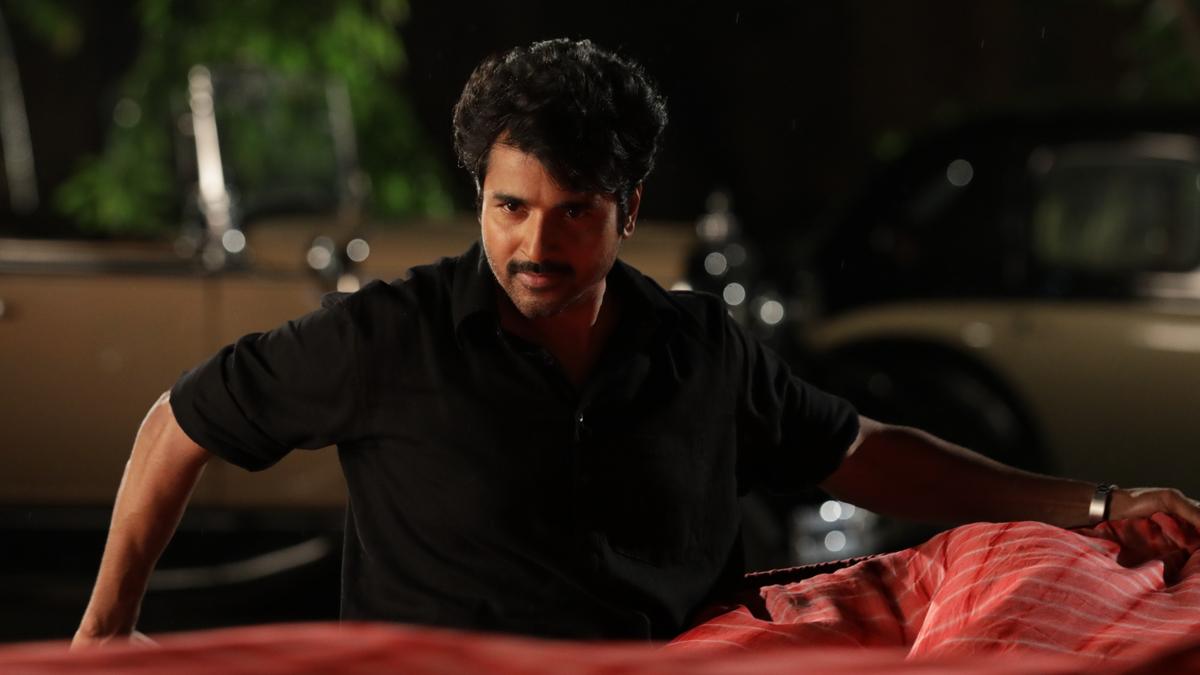
  • ‘Parasakthi’ movie review: Sivakarthikeyan’s period Tamil drama on anti-Hindi imposition has power and purpose

    ‘Parasakthi’ movie review: Sivakarthikeyan’s period Tamil drama on anti-Hindi imposition has power and purpose

    [ad_1]

    The year 2026 has not started off on a great note for Tamil cinema. Two much-anticipated Pongal releases – both Vijay’s Jana Nayagan and Sivakarthikeyan’s Parasakthi – have faced issues due to some points raised by the CBFC (Central Board of Film Certification). With Jana Nayagan hanging in balance,Parasakthihas released after the makers decided to implement 20-odd changes.

    Even as fans of cinema find this environment worrisome, what comes as a sigh of relief is Parasakthi’s rich, dense material. Directed by Sudha Kongara, this multi-starrer, featuring Sivakarthikeyan, Atharvaa and Ravi Mohan in lead roles, takes us back to the beginnings of the anti-Hindi imposition protests that happened during the 1960s.


    Also Read I ‘Jana Nayagan’: Why ‘Thalapathy’ Vijay’s ruse to remix ‘Bhagavanth Kesari’ might be a winner?

    The film kicks off with a busy action block, set in a hurtling train somewhere between two stations. Inside the vehicle is Thiru (Ravi Mohan), searching for something…or someone. Outside, waiting in the dark on the tracks, is a determined Chezhiyan (Sivakarthikeyan). A fight follows, but Chezhiyan gets away, leaving Thiru injured.

    Who is Chezhiyan and what exactly is his ‘Purananooru Squad’?

    Answers lie in the next 162 minutes – resulting in a film that is terrific in detailing and dense in writing.

    The world of Parasakthi is set against the backdrop of the anti-Hindi imposition protests in the Sixties, a movement that would change the course of Tamil Nadu and several other states in the future. This was a time when Hindi was set to be declared as an official language, an act, if implemented, would dramatically alter the lives of those living in the south.

    Sivakarthikeyan and Sreeleela in ‘Parasakthi’

    While this reads like a line from a history lesson, director Sudha Kongara places a camera in the middle of all the lives that would get affected by such a decision. A while into the film, an elderly lady heads to a post office, to send a money order to her grandson, only to realise that the entire form is in Hindi, a language alien to her. “They made me – someone who has studied till eighth grade – an illiterate,” she bemoans. It’s this delectable irony that the film wants to capture.

    Doing that is Chezhiyan (a sincere Sivakarthikeyan), a firebrand rebel who, in due course, gets mellowed down due to the system’s methods to deal with such revolutionaries. Chezhiyan changes due to a powerful incident that occurs in front of his eyes, but that hardly matters to his younger brother, Chinna (Atharvaa), whose playful mannerisms are an ideal foil to his revolutionary nature that will unfold as time goes by.

    There’s a poignant moment in Parasakthi when these two brothers realise the true meaning of what they are fighting for and how it signals hope to future generations. They embrace each other and hug tight, almost signifying that they have truly understood each other. It’s a quiet moment that hits hard.

    Parasakthi (Tamil)

    Director: Sudha Kongara

    Cast: Sivakarthikeyan, Ravi Mohan, Atharvaa, Sreeleela

    Runtime: 162 minutes

    Storyline: The Purananooru Squad actively engages in protests against the imposition of Hindi. Will it succeed?

    Parasakthi throws up many such quiet moments even as cries of protests and revolts break everywhere. Like the cold Thiru (Ravi Mohan), who is as determined to stop this revolution as the student leaders are to continue it. There’s a particular sequence in which this coldness comes through, when he pushes someone into a gutter without a trace of mercy. And that…is something that the makers could have worked on more.

    We get a lot of insight into Thiru’s methods, but little on the why. Why does he have such hatred for the pro-Tamil students? A flashback or back story might have helped, but that’s a minor grievance that is offset by the solid writing by Sudha and Arjun Nadesan. Thiru’s dialogues, like the one that compares his comeback post injury to the need for Tamil students to learn Hindi, are top notch.

    The love portions between Chezhiyan and Ratnamala (Sreeleela) remind you a bit of the Suriya-Aparna Balamurali portions in this director’s previous, Soorarai Potru,but, once she does away from the cutesy moments, Sreeleela too gets an opportune moment to announce herself, quite literally. That this heroine and three major Tamil heroes have so much agency is a major win for the director. Parasakthi is Sudha’s most solid work so far.

    Major contributions are also by the music director – GV Prakash, whose tunes delicately balance melody and mass, based on what unfolds on the screen. Ravi K Chandran’s camerawork and the production/art design sets the visual tone for the film well, scoring especially well during the riot scenes, which take us on a journey to the Madras of the Sixties.

    There are also a few pan-India surprise appearances that are bound to trigger excitement among theatre-goers. Parasakthi is the kind of film that not only raises awareness – the actual anti-Hindi imposition movement and its heroes are chronicled in the end – but also packs in the right elements of cinema to entertain today’s audiences.

    Published – January 10, 2026 02:39 pm IST