Category: Movie Review

  • Adithya Narayanan’s Sahana alapana carried a lot of soul

    Adithya Narayanan’s Sahana alapana carried a lot of soul

    [ad_1]

    <!–[if IE 9]><![endif]–>

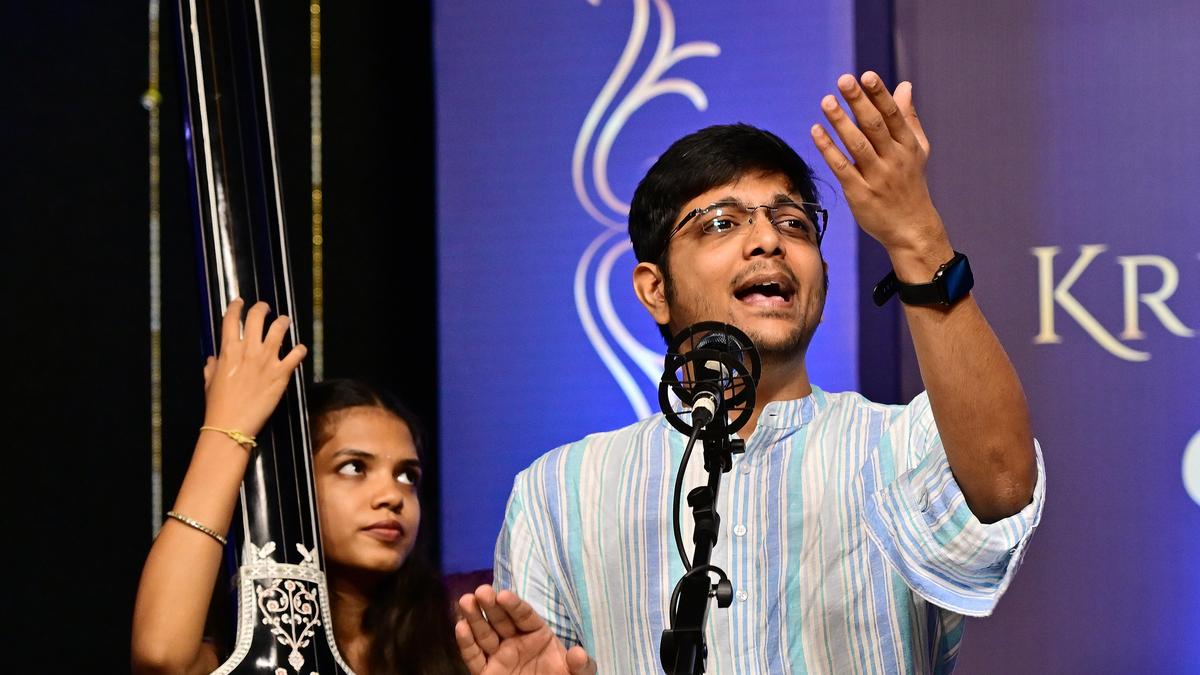
    Adithya Narayanan.
    | Photo Credit: B. Velankanni Raj

    At its core, this was a thoughtful exploration of raga and rasa. S. Adithya Narayanan emphasised rakti and bhava with restraint, avoiding excessive ornamentation. Sruthi Sarathy (violin) complemented his approach with precision, while percussionists Kishore Ramesh (mridangam) and K.R. Sivaramakrishna (kanjira) maintained attentive and balanced support. The quartet demonstrated strong artistic alignment.

    The afternoon concert began with the Behag varnam ‘Vanajaksha’, a gentle prelude that created a pleasant atmosphere. Tyagaraja’s Ritigowla kriti ‘Raga ratna malika’ came next. The niraval at ‘Bhagavatho’ was supported by Kishore’s expressive mridangam. The kalpanaswaras carried this synergy forward, Sruthi’s violin aligning well too.

    Adithya Narayanan accompanied by Sruthi Sarathy (violin); Kishore Ramesh (mridangam) and K.R. Sivaramakrishna (kanjira).
    | Photo Credit:
    B. Velankanni Raj

    The Sahana alapana delineated the raga’s contour with assurance, through sustained phrases. The deliberately-placed notes drew the audience into a reflective mood. On the violin, Sruthi sustained the effect with clear, understated playing, while preserving her interpretation.

    Papanasam Sivan’s ‘Senthil vellaiyya’, a vilamba kala kriti, retained this meditative mode. Its gait was supported by percussion that employed space as strategically as sound.

    Adithya Narayanan performing at the 69th Margazhi mahotsavam of Krishna Gana Sabha.
    | Photo Credit:
    VELANKANNI RAJ B

    The transition into ’Marubalka’ (Sriranjani) occurred after a brief stage-side conversation. The tanam in Kalyani introduced a noticeable shift, prompting an introspective response that rasikas recognised. The ragaswarupam appeared subtly, with the raga’s emotional core conveyed more through pauses than through the phrases themselves. Tyagaraja’s ‘Etavunara’ followed. At ‘Sri karunaku tyaga’, the niraval acquired briga-brightness without compromising contour.

    The tani avartanam was brisk to the point of feeling compressed. Though the korvais were undeniably complex, the segment seemed to sit adjacent to the concert, adding little to the interpretive momentum that existed until then.

    The concert closed on a sprightly note with Patnam Subramania Iyer’s Khamas thillana.

  • Uthama Deivangal: Devotion at its core

    Uthama Deivangal: Devotion at its core

    [ad_1]

    <!–[if IE 9]><![endif]–>

    Srekala Bharath and students of her Thejas School of Performing Arts presented ‘Uthama Deivangal’.
    | Photo Credit: Special Arrangement

    Srekala Bharath and Thejas School of Performing Arts presented ‘Uthama Deivangal’, a thoughtfully-curated thematic production focussed on Santoshi Mata, Shirdi Sai Baba and Swami Ayyappa, at Bharatiya Vidya Bhavan, Mylapore. The presentation employed music, movement and visual imagery to evoke a spiritual ethos. Srekala anchored the production as the narrator, providing clarity and continuity.

    The presentation opened with an invocatory piece on Ganesha and moved on to depict Santoshi Mata as a little girl and as a goddess clad in a golden saree, sporting long hair and a decorative headpiece who grants her devotees’ wishes.

    The Shirdi Sai Baba segment began with an introduction by a group of dancers showing him as someone who dispels darkness. The segment included some jathis too. This section concluded with a joyful dance.

    Srekala Bharath’s thematic production ‘Uthama Deivangal’ performed at Bharatiya Vidya Bhavan.
    | Photo Credit:
    Special Arrangement

    The final segment ‘Swamiye saranam Ayyappa’ saw Srekala Bharath narrate the legend of Ayyappa. Harihara Sudhan appeared as a young child in black attire with striped detailing, performing a jathi. Soon, he becomes Manikandan, growing up under the care of King Rajasekhara of Pandalam. It concluded with Ayyappa emerging victorious over Mahishi and commanding the royals to build a temple where his arrow fell. The segment concluded with a depiction of the 18 sacred steps, the song ‘Kallum mullum kaalukku methai,” and the devotion of Ayyappa’s followers who go on a pilgrimage. The evening came to a close with a tillana.

    L. Narendra Kumar provided inputs for the stories and Rukmani Ramani contributed to the music. The orchestra for the evening featured Padma Raghavan on the nattuvangam, Chitrambari Krishnakumar on vocals, Sakthi Vel Murugan on the mridangam, N. Shigamani on the violin and rhythm pad by K. R. Venkata Subramani. Concept, choreography, and costume design were by Srekala Bharath.

  • ‘Chatha Pacha’ movie review: Gets the dynamics of WWE right, but lacks a compelling narrative

    ‘Chatha Pacha’ movie review: Gets the dynamics of WWE right, but lacks a compelling narrative

    [ad_1]

    <!–[if IE 9]><![endif]–>

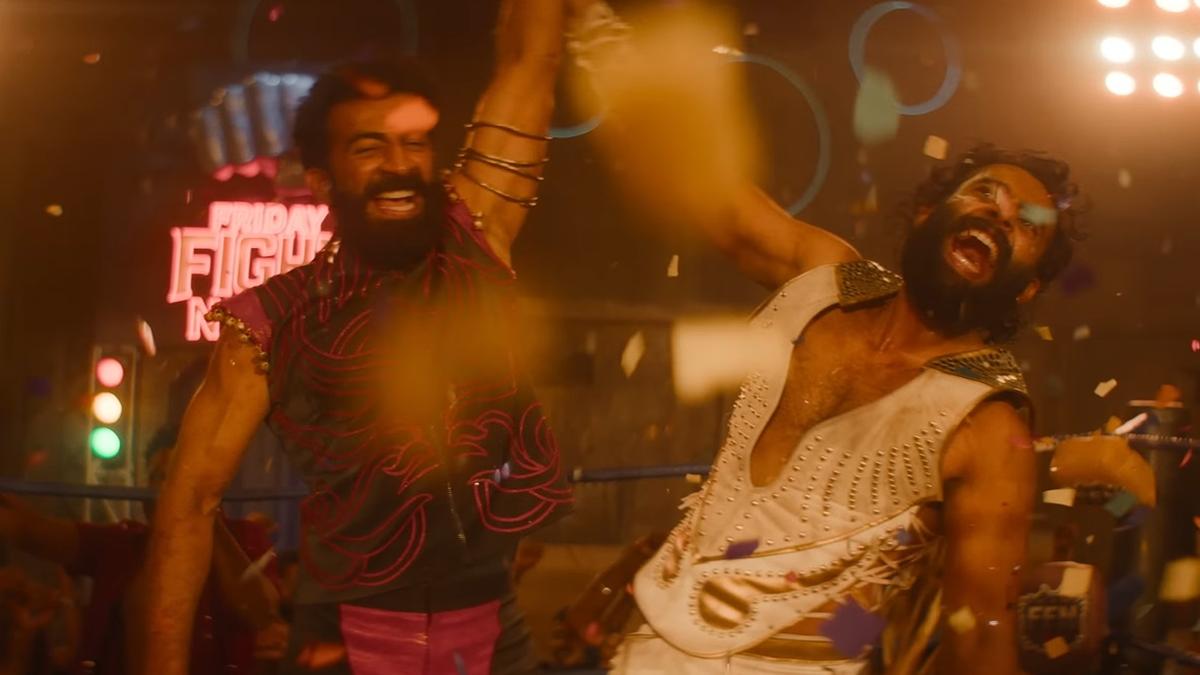
    A sequence from ‘Chatha Pacha’.

    Every minute aspect about World Wrestling Entertainment (WWE) wrestlers, ranging from their signature moves to their individual body dimensions, is imprinted in the memories of a generation that grew up in the 1990s. Debutant filmmaker Adhvaith Nayar’s Chatha Pacha attempts to tap into this enduring nostalgia of the WWE trump card-playing generation.

    On the surface, it appears the makers got a lot of it right, from replicating the signature moves of Undertaker and Rey Mysterio to recreating the mood of the wrestling ring with a local touch. Some of the fights in the ring have an unmistakable rhythm to them, which is further elevated by a few standout performers. But, scratch a little, and there emerges the shaky foundation, which could fall with even a weak kick, let alone a chokeslam.

    Chatha Pacha (Malayalam)

    Direction: Advaith Nayar

    Starring: Arjun Ashokan, Roshan Mathew, Vedhika Sreekumar, Vishak Nair, Ishan Shoukath

    Runtime: 134 minutes

    Storyline: A group of economically struggling youth attempts to form an entertainment wresting franchise in Kochi, but there are roadblocks galore

    Written by Sanoop Thykoodam, Chatha Pacha’s narrative revolves around a group of youngsters from lower-income backgrounds trying to create an entertainment wrestling franchise, modelled on WWE, in Kochi. They have roadblocks galore, including local goons and businessmen, scheming politicians, and some deep personal misunderstandings between two of its organisers. Yet, it takes off and flies high, as the film attempts to tell us through the numerous reaction shots of its young and old spectators.

    But the weak conflict brings down the movie. We are never emotionally invested in the film, even when wowed by some of the strikingly choreographed stunts. The conflict revolves around the misunderstandings between Vetri (Roshan Mathew) and Savio (Arjun Ashokan), which a rival seeks to take advantage of. Vetri’s character is written as someone who can’t think for himself and acts according to what others tell him in each situation, almost like a wind-up toy. Roshan’s intensity on screen saves the character to an extent, but the conflict fails to make an impact.

    Some of the wrestling characters were imaginatively created, especially Kadalkomban (played with a lot of heart by Dartagnan Sabu), Bhasmasuran, or the gig worker who doubles up as a wrestler with some stinging moves. The much-hyped superstar cameo turned out to be the weakest portion of Chatha Pacha, as every department, from writing to makeup, hit the wrong notes, turning his entry into a sorry spectacle. In the middle of one of the best phases in his long career, this cameo becomes a rare aberration. One of the memorable performances was from child actor Vedhika Sreekumar, who appears to be a natural performer, although at times she was made to mouth some lines well beyond her age.

    ALSO READ: Roshan Mathew interview: On ‘Kankhajura’ and feeling at home in Hindi cinema

    The popularity of WWE owed more to the careful scripting of its fight sequences, even though it had hardly any similarity to the actual sport of wrestling. Chatha Pacha gets the dynamics of WWE right, but fails to script a compelling narrative. It becomes an unfortunate case of falling flat while making a stylish signature move.

    Chatha Pacha is currently running in theatres

  • ‘Percy Jackson and the Olympians’ Season 2 review: Percy and friends barrel through mythic mayhem

    ‘Percy Jackson and the Olympians’ Season 2 review: Percy and friends barrel through mythic mayhem

    [ad_1]

    <!–[if IE 9]><![endif]–>

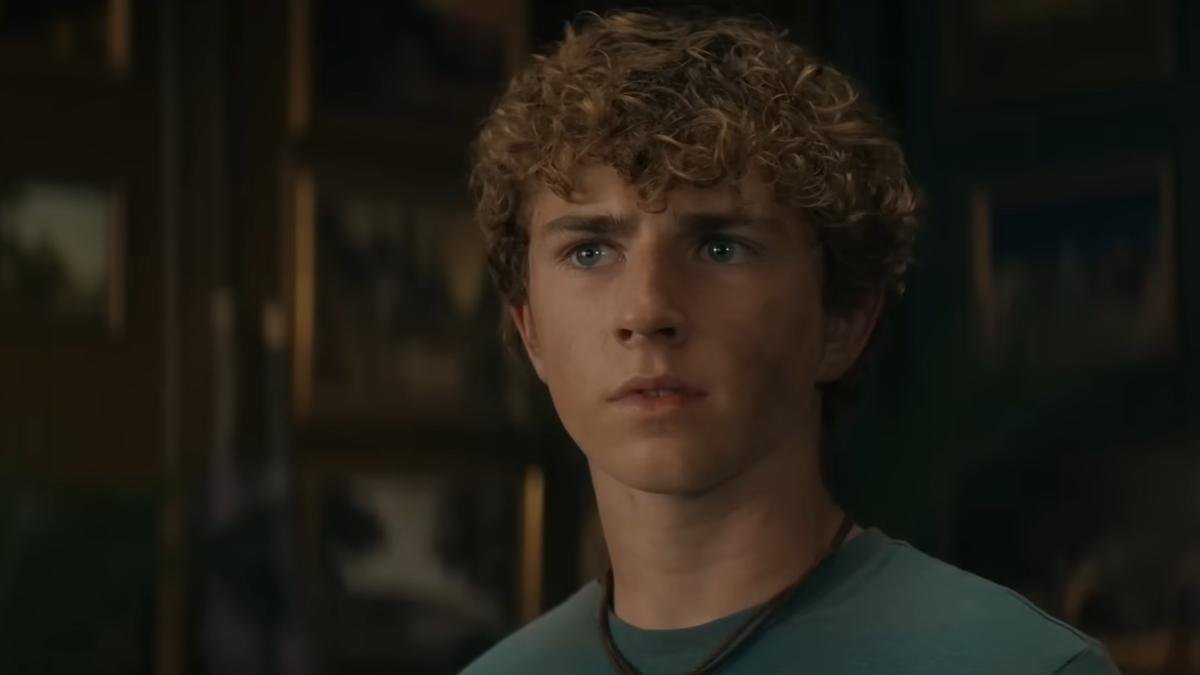
    A still from ‘Percy Jackson and the Olympians’ Season 2
    | Photo Credit: Disney/YouTube

    What a joyful ride Season 2 of Percy Jackson and the Olympiansis! There is adventure, action, humour, heartbreak, and growing up in a complete package. Based on the second book of Rick Riordan’s popular fantasy novel series, The Sea of Monsters, Season 2 finds the young demigod and son of Poseidon (Toby Stephens), Percy Jackson (Walker Scobell), returning to Camp Half-Blood with a classmate, Tyson (Daniel Diemer), who just happens to be a Cyclops.

    Percy Jackson and the Olympians (English) Season 2

    Episodes: 8

    Creators: Rick Riordan, Jonathan E. Steinberg

    Starring: Walker Scobell, Leah Sava Jeffries, Aryan Simhadri, Charlie Bushnell, Dior Goodjohn, Daniel Diemer

    Storyline: Percy goes to the Sea of Monsters to retrieve the Golden Fleece and save Camp Half-Blood from the vengeful Kronos

    Runtime: 32 – 47 minutes

    Percy’s mother, Sally (Virginia Kull), recognising Tyson as a Cyclops, takes care of him and sends him with Percy to Camp Half-Blood, where demigods can be safe from attacking monsters.

    Percy’s best friend, Annabeth (Leah Sava Jeffries) is acting strangely while his other bestie and protector, the satyr Grover (Aryan Simhadri), seems to have vanished. Six years ago, Thalia Grace (Tamara Smart), the daughter of Zeus, sacrificed herself to save Annabeth, Grover and Luke (Charlie Bushnell), the duplicitous son of Hermes, from the Furies. Zeus turned Thalia into a tree that protected Camp Half-Blood from attack.

    Now the tree is poisoned, and attacks by monsters have become more frequent. The only way to revive the tree and ensure Camp Half-Blood’s safety is to retrieve the Golden Fleece, with its healing properties, from the Sea of Monsters.

    A still from the show
    | Photo Credit:
    Disney/YouTube

    Through an empathy link, Percy finds that Grover went in search of Pan and has been captured by the Cyclops Polyphemus (Aleks Paunovic), the guardian of the Golden Fleece. Since Polyphemus cannot see too well, Grover has disguised himself in a wedding dress.

    Though Percy tries to enlist for the quest to get the Golden Fleece, it is the bossy Clarisse (Dior Goodjohn), daughter of Ares, who gets the job. Chiron (Glynn Turman), the activities director of Camp Half-Blood has been temporarily replaced by the sulky King Tantalus (Timothy Simons) who is only interested in getting the chariot track up and running, never mind the rampaging Laestrygonians.

    Getting to The Sea of Monsters involves deadly dangers including escaping unscathed from the Sirens’ song and not falling for Circe’s (Rosemarie DeWitt) blandishments. There is also the threat of the King of Titans, Kronos using the fleece to regenerate and take over the world.  

    A still from the show
    | Photo Credit:
    Disney/YouTube

    The eight episodes zip by in a flurry of action and humour, meticulous world-building and Greek myth in excellently accessible bites. The cast, especially the young leads, give spirited performances in a show that is organically inclusive. When Season 3 is announced in the middle of that excellent art deco end-credit sequence, one can only hug oneself with joy.

    Percy Jackson and the Olympians is currently streaming on Jio Hotstar

  • ‘Cheekatilo’ movie review: Sobhita Dhulipala anchors a crime drama that occasionally thrills

    ‘Cheekatilo’ movie review: Sobhita Dhulipala anchors a crime drama that occasionally thrills

    [ad_1]

    There are two strands to Cheekatilo (In the Darkness), the Prime Video original Telugu film directed by Sharan Kopishetty. On the surface, it is a crime drama that attempts to build an edge-of-the-seat whodunnit. At its core, however, it is a social commentary that urges silenced voices to speak, heal and find closure to long-buried wounds. In a film led by Sobhita Dhulipala, this second strand proves far more compelling.

    Read | Sobhita Dhulipala: ‘Cheekatilo’ is my bridge to reconnect with the Telugu audience

    True to its title, cinematographer Mallikarjun cloaks the film in a moody, low-lit palette. The darkness suggests threats lurking in the shadows while doubling as a metaphor for the emotional fog that engulfs survivors of violence. Even daylight scenes are deliberately underlit, reflecting the characters’ inner worlds as they search for a sliver of light.

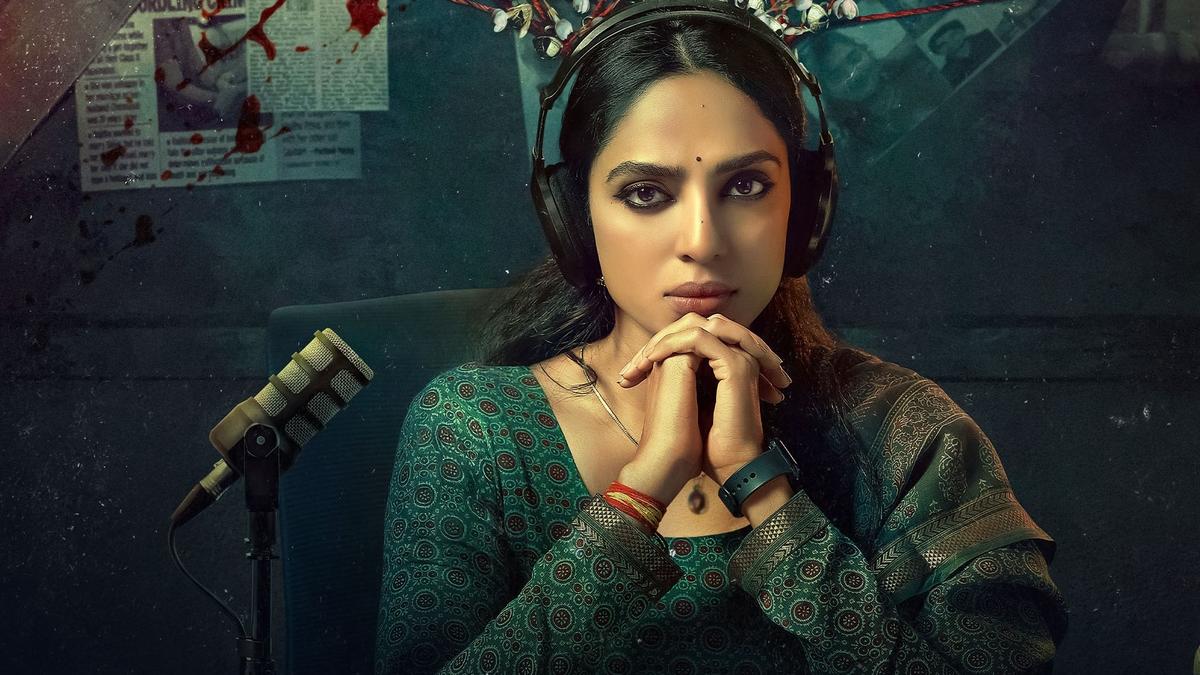
    Sandhya Nelluri (Sobhita) anchors a television crime show and soon finds herself at odds with the channel’s boss over its sensationalist tone. She would rather probe the realities of crime and the emotional toll on victims than chase ratings through lurid storytelling.

    Cheekatilo (Telugu)

    Director: Sharan Kopishetty

    Cast: Sobhita Dhulipala, Vishwadev Rachkonda, Chaitanya Krishna, Jhansi

    Runtime: 124 minutes

    Storyline: Shocked by the murder of a dear one, a podcaster gets to the bottom of the story. It takes her on a larger, dangerous journey.

    Sharan Kopishetty, who shares writing credits with Chandra Pemmaraju, gradually peels back his characters through conversations punctuated by telling silences. Snatches of dialogue reveal that Sandhya studied criminology, while her demeanour underscores a dogged determination to get to the truth. Strained exchanges with her mother (Jhansi Laxmi) hint at unresolved wounds from childhood.

    Running parallel to the true-crime narrative is Sandhya’s relationship with Amar (Vishwadev Rachakonda). Where Sobhita plays Sandhya with stoicism, Vishwadev brings an easy warmth to Amar. Their conversations are economical, revealing just enough — his shift from an IT career to entrepreneurship, a café as a passion project — to explain why he stands by Sandhya when she follows her instincts and turns podcaster.

    When the film tracks Sandhya’s pursuit of truth after a gruesome incident, the investigative portions could have used more bite. Familiar genre elements surface — patterns in crimes, reopened files, false leads — these sections offer nothing new and hence, stop short of delivering a true edge-of-the-seat experience.

    It is the smaller moments that resonate more. An emotional outburst by a victim’s family member forces Sandhya to reflect on her own methods, while a scene in which she reaches out to an older woman (Aamani), who laments the absence of female friendships after marriage, adds tenderness and depth.

    The final reveal, however, feels underwhelming. Whodunnits typically either plant clues in plain sight to let the audience connect the dots, or introduce a new subplot to explain motive. Cheekatilo opts for the latter, and despite a compelling backstory, the larger resolution — particularly where a medical condition is invoked — lacks conviction. It is unsettling, but not quite weighty enough.

    The film’s strengths lie in its 124-minute runtime and assured performances. Sobhita makes the most of an author-backed role, shedding glamour to inhabit Sandhya as a grounded, girl-next-door presence. Her Telugu dialogue delivery is precise, lending the character emotional heft. Vishwadev delivers a measured, breezy turn, while supporting performances by Ravindra Vijay, Chaitanya Krishna and Aamani are effective within the limited screen time.

    Jhansi is particularly striking as a mother who urges silence to avoid shame. In real life, she is among the most vocal members of the Voice of Women support group in Telugu cinema; here, playing the ideological opposite, she convincingly embodies a mindset that prefers to bury discomfort and maintain appearances.

    Cheekatilo is an engaging, thoughtful drama that finds its strength in empathy rather than spectacle, but it could have benefited from sharper writing.

    (Cheekatilo is streaming on Amazon Prime Video)

    Published – January 23, 2026 09:42 am IST

  • ‘Marty Supreme’ movie review: Timothée Chalamet peddles destiny in Josh Safdie’s monumental trial of self-worth

    ‘Marty Supreme’ movie review: Timothée Chalamet peddles destiny in Josh Safdie’s monumental trial of self-worth

    [ad_1]

    Josh Safdie opens Marty Supreme with an admirably vulgar sort of confidence, suggesting ambition will now be treated as a decidedly corporeal function. He does so by staging the opening credits as conception itself, where a human egg is fertilised and immediately aestheticised into a spinning ping-pong ball set to shimmering ‘80s synths, as though destiny were something you could manufacture through sheer force of want. Timothee Chalamet’s impossibly vainglorious titular character spends the next two and a half hours behaving like a man convinced that the universe already endorsed him retroactively, which leaves everyone else stuck living inside the aftershocks of his self-esteem.

    Set in 1952 but vibrating with a restlessness that belongs to no single decade, Marty Supreme marks Josh Safdie’s second solo feature since 2008’s The Pleasures of Being Robbed, and follows Marty Mauser, a Lower East Side shoe salesman whose prodigious table-tennis talent matters less than his belief that talent should entitle him to speed, access, and forgiveness. Safdie understands that this belief is comic and lethal, which allows the film to lampoon Marty while still tracking the damage he leaves behind.

    Marty Supreme (English)

    Director: Josh Safdie

    Cast: Timothée Chalamet, Gwyneth Paltrow, Odessa A’zion, Kevin O’Leary, Tyler Okonma, Abel Ferrara and Fran Drescher

    Runtime: 150 minutes

    Storyline: Marty Mauser, a wily hustler with a dream no one respects, goes to hell and back in pursuit of greatness

    Marty enters the movie already mid-hustle. He is sleeping with a married woman in the back of a family shoe store that he yearns to escape, and he speaks about his future with a cocksure certainty. Chalamet plays him as verbally overclocked, a half-beat ahead of everyone else in the room because he refuses to wait for permission to finish a thought. That confidence sows the seeds for what follows since every subsequent choice grows logically from Marty’s refusal to accept friction or setback as anything but a temporary inconvenience.

    Safdie frames early-’50s New York as a pressure cooker in which money, sex, and ambition circulate through the same greasy ventilation system, so that the table-tennis club becomes a combined flop house, chapel, and delusion factory, endlessly incubating Marty’s male fantasy. Marty flourishes in this compressed environment because compression rewards loudness, yet the moment he leaves it — specifically during his London encounter with the monkishly unflappable Koto Endo — the limits of his velocity become impossible to ignore. His refusal to bunk with the other players, followed by his immediate relocation to the Ritz, plays as strategic self-importance, since Marty intuits that being seen matters at least as much as being good, and often pays better. The affair with Gwyneth Paltrow’s Kay Stone proceeds like a sweet-talk negotiation in which intimacy substitutes for capital, and Safdie lingers just long enough to show Marty mistaking adjacency to wealth for initiation into it. Losing the final to Endo deflates the coronation fantasy, although Safdie withholds real punishment until later.

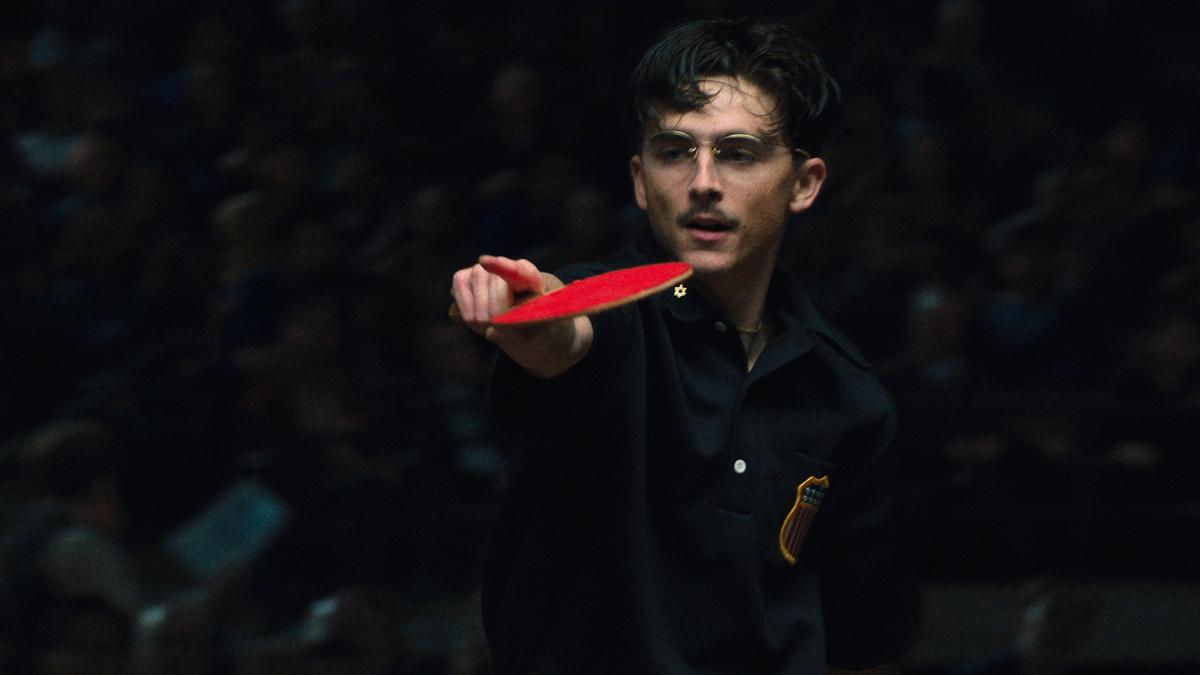
    A still from ‘Marty Supreme’
    | Photo Credit:
    A24

    Daniel Lopatin’s exquisite score articulates ambition more clearly than dialogue ever could and rewires the film’s relationship to history. The choice to flood a 1950s story with ’80s synths and new wave anthems creates a productive dissonance, since the music motions towards futurity while the characters remain trapped inside outdated hierarchies. Lopatin’s cues behave like Marty’s nervous system, surging ahead of the body and dragging the narrative toward an imagined horizon that never quite arrives.

    When Marty slingshots back to New York, the film shifts gears from propulsion to fallout, and pressure begins redistributing itself onto every person foolish enough to still stand nearby. Rachel’s (Odessa A’zion) pregnancy detonates the fantasy of endless postponement by demanding consequence in calendar form, while Marty’s preferred improvisations disguised as ingenuity mutate into a chain of increasingly deranged schemes involving a kidnapped dog, an increasingly irritated gangster, suburban bowling alleys, and the systematic liquidation of trust. Safdie resists escalation for its own sake, opting instead to let each disaster unfold as the logical response to the last one, which gives the chaos a queasy coherence even as the trajectory bends unmistakably toward collapse. Nothing here feels random — everything feels earned in the most damning way possible.

    Chalamet makes this descent legible by refusing any semblance of interiority. Marty does not pause to think because thinking would slow him down, so the performance operates on appetite alone, calibrated to hunger rather than reflection. When humiliation becomes the cover charge for continued motion, Marty pays instantly and without receipt, treating dignity as a liquid asset meant to be spent, replenished, and spent again. What makes the performance sting is how casually he performs this exchange, as though converting self-respect into forward momentum were simply another cost of doing business in a world that keeps rewarding the loudest man in the room until the bill finally comes due.

    The Safdie brothers have been flattened into a vibe by criticism that describes their films as simply “stressful” or “anxiety-inducing” rather than to ask what that stress is actually doing, and Marty Supreme makes the poverty of that shorthand impossible to ignore. The connective tissue running from Good Time through Uncut Gems and into this film has little to do with nerves and everything to do with exposure, since Josh Safdie keeps returning to capitalism as a system that demands ritualised abasement before it offers even the illusion of mobility. Marty’s life becomes a syllabus of required humiliations, each one framed as a reasonable toll for continued participation, whether that toll arrives as a fine, a ban, a public paddling on the bum, or the gradual erosion of everyone who believes in him.

    A still from ‘Marty Supreme’
    | Photo Credit:
    A24

    Marty Mauser embodies a peculiarly American fantasy in which destiny metastasises into a personal branding exercise, and Safdie has obvious fun letting that fantasy curdle into parody. His conviction that greatness is owed to him feels eerily current, especially when paired with the image of orange table-tennis balls stamped with his name and patriotic promise, since it echoes the way American power loves to aestheticise itself as a product. Watching Marty hustle his way across borders boasting over his exceptionalism, it becomes hard not to think of another orange symbol of the American Dream ping-ponging across the country fueled on unfounded machismo and aggressively merchandised fascist fervour.

    Safdie also slips one of the film’s sharpest knives in sideways, through a bit involving Holocaust “honey” that renders historical violence as something thick, marketable, and endlessly siphonable once you know how to sell it. The metaphor surfaces as Marty prods his former-rival and Auschwitz survivor to casually invoke inherited suffering to grease access to a certain Shark (who unfortunately features prominently in the film). Marty never articulates this system, yet he benefits from it instinctively, which is precisely the point, since Safdie seems to be alluding to how historical trauma becomes an endlessly renewable resource that could justify just about anything, which of course rings sonorous with a particularly well-worn state-level playbook.

    It is difficult to watch Marty Supreme without recognising that Timothée Chalamet had been rehearsing for this role long before cameras rolled, especially once you recall his unapologetic declaration of greatness at the SAG Awards last year. The hubris of that moment feels like a very public spot of method acting in retrospect, since the hunger he displayed there became the animating force of his performance here. Chalamet plays Marty with a brazen thirst that feels at once, exhausting and magnetic, and the film benefits from his willingness to make ambition look depraved. As much as it pains me to admit it, watching an insufferable white boy channeling the pathology of an even more insufferable white boy results in something undeniable, because Chalamet finally aligns his own pursuit of validation with a character built to interrogate it.

    May thy paddle chip and shatter, Timmy Tim.

    Marty Supreme is currently running in theatres

    Published – January 23, 2026 05:30 pm IST

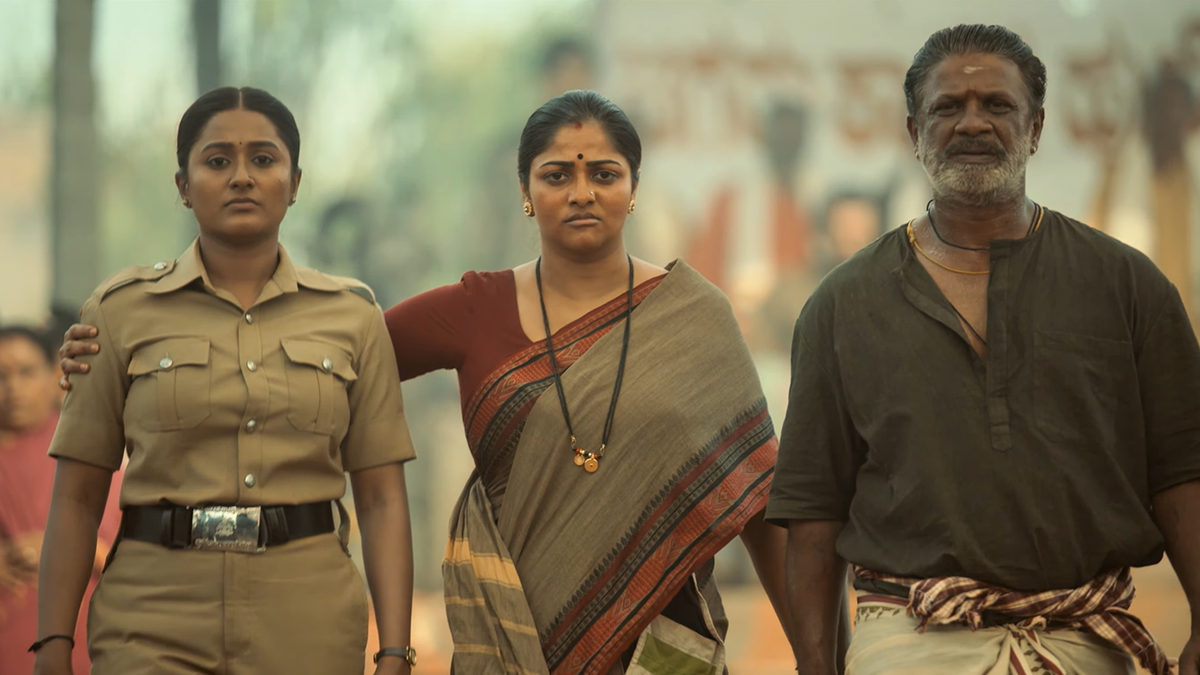
  • ‘Landlord’ movie review: Duniya Vijay and Raj B Shetty lift Jadeshaa K Hampi’s rustic drama

    ‘Landlord’ movie review: Duniya Vijay and Raj B Shetty lift Jadeshaa K Hampi’s rustic drama

    [ad_1]

    After 45, directorJadeshaa K. Hampi’s Landlord provides ample proof of the strong potential of multi-starrers in cinema. Give the big stars interesting characters, offer them room to perform, blend their roles convincingly with the story, and watch the magic unfold on the big screen. Arjun Janya executed the process with little success in 45, whereas Jadeshaa marches several steps ahead in the game, though he just about falls short in providing a near-perfect experience.

    Jadeshaa was the co-writer of the Darshan-starrer Kaatera (2023). Directed by Tharun Sudhir, that film was set in a time when feudal landlords ill-treated the farmers. The core story of Landlord is the same. Legal justice has no place in the violence-stricken village, as the greedy Zameendars call the shots. The oppressed labourers dream of owning land, but it comes with a heavy price.

    In Kaatera, Tharun brilliantly balanced the ‘actor’ and ‘star’ in Darshan; in Landlord, Jaadesha has the daunting task of doing it with two performers — Duniya Vijay and Raj B Shetty — and he fairly manages to give equal significance to the two. But, it’s just not star power that works in favour of Landlord.

    The film’s politics grabs your attention. Kannada cinema is known to shy away from themes of caste discrimination; however, Jadeshaa here offers a serious, even if not unfamiliar, look at the fight between the haves and the have-nots. It’s interesting how Raj B Shetty’s character (which doesn’t have a name) sends shivers down the spine of those who are thinking of registering a complaint in a police station. It’s surprising how insignificant the police station is in the village, and the director gives a backstory for it as well.

    Landlord (Kannada)

    Director: Jadeshaa K Hampi

    Cast: Duniya Vijay, Raj B Shetty, Rithnya Vijay, Rachitha Ram, Umashree

    Runtime: 156 minutes

    Storyline: In a village crushed under a brutal landlord’s rule, fear silences the poor, and justice is denied. What follows is a costly fight to reclaim dignity, justice, and the power of the Constitution.

    The visual symbolism, which even includes BR Ambedkar’s favoured colour blue, which symbolises Dalit empowerment, adds to the world-building of the movie. Raj B Shetty’s brutal landlord uses the golden bracelet as his weapon, as opposed to Duniya Vijay’s Rachayya, a common, oppressed man, who wields the axe to fight for equality.

    Even the supporting characters are made essential to the story. The talent of Gopalkrishna Deshpande, Achyuth Kumar, Shishir Baikady and Sampath Maitreya isn’t left untapped. The set pieces keep coming, often at the expense of smooth storytelling, but they are hard to dismiss. Rachitha Ram, as a resilient wife, and Rithnya, as an aspiring cop who challenges gender norms, get powerful scenes. The best of the lot is the portrayal of the protagonist as a Robinhood, though Jadeshaa doesn’t explore the concept to the fullest.

    Raj B Shetty in the movie.
    | Photo Credit:
    Anand Audio/YouTube

    Landlord strongly reminds you of Vetri Maaran’s Asuran (2019). It has the film’s storyline of a superheroic man who fights against systematic oppression. The repeated stress on the importance of education from the protagonist makes the comparison more valid.

    ALSO READ: Decoding the success of ‘Bheema’: How Kannada star Duniya Vijay is revelling in his new actor-director role

    The film is also an example of two lead actors trying not to be image-conscious. Vijay is a vulnerable protagonist who gets insulted in front of a village. The actor has always been natural in common man roles. Raj B Shetty makes you hate his presence in the antagonist role. He is brilliant in a scene where his character loses sanity when his manhood is questioned.

    That said, Landlord fails to reach the heights it wishes to thanks to a timeline that feels rushed. The over-the-top melodrama, which hasn’t disappeared from the grammar of Kannada filmmaking, is a big drawback. The overt messaging also kills the good impact of portions with realistic drama.

    Interestingly, Landlord has hit theatres 50 years after BV Karanth’s classic Chomana Dudi was released. Choma dreamt of tilling his own land, but faced the harsh realities of the one-sided system. Rachayya here takes the fight head-on. The concept still stays relevant in Kannada cinema, but the treatment has become more cinematic. The impact of a social issue lies in the balance between ‘mass’ and ‘messaging,’ and Landord tries to crack it with mixed results.

    Landlord is currently in theatres

    Published – January 23, 2026 06:13 pm IST

  • ‘The Rip’ movie review: Matt Damon and Ben Affleck power muscular thriller

    ‘The Rip’ movie review: Matt Damon and Ben Affleck power muscular thriller

    [ad_1]

    <!–[if IE 9]><![endif]–>

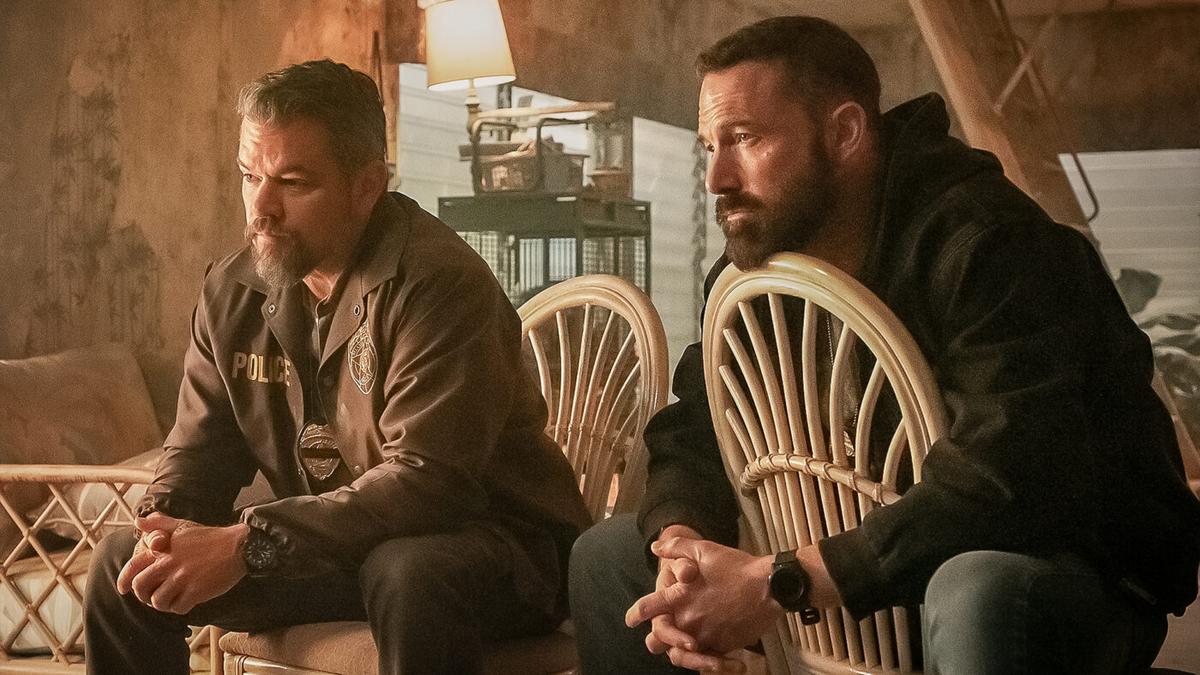
    A still from ‘The Rip’
    | Photo Credit: Netflix

    There is a particular joy in seeing two veterans riff off each other, which The Riptaps into with efficiency. Matt Damon and Ben Affleck clearly had a lot of fun making this lean action movie, and it shows.

    The movie, based on true events, begins with a bang per Netflix instructions. Captain Jackie Velez (Lina Esco) of the Miami-Dade Police Department is on the phone and being chased by masked gunmen. She fires back, and, gravely wounded, manages to send a text before she is fatally shot.

    The investigation into her death is clouded by suspicion of her Tactical Narcotics Team. As the authorities question the team, including Dane Dumars (Damon), JD Byrne (Affleck),  Mike Ro (Steven Yeun), Numa Baptiste (Teyana Taylor) and Lolo Salazar (Catalina Sandino Moreno), we begin to learn more about the detectives.

    The Rip (English)

    Director: Joe Carnahan

    Cast: Matt Damon, Ben Affleck, Steven Yeun, Teyana Taylor, Sasha Calle, Catalina Sandino Moreno, Scott Adkins, Kyle Chandler

    Runtime: 113 minutes

    Storyline: A tip-off about a stash house with a considerable amount of money tests the loyalties of a police team

    Dumars lost his 10-year-old son to leukaemia, his marriage imploded and he is deep in debt. Byrne, Dumars’ partner, is a good detective but a bit of a cowboy. Byrne was in a relationship with Jackie, so his boss Major Thom Vallejo (Néstor Carbonell) wonders how detached Byrne can be.

    Byrne’s brother, FBI agent Del (Scott Adkins), who is investigating the case, is another complication. Dumars’ recent promotion has also upset the balance in the team.  

    With suspicion of crooked cops robbing drug houses mounting, when Dumars gets a tip about a house in Hialeah with stacks of money, no one knows who to trust. Agent Matty (Kyle Chandler) from the DEA warns Byrne as much. Dumars leads his team, and Wilbur the money dog, to the house where Desi (Sasha Calle) is reluctant to let them in.

    When $20 million is discovered and need to be counted on site, suspicions and tensions sky-rocket, with blackouts, threatening phone calls, hostile local cops and shoot-outs providing the background score.

    A still from ‘The Rip’
    | Photo Credit:
    Netflix

    Dumars does not seem to be following standard protocol, and is not willing to share the exact amount of money mentioned in the tip. Dumars confiscates phones but still information seems to be leaking out. The money is definitely cartel money and some very violent people are coming for it. As the sun comes up, all is made somewhat clear with Dumars’ Cormac McCarthy-inspired The Road tattoos making sense.

    Written and directed by Joe Carnahan The Rip (Miami police slang seizing bad people’s things) is the kind of jolly pulp fiction that moves smoothly along expected lines. Juan Miguel Azpiroz’ cinematography is glorious noir with rain and neon. That framing in the rest room with the mirrors and reflections echoing the themes of trust and betrayal was smart.

    Affleck and Damon invest a high level of believability in their characters. Having worked together on 13 films, they bring a lived-in vibe to Dumars and Byrne. And best of all is the care the team takes to make sure the absolutely adorable Wilbur is safe, insisting on putting a vest on him, suggesting while they might betray their peers, no one wants to put a hard-working beagle at risk.

    The Rip is currently streaming on Netflix

  • ‘Baby Girl’ movie review: Nivin Pauly-Lijomol Jose starrer fails to work due to dated approach

    ‘Baby Girl’ movie review: Nivin Pauly-Lijomol Jose starrer fails to work due to dated approach

    [ad_1]

    <!–[if IE 9]><![endif]–>

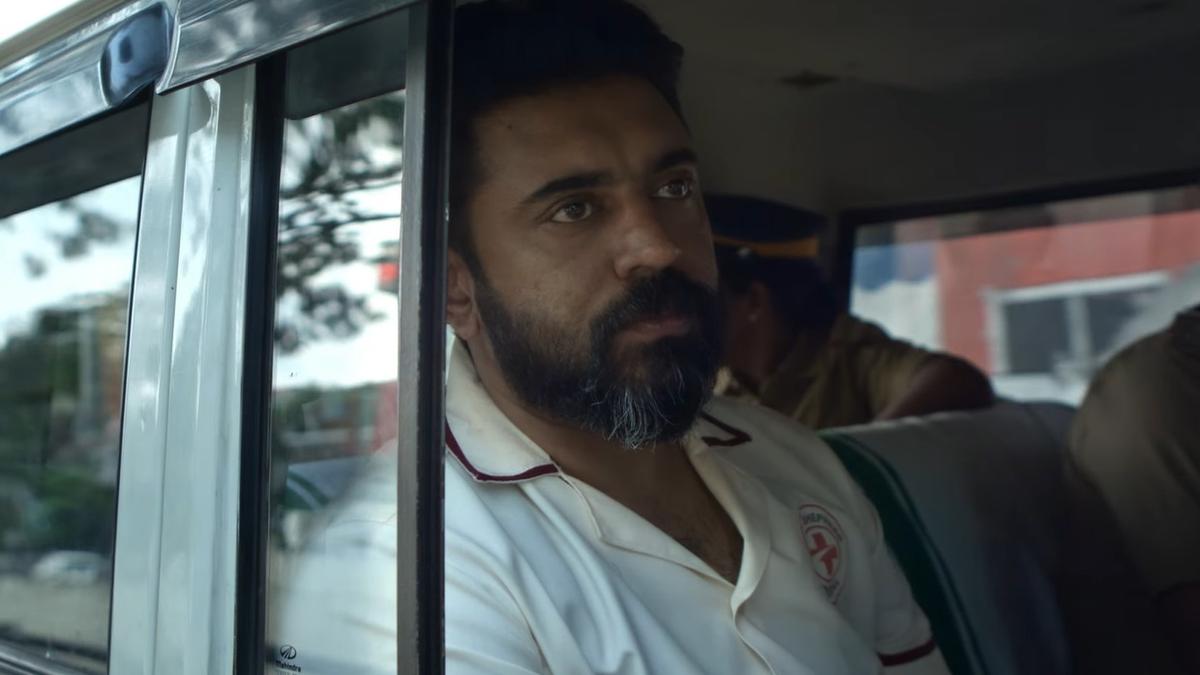
    A scene from ‘Baby Girl’.
    | Photo Credit: Special Arrangement

    Fifteen years ago, Malayalam cinema was not in the pink of health when the screenwriting duo of Bobby-Sanjay came up with Traffic, which would give a new sense of direction for the industry. In 2026, when the same duo returns with Baby Girl, after a mix of memorable and forgettable films in the intervening years, they borrow some of the elements from their most successful film yet. But then, times have changed and the tastes of the audience too have evolved, and things that worked back in the day might not work now, which is what unfortunately happens with Baby Girl’

    The film, directed by Arun Varma, revolves around the happenings on a day when a newborn baby goes missing from a hospital. Sanal (Nivin Pauly), an attendant at the hospital, also gets caught in the drama, when his suspicions about the possible abductor immediately sets the police on a hunt. Parallel to this runs the drama involving the families of the young parents, who are still in college, and another track of a woman who is facing emotional struggles after having a stillborn baby.

    Baby Girl (Malayalam)

    Direction: Arun Varma

    Cast: Nivin Pauly, Lijomol Jose, Sangeeth Prathap, Abhimanyu Shammy Thilakan

    Storyline: A newborn baby goes missing from a hospital, leading to a hunt involving multiple suspects

    Runtime: 126 minutes

    If it was just the template of the narrative that happens in a day and the multiple parallel strands that the screenwriters reused from Traffic, the movie might have still worked at some level. But, what ultimately brings it down is the treatment, which has ‘dated’ written all over it, be it in the visual style or the editing patterns or the background score. Filling a good part of the runtime are sequences of police cars running aimlessly in the city with wireless sets chattering non-stop in the background, big screen visuals from the control rooms and characters poring over CCTV visuals.

    A hint of potential

    Towards the end of the film, a sequence depicting the meeting of two mothers gives one a hint of the emotional potential that the film held, but this comes too late in the day. Lijomol Jose, as one of the mothers, is one of the few saving graces in the film. Nivin Pauly’s character appears superfluous at several points, with the screenwriters often taking evident efforts to insert the star into the drama. Neither does the role provide any scope for performance to the actor, nor does he add much to the movie.

    With the thriller track losing steam by the halfway mark, the rest of the film plods along with the aid of the emotional drama and a few convenient contrivances. But the dated approach ensures that much of this does not create the intended impact. 

    Baby Girl is currently running in cinemas

  • ‘Ponies’ series review: Emilia Clarke and Haley Lu Richardson give a haute spin to the Cold War

    ‘Ponies’ series review: Emilia Clarke and Haley Lu Richardson give a haute spin to the Cold War

    [ad_1]

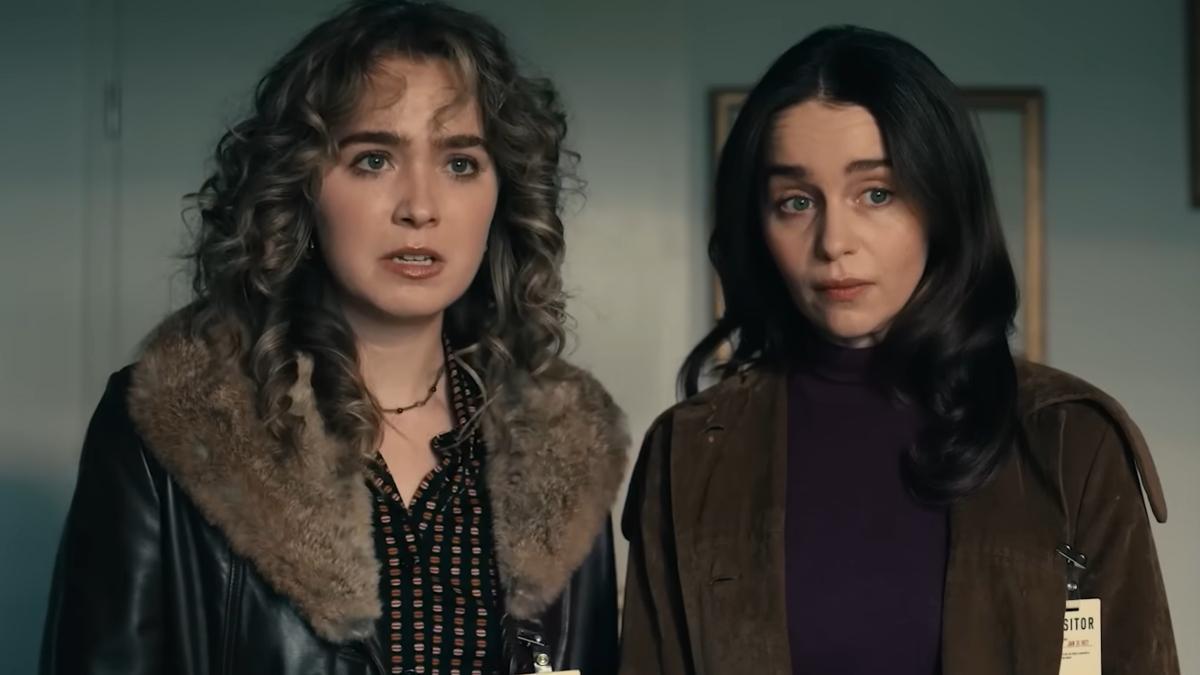
    We first meet Bea (Emilia Clarke) in a market in Moscow politely asking a lady for the eggs she paid for. The lady does not seem to understand until Twila (Haley Lu Richardson) tells Bea to curse the woman in Russian, and when she does, the woman sniffs and hands over the eggs.

    Ponies Season 1 (English)

    Episodes: 8

    Creators: Susanna Fogel, David Iserson

    Starring: Emilia Clarke, Haley Lu Richardson, Adrian Lester, Artjom Gilz, Nicholas Podany, Petro Ninovskyi, Vic Michaelis

    Storyline: Two American embassy wives in Moscow decide to step in to find out the truth about their husbands’ mysterious deaths

    Runtime: 47–53 minutes

    Bea and Twila are embassy wives while their husbands, Chris (Louis Boyer) and Tom (John Macmillan) are ostensibly doing boring work for the ambassador to the USSR, but they are actually spies for the CIA.

    When Chris and Tom are killed in an air crash, Bea and Twila convince the Moscow station chief, Dane (Adrian Lester) that they could be spies as no one in the KGB would pay any attention to a couple of women, “ponies” — people of no interest, as opposed to people of interest. Dane reluctantly agrees seeing the strength of the argument.

    A still from the show
    | Photo Credit:
    Peacock

    Soon enough, Bea and Twila are involved in meeting a secret agent, Sasha (Petro Ninovskyi) who prefers the codename Radford (after Robert Redford) to the one the CIA gave him—C.K. Solar. A KGB agent, Andrei (Artjom Gilz), is interested in Bea and Dane asks her to cultivate him.

    When Twila discovers that vulnerable women are being murdered, and that the police are treating them as isolated incidents, she decides to investigate, with help from mild-mannered Ray (Nicholas Podany) who also works in the embassy and lets his life be run by his harridan wife, Cheryl (Vic Michaelis).

    There are double and triple crosses, missing sisters, and old women working as spies, including Bea’s grandmother, Manya Caplan (Harriet Walter). The period detail is wonderful including the cars and bell bottoms, broad belts and shiny jumpsuits. Adding George H. W. Bush (Patrick Fabian) as the director of the CIA was a nice touch, given that the former U.S. president was DCI for a year in 1976.

    The needle drops (each episode title is a ‘70s pop song) including songs by Fleetwood Mac (‘Second Hand News’) Boney M (‘Rasputin’, naturally), Steely Dan (‘Do It Again’), and David Bowie (‘Moonage Daydream’), are thoughtful choices.

    A still from the show
    | Photo Credit:
    Peacock

    With Budapest standing in for Moscow, the noir palette, complete with rain-slick streets, grim buildings and the rich, faded grandeur of glorious old buildings is delightful.

    Clarke and Richardson have great chemistry and are one of the strongest reasons to watch the show (the music comes a close second). Clarke shrugs off her Daenerys persona from Game of Thrones to reveal her tough side under a silken glove. Richardson, (Portia from The White Lotus) once she stops echoing Natasha Lyonne from Poker Face or Russian Doll, is fun to watch.

    There are some cavernous plot holes that one can fly a plane through, but Ponies is such a cheerful show that you are reluctantly willing to let its weird narrative choices go.

    The finale with its Elton John (Alistair Mumford) concert, is action packed and twisty, with friends and allies turning into antagonists on a dime. There are more than a few unresolved plot points, and that cliff-hanger to the tune of Billy Joel’s ‘The Stranger’ is suitably jaw dropping. Hopefully, there will be a season 2 or else we will wonder forever about what happened to the probably good/bad guys and girls.

    Ponies is currently streaming on Jio Hotstar

    Published – January 24, 2026 04:45 pm IST

  • ‘Cult’ movie review: An earnest Zaid Khan cannot save this utterly regressive tale of love

    ‘Cult’ movie review: An earnest Zaid Khan cannot save this utterly regressive tale of love

    [ad_1]

    <!–[if IE 9]><![endif]–>

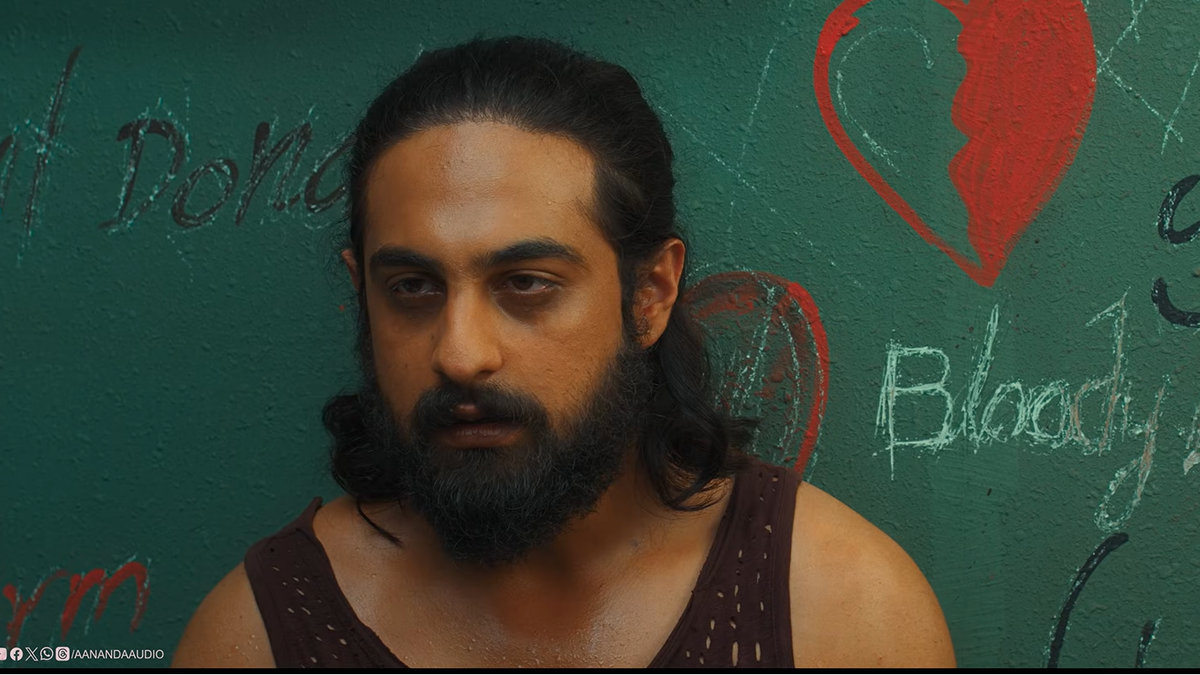
    Zaid Khan in ‘Cult’.
    | Photo Credit: Anand Audio/YouTube

    Mahava, a.k.a. Maddy, has a set routine in life: smoke, drink, and pass out. No prizes for guessing that he is a “victim” of a love failure. This romanticisation of the “brooding, broken-hearted” men is one of the major problems of Anil Kumar’s Cult, which is so cliched that it gets dreadful by the minute.

    Maddy’s girlfriend, Geetha (Maliaka Vasupal), ditches him for a “better lifestyle” after she moves to Bengaluru from a village for higher studies. According to the director, a better lifestyle is a happening nightlife and a boyfriend who splurges money. If that isn’t an insult to several women who move to Bengaluru from small towns with big dreams, the movie vilifies women as gold diggers.

    Cult (Kannada)

    Director: Anil Kumar

    Cast: Zaid Khan, Rachita Ram, Malaika Vasupal, All Ok, Achyuth Kumar, Rangayana Raghu

    Runtime: 166 minutes

    Storyline: A tale of a man drowned in elf-destruction after suffering a romantic failure.

    The storytelling is so outdated that the protagonist transforms into a “love guru” after a breakup. Maddy hates the idea of love, and there is no earthly reason why the film revolves around this plot point for more than half an hour. If that’s not enough, the director treats his audience as infants, as he makes his protagonist write his hatred for love on walls and mirrors. The ridiculously bad dialogues (”dude, love is nude”) make things worse.

    Maddy meets Ithi (Rachitha Ram), who transforms his life. She is another broken soul. So what does she do? Smoke, drink and pass out! Anilkumar gives a tragic backstory for Ithi, but it’s easy to tell that it’s just an attempt to manipulate your emotions.

    Cult has stock characters. Take, for instance, the character essayed by rapper All Ok. He is the protagonist’s best friend who takes the film’s two hours of runtime to stop funding his alcohol addiction. It’s only then that he realises that he needs to advise Maddy to focus on education to stop wasting his parents’ hard-earned money. The self-destructive hero reminds you of Arjun Reddy, but Sandeep Reddy Vanga’s conviction in storytelling is missing in Anil Kumar, who has made a film with a sheer lack of imagination. How else can you escape the stereotypical appearance of the hero? He grows a beard, develops a passion for guitars and drums out of nowhere, and prefers to remain in a state of pathos.

    Zaid Khan is earnest in his second outing as a hero. He dances, fights, and emotes with intent. Sometimes, nothing can save a poor script. What’s more shocking is to imagine these kinds of stories being passed off as potential hits to convince producers.

  • Rama Vaidyanathan explores the myriad facets of Sringara rasa

    Rama Vaidyanathan explores the myriad facets of Sringara rasa

    [ad_1]

    <!–[if IE 9]><![endif]–>

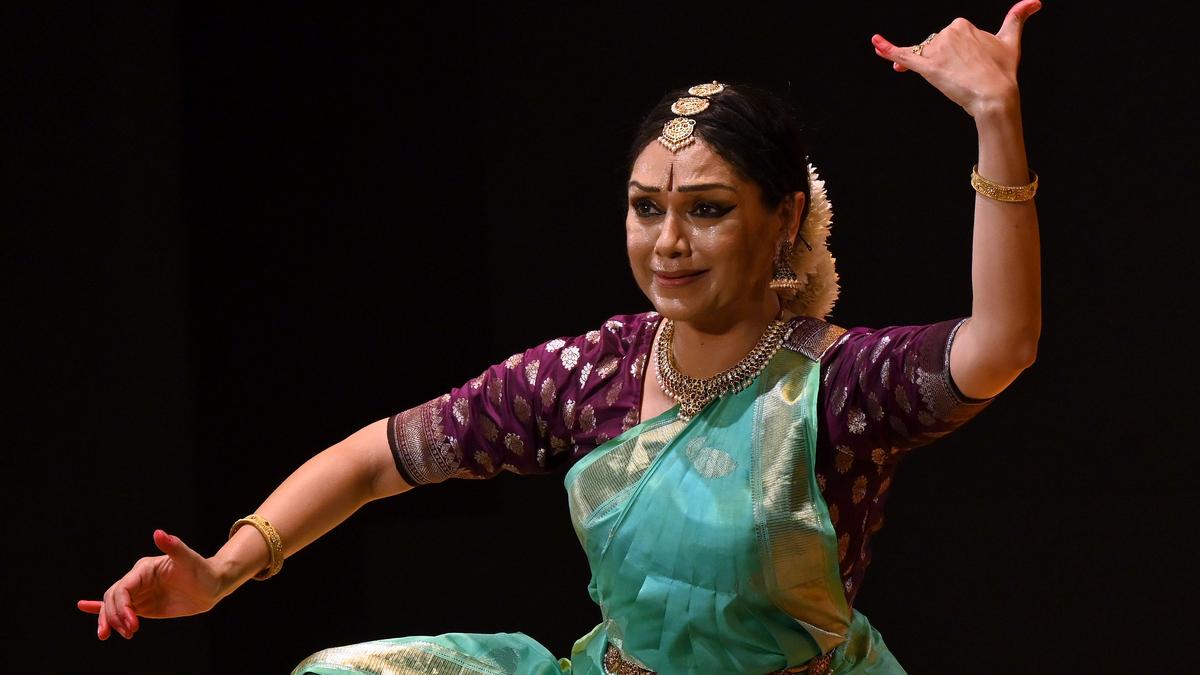
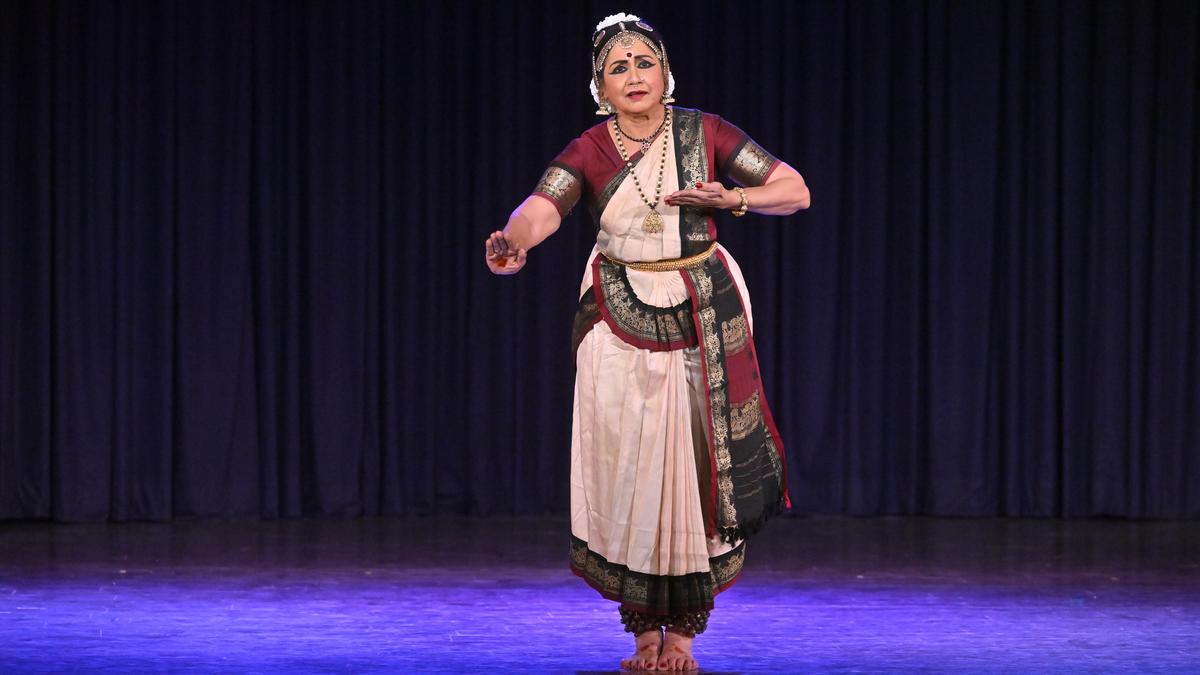
    Rama Vaidyanathan unfolded a spectrum of emotions through evocative abhinaya.
    | Photo Credit: K. Pichumani

    When love becomes the focal point of a dance performance, the experience is sublime. That was the feeling Rama Vaidyanathan’s performance on the inaugural day of the Music Academy dance festival evoked among the audience.

    Senior Bharatanatyam dancer Rama Vaidyanathan during her performance on the inaugural day of The Music Academy’s dance festival.
    | Photo Credit:
    K. Pichumani

    Three compositions were chosen to explore the idea of love in its varied facets. The first was the love of anticipation and disappointment, the second of surrender and devotion, and the third of passion and yearning. Shabdam, a composition that blends simple korvais and abhinaya, has become a rarity in the Bharatanatyam repertoire these days. Rama chose to perform a ragamalika shabdam by Thanjavur Arunachala Pillai as the opening number. A heroine confesses to her confidante her deep love for the lord of Chidambaram, and her doubts if he would reciprocate her feelings. Rama layered it with an imaginative expansion of ideas, elevating a simple conversation to something poetic.

    The varnam, a composition of M. Balamuralikrishna in raga Thodi, explored a different facet of love towards the universal mother Devi, the benevolent benefactor who alleviates the fears and sorrows of her devotee.

    Rama Vaidyanathan depicted creatively imagined moments through impeccable sancharis. 
    | Photo Credit:
    K. Pichumani

    What enhanced this presentation was how attuned the dancer was to the music. As Raghavendra Prasad played the flute, she came up with myriad postures to create a visual imagery of the same. The vibrant jathis composed by Sumodh Sridharan and rendered by Sridhar Vasudevan with finesse, the beautiful swara passages sung with rich musical intonations by Vishwesh Swaminathan formed a seamless tapestry of music and movement.

    At the end of the pallavi, anupallavi and charanam, creatively imagined moments were depicted through impeccable sancharis that brought out the bond between a devotee and the goddess in a captivating manner.

    The orchestra’s nuanced accompaniment enhanced the overall appeal of Rama Vaidyanathan’s performance.
    | Photo Credit:
    K. Pichumani

    Taking verses from Kalidasa’s ’Ritusamharam‘, Rama depicted the anguish of separated lovers. The piece revolved around the mango tree, with every emotion of the hero and heroine beautifully linked to different imageries of Nature, including birds, clouds, flowers and the Sun. Soorya Rao’s lighting was the highlight here.

    Rama’s performance was a testimony to how the repertoire can be reinterpreted to accommodate new expressions and ideas.

  • Revisiting the musical genius of Harikesanallur Muthiah Bhagavatar

    Revisiting the musical genius of Harikesanallur Muthiah Bhagavatar

    [ad_1]

    What is the common thread linking ragas such as Mohanakalyani, Hamsanandi, Valaji, Karnaranjani, Pasupathipriya, Gaudamalhar, Sarangamalhar, Vijayanagari, Vijayasaraswathi, Budhamanohari, Sumanapriya and Niroshta? The answer lies in one of the most significant contributions of Harikesanallur Muthiah Bhagavatar (1877–1945) to Carnatic music: he was the composer who first gave form and life to these ragas through his kritis.

    Erudition, an affluent background and a commanding presence placed Muthiah Bhagavatar among the elite in the musical world. He was the first musician in India to be awarded a doctorate (in 1943), and is credited with nearly 500 kritis composed across Sanskrit, Telugu, Tamil and Kannada.

    To mark Muthiah Bhagavatar’s 148th Jayanthi, maestro Madurai T.N. Seshagopalan’s Gurukrupa Trust recently organised an award ceremony and a lecture-demonstration on the musician-composer, Sanskrit scholar, vaggeyakara, musicologist and Harikatha exponent at Ragasudha Hall.

    While violin virtuoso M. Chandrasekaran was honoured with the ‘Gayaka Shikamani Dr. Harikesanallur Muthiah Bhagavathar Award’, there could not have been a fitter presenter for the lec-dem than Seshagopalan himself — a direct musical descendant, being a disciple of Ramanathapuram C.S. Sankarasivam, whose guru was Muthiah Bhagavatar.

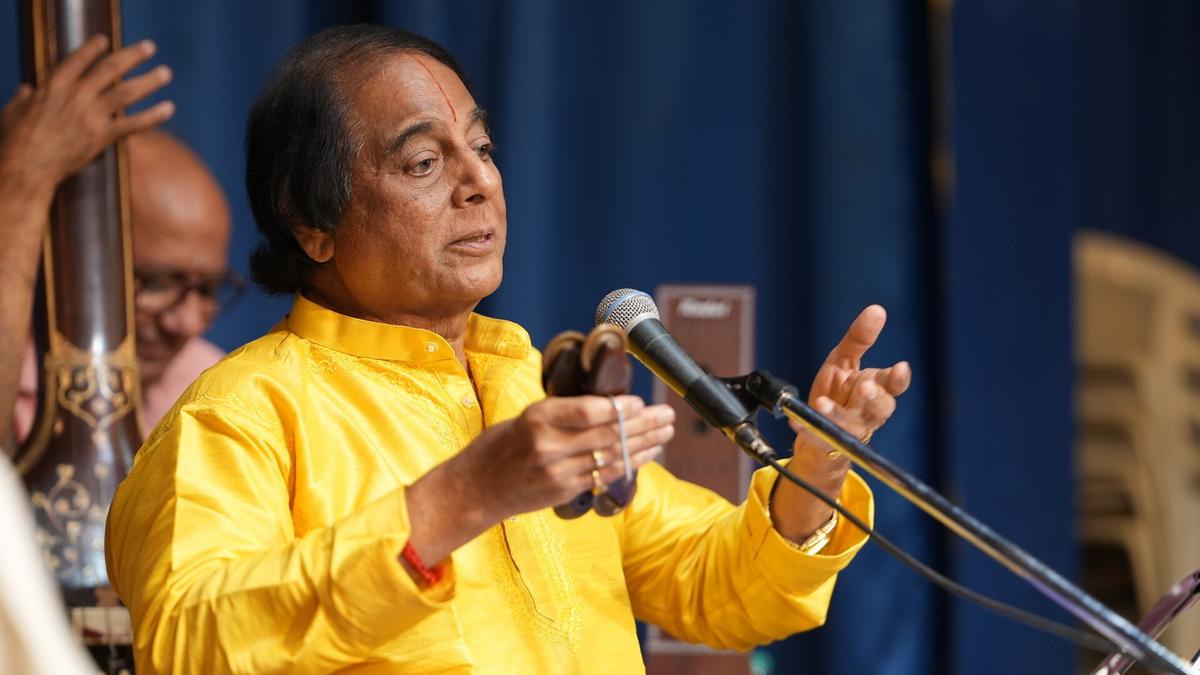
    T.N. Seshagopalan accompanied by T.N.S. Krishna (vocal support), R.K. Shriramkumar (violin), and Trichur C. Narendran (mridangam).
    | Photo Credit:
    Nick Haynes

    A multi-faceted musician himself, T.N. Seshagopalan has popularised scores of Bhagavatar’s compositions and has even set chittaswaras for about 15 of them. He began with Bhagavatar’s Sriranjani kriti ‘Sakthi vinayaka’ followed by his own shloka ‘Manda smitha mukhamboruham’ extolling his paramaguru’s personality. He regaled the audience with interesting anecdotes and insightful snippets from Bhagavatar’s life, weaving them together with his tongue-in-cheek humour. T.N.S. Krishna lent vocal support and seasoned accompanists R.K. Shriramkumar (violin) and Trichur C. Narendran (mridangam) provided admirable instrumental backing.

    Orphaned before age nine, Muthiah Bhagavatar was raised by his maternal uncle Lakshmana Suri, father of musicologist T.L. Venkatarama Iyer. Grounded initially in the Vedas, he then underwent rigorous musical training in Thiruvaiyaru. He returned to Harikesanallur at 16, hailed as a ‘Maha Gayaka’ and earned the patronage of Moolam Tirunal of Travancore when he was barely 20.

    Seshagopalan dismissed the notion that Bhagavatar turned to Harikatha at 27 due to a fading voice, explaining that he sought a wider audience amid its growing public craze. In doing so, he innovatively enriched its repertoire by incorporating forms such as kavadi chindhu, Nondi chindhu, kili kanni, themmangu, virutham and shloka. He noted, with a touch of humour, that vocalists of that era possessed ‘mayakku (mesmerising) voice’ unlike today’s reliance on amplified ‘mic voice’.

    Bhagavatar’s discourses, particularly on ‘Valli Parinayam’, ‘Tyagaraja Divya Charitram’ and ‘Tyagaraja Ramayanam’, gained immense popularity; and he even delivered one praising the British rule, reflecting the era’s complexities of patronage. He also introduced new ideas and songs for specific situations in his performances. The ‘English Note’, later made famous by Madurai Mani Iyer, was one such improvisation as he sang it in ‘Rukmini Kalyanam’ and ‘Subhadra Kalyanam’, using its rhythmic drive to musically mimic a speeding chariot in abduction scenes. He also adopted it for the Durvasa Bhiksha episode, varying the tempo to suit the situation.

    T.N. Seshagopalan demonstrated how the third muktayi swara in the Mohanam kriti ‘Manamohan’ can be interpreted as sahityam also.
    | Photo Credit:
    Nick Haynes

    Seshagopalan said that the tana varnam ‘Manamohana’ in Mohanam was created by Bhagavatar for the Arangetram of his disciple Sankarasivam. He demonstrated how the third muktayi swara therein can be interpreted as sahityam also. Similarly, he highlighted the daru varnam ‘Mathe’ in Khamas where the entire final charanam is an example of masterful swarakshara sahityam.

    Bhagavatar’s stay in Varanasi and his exposure to Hindustani music, particularly raga Sohini, resulted in his Hamsanandi kritis, and Pasupathipriya was an inspiration from raga Durga. His creative acumen was recognised nationally when he composed the Vijayanagari-based signature tune for All India Radio. He also composed about 10 thillanas.

    According to Seshagopalan, crediting someone with ‘inventing’ or ‘creating’ a raga (barring the vakra variety) is a misnomer. He asserted that a raga can only be discovered, and never created, because its constituent notes have always existed.

    No narrative on Bhagavatar’s music could be complete without reference to his ingenious kriti ‘Rajaraja radhithe’ in Niroshta. The raga is formed by the five notes that do not involve lip movement (excluding ma and pa). The prefix ‘Nir’ means ‘devoid of’ and the noun ‘Oshta’ refers to lips. In a stunning parallel, the entire lyrics — not just the swara structure of the raga — shun labial consonants, not requiring the lips to press together. Seshagopalan said he composed a thillana in the raga, inspired by his paramaguru.

    The engaging presentation concluded with Bhagavatar’s ‘Mangalam bhavatu’ in Pantuvarali.

    Published – January 24, 2026 04:50 pm IST

  • ‘Idol I’ K-Drama review: Sooyoung and Kim Jae-young helm a whodunit amidst glitz, glamour and deception

    ‘Idol I’ K-Drama review: Sooyoung and Kim Jae-young helm a whodunit amidst glitz, glamour and deception

    [ad_1]

    <!–[if IE 9]><![endif]–>

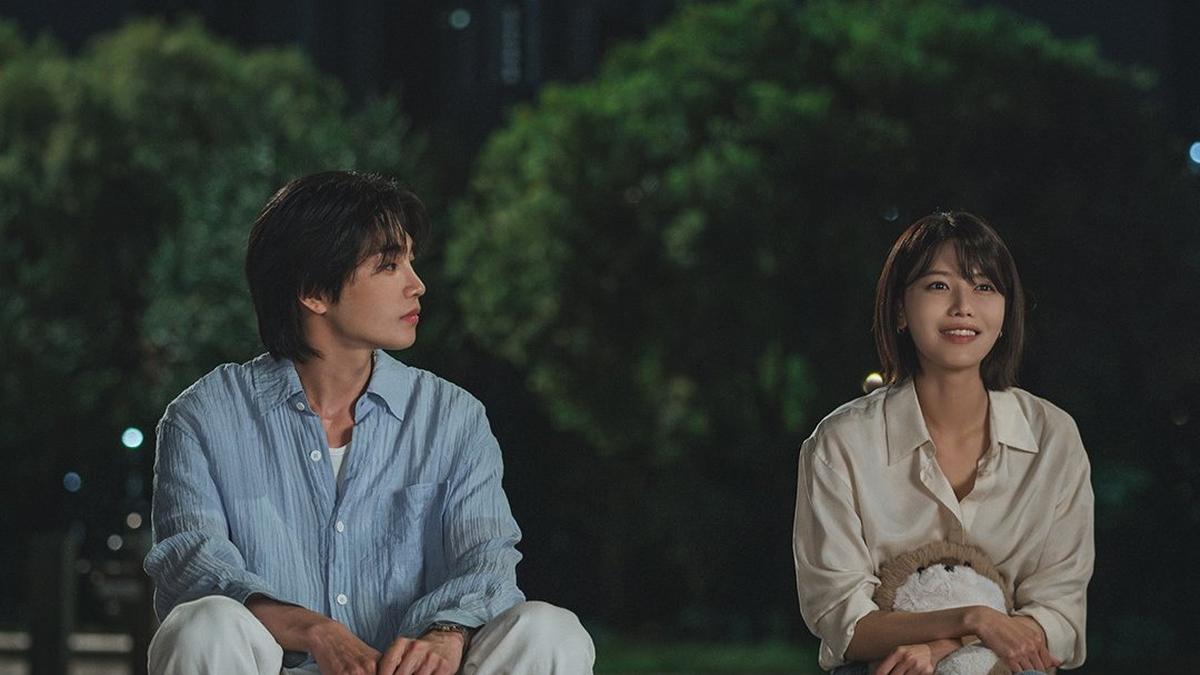
    Kim Jae-young ans Sooyoung in a still from the show
    | Photo Credit: Netflix

    In the first episode of Idol I, Do La-ik (Kim Jae-young), a famous singer and member of the group Gold Boys is on his couch and cradling a drink when he suddenly calls out to someone seemingly in his house. We assume he was all alone at home and in what feels like a jumpscare, two women jump out from behind the curtains, self-professed rabid fans of his who admonish him for drinking and not taking enough care of himself. 

    This K-Drama which places an idol (a popular term used to refer to an entertainer in the music industry) at its centre starts off by making its viewers squirm. Do La-ik has to contend with fans stalking him, aggressive behaviour at a fansign event, gossipy reporters on his tail and his deteriorating mental health. If you are a K-pop stan, it wouldn’t take you long to identify some of these isolated incidents that have been seemingly inspired by real-life happenings. 

    Matters soon come to a head when La-ik’s bandmate and friend is found murdered in his apartment and he is named the primary suspect. La-ik’s inability to remember anything from the night of the incident, having passed out drunk and on heavy medication doesn’t help his case. 

    Idol I (Korean)

    Director: Lee Kwang-young

    Cast: Kim Jae-young, Sooyoung, Jung Jae-Kwang

    Episodes: 12

    Runtime: 59-64 minutes

    Storyline: A famous idol embroiled in a murder investigation turns to a no-nonsense attorney who is seecretly, his biggest fan, to help him out

    Enter Maeng Se-na(Choi Sooyoung), a competent, no-nonsense attorney who is rising up the ranks as a lawyer for the wrongfully convicted. Se-na might be a workaholic who seemingly abhors all niceties, but her one big secret is that she is a secret fangirl of Gold Boys and particularly La-ik. When her favourite idol is convicted, she makes a beeline to defend him. Her decision however isn’t just driven by her being a fan; she is convinced he is innocent, and doesn’t want him wrongfully persecuted much like her father was many years ago. 

    Over the course of twelve episodes, Idol I plays out like a slow-burn whodunit. Alongside an ongoing police investigation, and an obnoxious prosecutor Kwak Byung-gyun(Jung Jae-kwang) hell bent on indicting La-ik, Sae-na sets out to uncover what really happened. The Gold Boys were a group in turmoil and this infighting makes up for a bulk of the drama, but so does their strained ties with their agency and Laik’s shaky ties with his mother. For a chunk of its runtime, La-ik too seems to be unreliable when it comes to his version of how it all happened and this helps with the suspense. He is infuriatingly stubborn and refuses to cooperate as Se-na plods along to help his cause. 

    A still from ‘Idol I’
    | Photo Credit:
    Netflix

    For Se-na, who is a fangirl, having her favourite idol co-habit with her might be the stuff of dreams and elaborate fanfiction, but she insists on boundaries and stashes away all her mech and life-size posters in a bid to be professional about it all. A show like this of course, requires a willing suspension of disbelief especially given how there is a slow and steady relationship that develops between Se-na and La-ik; a strict no-no if you’re going to look at how ethical this all is. The show can’t quite make its mind up about Se-na; if she is shown as someone who is capable of drawing boundaries, we soon rewind to see how heartbroken she was when her celebrity crush was rumoured to have been in a relationship. Why this dissonance when it comes to a character who is otherwise shown to be smart, capable and empathetic? 

    It helps however that the show has a central mystery that sustains interest, and has earnest, likable leads. In a nice touch of meta casting, it is Sooyoung, a hugely successful idol in real-life, who plays the fangirl here. Both she and Kim Jae-young slip into their roles with ease and make a case for their characters, each dealing with demons of a different kind. Jung Jae-kwang, who was last seen as a brooding anesthesiologist in Trauma Code: Heroes On Call gets an interesting character here, and isn’t just a one-note villain who hams it up. 

    In its latter half, Idol I could have done with tighter writing since much like the investigating team on the show, we are also left groping in the dark as to how all of this will eventually go down. The show thankfully does find its footing towards the end, and instead of an abrupt end, manages to dwell on whether everyone does manage to emerge from all the chaos, unscathed. 

    There have been several K-Dramas in the past that include the 2021 show Imitation which focuses on the toll of being under public scrutiny and the harsher realities of fame, Idol I however makes for an entertaining whodunit over anything else. Come for the suspense, and stay for the reveal, with romance sprinkled in of course. 

    Idol I is currently available to stream on Netflix

  • ‘A Knight of the Seven Kingdoms’ series review: A Hedge Knight shows Westeros how to trim the fat

    ‘A Knight of the Seven Kingdoms’ series review: A Hedge Knight shows Westeros how to trim the fat

    [ad_1]

    The awaited Westerosi prequel spinoff, A Knight of the Seven Kingdoms, begins with Irish actor and former rugby player, Peter Claffey’s towering simpleton, Ser Duncan the Tall, digging a grave beside a lone tree, which is the most honest piece of staging this franchise has offered in years because it establishes immediately that this story is about labour before legacy and myth. ‘Dunk’ has just lost the hedge knight he squired for, and what that leaves him with is but a handful of possessions, a body trained to obey (at the cost of a few too many clouts in the ear), and a claim to knighthood that no institution is prepared to recognise without witnesses or blood. The series stays close to that problem for its entire six-episode run, and its eschewal to inflate the premise into something grander is the source of both its charm and its bite.

    Set roughly ninety years before Game of Thrones, the show adapts George R. R. Martin’s Tales of Dunk and Egg novellas with a whimsy that feels almost radical for a prestige fantasy spinoff. The season unfolds over a few days in and around Ashford Meadow, where a tournament has drawn princes, knights, performers, servants, and opportunists into the same muddy field, and the writing explores that convergence of wannabe heroes looking to prove their chops as a makeshift economy with rules that benefit those who already know how to play them. By keeping the geography tight and the episode count short, the series forces every scene to pull weight. When something goes wrong, there is no adjacent plotline to dilute the impact, and when someone makes a bad decision, the fallout arrives quickly and publicly.

    A Knight of the Seven Kingdoms (English)

    Creator: Ira Parker

    Cast: Peter Claffey, Dexter Sol Ansell, Daniel Ings, Bertie Carvel, Shaun Thomas, Tanzyn Crawford, Rowan Robinson, Finn Bennett

    Episodes: 6

    Runtime: 30-40 minutes

    Storyline: A young and naive but courageous knight, Ser Duncan the Tall, and his diminutive squire, Egg, face a series of dangerous exploits

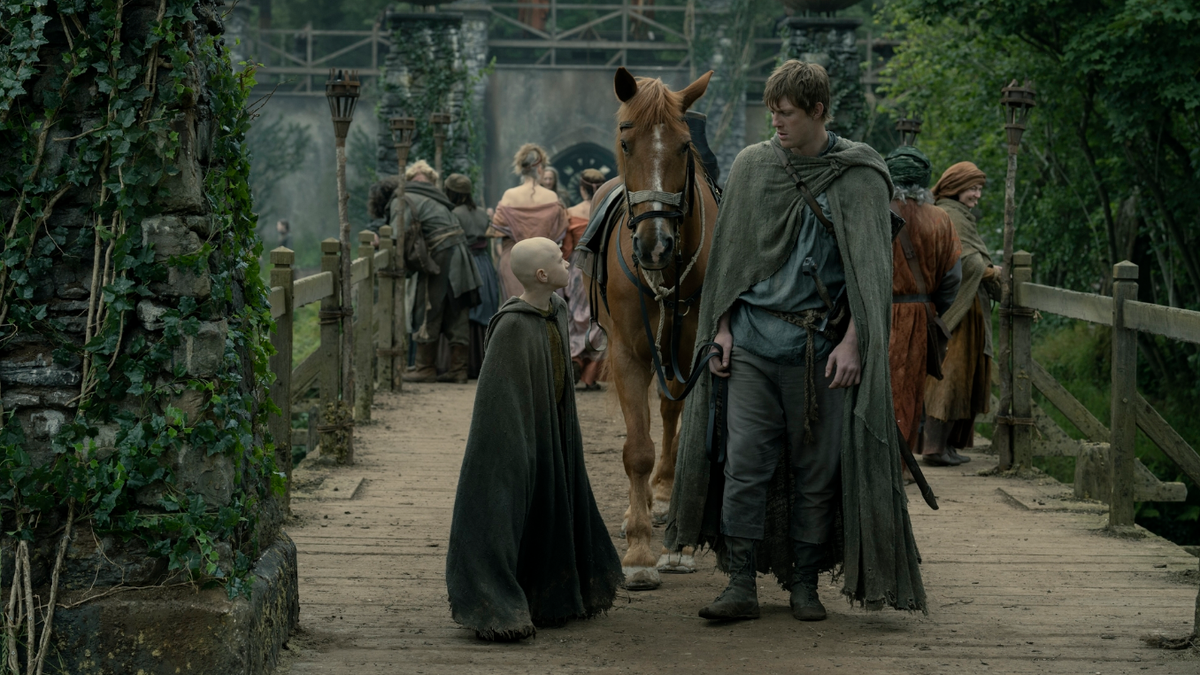
    Claffey plays Duncan as a man whose body keeps promising competence that his circumstances cannot deliver. He is enormous, slow-moving, plainly dressed, and visibly earnest, which causes strangers to overestimate his authority and institutions to dismiss him quickly. Dunk is badly prepared for this environment, but Claffey never leans on charm to smooth that contradiction. He believes in knighthood because it gives structure to his life, and the show repeatedly places him in situations where that belief sounds naïve once it has to compete with regal boredom and legal precedent. Humour grows out of watching Duncan try to behave honourably in systems designed to reward spectacle and cruelty, and the sting is surprisingly effective because the show never lets him off the hook for his ignorance.

    The tiny, bald stable-boy Egg, who insists on becoming Duncan’s squire, sharpens that tension. A revelatory Dexter Sol Ansell plays him as observant and socially agile, a child who has learned to read rooms because his safety has depended on it (those familiar with the source material would already know why). Their partnership forms through logistical sentimentality as they negotiate food, shelter, money, and appearances while exploring the tournament, and those conversations do more world-building than any exposition dump ever could. When Egg interrogates Dunk about songs, customs, or rules, he is usually doing so because misunderstanding them carries a cost, and the show uses that friction to explain Westerosi lore to the uninitiated without slowing the story down.

    A still from ‘A Knight of the Seven Kingdoms’
    | Photo Credit:
    HBO

    The tournament itself is staged as a hierarchy machine. Knights make merry and rehearse their reputations while servants, merchants, and performers keep the spectacle running, and the series consistently frames these interactions to show who absorbs the labour and who receives the applause. A puppeteer’s dragon draws more wonder than any real one could, partly because it is cheap and full of child-like wonder, far removed from the contrived dragon-back conquests from House of the Dragon’s latest season — the tongue-in-cheek imagery seems to take shots at how hollow the franchise’s usual obsession with scale has become. The show’s best lines often come from people who do not benefit from pageantry and therefore feel free to name its uselessness, and those observations cut deeper than speeches about honour because they come attached to money and exhaustion.

    Directors Owen Harris and Sarah Adina Smith shoot the season with an emphasis on proximity and aftermath. The jousts are filmed close enough to register fear and imbalance, and the camera lingers after impact to show what injury actually looks like once the cheering stops. Violence escalates midway through the season through procedure, which makes it colder and more disturbing, because it is written off as sanctioned or justified. The tonal shift from broad, bodily humour in the early episodes to something darker and more punitive later on works because it follows institutional attention. This is a Westeros where harm is administered correctly, and the show understands how unsettling that is when you are standing on the wrong side of the rulebook, outside the patronage of the great houses.

    The ensemble remains deliberately limited. There are memorable figures who drift in and out of Duncan’s path, but the series resists the franchise urge to stockpile personalities, preferring instead a handful of sharply drawn presences who arrive, exert pressure, and move on. Daniel Ings’ Ser Lyonel Baratheon is all volume and appetite, his drunken bonhomie functioning as a charming comic relief which is endlessly entertaining. Bertie Carvel’s Baelor Targaryen carries himself with control, projecting a fairness that seldom graces his royal kind. Even the flashbacks to Danny Webb’s Ser Arlan of Pennytree resist nostalgia, presenting him as a half-formed moral influence whose evasions and omissions explain Duncan’s enduring fighting spirit. 

    A still from ‘A Knight of the Seven Kingdoms’
    | Photo Credit:
    HBO

    Modest production choices across the series’ Northern Ireland locations reinforce its sense of restraint. Dan Romer’s pretty score favours folk textures over the inherited bombast of GoT veteran Rami Djawadi; the absence of an elaborate title sequence also refuses to front-load mythology. Everything looks lived in, maintained, and slightly uncomfortable, which suits a story about people existing at the mercy of ruthless systems.

    What ultimately makes A Knight of the Seven Kingdoms work is that it consistently abdicates the sprawl of its predecessors. Duncan’s commitment to knighthood demands constant upkeep, and Egg’s scepticism functions as a corrective. Their pairing clicks into a well-worn but durable television shape as the oversized protector and the precocious companion — a lineage that runs from The Mandalorian to The Last of Us. This is a tried-and-tested structure recent prestige shows have leaned on heavily because audiences respond to it, and A Knight of the Seven Kingdoms benefits from trusting that engine instead of pretending it has invented a new one.

    Compared to Game of Thrones, which built its reputation through accumulation and shock, A Knight of the Seven Kingdoms builds confidence through containment. It understands exactly how much story it has, tells it cleanly, and stops. For a franchise addicted to expansion, that prudence makes Westeros feel, for once, like a place normal people actually have to live in rather than a high fantasy RPG designed to satiate diehards.

     A Knight of the Seven Kingdoms is currently streaming on JioHotstar with new episodes premiering weekly.
    Published – January 28, 2026 05:30 pm IST

  • Roja Kannan goes on a temple trail in her new work

    Roja Kannan goes on a temple trail in her new work

    [ad_1]

    <!–[if IE 9]><![endif]–>

    Roja Kannan’s thematic production on Tiruchendur Murugan.
    | Photo Credit: M. Srinath

    Roja Kannan, along with her students, unravelled the intriguing aspects of Tiruchendur Murugan in ‘Theeraavinaitheerkum Thiruchendur’, in her carefully-crafted recital at Bharatiya Vidya Bhavan.

    The evening commenced with pushpanjali in raga Shanmukhapriya. Thiswas followed by a viruttam and Subramania kavuthuvam with verses from Thiruchendur Shanmuga Stotram. In each of these items, the synchronised movements of the dancers aligned perfectly with the jathi.

    Murugan as Valli Kanavan was depicted through expressive abhinaya and gestures in the Ragamalika Shabdam. It was heartening to see the context being reinforced through the traditional margam.  

    Students of Bharathanatyalaya presenting the thematic production ‘Theeraavinaitheerkum Thiruchendur’.
    | Photo Credit:
    M. Srinath

    Parur Ananthashree and Sahana Selvaganesh, senior students of Bharatha Natyalaya, performed Lalgudi Jayaraman’s varnam in Nilambari raga, Adi tala, which celebrates Tiruchendur Murugan. The dancers touched upon the sthala purana of Thiruchendur and depicted how Muruga is worshipped by his devotees — observing fast and carrying the kavadi on their shoulders.  

    The highlight was Roja Kannan’s soulful depiction of the story of Kumaraguruparar in Periyasami Thooran’s  song ‘Muruga muruga yenraal’ in Saveri raga, Misra Chapu tala. The story goes that Kumaraguruparar, who was a mute till he was five, was brought to Tiruchendur by his distraught parents, where he began to talk, believed to be due to the grace of Muruga. The panner elai vibhuthi of Thiruchendur cured Adi Sankarar and Vishwamitrar from their debilitating illnesses. These were portrayed through Adi Sankarar’s ‘Subramanya Bhujangam’ presented in Ragamaliga.

    Roja kannan’s thematic production on Tiruchendur Murgan.
    | Photo Credit:
    SRINATH M

    The concluding piece was a thillana in raga Tillang followed by Tiruppugazh. The orchestra included Roja Kannan and Parur M.S. Ananthashree (nattuvangam), Prithvi Harish (vocal), G. Vijayaraghavan (mridangam) and R. Kalaiarasan (violin).

  • Mahati Kannan takes the Bharathanrithyam legacy forward

    Mahati Kannan takes the Bharathanrithyam legacy forward

    [ad_1]

    <!–[if IE 9]><![endif]–>

    Mahati Kannan.
    | Photo Credit: B. Velankanni Raj

    Mahati Kannan’s Bharathanrityam performance for Krishna Gana Sabha’s Pongal Dance Festival was grounded in tradition. She was supported by Gayathri Kannan on the vocals with Anantha Shree providing vocal support and nattuvangam, Shreelakshmi Bhat on the violin, and Nagai P. Sriram on the mridangam.

    The recital opened with a Pushpanjali, following which Mahati took up the Tiruppavai of the day, ‘Koodarai vellum’. This choice mirrored the customary practice in Carnatic concerts where the Tiruppavai of the day is rendered. Its translation into movement brought a time-tested framework into the dance space.

    One of Mahati’s strengths is the variety of compositions she chooses. This was evident in ‘Ma mayil meedhu eri vaa’, a composition by Meenakshi Subrahmanyam on Muruga. The piece permitted ample scope for sancharis, particularly episodes depicting Muruga as Swaminatha, the divine guru who revealed the meaning of the Pranava to Shiva himself. These narratives were handled with clarity, making room for the philosophical idea to emerge without excessive elaboration.

    Mahati Kannan.
    | Photo Credit:
    B. Velankanni Raj

    The central piece of the evening was the varnam ‘Vanamala shri gopala’ by Kunrakudi Krishna Iyer, set in Valaji. The varnam’s restrained musical and lyrical structure provided fertile ground for dance, allowing movement to remain at the forefront. For each line, Mahati drew upon episodes from the Bhagavatam, sometimes juxtaposing them creatively — as when she questioned Krishna on the contrast between his stealing the gopis’ garments and his protection of Draupadi’s honour. Such moments added an element of introspection to the presentation.

    In the post-charanam section, the tempo increased, and Mahati demonstrated a notable interplay of karanas and adavu-based nritta. Karanas were not treated as isolated inserts but were woven into rhythmic passages, particularly in the endings of ettugada swaras, each concluding with a distinct spatial resolution. This thoughtful variation enhanced visual interest and highlighted a Bharathanrityam approach that integrates karana vocabulary with structured adavu patterns.

    Mahati demonstrated a notable interplay of karanas and adavu-based nritta.
    | Photo Credit:
    B. Velankanni Raj

    The pieces that followed continued this exploration. ‘Neela vaanam’ in Punnagavarali by Oothukkadu Venkatasubbaiyer, which describes Krishna amidst the lushness of Vrindavan, was approached with sensitivity. The composition naturally lends itself to suggestive rather than descriptive abhinaya, and the inclusion of jathis structured with karanas added rhythmic interest without disturbing the contemplative tone of the song.

    ‘Vandeham sharadaam’ by Swami Dayananda Saraswati included a sanchari drawn from the ‘Shankara Vijayam’, narrating the episode of Adi Shankara and Sharadamba, which was conveyed with restraint. The concluding ‘Adbhuta natanam’, a composition by Puliyur Doraiswamy Iyer on Nataraja, tuned by dancer-scholar Padma Subrahmanyam, presented an expanded karana inventory, connected appropriately using charis to give the choreography a complete kinetic expression.

    The orchestra with Gayathri Kannan and Anantha Shree on the vocals, Shreelakshmi Bhat on the violin and Nagai P. Sriram on the mridangam contributed significantly to Mahati Kannan’s performance.
    | Photo Credit:
    B. Velankanni Raj

    Gayathri’s pleasant and steady vocal presence contributed significantly to the recital, supported ably by Anantha Shree. Shreelakshmi’s violin complemented the dance sensitively, while Nagai Sriram’s intuitive mridangam accompaniment responded closely to the dancer’s rhythmic needs.

    Mahati’s recitals continue to stand out for the proportion and precision of karanas employed alongside adavus, reflecting the choreographic vision of Padma Subrahmanyam. With continued guidance, Mahati is well-positioned to find new ways of presenting Bharathanrityam that resonate with younger audiences.

  • ‘The Wrecking Crew’ movie review: Jason Momoa, Dave Bautista breeze through this action comedy

    ‘The Wrecking Crew’ movie review: Jason Momoa, Dave Bautista breeze through this action comedy

    [ad_1]

    <!–[if IE 9]><![endif]–>

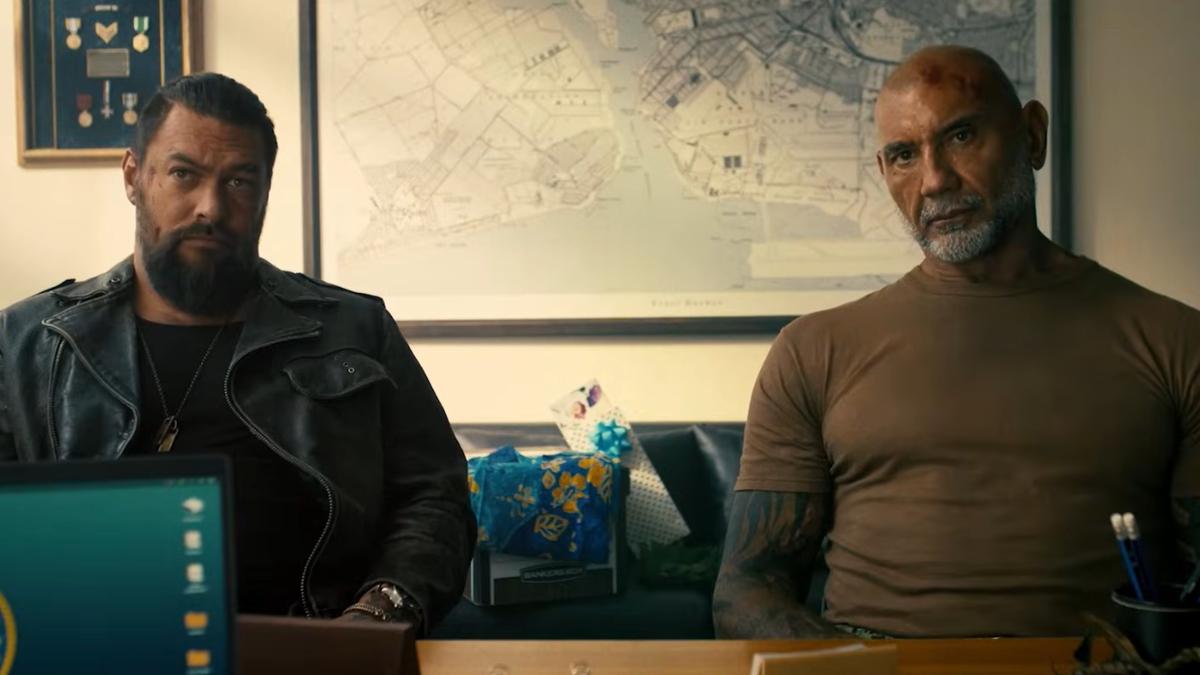
    A still from the film
    | Photo Credit: Prime Video

    We first see James (Dave Bautista) calmly sitting cross-legged underwater, while others give up and go to the surface gasping. Elsewhere in Hawaii, a man posts a package and is run over by a van.

    The Wrecking Crew (English)

    Director: Ángel Manuel Soto

    Cast: Jason Momoa, Dave Bautista, Claes Bang, Temuera Morrison, Jacob Batalon, Frankie Adams, Miyavi, Stephen Root, Morena Baccarin

    Storyline: Two estranged brothers must work together to find out the truth about their father’s death

    Runtime: 122 minutes

    James, a navy SEAL instructor who trains cadets in underwater breath‑holding and endurance, gets a phone call telling him that his father Walter (Brian L. Keaulana) was killed in a hit and run.

    James is a steady, sober family man and the exact opposite of his half-brother Jonny (Jason Momoa), who is raising hell as a cop on the Reservation in Oklahoma. We first meet Jonny driving home on a mean bike to an angry girlfriend, Valentina (Morena Baccarin), who is furious with him for having forgotten her birthday. He makes matters worse by trying to sweet-talk her in Spanish when she is Brazilian and he should be using Portuguese.

    The brothers have not spoken for 10 years and James is unwilling to call Jonny to inform him of their father’s death. James’ wife, Leila (Roimata Fox) informs Jonny of his father’s death. Much to James’ surprise, Jonny turns up for the funeral. The visit from a bunch of bloodthirsty yakuza demanding the package Walter posted might have convinced Jonny that there is more to his father’s death than a simple hit and run.

    A still from the film
    | Photo Credit:
    Prime Video

    Once Jonny is in Hawaii, he stirs things up as only he can and soon both Jonny and James are fighting yakuza, the local Syndicate ruled with an iron fist by Mr K. (Branscombe Richmond), and sundry villains while digging through Walter’s past for clues to his death.

    There is an oily hotel magnate, Marcus Robichaux (Claes Bang), his muscle in the form of Nakamura (Miyavi) and his yakuza goons, and some shady casino deal. The police led by Karl Rennert (Stephen Root) persist in thinking Walter’s death was accidental.  

    In between all the running, shooting, and things that go bang, the brothers iron out their differences. Jonny spends time with James’ son, Kai (Josua Tuivavalagi), and daughter, Lani, (Maia Kealoha) who wishes to braid Jonny’s hair.

    Pika (Jacob Batalon), who helped Walter with tech stuff, assists Jonny, albeit reluctantly. Jonny’s cousin, Nani (Frankie Adams) also helps; her job as assistant to Governor Peter Mahoe (Temuera Morrison), proves useful in getting information quickly.

    A still from the film
    | Photo Credit:
    Prime Video

    The Wrecking Crew moves at the speed of light with spiffily choreographed action sequences (that helicopter chase is out of this world) and sharp one-liners.

    The bevy of pop anthems, including Guns N’ Roses’ ‘Paradise City’, Air Supply’s ‘Making Love out of Nothing at All’, Duran Duran’s ‘Ordinary World’, and Billy Idol’s ‘Eyes Without a Face’ add another level of fun. RZA’s ‘Like a Drum’ is used to great effect in the final punch-up.

    Hawaii looks lovely and the chemistry between Momoa and Bautista is crackling. While the concept is not wildly original, but by giving a polished execution to every tried-and-tested-action-movie beat, The Wrecking Crew offers a delightful escape from real-world grimness.

    The Wrecking Crew is currently streaming on Amazon Prime Video

  • ‘Daldal’ series review: An emotionally exhausting slog

    ‘Daldal’ series review: An emotionally exhausting slog

    [ad_1]

    <!–[if IE 9]><![endif]–>

    Bhumi Pednekar in ‘Daldal’.
    | Photo Credit: Prime Video India/YouTube

    A tale of damaged people caught in a psychological swamp, Daldal is a thriller that is more keen on uncovering the motivations behind the crime than on who committed it. The plot follows DCP Rita Ferreira (Bhumi Pednekar) investigating a series of gruesome murders while confronting her guilt-ridden past and a patriarchal system that projects committed female police officers as mere showpieces.

    It promises a taut cat-and-mouse dynamic with personal stakes, but its engagement with issues like gender, mental health, and systemic decay proves more superficial than meaningful. It is a kind of creative enterprise that tries hard to be hard-hitting than it actually is, that mistakes prolonged misery for depth.

    When Rita solves a complex case of child trafficking, she is promoted as the youngest female DCP in the bustling metropolis. While the promotion irks her male colleagues, the case wins her the ire of a serial killer who is also struggling to cope with a painful past. The series looks into how the orphanages, the shelter homes that are meant to protect innocence, become centres of exploitation, breeding discontent and contempt for society and the system in young minds.

    Series creator Suresh Triveni and director Amrit Raj Gupta create a quietly unsettling atmosphere with haunting visuals, tense background score, and bloody imagery, ticking all the boxes for a binge-worthy experience for thriller junkies. But the addicts have consumed so much of this designer dope that they have become desensitised to the regular dose.

    As writers take the frequently travelled road on OTT platforms these days, a sense of sameness sets in. The series is based on Vish Dhamija’s bestseller, Bhendi Bazaar, which became a rage in pulp publishing when it was published in 2019.

    Since then, the glass ceiling for female representation in police procedurals has been broken monthly. Delhi Crime is streaming in living rooms, and Mardani is running in theatres. The surprise value of female actors playing the protagonist, the antagonist, and the supporting role has gradually dissipated.

    To compensate, the makers seem to be in a race to outdo competitors on the gore quotient and information density. When the camera stays and returns to faces choked with chocolate, chicken, etc., the craft is reduced to a gimmick, a modus operandi in which the emotional resonance feels manufactured to generate jitters.

    Rather than innovating in the characters’ psychology, it leans on clichés. The interplay between crime solving and psychological introspection becomes increasingly predictable as the series progresses.

    ALSO READ: ‘The Royals’ series review: Ishaan Khatter and Bhumi Pednekar fail to hold court in this predictable affair

    Bhumi Pednekar sheds the reporter’s garb in Bhakshak (2024) to don the uniform and the haunted-cop archetype. In an author-backed role of a girl grappling with self-doubt, Bhumi is suitably stoic and tries to blend vulnerability with quiet determination, but her effort to appear grim and grounded results in emotional inertness. As the androgynous antagonist, Samara Tijori generates dread and empathy in turn, but she lacks the physicality the role demands, and eventually, the character arc makes her performance one-dimensional.

    Geeta Agrawal and Aditya Rawal show how to address gaps in writing and predictability in character progression. As the devoted subordinate of Rita, Geeta lights up the proceedings, and Aditya’s eyes reflect the truthful pain and anguish that otherwise remain buried in the dense narrative.

    Daldal is currently streaming on Amazon Prime.

  • ‘Valavaara’ movie review: Sutan Gowda’s debut feels like a warm hug

    ‘Valavaara’ movie review: Sutan Gowda’s debut feels like a warm hug

    [ad_1]

    <!–[if IE 9]><![endif]–>

    A still from ‘Valavaara’.
    | Photo Credit: Morph Productions/YouTube

    Moments before the intermission of Valavaara (meaning favouritism), the movie’s lead character, Kundesi (Vedic Kaushal), lets out a huge cry of desperation. The scene is a testament to debutant director Sutan Gowda’s control over the craft, as he ensures we are as anxious and stressed about the film’s central plot point as the little boy, Kundesi. We then see a subtle yet “mass” interval bang, as Kundesi breaks the fourth wall with a smile.

    Just like the scene, Valavaara maintains a nice balance of tension and hope throughout its nearly two-hour runtime. Kundesi’s trouble arises when his cow goes missing. Without the cow, he can’t think of going back to his house to face his father, whom he hates and fears in equal measure.

    Kundesi often wonders why his father (Malathesh HV) is disgusted with him. The little one’s disappointment grows manifold when he sees his father showering his younger brother, Kosudi, with unconditional love. Kundesi’s biggest respite is his mother, who means the world to him. The bonding reimagines Kannada cinema’s familiar trope of mother sentiment with several poignant moments.

    One of the film’s strong suits is the comedy; the humour is drawn from hilarious situations and funny dialogue, mostly involving a carefree, aimless youngster, Yadhu (a charming Abhay), who often secretly meets his girlfriend to make love. Yadhu’s arc blends nicely with Kundesi’s pursuit of getting back the cow.

    Valavaara (Kannada)

    Director: Sutan Gowda

    Cast: Vedic Kaushal, Shayan, Abhay, Malathesh, Harshitha Gowda

    Runtime: 113 minutes

    Storyline: A young boy’s quest to find a missing cow that ties into his familys struggles.

    A heart-warming film, Valavaara reminds viewers how the Kannada big screen had missed the feeling of tenderness. The slow-growing friendship between Yadhu and Kundesi is fleshed out beautifully. The writing triumphs, as despite tonal shifts, we are never detached from the proceedings. Every plot point leads to Kundesi’s search for his cow, and every time he messes up, we sigh in disappointment.

    ALSO READ: ‘Landlord’ movie review: Duniya Vijay and Raj B Shetty lift Jadeshaa K Hampi’s rustic drama

    Director Sutan Gowda’s economical storytelling ensures the film isn’t pulled down by melodrama. Valavaara has the spirit of a show-burner, but it never forgets to entertain and engage. The captivating cinematography by Balaraja Gowda and Manikanth Kadri’s moving score elevate the movie.

    Some dialogues sound philosophical. The film also slightly overstays its welcome. These are minor shortcomings that can be easily ignored, for Valavaara has several moments that shine thanks to the commendable performances of the lead cast.This is a film that feels like a warm hug.

    Valavaara is running in theatres