Category: Movie Review

  • ‘Valathu Vashathe Kallan’ movie review: Jeethu Joseph’s film gets lost in a maze of its own creation

    ‘Valathu Vashathe Kallan’ movie review: Jeethu Joseph’s film gets lost in a maze of its own creation

    [ad_1]

    <!–[if IE 9]><![endif]–>

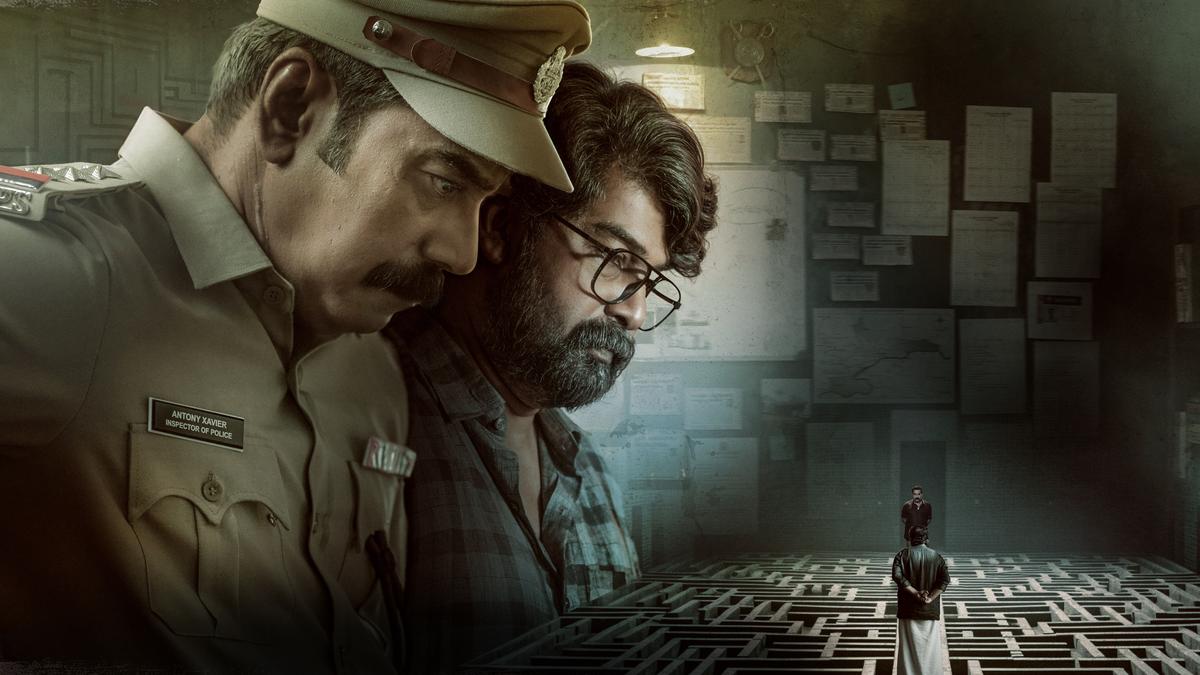
    Biju Menon and Joju George in a poster of ‘Valathu Vashathe Kallan’
    | Photo Credit: Special Arrangement

    Puzzles, crosswords and word mazes are often associated with lazy Sunday mornings for a reason. For that is usually when a good number of people find enough mental space to indulge in the pleasure of solving one. These certainly are not meant for highly stressful situations such as the one in Jeethu Joseph’s Valathu Vashathe Kallan, where the protagonist, running against time to save someone’s life, stops midway to solve a word maze.

    Of course, saving the person depended on solving the maze, but the whole placement of the series of puzzles in the narrative to generate the thrills hardly feels organic. This downward spiral that the movie takes in its final hour is unfortunate, since it had at its core a compelling story of a guilt-ridden man finally facing his reckoning. Screenwriter Dinu Thomas Eelan might have chosen to take that contrived path to resolve the conflict owing to the general expectations from a Jeethu Joseph film.

    A still from ‘Valathu Vashathe Kallan’

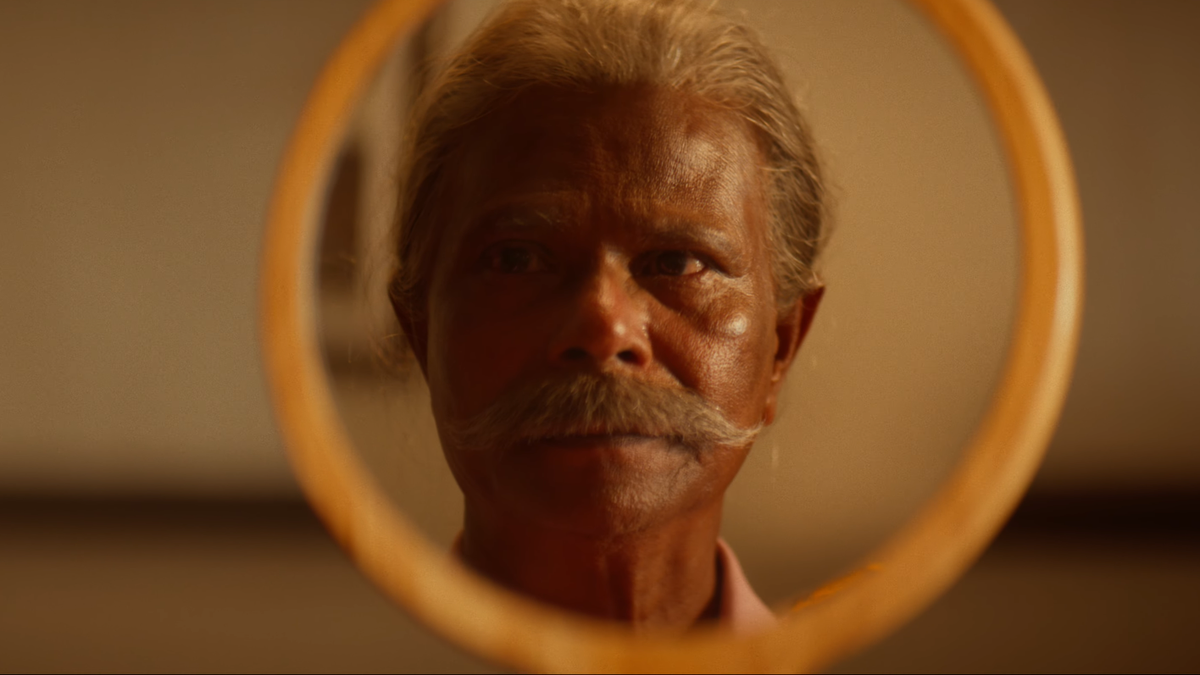
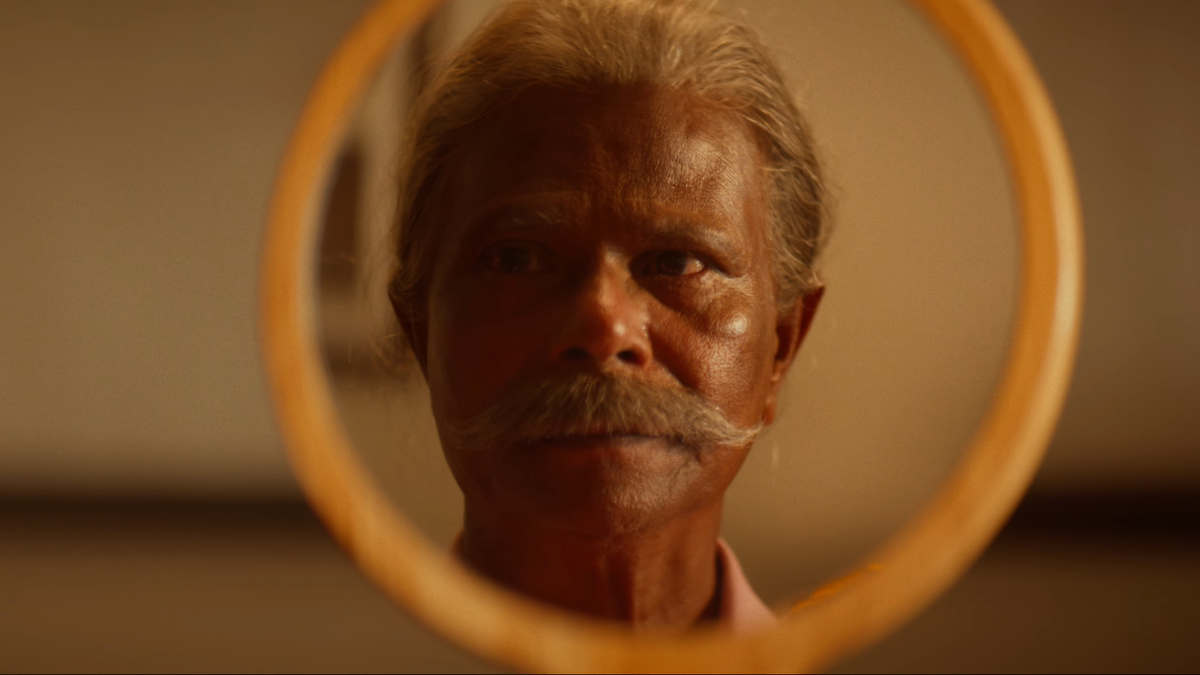
    No space for ambiguity exists in Valathu Vashathe Kallan, as far as character traits are concerned. Early on in the film, Circle Inspector Antony Xavier (Biju Menon), with a display of polished evilness, dissuades a sexual assault survivor from filing a complaint. Even though it is quite a punchy start to the film, in hindsight, one realises that there are no more nuances to this character than what is evident in that initial scene. When a young woman (Vyshnavi Raj) goes missing from the city, the police officer’s paths cross with that of Samuel (Joju George), an ethical hacker.

    Valathu Vashathe Kallan (Malayalam)

    Director: Jeethu Joseph

    Cast: Biju Menon, Joju George, Lena, Vyshnavi Raj, K.R.Gokul, Irshad, Leona Leshoy

    Runtime: 138 minutes

    Storyline: When a young woman goes missing in the city, the paths of a police officer with a shady past cross with that of an ethical hacker

    Their confrontations raise the exciting prospect of an intriguing war of wits between two battle-worn souls. But then, they choose to go about it using a super contrived puzzle game involving phone numbers, case numbers and random coincidences. What begins as a situation involving the lives of people almost turns into a competition between two individuals to show their IQ. Towards the end, an unconvincing attempt is made to stitch a message to the film. But compared to Jeethu’s previous film Mirage, which drowned the audience in one twist after another, Valathu Vashathe Kallan appears a tad more believable.

    Part of the film works because of the presence of the two towering performers in Biju Menon and Joju George, who, even when they are not at their best, lend some gravitas to the proceedings. Although Jeethu’s films are not particularly known for their visual or technical aspects, here the darker tone sits well with the theme until the screenplay spoils the game.

    For over a decade now, every Jeethu Joseph release has led to some level of anticipation, riding on the Drishyam wave. But most of his recent works have only contributed in chipping away the sheen that his career got through that landmark film.

    Valathu Vashathe Kallan is currently running in theatres

  • ‘Send Help’ movie review: Rachel McAdams and Dylan O’Brien shine in Sam Raimi’s darkly comic survival thriller

    ‘Send Help’ movie review: Rachel McAdams and Dylan O’Brien shine in Sam Raimi’s darkly comic survival thriller

    [ad_1]

    <!–[if IE 9]><![endif]–>

    A still from ‘Send Help’
    | Photo Credit: 20th Century Studios

    Sam Raimi’s return to his Evil Dead roots is something to look forward to in the New Year. The Doctor Strange in the Multiverse of Madness director mostly delivers, with sufficient amounts of gore, boar-hunting, and eye-gouging. This meek-shall-inherit-the-earth trip is completely satisfying — until a character makes a call that lands them firmly on the naughty list and stops us rooting for them in our tracks.

    As a result, the epilogue, instead of being rousing and uplifting, feels faintly hollow, leaving ash in the mouth rather than the sweet taste of a well-deserved win.

    Linda (Rachel McAdams) is a brilliant and conscientious worker in her company’s Planning & Strategy Department. Her people skills, however, are lacking, and her colleagues invariably laugh at her even as they take credit for her work.

    Send Help (English)

    Director: Sam Raimi

    Cast: Rachel McAdams, Dylan O’Brien

    Runtime: 113 minutes

    Storyline: A woman and her dreadful boss are stranded on a desert island. Who will survive the shift in the balance of power?

    All is meant to change when Bradley (Dylan O’Brien) takes over the company upon his father’s death. Bradley’s father promised Linda she would be promoted when Bradley took over. The promise is broken when Bradley promotes his friend from college, Donovan (Xavier Samuel), instead. Bradley is a standard-issue entitled person who treats everyone with a mix of condescension and entitlement, including his fiancée, Zuri (Edyll Ismail).  

    Though Bradley, who is repulsed by Linda, wants to banish her to a dead-end part of the business, Franklin (Dennis Haysbert), a senior executive, says Donovan will not be able to manage the important merger coming up. Bradley tells Linda to come along for the merger, with the idea of using her expertise until the deal goes through, before exiling her to an obscure position.

    On the flight to Bangkok, as Bradley and Donovan laugh over Linda’s audition tape for Survivor, the plane develops engine failure and crashes into the ocean. Only Linda and Bradley wash ashore on a deserted island off the Gulf of Thailand.

    A still from ‘Send Help’
    | Photo Credit:
    20th Century Studios

    The tables are properly turned now as Linda with her endless watching of Survivor has all the skills needed to live off the land. Bradley repeatedly fights against the perceived loss of control — a control he never truly possessed, having merely inherited the company his father built. It is just that on the island, survival and power are stripped of their language of civilisation.

    McAdams wades into her role with gusto, and we root for her as she transforms from office nerd to skilled survivalist. McAdams and O’Brien are the only two people on screen for most of the movie and they do the heavy lifting, riffing off each other as the micro-aggressions scale up to full-on war.

    There is gore, eye trauma (in 3D, no less) and grossness as well as humour. The island is gorgeous and could have been an Eden, if only snaky human nature could let it be.

    There are all kinds of readings one can make into the psychological survival thriller, or not. Send Help can also be enjoyed as a nifty exercise in an extreme what‑if, provided one can accept the choice Linda makes when survival tips into something else.

    Send Help is currently running in theatres

  • ‘Wonder Man’ series review: Wonder-ful, meta-bromance strips the slop away from Marvel for its best TV yet

    ‘Wonder Man’ series review: Wonder-ful, meta-bromance strips the slop away from Marvel for its best TV yet

    [ad_1]

    Marvel’s Wonder Man is a skittish little contraband smuggled into the MCU as something wholly averse to its spectacled scaffolding. Three years ago, the pitch alone would’ve been internet bait — an MCU series about an actor chasing a role in a fictional Marvel movie, stuffed with industry ribbing and showbiz self-parody — and yet here it is, ushering in Marvel’s 2026 slate. The gambit mostly pays off. By sidestepping the house tics that sank recent efforts and refusing to genuflect before its own apotheosised canon, Wonder Man lands somewhere unexpectedly fresh.

    Marvel’s Phase Five left the franchise with a sense of creative hangover. A relentless churn of content produced diminishing returns on attention and enthusiasm; blockbuster after blockbuster settled into a pattern where reality-bending explosions meant nothing unless they were bigger than the last ones. Wonder Man enters precisely when superhero fatigue has calcified into expectation fatigue, and the studio’s choice to foreground introspection over omnidirectional spectacle feels like necessary course-correction as Avengers: Doomsday looms.

    Wonder Man (English)

    Creator: Destin Daniel Cretton and Andrew Guest

    Cast: Yahya Abdul-Mateen II, Ben Kingsley, X Mayo, Zlatko Burić, Arian Moayed, Joe Pantoliano, Byron Bowers, Josh Gad

    Episodes: 8

    Runtime: 30-35 minutes

    Storyline: Hollywood actor Simon Williams is thrust into the world of superheroes as he gets powers of his own, and becomes the new superhero Wonder Man

    Against that backdrop, creators Destin Daniel Cretton and Andrew Guest disarm us by centering its story in a cataclysmic conflict of a different kind: surving Hollywood. The premise is so deliberately ordinary it almost feels like Kevin Feige augured us rolling our eyes at the mere thought of another She-Hulk before we’ve hit play. Simon Williams (Yahya Abdul-Mateen II), an actor with hidden ionic powers, is chasing the titular role in a remake of Wonder Man, a movie he adored as a kid. His potentially explosive and definitely career-derailing powers complicate that pursuit, since this version of Hollywood has decided that enhanced individuals are professional liability with insurance problems, and are hereby banned from working in the industry under the Doorman Clause (more on that later).

    A still from ‘Wonder Man’
    | Photo Credit:
    Marvel Studios

    The superhero-meets-Hollywood-fishbowl conceit could have collapsed under self-conscious satire, but the people inhabiting it ground it. Abdul-Mateen shapes Simon as a man addicted to performance but allergic to the consequences of self-sabotage. His neuroses aren’t cute. The way he talks around silence, dissects backstories in empty rooms, and treats every minor audition like the last chance to matter, is deliberately frustrating and adds layers to his personality. It’s an internal rhythm rarely heard in Marvel’s typically externalised universe, and Abdul-Mateen’s performance anchors it with texture and humane precision that avoids reducing the character to camp or quirk.

    A marvelous Ben Kingsley’s Trevor Slattery could’ve been a recurring gag in lesser hands — the washed-up “ACK-TOR” forever haunted by his role as the faux terrorist, Mandarin. Here, Trevor is a phantasm of vanity and tenderness whose eccentricities are investments in survival. Kingsley gives him a wrecked beauty, as though every laugh line is a record of battles fought in small rooms and tiny theatres. 

    Together, the two generate a chemistry rooted in shared obsession and passion for their craft. They meet in a half-empty repertory theatre during a screening of Midnight Cowboy, bond over quoting Shakespeare at each other, and build trust through Trevor’s old-school breathing drills and off-camera line readings that steady Simon before auditions. The show uses those moments to interrogate what dedication to craft actually feels like as persistently return to acting as work worth arguing over, sweating through, and stealing time for, which turns their fevered cinephilia into a survival tactic.

    A still from ‘Wonder Man’
    | Photo Credit:
    Marvel Studios

    What’s especially telling in Wonder Man is how it consciously slots itself into the lineage of Hollywood RPGs. Apple’s recent success with Seth Rogen’s Emmy-winning, The Studio might have staked precedence in meta comedy about the industry, and HBO’s The Franchise attempted a darker, cynical exploration of blockbuster fatigue, yet Marvel’s version doesn’t shy from affection even while it skewers. Wonder Man satirises the machine without spitting on its wheels, deploying industrial mockery as a connective tissue. There’s a sly understanding that superhero cinema is big business, and that business disproportionately values spectacle over struggle. So a scene about struggling around LA to craft the perfect self-tape carries more subversive weight here than any green-screen ensemble battle scene.

    The Doorman episode is Wonder Man at its mischievous best because it stops the show cold to explain a piece of Marvel bureaucracy that would usually get buried in a throwaway line. Halfway through the season, the series abandons Simon and Trevor to tell the story of DeMarr Davis, a longtime club doorman whose ability to phase himself and other objects through walls turns him, briefly, into exactly the kind of “authentic” oddity Hollywood loves to rent. He lands acting work, becomes a minor fascination, then causes a catastrophic on-set accident involving a certain J-Gad playing himself that sends insurers into panic mode and studios scrambling for legal cover. Out of that mess comes the aforementioned Doorman Clause, the rule banning superpowered people from acting, which retroactively explains why Simon’s gifts function as a career death sentence. The joke, and the critique, sit in plain view as Marvel pauses its own narrative to dramatise how one marginal worker gets sacrificed so an industry can keep calling itself “risk-averse,” then folds that sacrifice back into the franchise as policy.

    A still from ‘Wonder Man’
    | Photo Credit:
    Marvel Studios

    The funniest thing Wonder Man ever does involves taking acting extremely seriously inside a franchise that has spent the past decade training audiences to treat performance as decorative upholstery for its homogenised fantasies. This is Marvel, pausing its conveyor belt long enough to stage earnest debates about breath control, intention, and subtext, then filming them with the solemnity of a conservatory critique. All of it unfolds inside a corporate ecosystem optimised for scale, synergy, and quarterly earnings calls, which gives the reverence a faintly deranged edge. The show never explicitly names that contradiction, since it doesn’t need to. Watching a multibillion-dollar studio bankroll a love letter to craft is the joke itself, and Wonder Man trusts us to get it.

    It’s also telling (though still unsurprising) that Marvel’s most resonant project in recent memory doesn’t require endless crossovers or universe-wide tie-ins. The studio still hasn’t solved every problem but in a franchise oversaturated with bigger being better by default, Wonder Man chooses deeper instead, and the difference is palpable. It suggests that, at least for now, Marvel’s most effective magic may no longer be spectacle on the surface, but sincerity beneath it.

    Wonder Man is currently streaming on JioHostar

    Published – January 30, 2026 06:15 pm IST

  • ‘Om Shanti Shanti Shantihi’ movie review: Eesha Rebba, Tharun Bhascker shine in this sharp critique of patriarchy

    ‘Om Shanti Shanti Shantihi’ movie review: Eesha Rebba, Tharun Bhascker shine in this sharp critique of patriarchy

    [ad_1]

    <!–[if IE 9]><![endif]–>

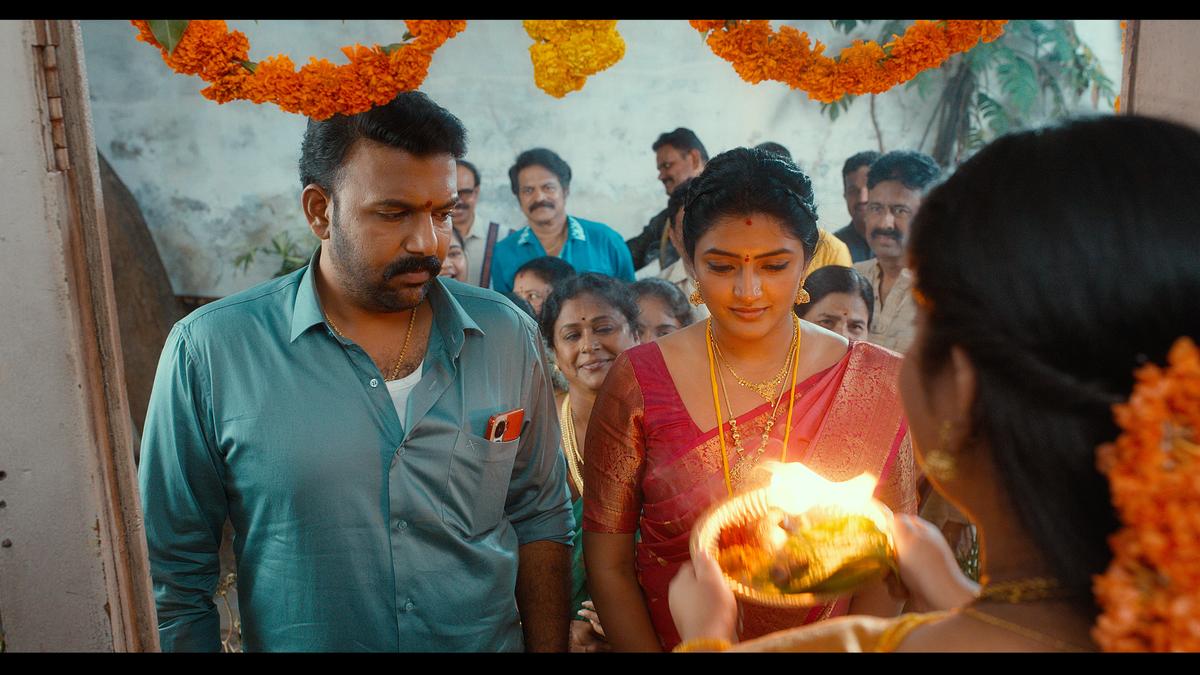
    Tharun Bhascker, Eesha Rebba in ‘Om Shanti Shanti Shantihi’
    | Photo Credit: Special Arrangement

    The 2022 Malayalam film Jaya Jaya Jaya Hey was not subtle in its take on patriarchy, opting instead for an intentionally over-the-top reversal of power. In adapting the film into Telugu and relocating it to the Godavari region, director A.R. Sajeev stays largely faithful to the original. Om Shanti Shanti Shantihi is a partly fun, partly simmering emotional drama, shouldered by compelling performances from Eesha Rebba and Tharun Bhascker. While it does not always strike the right note, the film effectively captures the many ways patriarchy continues to stifle women, and how both men and women often enable it.

    The childhood portions establish how the female protagonist is short-changed at every turn — in toys, books, clothes, and even something as simple as being denied the fruit of her choice — under the guise of others knowing what is best for her. Some character writing is especially sharp, notably the nosy, supposedly well-meaning uncle, a familiar figure who believes he has the right to dictate everything from a child’s education to her leisure.

    Early on, when the girl’s father expresses a desire to raise her like the fearless Rani Lakshmibai, he is swiftly corrected by this uncle on what society would find acceptable. The father’s lack of resolve and the mother’s internalised patriarchy shape how Prashanti (Eesha Rebba) grows up. Nanda Kishore Emani’s dialogues not only root the film firmly in its regional dialect but also mirror everyday conversations with unsettling accuracy.

    Om Shanti Shanti Shantihi (Telugu)

    Director: A.R. Sajeev

    Cast: Eesha Rebba, Tharun Bhascker, Brahmaji, Surabhi Prabhavati

    Runtime: 131 minutes

    Storyline: When a woman decides that she has had enough in a toxic marriage, she encounters resistance at multiple levels.

    Om Shanti Shanti Shantihi begins lightly before steadily exposing layers of social hypocrisy. Writer Nanda Kishore Emani appears briefly as a professor whose lofty talk of women’s empowerment amounts to little more than lip service.

    At the matchmaking meeting, Prashanti’s conversation with Omkar Naidu (Tharun Bhascker) barely moves beyond his fish business. The humour lies not just in his limited interests, but in how these seemingly throwaway remarks are cleverly used in the narrative later.

    The sections set in Naidu’s home, as Shanti adjusts to life as a new bride, go beyond depicting his rage. They raise pointed contradictions. Is a man who insists on the same breakfast every day — idlis made only from stone-ground batter — an emblem of simple living, or merely intolerant of change? What role does his family, especially his mother, play in excusing his behaviour? The film resists easy binaries, urging viewers to read the subtext. Refusing dowry alone, it reminds us, is no green flag; an unchecked ego can make everyday life unbearable.

    The narrative turns on the slap — a device long used by mainstream cinema to silence women — and reframes it as a catalyst for change. Viewers unfamiliar with the original will find the twist effective and a lot of fun, even if the shift feels abrupt rather than gradual. It is dramatic, but cathartic and whistleworthy.

    In these portions, Vishnu Vardhan Pulla’s production design and Deepak’s cinematography create a convincingly lived-in world of a middle class home without drawing attention to themselves. For a film centred on a handful of characters, performance is its backbone.

    Eesha Rebba delivers one of her most assured turns yet, balancing vulnerability with resolve. A dependable actor who has long been underappreciated, she handles both the lighter beats and emotional undercurrents with ease. Tharun Bhascker, shedding his usual affability, is striking as a man shaped by entitlement. Even when the momentum dips, the performances of these two actors help to stay invested in the drama. Brahmaji, Surabhi Prabhavati and the other actors add weight in well-judged supporting roles.

    The latter portions stretch on, though the film’s exploration of male toxicity remains pointed. The finale, though buoyed by a dramatic score, delivers poetic justice.

    In pushing back against the glut of alpha-male narratives in mainstream cinema, Om Shanti Shanti Shantihi makes its stance clear. When the protagonist asks whether she needs a man’s permission to study, work, or simply exist — right down to her choice of food — the question lands with uncomfortable force.

  • ‘Mardaani 3’ movie review: A Rani Mukerji project that loses steam after half-time

    ‘Mardaani 3’ movie review: A Rani Mukerji project that loses steam after half-time

    [ad_1]

    <!–[if IE 9]><![endif]–>

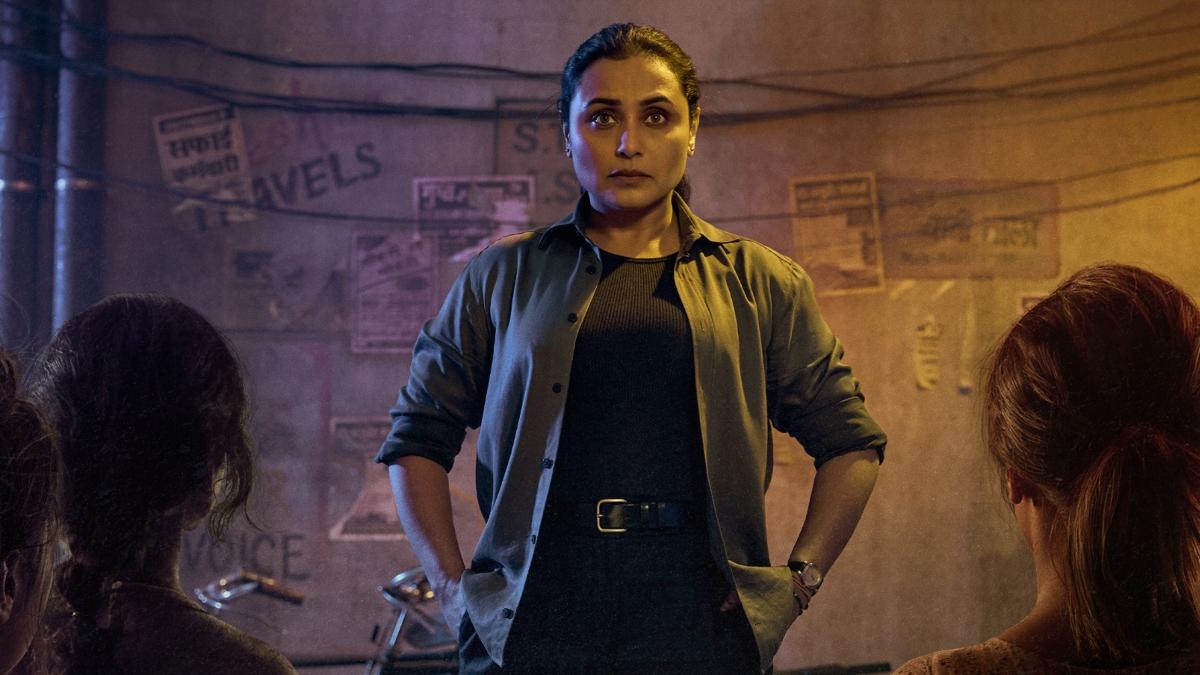
    Rani Mukerji in ‘Mardaani 3’
    | Photo Credit: Yash Raj Films

    Mounted more than a decade ago as a challenge to the action-hero archetype, Mardaani‘s third instalment begins as a fiercely committed, unflinching crime thriller that delves deeper into the horrors of child trafficking and the begging mafia, delivered with raw brutality and social urgency.

    Anchored by Rani Mukerji as Shivani Shivaji Roy, the story centres on a tough cop’s investigation into a high-profile kidnapping that unravels a vast network of child exploitation.

    A still from ‘Mardaani 3’
    | Photo Credit:
    Yash Raj Films

    It begins with the abduction of two girls – one from a privileged background and the other from a marginalised one — from the outskirts of a diplomat’s farmhouse in Bulandshahr in western Uttar Pradesh, forcing Shivani to navigate official pressures, criminal syndicates, and moral dilemmas. Do the two lives carry the same weight? Her superiors repeatedly tell Shivani to focus only on the diplomat’s daughter, even after it becomes clear that the kidnapping doesn’t have a political motive but has a social dimension.

    Mardaani 3 (Hindi)

    Director: Abhiraj Minawala

    Duration: 130 minutes

    Cast: Rani Mukerji, Mallika Prasad, Prajesh Kashyap, Janki Bodiwala, Jisshu Sengupta

    Synopsis: Shivani Roy returns to combat a massive, organised child-trafficking network, facing off against a ruthless Amma. 

    Both the system and the syndicate know whose life matters, setting off a game of one-upmanship between two fiery women: Shivani and Amma, the queen of a beggar mafia. While Shivani uses the social difference between the victims to bring the kidnappers out of their shell, she eventually realises that it compromised the life of the guard’s daughter. Finding herself shackled in the uniform, Shivani lets her rage take over the rules of the game.

    Director Abhiraj Minawala and writer Aayush Gupta create an imperfect world run by flawed characters. The antagonists, Amma (Mallika Prasad) and Ramanujan (Prajesh Kashyap), have backstories that suggest they are products of the rot they now rule.

    But then, franchises are all about reheating the same dish over and over again, hoping it doesn’t lose its flavour. Soon, the veneer of social empathy and feminist tone gives way, and we can clearly see the product’s formula: a fearless protagonist, blended with a hard-hitting social issue, taking on an intense antagonist. The experiment and freshness are limited to the introduction of the villain and their lair. After that, the writers serve Shivani’s image and Rani’s fans. Rani continues to operate in the massy grammar, structured like a counterpoint to the male action stars, perhaps not realising that familiarity dulls impact. The overwriting limits her ability to emote in silence. It borders on forced messaging, where her intensity feels performative.

    Rani Mukerji in the film
    | Photo Credit:
    Yash Raj Films

    Unlike the previous instalments, where Tahir Raj Bhasin and Vishal Jethwa were given potent character arcs, here Prasad is short-changed after an ominous build-up where her dynamic with Rani promises a delicious conflict before getting diluted. After pitting a menacing female villain against a strong female cop, it seems the makers realised that the franchise’s stated goal demands that Rani reduce misogyny to pulp, and for that, you need a male antagonist to punch.

    As a result, the storytelling and world-building stumble in the second half due to plot holes, overwritten moments, and tonal inconsistencies, such as the foreign conspiracy angle that is introduced late in the second half. We could see the true colours of Ramanjuan from a distance and pretty much guess the job of a young Muslim female police officer in the narrative. As the thriller builds to the climax, the narrative turns feel routine, diminishing tension and resulting in an uneven experience.

    Mardaani 3 is currently running in theatres. 

  • ‘Mayasabha’ movie review: Javed Jaaferi assuredly leads Rahi Anil Barve’s sentimental mood piece

    ‘Mayasabha’ movie review: Javed Jaaferi assuredly leads Rahi Anil Barve’s sentimental mood piece

    [ad_1]

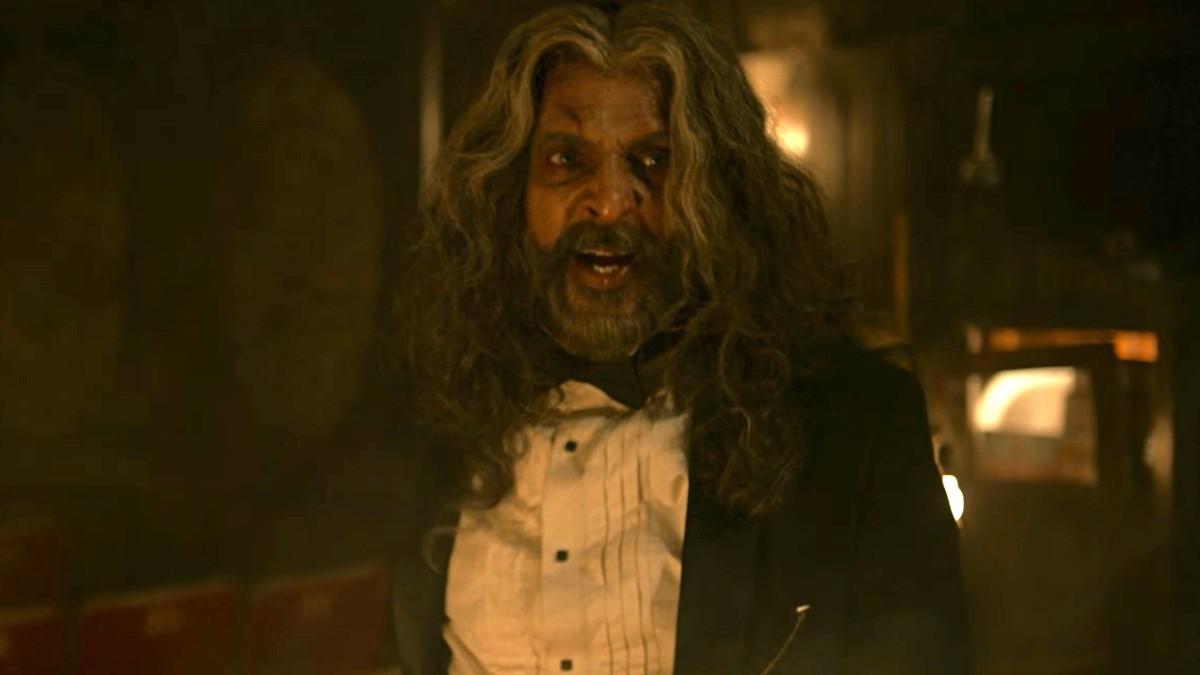
    Javed Jaaferi in ‘Mayasabha’

    Javed Jaaferi in ‘Mayasabha’
    | Photo Credit: Zirkon Films

    Just as Tumbbad soaked with rain, Mayasabha brims with smoke. If Tumbbad accumulated an age-old myth, Mayasabha exorcises an almost dystopian reality of a dilapidated single screen theatre. It carries the atmosphere of dread in its meticulously imagined morbid interiors of the space. Like the cursed great grandmother turning into a tree stretches the existential epic-ness of time in Tumbbad, the spoiled, defunct walls of the theatre in Mayasabha deify its ancient permanence. The grandiosity of its desolation makes it eerily illusive. The shadow of the theatre looms over the film like the grey clouds in Tumbbad, thickly spreading its claustrophobic tenacity into the minimalistic whole.

    Parmeshwar Khanna (Jaaved Jaaferi) seems like an extension of the theatre ruins. The loss of its glory mirrors starkly in the unforgiving rupture of his mind. As a menacing, remarkably shabby, grey-haired figure, Parmeshwar’s bizarre unpredictability nurtures the theatre’s mystery. Apart from carrying the remains of his insanity, the theatre also houses kilos of gold in the mist — its location not really known even to Parmeshwar himself, who forgot about where he hid it. Or so his teenage son, Vasu (Mohammed Samad) believes, as he recounts the details to the cunning ears of Ravrana (Deepak Damle). Along with his manipulative sister Zeenat (a compelling Veena Jamkar), Ravrana strives to get hold of the gold when they are invited over to the theatre by Vasu for a party. The night proves to be fatal for the four.

    Mayasabha (Hindi)

    Director: Rahi Anil Barve

    Cast: Javed Jaaferi, Mohammed Samad, Deepak Damle, Veena Jamkar

    Runtime: 104 minutes

    Storyline: An ageing, eccentric producer lives in a dilapidated theatre with his teenage son. Hiding in its ruins is 40 kilos of gold, which lures two street smart siblings to go on a treasure hunt

    Filmmaker Rahi Anil Barve uses the setup to explore the decay of Parmeshwar and how he came to be. Once a producer in bygone times, left scarred forever when his actress wife cheated on him, Parmeshwar is seldom what he claims to be. He is obsessed to live with smoke, that he continuously sprays from his DDT hand-spraying machine. His memory is thick, his stories thicker. Barve’s layered writing makes him a ghost, who martyred his reality to pave way for an imaginative fantasy. As Vasu recounts how Parmeshwar locked himself in the theatre for three months after separating from his wife as he kept looping over her films on the big screens. The theatre consumed him and he consumed the theatre

    A still from the film

    A still from the film
    | Photo Credit:
    Zirkon Films

    Rahi also infuses a sense of tragedy into the character that is as prodigious as a Shakespearean tale. There is unmissable theatricality even in Javed’s performance, who uses his wildly expressive face as a disintegrating force. He brings a certain magnetism to his persona, marked by a hyperactive body language and an immaculate shift in his vocal range that leaves a dangling trace of terror. Reacting to his outbursts, Mohammed Samad displays disarming innocence. Just like Tumbbad, he plays a son, whose premature coming-of-age follows after his meeting with violence.

    At its heart, Mayasabha explores the intricacies of a father-son relationship standing upon scandalous grounds. Rahi’s film is fragmented like a sentimental poem. There is so much more to unravel here than to be able to grasp completely in a single watch. The mise en scène is dense, filled with innumerable details and textures. The camerawork by Kuldeep Mamania places the maze-like world in a string of moody visuals, dabbling constantly with the idea of light and dark, as if existing only in the extremes where Parmeshwar seems to operate.

    Instead of sticking to a genre, Rahi is more interested to observe the deterioration of the eccentric anti-hero. The film also seems to be thematically ambiguous compared to the sharp exploration of capitalistic greed in Tumbbad. The philosophy here is more veiled or, as Parmeshwar remarks in a scene, hidden in plain sight. There is an echoing of Kabir’s verse too, when he reflects on the frailty of life and the brutal inevitability of death. Not all of it ties together as coherently into scenarios, often getting too entangled in the physicality of action than in the emotive release of its themes.

    A still from the film

    A still from the film
    | Photo Credit:
    Zirkon Films

    It is still a triumph of Rahi’s conviction for not pit-falling into templates. His vision becomes intoxicating, carrying surprises not just in the narrative but in the boundless appeal of his images. He crafts them with a decorative spirit; placing them on the screen like words on paper, as they evolve together into newer shapes, meanings and metaphors. Patching it together is his refusal to stick to a particular form which adds an exploratory feel to the narrative. Where Tumbbad treaded on atmospheric landscapes, Mayasabha internalises the machination. If this is what he can build with a limited budget and 22 days of shoot, I wonder what gold awaits in Gulkanda Tales.

    Mayasabha is currently running in theatres

  • ‘Shelter’ movie review: Jason Statham punches his way through this lean actioner

    ‘Shelter’ movie review: Jason Statham punches his way through this lean actioner

    [ad_1]

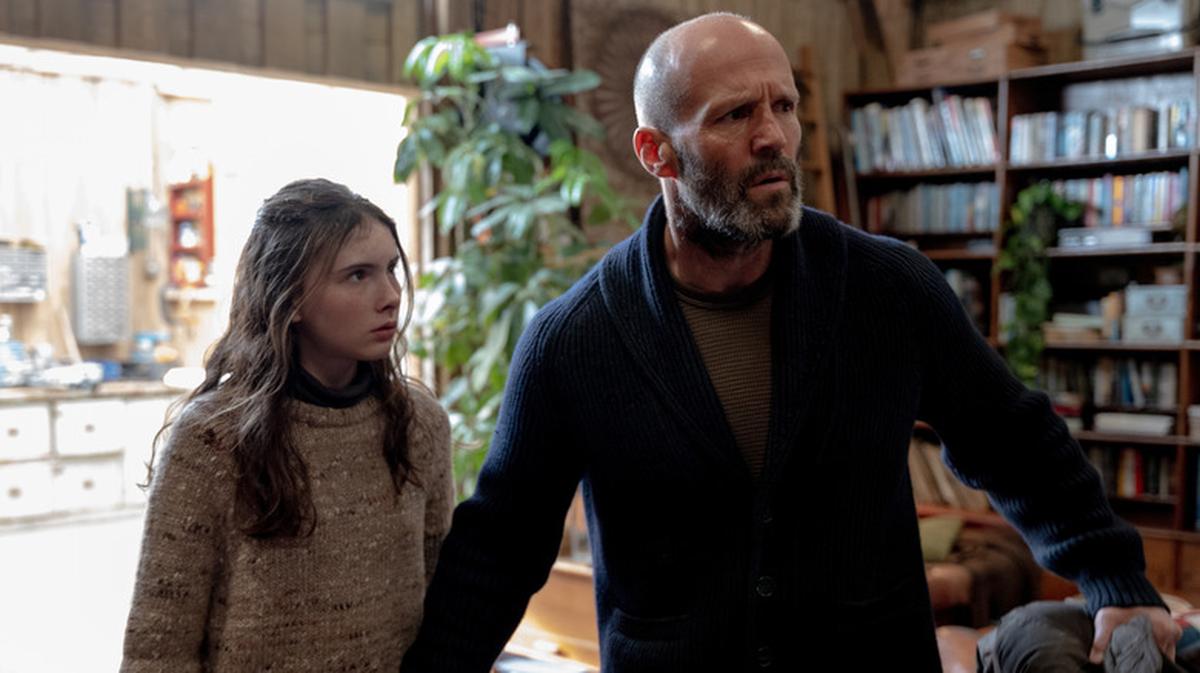
    Jason Statham in the film

    Jason Statham in the film
    | Photo Credit: Elevation Pictures

    There is something utterly delightful about a lighthouse, immediately bringing up memories of Enid Blyton’s Famous Five series, as well as sundry ghosts mournfully clanking chains as they creep up and down the spiral staircase.

    Shelter (English)

    Director: Ric Roman Waugh

    Starring: Jason Statham, Bodhi Rae Breathnach, Bill Nighy, Naomi Ackie, Daniel Mays

    Storyline: A man lives alone on an island until a storm and an act of kindness force him to confront his past

    Runtime: 107 minutes

    So, when Shelter opens in the Hebrides, with the windswept sea and a lighthouse standing proud and true on craggy rocks, you know the curtain has been lifted on a fun time at the movies.

    A still from the film

    A still from the film
    | Photo Credit:
    Elevation Pictures

    A young girl, Jessie (Bodhi Rae Breathnach), goes with her uncle to the island to deliver supplies to a reclusive man (Jason Statham) every week. Jessie tries to communicate with the Man, leaving little presents with the deliveries, which the Man studiously ignores.

    One day, on a supply run, a storm causes Jessie’s boat to capsise. Her uncle drowns, and Jessie’s feet get tangled in a fishing net.

    The Man rushes to save Jessie and brings her ashore to his Spartan home. Shocked at the loss of her uncle (Jessie is an orphan, and her uncle was her only family), Jessie and the Man form a tentative bond. When Jessie’s foot gets infected, the Man decides to go to the mainland to get medical supplies, setting off a chain of unfortunate events.

    In London, there is horror and outrage at a surveillance programme on ordinary citizens. The MI6 chief, Manafort (Bill Nighy), and the Prime Minister discuss the pros of surveillance and the need for a scapegoat to pacify the howling masses.

    A still from the film

    A still from the film
    | Photo Credit:
    Elevation Pictures

    The Prime Minister suggests Manafort step down and that his second-in-command, Roberta (Naomi Ackie) take his place while he continues to work in the shadows.

    Outside a pharmacy, the Man’s face is identified as that of a dangerous terrorist, and a team is sent out to terminate him. Through the movie, we learn of the Man’s past and why so many people are out to get him, all the while he efficiently dispatches waves of attackers, while remaining one step ahead of a trained killer, James Workman (Bryan Vigier).

    After one too many encounters, the Man decides to go to the head of the snake to put the problem to bed once and for all. There is no one the Man can trust except an old friend (Daniel Mays), who is able to provide only limited help.

    All that one expects from a Jason Statham film is present and correct. Ric Roman Waugh, who seemed to have sleepwalked through Greenland: Migration, is firmly on top of his game. The action is taut, the chases adrenaline-fuelled, the scenery rugged and beautiful, and Nighy suitably silky and sinister.

    One only wishes the dog, with the sweetest expressive eyes, did not come to such a sticky end. Now all that is left to do is to log on to bookalighthouse.com for a week’s stay at one of these jolly lighthouses, while feeling like an assassin on the run.

    Shelter is currently running in theatres

  • ‘Aashaan’ movie review: A patchily-written ode to cinema and strugglers

    ‘Aashaan’ movie review: A patchily-written ode to cinema and strugglers

    [ad_1]

    Indrans in a still from ‘Aashaan’

    Indrans in a still from ‘Aashaan’
    | Photo Credit: Guppy Cinemas/YouTube

    Once in a while, the film industry takes an inward look into the lives of those struggling to make it and the foibles and eccentricities of those who have made it. In Aashaan, to tell this story, Johnpaul George follows the film-within-a-film format used in movies like the memorable Udayananu Tharam. The stories of two men with a deep yearning to make a mark in cinema becomes its emotional bedrock.

    Anandaraman (Joemon Jyothir), a visual effects technician, realises his wish of becoming a part of a film crew when he identifies a suitable location, a circular-shaped apartment complex, for a popular filmmaker (Shobi Thilakan)’s next film. However, to get that space, he promises the flat association president (Indrans), who has long harboured the dream of acting, a role in the film. This promise would have unforeseen consequences for the film, its crew and most importantly, Anandaraman.

    Indrans in a still from ‘Aashaan’

    Indrans in a still from ‘Aashaan’
    | Photo Credit:
    Guppy Cinemas/YouTube

    Johnpaul George, who debuted almost a decade ago with the promising yet flawed Guppy and followed it up with a disappointing Ambili, has certainly widened his canvas in his third film. Yet, the strengths and weaknesses of his debut film continue to persist to this day, as evident in Aashaan. He really has the ability to effectively portray varied human emotions, although at times he goes overboard with melodrama. In Indrans and Joemon, he has actors with the necessary flexibility to make that seamless switch to capture the whole gamut of emotions that come into play while making a movie.

    Aashaan (Malayalam)

    Director: Johnpaul George

    Cast: Indrans, Joemon Jyothir, Shobi Thilakan, Appunni Sasi, Bibin Perumbilli

    Runtime: 160 minutes

    Storyline: Two persons with a deep yearning to make it in cinema becomes part of a film project inside an apartment complex, but it is going to be a messy endeavour

    Johnpaul always appears to be averse to cutting much of what he has shot. Consequently, his films end up with a bit of flab. In Aashaan, too, he tries to say a lot — from the many inside stories of the industry to the difficulties of making it — and packs in a lot of characters. At times, one can feel the movie creaking under the burden it has taken upon itself. In those moments, the struggles of the hapless filmmaker of the film-within-the-film appear to mirror the actual process of making Aashaan. But at other moments, it strikes a chord with its earnestness, as does the film-within-the-film.

    Aashaan takes its time to get into the groove. Johnpaul succeeds in serving heartwarming moments at regular intervals, which helps to an extent in tiding over the tediousness of some of the patchily written parts. The music department, handled by the filmmaker himself, goes a long way in enhancing the effect of these moments. The protagonist being a visual effects technician turns out to be a nice touch, going by the minimal and inventive methods with which the movie is made.

    Indrans in a still from ‘Aashaan’

    Indrans in a still from ‘Aashaan’
    | Photo Credit:
    Guppy Cinemas/YouTube

    Quite a good part of the movie might be relatable to people within the industry, especially the toiling class of assistant directors who are, at times, at the mercy of short-tempered people with inflated egos. Aashaan certainly comes from someone who understands the struggle of making it, but that passion also makes him pack in a lot more than what should have been there.

    Aashaan is currently running in theatres

  • On line casino Private room Advantage https://e2bethp.com/ Courses

    Casino Very important personel systems usually are motivation platforms that include players a good degrees of is the winner, for instance bonus bonus products it’s essential to cash return possesses. And also they place in a purchased exec the fact that carries personalized network.

    Vip programs mill within becoming wagers straight to responsibility facts. Knowledgeable bettors can boost it within game playing any reward them with responsibility truths quicker. (more…)

  • ‘With Love’ movie review: Anaswara Rajan’s cute rom-com lacks emotional heft

    ‘With Love’ movie review: Anaswara Rajan’s cute rom-com lacks emotional heft

    [ad_1]

    One of the sweetest moments in life is when we cross paths with someone from a distant path in a ‘small world’ moment. Say you knew of a Karthik who was your school senior in Chennai; almost a decade later, a man you meet mentions a Karthik in Chennai, would you connect the two to be the same person? After all, there might be many Karthiks in Chennai. Maybe the mention of the name might trigger a memory — perhaps Karthik meant a lot to you — but would you conclude or put your doubts out, interrupting a stranger talking about how they were in love with a Karthik they went to school with in Chennai? In With Love, Monisha (Anaswara Rajan) recognises that her date, Sathya Seelan (Abishan Jeevinth), is, in fact, her school senior when he casually mentions that he was once in love with a girl named Anisha while studying at a school in Trichy. “Wait, is that Anisha akka?” she instantly asks, before they exchange further information.

    If you think all is good and any criticism over this is nitpicking, you may not have many complaints about With Love, which is still a simple, sweet romance-comedy that celebrates young love. But if you are someone who looks for convincing psychological ties between actions and reactions, you might find many instances in this film quite contrived. Or have a problem even with a harmless cameo appearance by someone close to Sathya (because why do they give a stranger who walks by them on a train a tiffin box and never even bother to get it back? You are asked to ignore it). With Love, directed by Madhan, is a straightforward rom-com that is aware of the emotional register it is aiming for, but lacks the substance to build to it organically.

    In their meeting, Sathya and Monisha open up about their respective school-time romances. Sathya speaks about how he was in love with a classmate, Anisha (Kavya Anil makes a strong impression), and how it all came to a head, thanks to a traitor of a friend — a routine backstory sustained by humour. Monisha, an unruly backbencher, was in love with her class topper, Balaji (Sacchin Nachiappan), but circumstances never allowed her to express her feelings, and again, a betrayal seals its fate — a flashback with a beating heart, it also refreshingly shows a ‘love failure’ from a female perspective. These two backstories feature the strongest sequences; the many interesting coincidental overlaps between them make you smile, and director Madhan understands the beauty, innocence, and pangs of school-time romance. 

    A still from ‘With Love’

    A still from ‘With Love’
    | Photo Credit:
    Special Arrangement

    However, the very sentiment that propels the story forward from here, though written with the best of intentions, lacks the necessary emotional infrastructure. Monisha realises that they both have “an unexpressed love” in their past and decides to find their exes and express their feelings. Again, it’s an impulse many hopeless romantics daydream about, and someone might even actually think of doing it, but the film jumps a beat and asks us to take a leap of faith without addressing why they must dig up the past to move forward.

    Given that the rest of the film follows the protagonists on this journey, it becomes of utmost importance that we know the emotional itch that needs resolution. Perhaps both of them struggle to get into anything meaningful without a closure to these chapters? We aren’t told.

    Without any convincing psychological backing to this journey, the rest of the film rests on how they find Anisha and Balaji, and even in those regards, the film ends up with mixed results. The lack of conflicts seems quite apparent after a point, but what baffles one is how even ideas that could make way for some are resolved immediately, be it an arc about Saravanan’s school teacher character or one about Sathya snooping on Monisha. Ideas, though they appear good on paper, fail to translate into anything convincing on screen. When we reach the much-awaited reunion with Balaji and Anisha, you are left wondering why, when one is spelt out — little silences and awkward pauses intact — the other is written quite underwhelmingly.

    With Love (Tamil)

    Director: Madhan

    Cast: Anaswara Rajan, Abishan Jeevinth, Kavya Anil, Sacchin Nachiappan

    Runtime: 141 minutes

    Storyline: A young man and a woman on a date decide to go on a journey to track down their school-time crushes and express their love

    It doesn’t help the film’s cause that the personal journeys of Monisha and Sathya do not flesh them out as anything more than what the larger plot wants them to be. There’s an intimate moment in the second half where they get quite close after a party, something Monisha later blames on the alcohol, much to Sathya’s dismay. Her casual reaction and his disbelief in her school of thought paint two extreme ideological backgrounds, but this is never addressed again.

    The lapses in the story’s emotional beat are evident when Sathya suffers a heartbreak. A soup song sung by Yuvan Shankar Raja plays in the background, and while this is a great idea on paper (who else would Sathya, a hardcore Yuvan fan, listen to when he feels the blues?), you end up watching these proceedings with a straight face as the screenplay hardly tries to sell anything convincing to empathise with Sathya.

    Anaswara Rajan and Abishan Jeevinth in a still from ‘With Love’

    Anaswara Rajan and Abishan Jeevinth in a still from ‘With Love’
    | Photo Credit:
    Special Arrangement

    It is also perplexing to see Sathya suddenly turn into someone quite immature for his age. At one moment, we see him, now an adult, mind you, get upset about the results of a game of FLAMES with Monisha — no, it isn’t even written as a comical moment. He appears quite hotchpotch as a character, and Abishan’s enactment of an eccentric young man seems performative rather than lived-in, especially in the older portions.

    If anything, it’s Anaswara who ably carries the film. And yet, her character also gets underwritten. In the real world, a Monisha would have used her 1.9 million Instagram followers to get leads about Balaji and Anisha. It’s nice that our Monisha wants to do it the old-school way, but her only idea is to go back to their school and see if something comes up. The parameters she seems to set to measure her potential partner aren’t clear, nor are the boundaries she draws for herself. Even when Sathya does something comically extreme later, Monisha hardly addresses the concerning situation and is only bothered about where they go from there.

    In an earlier scene at a cafe, a parallel between Monisha and an unidentified woman paints what it means to let someone be themselves; the other woman passive-aggressively polices Sathya for adding sugar to his coffee, but Monisha accepts him for who he is. Which is why she doesn’t consciously ask him to stop smoking and sees in him a responsible man when he finally does. And so, these ideas only make you imagine a story about how Monisha and Sathya would deal with something that challenges this acceptance of each other. The arc surrounding Saravanan’s character showed potential to help with this, but With Love doesn’t wish to play the long game. It instead settles for what comes easily, a quality that harms art and love.

    With Love is currently running in theatres

    Published – February 06, 2026 09:00 am IST

  • ‘Sri Chidambaram Garu’ movie review: A refreshing, earnest tale of self-discovery

    ‘Sri Chidambaram Garu’ movie review: A refreshing, earnest tale of self-discovery

    [ad_1]

    Spectacles have often served as a captivating narrative device in cinema. In the Nani-starrer Yevade Subramanyam, they were a protagonist’s desperate tool to be taken seriously in elite circles. In Ee Nagaraniki Emaindi, Vishwak Sen wore them as a mask to weather heartbreak. In this week’s release, Sri Chidambaram Garu, a man with a squint uses sunglasses to conceal deep-rooted insecurity about his appearance.

    Interestingly, despite the films’ contrasting backdrops, removing the spectacles in all these stories represents an act of letting go, of coming to terms with oneself. In a nutshell, debut director Vinay Ratnam’s Telugu film Sri Chidambaram Garu is a story of self-discovery that follows a youngster as he frees himself from the mental roadblocks that have tormented him all his life. An idyllic love story serves as a catalyst for his transformation.

    Sri Chidambaram Garu (Telugu)

    Director: Vinay Ratnam

    Cast: Vamsi Tummala, Sandhya Vasishta, Sivakumar Matta

    Runtime: 140 minutes

    Storyline: A man with a squint must dismantle his own deep-rooted insecurities to find love

    Solomon (Vamsi Tummala), addressed as Chidambaram by his fellow villagers owing to his squint, abandons his education after a childhood tragedy. He works as a construction labourer , supporting his mother and gradually clearing the debts left behind by his late father. As Solomon’s squint becomes a constant source of ridicule, he allows himself to be defined by it rather than standing up for himself.

    He finds a surprising ally in Leela (Sandhya Vasishta), a spirited neighbour and former classmate. As Solomon and Leela try to move their relationship forward, a simple question from his love interest hits a raw nerve: “How can I trust someone with love when they do not even love themselves?” It pushes him to take drastic decisions that trigger a psychological awakening of sorts.

    Set in a quaint village in Rajahmundry, Vinay’s film is a rare, appreciable attempt at chronicling the lives of the Christian community in the countryside of Andhra Pradesh, without reducing them to caricatures for comic effect. It explores a region, its mundanity, and its cultural landscape through a fresher lens.

    Vamsi Tummala and Sandhya in the film

    Vamsi Tummala and Sandhya in the film
    | Photo Credit:
    Special Arrangement

    It’s a village where toilets may not be commonplace (a reality that turns into a nuisance for the women), yet boasts a bounty of natural riches. The mist-laden mornings are a sight to behold; men and women dream big, seated on benches overlooking surreal views from hilltops. The breathtaking sunsets, pathways, and bridges enveloped by lakes give reason to cheer. The cinematography (by Akshay Ram Podishetti) encompasses these intimate details with such delicacy.

    With a wafer-thin storyline tracing the protagonist’s inward journey, the film regularly risks lingering too long in the moment. Considerable time is spent tapping into Solomon’s vulnerabilities across various phases, in the company of his mother, his love interest, fellow villagers, and well-wishers. The breezy romance provides a cushion, distracting us from the plot’s minimal progress.

    Though this is essentially Solomon’s story, Leela’s resilience gives it the required edge. She swears by her loved ones at all costs, knows how to guard herself, and has a voice of her own, firm about what she expects from a partner. Similarly, the mothers of both protagonists display significant agency, keeping both their wards and troublesome villagers at bay whenever the situation demands.

    The integrity of the writing is evident in Solomon’s transformative phase, one in which he seeks refuge in religion as a quick-fix solution, and in the subplot involving his friend, Anil (which could still have been fleshed out better). While the life lessons strike a chord, the director tends to verbalise the messages too much, rather than allowing the character to introspect in silence.

    The tension in the second hour is effectively heightened by juxtaposing the lives of Solomon and his father. The Rajahmundry setting, with its bridges, Godavari river and the railway tracks, craftily externalises the crossroads in his life. 

    The heart of the film is about his refusal to wallow in self-pity, treating the world with a pinch of salt. The ending emphasises this particularly well, as Solomon confronts the retorts of naysayers without losing his cool. The call for all the ‘Chidambarams’ to refuse to let their imperfections define them is delivered on an empathetic note.

    Sri Chidambaram Garu is a breath of fresh air because it lets the characters become instruments in driving an honest story forward. The naivety, partly intended and partly unintentional, is its secret sauce, helping one overlook the uneventful stretches. It breaks away from persistent storytelling patterns with conviction.

    The freshness in the casting proves a fair advantage. Vamsi Tummala plays the vulnerable Solomon with refreshing tenderness, while Sandhya Vasishta embodies Leela’s firebrand energy with verve. Sivakumar Matta impresses as the supportive sidekick, but much of the emotional weight comes from Kalpalatha Garllapati and Tulasi’s performances. Gopinath’s antics leave us amused more often than not. Amid the raw newcomer energy, the sophistication in the soundtrack by Chandu-Ravi and the visuals lend a wider appeal. 

    The film, a moving tale of self-discovery, works as a fine companion piece to under-appreciated 2025 rural dramas like Kanya Kumari and The Great Pre-Wedding Show, which also showcased oft-explored backdrops through an insider’s eye, bustling with energy and free from stereotypes. It’s told with an authenticity and simplicity that mainstream cinema generally sacrifices to cater to a wider audience.

    Published – February 06, 2026 10:18 am IST

  • ‘Vadh 2’ movie review: An emotionally resonant thriller where restraint is over-stated

    ‘Vadh 2’ movie review: An emotionally resonant thriller where restraint is over-stated

    [ad_1]

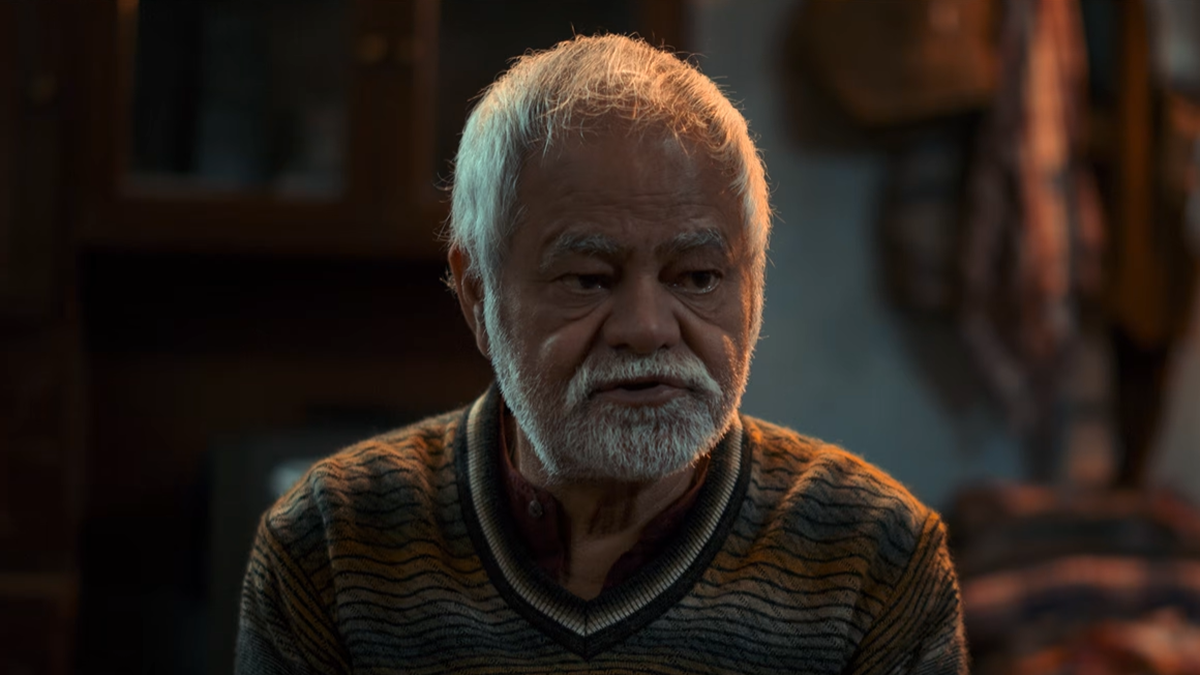
    Sanjay Mishra in ‘Vadh 2’.

    Sanjay Mishra in ‘Vadh 2’.
    | Photo Credit: Luv Films/YouTube

    Over the years, carceral imagery has been an important creative device for shaping tales of confinement and social control. This week, Shambhunath Mishra (Sanjay Mishra), a prison guard struggling with financial burdens and personal isolation, forms an unlikely bond with Manju Singh (Neena Gupta), an inmate serving a life term for crimes she may not have committed. The intimacy amid isolation gets a jolt when one night a politically-connected predator disappears from prison, triggering an investigation. As a determined officer, Ateet Singh (Amitt K. Singh) takes charge, and elements of caste dynamics and power struggles surface, involving a strict but prejudiced superintendent (Kumud Mishra) and a perverted inmate (Akshay Dogra).

    If you have watched Vadh and the trailer of its spiritual sequel, you can pretty much guess the who and why of the thriller in the first few minutes. It deliberately reunites the lead actors and retains their screen names, shifting the narrative from the original’s domestic thriller to a prison-set story rooted in the moral complexities and systemic flaws of the criminal justice system. Murder with a moral, which became a rage with Drishyam, is the connecting link. One could see that the same thought is being reimagined from a distance, and the makers want to underline it.

    As a result, the narrative structure of this slow burn doesn’t hold many surprises until the efficiently concealed final twist, which leaves us amazed with a timely tweak to the karmic theory. You don’t have to wait for rebirth to pay for your sin.

    Vadh 2 (Hindi)

    Director: Jaspal Singh Sandhu

    Cast: Neena Gupta, Sanjay Mishra, Kumud Mishra, Amit K Singh, Shilpa Shukla, Yogita Bihani

    Duration: 131 minutes

    Storyline: A kind-hearted retiring prison guard forges an unexpected bond of trust and affection with a long-imprisoned woman amid the sudden disappearance of a high-profile inmate

    The film questions the idea of justice as writer-director Jaspal Singh Sandhu judiciously weaves the realities of caste, confinement, and entitlement. Sapan Narula’s cinematography and Sidhant Malhotra’s production design create a space you can believe in. Neena and Sanjay once again bring quiet intensity and emotional depth to the performance without making the suffering dreary. While Sanjay brings his whimsical style to Shambhu, Neena imparts grit and grace to Manju. But it is Kumud who lights up the layers in the scenario as the surname-hunting superintendent Prakash Singh, whose righteousness is undone by his bias.

    However, Sandhu spends too much time establishing the obvious good and bad, leaving the grey to go underappreciated. The modus operandi of removing evidence is carried out with a heavy hand, and the role of call details in the investigation is conveniently forgotten. In a thriller, if the supporting characters wear their intent on their sleeves, the emotional drama leading up to that big revelation becomes laboured even in two hours.

    ALSO READ: Sanjay Mishra on his next film ‘Kaamyaab’: ‘This is the story of my industry – which I live and breathe’

    More importantly, the uneven treatment of the second act exposes the carefully curated restraint of an unrushed thriller with middle-aged actors. A self-conscious Amit K Singh doesn’t fit the film’s tone. As the investigating officer, he seems to be using the opportunity to audition for a Bollywood biggie.

    It is irritating to see the director allowing the character to flaunt his body in bed and strike a pose with a cigarette in a film where artistes such as Neena, Sanjay, and Kumud play on a different plane. If the idea is to bring a little more colour, it doesn’t work. Eventually, it is like a well-intentioned sentence with punctuation all over the place.

    Vadh 2 is currently running in theatres

  • ‘Scarlet’ movie review: Mamoru Hosoda gives ‘Hamlet’ a stunning, maximalist afterlife with little to live in

    ‘Scarlet’ movie review: Mamoru Hosoda gives ‘Hamlet’ a stunning, maximalist afterlife with little to live in

    [ad_1]

    Cinema has returned to Hamlet repeatedly this year. A machinima documentary stages the text inside the videogame physics of GTA V, testing how Shakespeare’s language behaves within the absurdity of Los Santos in Grand Theft Hamlet. Meanwhile, Chloé Zhao’s Oscar-nominated Hamnet redirects attention away from the Danish court toward the private grief that preceded the play’s composition through Maggie O’Farrell’s eponymous novel. Even Riz Ahmed has taken a turn at the play, anchoring a contemporary screen adaptation that relocates familial betrayal within a modern South Asian business dynasty. Anime filmmaker Mamoru Hosoda’s Scarlet enters this crowded field by absorbing the play’s revenge mechanics into a fantasy cosmology. It arrives with the weight of expectation that now trails every new Studio Chizu project, partly because of Hosoda’s stature as one of contemporary animation’s defining auteurs and partly because of the sheer ambition signaled by a four-and-a-half-year production cycle and an explicit dialogue with Shakespeare.

    Hosoda opens Scarlet with an extended audiovisual stunner. A famished, pink-haired figure moves across a blasted deserted plain layered with discarded armor, each piece rusted into the ground as magma advances in slow, deliberate seams beneath her feet. Above her stretches a sky composed of a suspended ocean, its vast waters sweeping overhead in heavy currents while stars glimmer beyond the surface like distant bioluminescence.

    Cutting through this inverted sea is a dragon of overwhelming, almost geological scale, its elongated neck and trailing tail extending beyond the frame, its wingspan so vast that it seems to displace the sky itself as it moves. Millions of weapons are embedded across its body—swords, spears, axes, relics from every era—turning its hide into a drifting armory that records centuries of failed resistance. Lightning discharges along its passage as a secondary effect. The image carries the density of a long-promised Silmarillion myth finally rendered, recalling the sheer dimensional terror of Ancalagon the Black, Tolkien’s legendary sky-filling dragon whose scale was defined less by description than by the devastation required to bring it down.

    Scarlet (Japanese)

    Director: Mamoru Hosoda

    Cast: Mana Ashida, Masaki Okada, Koji Yakusho, Masachika Ichimura, Kōtarō Yoshida, Yutaka Matsushige

    Runtime: 111 minutes

    Storyline: A sword-wielding princess embarks on a dangerous quest to avenge the death of her father

    For several minutes the film feels bracingly unburdened by explanation or thesis and establishes Hosoda’s guiding interest in thresholds, between life and death/ past and future. The narrative that follows is more classical in its scaffolding. Set initially in a mythicised late-sixteenth-century Denmark, the film introduces Princess Scarlet, voiced with steely resolve by Mana Ashida, as the adored daughter of King Amleth, a ruler committed to compromise over conquest. His brother Claudius, performed by Kōji Yakusho with oily composure, engineers Amleth’s execution through political subterfuge and consolidates power through fear. Scarlet witnesses the spectacle of her father’s death, swears vengeance, and is swiftly poisoned herself, which sends her into the aforementioned hellscape of the Otherlands, a purgatorial realm populated by the dispossessed dead from across eras and cultures. Once she learns that Claudius has also taken refuge there, she sets out across its shifting terrain with the explicit aim of finding him and finishing what was interrupted in life.

    A still from ‘Scarlet’

    A still from ‘Scarlet’
    | Photo Credit:
    TOHO

    The Otherlands is where Scarlet briefly regains its footing as something strange and genuinely curious. Hosoda’s much-publicised hybrid digital approach yields environments that feel overworked in the best sense, scarred by prior occupants and burdened with history. Rejecting traditional 2D character animation and avoiding Hollywood-style CG, Hosoda and Studio Chizu pursue an amalgamated aesthetic that privileges facial micro-expression and environmental density. Characters move with a certain stiffness in their bodies, yet their faces register emotion with unusual granularity, while the landscapes around them stretch into deserts, quarries, storm-wracked plains, and rocky expanses that feel oppressively realistic.

    Scarlet’s journey through this space introduces her to Hijiri, a modern-day Japanese paramedic voiced by Masaki Okada, whose disbelief at his own death grounds the film’s philosophical tension. Hijiri’s ethic centers on care, patience, and collective survival, and his presence forces Scarlet’s single-minded pursuit of revenge into constant friction with alternative modes of action. That tension briefly loosens during a spontaneous dance interlude, staged as Scarlet glimpses the future, where bodies move in open synchrony reminiscent of La La Land’s “Another Day of Sun,” while her vision slips across eras and star fields in a wordless passage that echoes the cosmic drift of 2001: A Space Odyssey. Their dynamic supplies the film’s clearest emotional throughline, especially as Hijiri challenges Scarlet’s reliance on force while acknowledging the realities of being hunted by Claudius’s soldiers.

    The film’s ambitions briefly widen as Scarlet begins to recognise her influence within the Otherlands, where inequality mirrors the hierarchies of the living world and charismatic tyrants exploit hope as currency. Hosoda structures this realm as a mirror economy, where proximity to power determines access to safety, food, and eventual passage to the ‘Infinite Lands’, while the majority linger in provisional camps built from scavenged armor and collapsed architecture. 

    Claudius exploits this arrangement with precision, promising collective ascension in exchange for military loyalty, which allows him to reproduce his earthly coup inside the afterlife itself. Scarlet’s symbolic weight emerges from her visibility, since her battles against Claudius’s forces circulate as rumour among the displaced dead. She listens to grievances and witnesses deprivation, yet her forward motion remains tethered to a single objective. Hosoda frames this as a moral problem, which leaves Scarlet’s influence suspended between revolutionary potential and narrative inertia.

    A still from ‘Scarlet’

    A still from ‘Scarlet’
    | Photo Credit:
    TOHO

    Hosoda also gestures toward systemic critique, toward cycles of violence perpetuated through myth and inheritance, and toward the ethical limits of forgiveness. These gestures remain broad, and the film’s political imagination stops short of turning observation into consequence, hesitating to let these elements transform Scarlet’s choices in materially distinct ways.

    The inertia sharpens once the story pivots back toward Claudius and the mechanics of revenge inherited from Hamlet. Hosoda abandons the early formal looseness of the Otherlands in favour of increasingly linear progression, with Scarlet advancing through successive confrontations that echo the logic of videogame boss battles. This shift parallels Hosoda’s adaptation strategy, which borrows Shakespeare’s architecture of deferred confrontation while discarding the play’s interior conflict as an engine of delay. The movement culminates in a climactic sequence set along a luminous stairway leading toward the Infinite Lands, where sparkling steps stretch upward through open air, as Scarlet ascends in slow procession, and Hosoda’s animation turns light, fabric, and motion into a fragile, ethereal spectacle.

    Scarlet remains compelling precisely because its reach exceeds its grasp. Hosoda’s commitment to treating animation as a space for adult moral inquiry persists even when the answers are softened by generality. It may never fully reconcile its Shakespearean inheritance with its pacifist yearning, yet it sustains a restless intelligence about why those stories continue to matter, and why revisiting them remains an unfinished task.

    Scarlet is currently running in theatres
    Published – February 06, 2026 03:58 pm IST

  • ‘Euphoria’ movie review: Gunasekhar’s part gritty social drama raises relevant questions

    ‘Euphoria’ movie review: Gunasekhar’s part gritty social drama raises relevant questions

    [ad_1]

    Euphoria is a difficult watch that demands viewer discretion; its ‘A’ certification is justified. Eschewing the mindless violence common in mainstream cinema, writer-director Gunasekhar delivers a sharp fictional drama rooted in a harrowing true story that shook Hyderabad.

    The film uses its narrative to pose urgent questions through three interconnected lenses: a survivor reclaiming her life, a mother desperate to reform her son, and the perpetrator’s uneasy and long path toward redemption.

    The plot draws from a 2022 incident in Jubilee Hills, where five minors from influential families sexually assaulted a 17-year-old girl. After leaving a non-alcoholic party, she unsuspectingly entered a vehicle, leading to an assault that sparked nationwide outrage. True to the toxic social climate surrounding such cases, an inevitable wave of victim-blaming followed.

    Euphoria (Telugu)

    Direction: Gunasekhar

    Cast: Bhumika Chawla, Sara Arjun, Gautham Menon, Vignesh Gavireddy

    Run time: 150 minutes

    Storyline: When a minor girl is assaulted, it raises pertinent questions that the authorities and society cannot look away from.

    In Euphoria, Chaitra (Sara Arjun) portrays a fictional character inspired by the 17-year-old survivor. She pointedly asks the judge if it is a crime for girls to enter a pub, questioning why she should live in shame when she was not at fault and had stayed within her boundaries. Though she feels grief and anger, she never flinches from asking these questions.

    The narrative evokes the emphatic “No means no” line from Pink, underlining the importance of consent. A subplot involving a fatal car accident in Banjara Hills further explores how public memory fades quickly while lives remain shattered forever.

    The film marks Gunasekhar’s return to contemporary drama following a long detour into historical and mythological dramas like Rudhramadevi and Shaakuntalam. Collaborating with Bhumika Chawla more than two decades after Okkadu, he delivers a hard-hitting narrative.

    The first hour is riveting as it captures the vulnerability of a teenager whose dreams are nearly shattered. It underscores how women often bear the brunt of social failure; Vindhya (Bhumika), who heads an educational institution, is blamed by her husband for neglecting their son in favour of her career. Crucially, the film does not absolve the father, whose indulgence and tendency to turn a blind eye are equally scrutinised. Throughout, the story raises relevant questions about responsible parenting.

    As details emerge, the film shatters stereotypes. The prime accused, Vikas (Vignesh Gavireddy), is a top-ranking student, challenging the assumption that substance abuse and waywardness are reserved for “last benchers”. While the narrative does not fully probe the roots of his behaviour, it effectively deconstructs these social misconceptions.

    There are a few niggles. While the film foregrounds Vindhya as a conscientious mother, the mothers of the other accused are conspicuously absent. The fathers, meanwhile, are sketched as one-note figures — men of influence determined to shield their sons from consequence.

    Thankfully, these lapses do not derail the film. The police procedural delivers several gripping moments, led by Gautham Vasudev Menon as the commissioner. With restraint and authority, he inhabits the role with ease. Both his character and the judge are written with a balance of resolve and empathy. A hospital sequence stands out as well, with Bhumika earning plaudits and reminding viewers of her range when offered layered emotional material. Euphoria also does not shy away from calling out the rot within sections of the media.

    After a strong first hour, however, the film loses momentum as it veers into some puzzling choices. When Gunasekhar turns inward to examine the psychology of the perpetrators and the possibility of remorse, the narrative slips into familiar commercial tropes, particularly in the prison sequences.

    The later turns taken by Bhumika’s character are also jarring, giving the impression of a narrative running out of ideas. If the intention was to explore the fraught complexity of a mother–son relationship, the execution falls short.

    The film, however, finds redemption in its closing moments. With sparse dialogue by Nagendra Kasi and Krishna Hari, the subtext lands more forcefully, allowing silence to do the heavy lifting. Sara Arjun and Vignesh make the most of the space their roles afford them, signalling promise. Much of the film’s strength also lies in its expansive supporting cast — from the actors playing the other accused to familiar faces such as Adarsh Balakrishna, Ashrita Vemuganti, Nasser, Rohith, and others.

    Euphoria demands patience in parts, but it remains a timely social drama that engages with pressing questions.

    Published – February 06, 2026 04:42 pm IST

  • Anomie movie review: Bhavana’s sci-fi thriller failed by too many derivative elements

    Anomie movie review: Bhavana’s sci-fi thriller failed by too many derivative elements

    [ad_1]

    Anomie revolves around Zaara Philip (Bhavana), a forensic expert, who begins to look at a series of deaths that has happened in a locality after her brother goes missing.

    Anomie revolves around Zaara Philip (Bhavana), a forensic expert, who begins to look at a series of deaths that has happened in a locality after her brother goes missing.

    Anomie (Malayalam)

    Direction: Riyas Marath

    Starring: Bhavana, Rahman, Arjun Lal, Shebin Benson, Vishnu Agasthya

    Plot: When a forensic expert digs deep into the mystery of her missing brother, she unearths patterns related to recent incidents in the locality. 

    Runtime: 152 minutes

    Genre cinema often comes with its expected trappings which unless backed by exceptional writing skills, gives the audience that sinking feeling of going through the motions. Anomie, written and directed by Riyas Marath, has several phases which convey a sense of ‘been there, done that,’ but as with many thrillers of late, the writer goes to great extents to ensure that the mystery about the series of killings is something beyond our wildest guesses. Just that this far-fetched idea had to sound a tad bit more convincing for it to work.

    Anomie revolves around Zaara Philip (Bhavana), a forensic expert, who begins to look at a series of deaths that has happened in a locality after her brother Ziyan (Shebin Benson) goes missing. She unearths patterns that Ghibran (Rahman), the police officer who was assigned to her brother’s missing case, failed to notice. The search from both ends lead to something sinister beyond their imaginations.

    In the initial half, the film looks and feels derivative, be it with the much overused side story of the cop with an emotional baggage or in its colour grading or dialogues, which are meant to be merely functional and expository in nature. Many of the dialogues get repeated, sometimes in the gap of a few minutes, perhaps to ensure that the audience will not lose track. For long portions, the screenplay meanders along without any eventful turns. Consequently, the film fails to be engaging except in the latter portions of the investigation.

    Half-baked novelty

    With Anomie being branded as a science-fiction thriller, the rather run-of-the-mill narrative makes one wonder about that branding till the fag end of the film, when the film unveils its real game. Although the hunt for the serial killer has its moments, it is only when the movie reaches the climax that there is any sign of novelty. But this novel turn in the narrative is somewhat half-baked and hence does not become the kind of pay-off that it was intended to be.

    Handled with ease

    Bhavana, appearing in a Malayalam film after a gap of three years, handles the character who has to go through emotional upheavals with a touch of ease. But in the latter portions of the investigation, her character is absent from the thick of things for long periods. The other characters are not too well-etched and are mostly present just to be in the service of the story, with the cop’s background story appearing to be a rushed job to give some context to his general attitude.

    With too many derivative elements, Anomie fails to achieve its ambitions of being an engaging sci-fi thriller. 

  • ‘The Strangers: Chapter 3’ movie review: About time to put this killer to pasture

    ‘The Strangers: Chapter 3’ movie review: About time to put this killer to pasture

    [ad_1]

    A still from ‘The Strangers: Chapter 3’

    A still from ‘The Strangers: Chapter 3’
    | Photo Credit: Lionsgate

    This is the silliest stuff that ever I heard, Queen Hippolyta declares in Shakespeare’s A Midsummer Night’s Dream, while watching the play put up by Bottom and the Rude Mechanicals. One wonders what the Amazon queen would have said if she had to sit through The Strangers: Chapter 3. At least the Rude Mechanicals had the Man on the Moon and his dog, and Bottom providing the laughs.

    Renny Harlin’s The Strangers: Chapter 3 is the fifth instalment in the series, itself a reboot of the 2008 film about a trio of masked, sociopathic home invaders. Harlin, who has directed cult action films including Die Hard 2 (1990) and Cliffhanger (1993), directed the new trilogy back to back.

    The Strangers: Chapter 1 (2024) finds Maya (Madelaine Petsch) and her boyfriend taking a detour to a small town called Venus in Oregon. After car trouble forces them to stay the night at a lonely cottage, they are terrorised by three masked strangers, Scarecrow, Dollface, and Pin-Up Girl.

    The Strangers: Chapter 3 (English)

    Director: Renny Harlin

    Cast: Madelaine Petsch, Gabriel Basso, Ema Horvath, Richard Brake, Rachel Shenton

    Runtime: 91 minutes

    Storyline: Maya is still hunting the Strangers, who are hunting her

    Maya is the Final Girl, and after killing Pin-Up Girl in The Strangers: Chapter 2 (2025), she is still fighting the other two, not even having time to clean her face or change her bloodstained hoodie — that is dedication for you.

    The Strangers: Chapter 3 starts with a lovely cover of Simon & Garfunkel’s ‘The Sound of Silence’ by Shelby Carter. Then there is a ponderous definition of a serial killer and we are off. There is some annoying back and forth in time from three years ago to 12 years ago to the present or some such.

    We learn the sheriff’s son was wicked even as a little boy and, for some strange reason, the judge thought it was fine to let the boy be.

    Sheriff Rotter (Richard Brake) is up to no good—the surname might be a clue. There is Gregory (Gabriel Basso), a Venus local wandering about dropping loaded hints. The best twist was how the third Stranger joined the gang.

    A still from ‘The Strangers: Chapter 3’

    A still from ‘The Strangers: Chapter 3’
    | Photo Credit:
    Lionsgate

    Meanwhile Maya is limping around (without washing her face) while her sister, Debbie (Rachel Shenton), has come from Portland in search of Maya.

    There are so many inexplicable things happening like why does Scarecrow not kill Maya? Why does he give her a knife and cut her ropes? Why are the Strangers killing people? Why was this movie even made? That last question repeatedly comes to mind as people are getting poked in the stomach and fed to the meat grinder. Unmasking the Strangers strips the last bit of interest from this lackadaisical psychological thriller.

    As it begins so it ends—with a lovely song, this time it is Moody Blues’ ‘Nights In White Satin’. When the lights came up after the fairly interesting end-credit sequence, one is left thinking why was this film released in February, which is usually the time for love or award heavies.

    The Strangers: Chapter 3 is currently running in theatres
  • ‘Rakkasapuradhol’ movie review: This Raj B Shetty-starrer gets the job done after a shaky start

    ‘Rakkasapuradhol’ movie review: This Raj B Shetty-starrer gets the job done after a shaky start

    [ad_1]

    Raj B Shetty in ‘Rakkasapuradhol’.

    Raj B Shetty in ‘Rakkasapuradhol’.
    | Photo Credit: Anand Audio/YouTube

    The runtime of the Raj B Shetty-starrer Rakkasapuradhol mirrors the film’s highs and lows. At two hours and seven minutes, you expect a taut thriller. Director Ravi Saranga’s film is far from that. There are portions that unfold more slowly than they should. Yet, the film accelerates before it’s too late for a good finish, ensuring the film isn’t needlessly long.

    The first half tries its best to keep our curiosity intact, but it’s not easy to guess the story’s deceptive turns. A small town is jolted when women start disappearing. Dead bodies are found to make things worse. The villagers fear it’s the doing of Kolli Devva (Torch Ghost). There is also a perverted teacher (Gopalakrishna Deshpande) and a temple priest (B Suresha), who is revered as a deity by the locals.

    Rakkasapuradhol (Kannada)

    Director: Ravi Saranga

    Cast: Raj B Shetty, Gopalakrishna Deshpande, B Suresha, Swathishta Krishnan, Archana Kottige

    Runtime: 127 minutes

    Storyline: When Shiva, an arrogant, drunkard cop, enters Rakkasapura, a series of unnatural manhunts begins

    In the middle of these dramatic episodes is Inspector Shiva (Raj) who is introduced as a wacky, alcoholic cop. Again, it’s easy to guess that his lax discipline will never come in the way of the crucial case in front of him. Till the plot kicks in, he is the archetypal cool cop hiding his brilliance behind the facade of an arrogant and drunken officer.

    Rakkasapuradhol gets its act together when the director dives into the crucial details of the case. It gets engaging and never loses focus when the inspector begins to unearth shocking details about the murderer. The thriller gets an extra layer when it deals with the mental disorder of the protagonist. Shiva is schizophrenic, and how this psychological aspect becomes integral to the plot pushes Rakkasapuradhol to a flourishing finish.

    ALSO READ: ‘Valavaara’ movie review: Sutan Gowda’s debut feels like a warm hug

    The film would have benefited from a deft handling of the episodes that build towards the big reveal. The loud background score is a drawback. There is something alluring about atmospheric thrillers set in rural regions. Cinematographer William David transforms the pleasing backdrop into something unsettling to indicate the impending danger.

    Rakkasapuradhol is a thriller that punches above its weight. More importantly, it gets the job done after a shaky start.

    Rakkasapuradhol is currently running in theatres

  • ‘JC: The University’ movie review: After a brilliant start, this crime drama loses momentum

    ‘JC: The University’ movie review: After a brilliant start, this crime drama loses momentum

    [ad_1]

    JC (Judicial Custody) begins with the gripping portrayal of the dark side of prisons. It illustrates how long-term imprisonment affects a person’s life in the outside world. A host of distinct characters playing notorious criminals with quirky names is the backbone of debutant Chethan Jayaram’s realistic reflection of the corrupt prison system. Add to it the violence, and you get the feel of the gritty realism of Suri films (Duniya, Kaddipudi), a pleasant imitation of the seasoned filmmaker who revelled in the noir genre.

    Madhusudhan a.k.a Maddy, a college student, lands in jail following a high-profile murder. It’s a cold and dark place, where everything, right from people to the food, is far from ideal. As he struggles to break away from the brutal environment, he finds reprieve by mingling with rowdy Kumari (Thriller Manju) and his gang, which includes two shrewd criminals, A-Z (a hilarious name to signify the thorough knowledge of the field) and Jadeja. Kumari wants to eliminate Kavala, the most feared don of the city, who is shielded by reckless rowdies in Raaka and Twins.

    Now, you can point to several reasons why Maddy commits a crime. You may attribute it to circumstances. He goes to a police officer for protection, but is met with ignorance. An opportunistic friend pushes him to take needless risks. It could also be because of Maddy’s brittle ego, as he can’t sleep without seeking revenge. A series of events leads to the execution of the big fish, and the proceedings are made gripping thanks to a host of actors who revel in their nicely fleshed out roles.

    JC The University (Kannada)

    Director: Chethan Jayaram

    Cast: Surya Prakhyath, Rangayana Raghu, Thriller Manju, Bhavana S Reddy

    Runtime: 162 minutes

    Storyline: A ten-year journey traces Madhusudan, aka Maddy, from a middle-class final-year degree student into the dark worlds of jail and the underworld

    After a brilliant first half marked by solid world-building, the director throws his hands up in the air as JC comes crumbling down. What is the mindset of the hero? Why does he persist in the criminal world? Why isn’t there even a moment of introspection? Kannada cinema’s previous attempts (Jogi, Duniya) at young men drawn to the underworld were convincing because the protagonists hailed from small towns, desperate to make a living in the big city. Here, Maddy isn’t as naive as they are and, more importantly, is educated enough to know the consequences of pursuing rowdysm. JC needed to show the vulnerable moments of the protagonist as he commits heinous crimes. Instead, the film opts for heroic moments that border on glorification of gangsters.

    Even if the real reason is ego, the idea goes on for too long in the second half, offering nothing new to the viewers. The clash of egos had to enter dangerous territories for us to feel gripped. JC settles for a verbal war between the hero and villain, which becomes tedious after a while. It’s surprising how the policemen have little to do in the plot. Apart from one scene, which shows the police’s active participation in the corrupt system, the men in khadi are largely absent in the violent world.

    The relationships around Maddy had to be written with more emotional heft. The love story is the film’s weakest link. Maddy’s romantic relationship is introduced with a silly quarrel over punctuality. Scenes revolving around the relationship are uninteresting, including the romantic number. I wish Bhavana S Reddy’s character had more to do than just claiming to accept his boyfriend despite constant danger lurking around him.

    The director also struggles to balance the father-son bonding with the gangster portions. Maddy’s sudden transformation, fuelled by his father’s shock at seeing his son almost commit a murder, feels too sudden. The scene reminds you of Mohanlal’s classic Kireedam (1989), where the protagonist drops his weapon in complete defeat after seeing his father, realising he has turned into what his father feared, a criminal. While that film had built up the deteriorating father-son relationship organically, the tonal shift in JC, while dealing with a similar trope is jarring, largely due to the melodramatic nature of the scenes.

    ALSO READ: ‘Valavaara’ movie review: Sutan Gowda’s debut feels like a warm hug

    Some direct inspirations are apparent, such as the last scene of the movie, which is eerily similar to the final moment of Nithilan Saminathan’s (Maharaja fame) debut Kurangu Bommai. The film begins the announcement of the murder of the dread don by unknown assassin. He is later revealed to the protagonist, exactly how the opening portions unfolf in Jogi.

    It’s frustrating to see a promising setup fall apart due to poor writing. JC settles to be a well-mounted portrayal of your usual innocent-turned-gangster who struggles to come out of the dreadful world, distancing his beloved ones in the process. Surya Prakhyath gives his all to a dense character, while Vijay Simha adds strength to the loose cannon Raaka despite the one-note nature of the character. JC needed to maintain the momentum of the first half, where the drama blended with very individualistic action sequences. However, it fails to reach the heights it aims for.

    JC is currently running in theatres

    Published – February 07, 2026 06:03 pm IST

  • ‘Ashakal Aayiram’ movie review: Jayaram in form in this breezy feel-good drama that falters in the end

    ‘Ashakal Aayiram’ movie review: Jayaram in form in this breezy feel-good drama that falters in the end

    [ad_1]

    A still from Ashakal Aayiram.

    A still from Ashakal Aayiram.

    An over-reliance on references from past hits often signals a dearth in creativity. But in Ashakal Aayiram, the references that fly thick and fast, all of it aimed at evoking the heydays of Jayaram in the 1990s, appear to be acts of fondness. Until the makers start overusing it to the hilt, especially towards the climax, one gets to swim along in the warm nostalgia of the yesteryears of a star whose films of limited ambitions also used to be minimum guarantee fare in the past.

    In Ashakal Aayiram, directed by G Prajith, Jayaram and his son, Kalidas Jayaram, yet again get to play their real-life relationship on screen. Ajeesh Hariharan (Kalidas), neck-deep in the world of Internet reels, aspires to be an actor, while his father Hariharan (Jayaram), a medical representative, wishes that his son start thinking realistically and take up a regular job. Caught amid this father-son tussle and clash of ideas on the right way to live is Asha (Asha Sharath), the mother, who struggles in her own way to keep the family’s finances afloat.


    Ashakal Aayiram (Malayalam)

    Director: G. Prajith

    Cast: Jayaram, Kalidas Jayaram, Asha Sharath, Sharaf U Dheen, Ishaani Krishna

    Runtime: 136 minutes

    Storyline: A youngster who dreams of becoming a film star finds unexpected roadblocks on his way

    Written by Aravind Rajendran and Jude Anthany Joseph (also the creative director of the film), Ashakal Aayiram has the structure of a typical family drama of the 90s, although it has the external appearance of a contemporary film. Ajeesh’s antics to land a dream role and his father’s inadvertent brush with cinema are all fodder for comedy, with some self-deprecating humour from Jayaram (especially the reference to his much-lampooned character in Salaam Kashmir) making it quite a breezy watch in the initial half.


    Also Read | ‘Putham Pudhu Kaalai’: Jayaram and Kalidas on acting in the anthology

    It is a character written with the intent to exploit Jayaram’s strengths as an actor, with relatable humour and emotions. Of late, he has mostly appeared in memorable cameos in Tamil films, but it has been a long time since he made a mark in Malayalam. Here, the actor is fully in his element, apparently aware that, in the end, this is a movie meant to celebrate him, although love for cinema is the overarching theme.

    But the one who almost walked away with the movie was Sharaf U Dheen, who plays Sumith Raghavan, a power-drunk star and a product of nepotism in the industry. Although the character is written with few shades, Sharaf’s performance lends it much more depth. However, in the latter half, the screenplay overpowers the actor, with over-the-top lines on nepotism and contrived plot turns spoiling not just the character, but the entire movie.

    Predictability of the narrative, which one ignores owing to the rather fun ride in the initial half, becomes evident as the film progresses. The manufactured conflict points also do not help the movie much. The over-dramatic sequence in the climax takes the movie down even further. At this point, a misplaced reference from the classic Veendum Chila Veettukaryangal lands rather jarringly, reminding us that such shortcuts can carry a movie only so far. An original and organic screenplay is any day a better bet.

    Ashakal Aayiram is currently running in cinemas

  • ‘Tu Yaa Main’ movie review: Adarsh Gourav and Shanaya Kapoor pull off this killer collab

    ‘Tu Yaa Main’ movie review: Adarsh Gourav and Shanaya Kapoor pull off this killer collab

    [ad_1]

    Adarsh Gourav and Shanaya Kapoor in ‘Tuu Yaa Main’.

    Adarsh Gourav and Shanaya Kapoor in ‘Tuu Yaa Main’.
    | Photo Credit: Colour Yellow and Bhanushali Studios Limited/YouTube

    This Valentine’s week, love floats in a pool infested with primal danger as Bejoy Nambiar blends genres to create a triangle between two contrasting social media influencers and a crocodile in Tu Yaa Main. Playing out like a nightmare with a message, when a privileged, polished Avani Shah and a gritty, ambitious rapper, Maruti Kadam, collide in Mumbai’s content scene, their calculated collaboration ignites a passionate romance that bridges class chasms and exposes raw vulnerabilities beneath curated personas. Beneath the swag, we discover that both are survivors who want to change their existing profile. She wants to escape her luxurious loneliness, and he is eager to climb the social ladder.

    Intimacy forces a tense reckoning on love and responsibility; a supposed escape to Goa derails when monsoon chaos strands them at a derelict hotel, where a mechanical failure traps them in the deep, drained basin of an abandoned swimming pool with no immediate rescue in sight. As rising water and a rogue predator turn confinement into visceral fear, the lovers’ bond fractures under survival’s merciless arithmetic: trust erodes, instincts sharpen, and the title, Tu Yaa Main, becomes an existential question of life and death.

    Tu Yaa Main (Hindi)

    Director: Bejoy Nambiar

    Duration: 150 minutes

    Cast: Adarsh Gourav, Shanaya Kapoor, Parul Gulati, Rajendra Gupta

    Synopsis: A passionate romance between two influencers from opposite ends of Mumbai’s social ladder hits rock bottom when they find themselves in a pool with a crocodile.

    Those who have watched Nambiar’s films over the years, such as Shaitan and Taish, would attest that his storytelling often leans more towards style than substance. Here, he almost finds the sweet spot between form and content. It is not just about the world-building, which he masters; he also infuses it with a beating heart. Based on the Thai horror flick The Pool, the idea of an encounter with a crocodile in a pool is mostly cut-and-paste, but Nambiar, along with writer Abhishek Bandekar, gives it a new colour and context in Monsoon-drenched Mumbai, evocatively captured by cinematographer Remy Dalai.

    A still from the film.

    A still from the film.
    | Photo Credit:
    Colour Yellow and Bhanushali Studios Limited/YouTube

    With a background score that reverberates with the restlessness and ambivalence of youth, Nambiar lays out the clichés of survival dramas and makes us like and subscribe to the cheap thrills they generate. Drawing on the boomers’ memories of Khoon Bhari Maang and Gangaa Jamunaa Saraswathi, where crocodiles play a meaty role, he creates a heady cocktail of the past and the present.

    Who would have thought Majrooh Sultanpuri’s ‘Tum Hi Humari Manzil Ho My Love’, an infectious love ditty composed by Jatin Lalit for the forgettable Yaara Dildara in 1991, would find a suitable body 35 years later. Adarsh’s Maruti is a more expressive version of his turn in The White Tiger (2021), and he goes with the flow as he channels raw ambition, class resentment, and survival instinct against systemic odds.

    ALSO READ: ‘Superboys of Malegaon’ movie review: Not too super, much too safe

    Literally punching above her weight, Shanaya’s indifference to detail becomes a strength for portraying @Miss Vanity, who gets a reality check.

    If the audacity in sharp lingo and attitude draws you into the love story, the antagonist’s unpredictable movement keeps us on the edge in the second half. From the eroding habitats of dangerous reptiles to stories of content creators falling off cliffs in a bid to keep their likes growing, the thriller is rife with references and metaphors. Amidst the mayhem, Nambiar doesn’t lose sight of the relationship’s shallow roots and offers a realistic resolution in a film that wants to suspend disbelief.

    Tu Yaa Main is currently running in theatres.