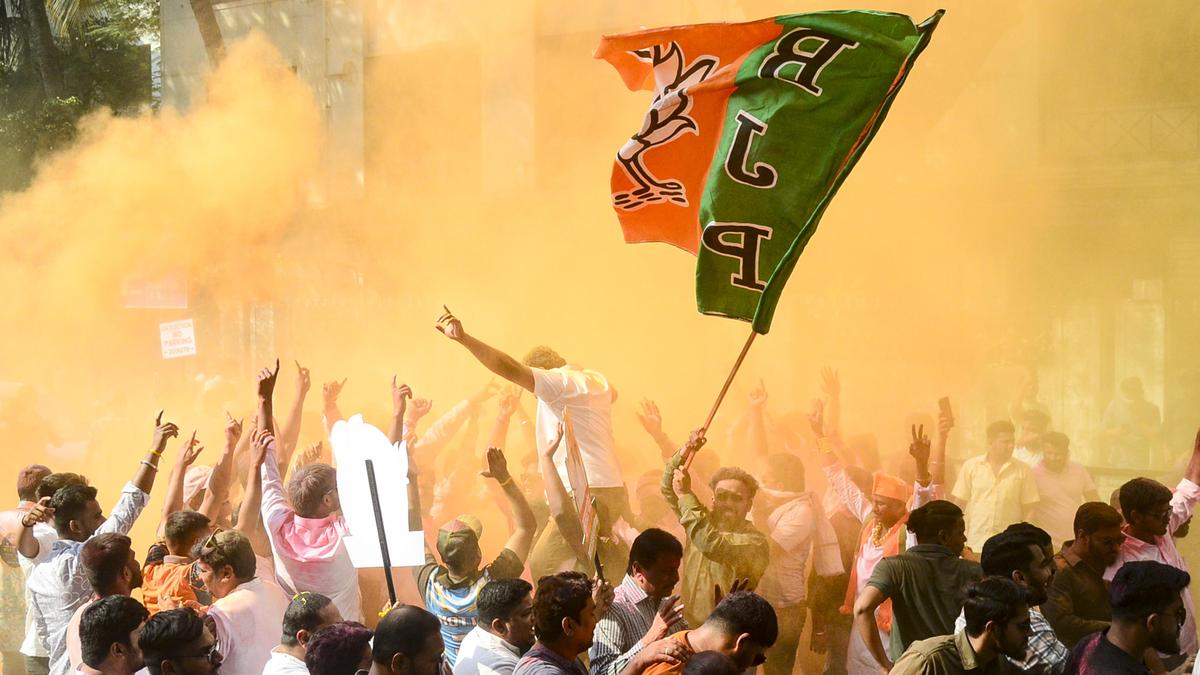
Dalit voting in State Assembly elections often diverges from national trends. Representative image
| Photo Credit: –
Hindu Dalit voters have long been an important vote bank in Indian elections, shaping party strategies, coalitions, and welfare policies. Their choices influence the outcomes of both national and State level elections, yet their political alignment remains fluid. An analysis of Lok Sabha elections from 1996 to 2024, alongside recent State Assembly trends, reveal shifting loyalties, regional variation, and emerging competition.
In the 1990s, the Congress held a clear advantage among Hindu Dalits (Table 1). In 1996, it secured 34% of the vote, compared to 14% for the Bharatiya Janata Party (BJP). This lead continued in 1998 and 1999, with Congress and its allies ahead of the National Democratic Alliance (NDA). The gap narrowed in the 2000s but remained in the Congress’s favour.
Chart appears incomplete? Click to remove AMP mode
A decisive shift was noticeable during the 2014 Lok Sabha elections, when the BJP doubled its standalone share from 12% to 24%, and the NDA rose from 15% to 30%, overtaking the United Progressive Alliance (UPA), which declined to 20%. By 2019, the NDA had consolidated its Dalit support base further, reaching 41%. In 2024, the NDA slipped slightly to 36%, while the Congress-led INDIA bloc climbed to 32%, narrowing the gap. However, State-level patterns remained uneven. In the analysis that follows, BJP and Congress are used throughout but it implies support either for the party alone or the party plus its alliance — depending on how they contested (Table 2).
In Bihar, the BJP’s support among Dalits surged in 2019 before declining in 2024, while the Congress rebounded over the same period. In Uttar Pradesh, support among the Dalits stayed relatively stable for the BJP, but the Congress made notable gains by 2024. Madhya Pradesh and Rajasthan saw closely fought contests, with leads alternating between the BJP and the Congress across elections. Haryana, Jharkhand, and Uttarakhand moved markedly towards the Congress in the most recent elections. In West Bengal, the BJP’s 2019 gains were partly reversed by 2024, whereas Congress support declined sharply. In the south, Congress expanded in Karnataka and Telangana, indicating that Dalit voting patterns are shaped more by State dynamics.
Click to subscribe to our Data newsletter
State-level election patterns
Dalit voting in State Assembly elections often diverges from national trends. In Uttar Pradesh, the BJP consolidated support after 2017, aided by the Bahujan Samaj Party’s decline, while the Congress remained far behind (Table 3).
Haryana witnessed swings: the Congress led in 2014, but by 2024, the BJP made gains, though the Congress retained a slight edge. Madhya Pradesh and Rajasthan remained favourable to the Congress, with the BJP trailing modestly. In Chhattisgarh, Dalit vote leaned towards the Congress, though the BJP strengthened its position in 2023. In Gujarat, the Congress led in 2017 but lost ground to the BJP and the Aam Aadmi Party (AAP) by 2022. Southern States highlight the role of regional dynamics: the Congress expanded Dalit support in Karnataka from 51% in 2018 to 63% in 2023, while the BJP declined slightly. In Telangana, Congress gained, though the Bharat Rashtra Samithi (BRS) retained a significant share of Dalit votes. Overall, Dalit voting has shifted from Congress dominance to increasing BJP consolidation. By 2024, no party commands unchallenged support. State-level alliances continue to shape outcomes alongside national trends.
Sanjay Kumar is a professor and political analyst. Vibha Attri is a researcher with the Lokniti-CSDS. Views expressed are personal.
Also read:Why upper caste support matters for the BJP
Published – March 09, 2026 08:00 am IST