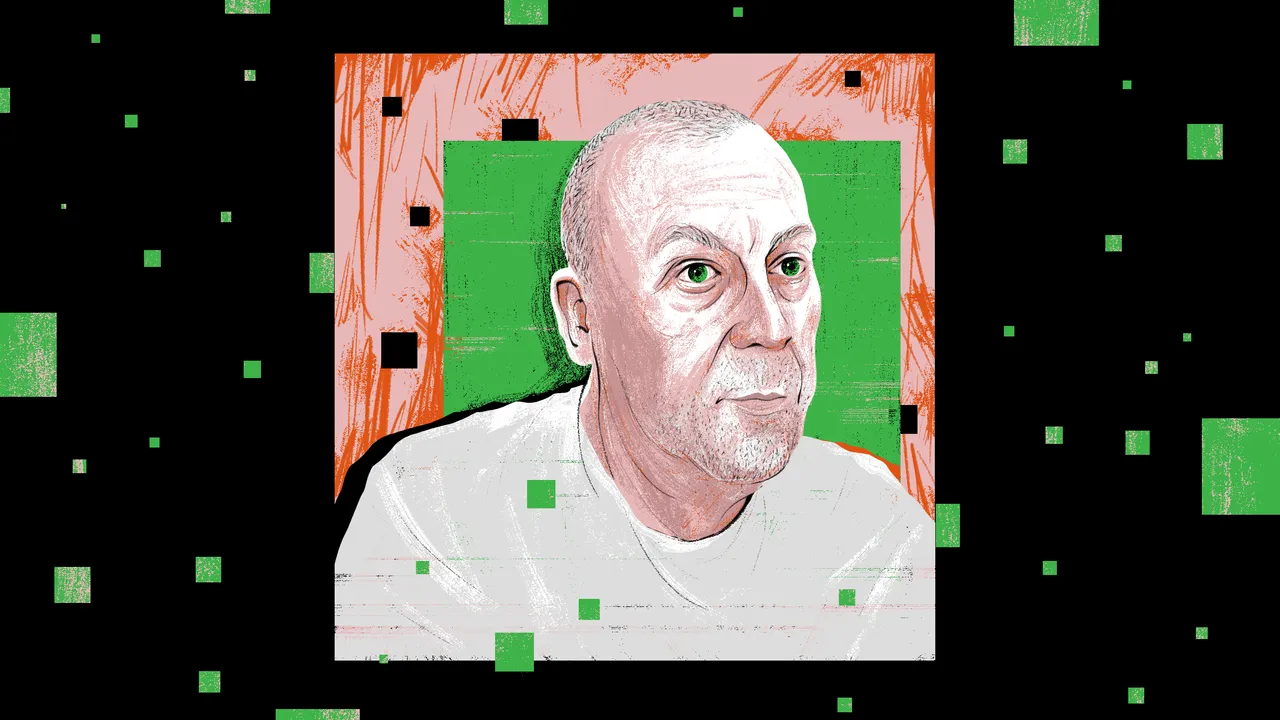
Land has always been a controversial figure, but not for the same reasons he is now. In the nineties, at Warwick, he led the Cybernetic Culture Research Unit, or C.C.R.U., a crew of graduate students, artists, and philosophers who saw in digital technology portents of revolution. Narrowly construed, cybernetics is the science behind digital computing, but the C.C.R.U. saw in it a vaster vision of self-regulating, auto-catalyzing processes. Computing, they argued, was not just a technology but the secret of the universe—the system underpinning genetics, market economics, thermodynamics. Burrowed in a sleepy university town, fuelled by amphetamines, rave music, and the end-of-history euphoria of the early internet, they hymned a future that would eventually lead to superintelligent A.I., societal collapse, and human extinction. “Monkey-flake”—that is, humanity—was mere grist for the coming machines. In thrall to visions of virtual apocalypse, Land soon saw his life fall apart. The C.C.R.U. lost its funding, and Land lost his job.
Other C.C.R.U. alumni—such as Mark Fisher, who became an influential critic of neoliberalism—eventually softened their stance, arguing that technology should be harnessed to build a more just and equitable future. But Land swerved hard to the right. In the nineties, he had told his students that the future would take place in China, and in the early two-thousands he surfaced in Shanghai, working as a journalist and travel-guide editor. He wrote articles in praise of the war on terror and posted about “flash-frying Islamofascists” in the comments sections of neoconservative blogs. In his earliest work, Land had advocated “feminist violence” and “the overthrowing of logic and patriarchy”; now he wanted to “squash democratic myths” and restructure governments as authoritarian city-states ruled by computers.
Land’s vision shares much with that of Yarvin, whom he describes as a “hero” and whose writings were the subject of Land’s Dark Enlightenment essay. Yarvin’s blueprint for a post-democratic future centers on the idea that states should be reconstituted as businesses—or, as he calls them, “sovcorps.” Yarvin was there that Tuesday night, making a much anticipated appearance. As the ballroom filled up, he walked in, wearing a natty tweed jacket and sunglasses. That evening was the first time that the two titans of neoreactionary thought would meet, and yet, when Yarvin joined Land on the stage, they didn’t seem to have much to say to each other. Yarvin tends to extreme digression, while Land speaks with the allusive compression of a guru. The conversation struggled to get traction. Was A.I. accelerating or slowing down? Would we all become managers of our own L.L.M. armies? As Yarvin free-associated on Venezuela, the resource curse, and the future of graphic designers (verdict: not looking good), Land waited patiently, seeming a little bored. Yarvin speculated that, after all jobs had been automated, perhaps people could make money selling their organs. “But our new robot overlords do not need human organs,” Land reminded him, before opening the floor.
Once upon a time, the attendees of an event like the one that took place the other week might have shied away from being associated with a figure like Land, but that night there was no sense of scandal or secrecy. The event had been organized by a man named Wolf Tivy, the founder of a futurist magazine rumored to be funded by the libertarian entrepreneur Peter Thiel. (Tivy declined to confirm Thiel as a funding source, and said the magazine’s funding is now entirely subscriber-based.) “Five years ago, I would have said, ‘Get the fuck out,’ ” Tivy responded when I told him I was writing for The New Yorker. “Now everything’s different.”