During the past several weeks, I have been making the argument that progressive movements in America need to strengthen their connection to communities of faith and center their work in the church, as earlier progressive movements have done. In the past decade, millions of Americans have taken to the streets on behalf of social justice, but this has not led to much in the way of real change. The accomplishments of the civil-rights movement in the nineteen-fifties and sixties and of the Sanctuary Movement in the eighties depended, in part, on the infrastructure, moral clarity, and greater purpose of the church.
But this argument raises a question that I haven’t addressed. If it’s true that those earlier movements drew inspiration and leadership from the church, and if it’s also true that young liberals are increasingly secular, then where does that progressive energy come from? Why do young people participate in politics today, either through voting or through protest, in high numbers? What institution taught them a sense of morality, gave them words to express their outrage, and offered them the space and infrastructure to imagine a different world?
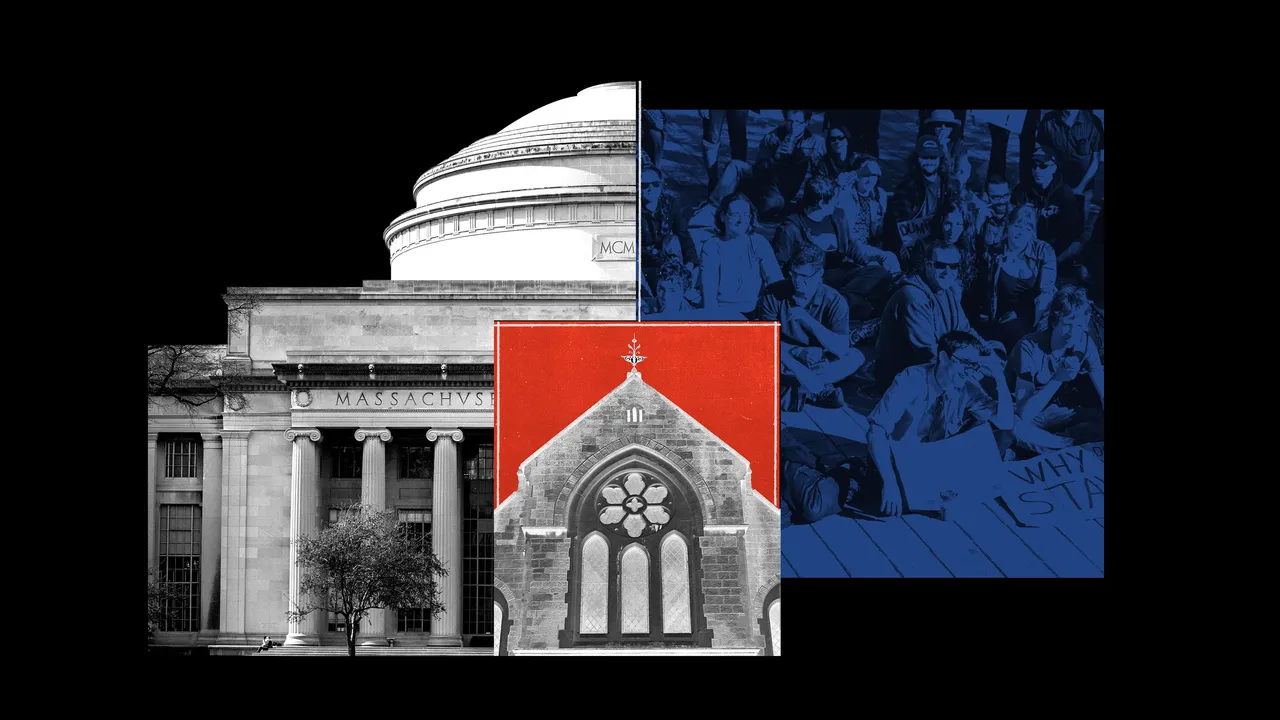
The answer is obvious: the university. In the past thirty or so years, the academy has replaced the church as the center of the liberal moral imagination, providing the sense of a community bound by ethics, a firmament of texts and knowledge that should inform action, and a meeting space for like-minded people. This isn’t an entirely new development, of course—American history is full of student-protest movements—but, rather, a consolidation of the university’s influence. Young people not only stopped going to church in large numbers, they also got fewer and fewer union jobs—and unions were the other institution in America that has historically produced a great deal of progressive change. College, particularly for middle-class and upper-middle-class kids, is now often the first and perhaps only place where young people are told that they are part of a community of their choosing, one that will prepare them to be “leaders of tomorrow” and instill in them a moral and ethical code of conduct.
So, if we accept that the university has become the incubator for social-justice movements in America, is it actually good at this job?
I began thinking about this question while reading about the effects of education on political polarization. It’s a familiar story by now: the more years of education you’ve received, the more likely you are to be a Democrat. In the past few election cycles, this correlation has become more robust. A number of conservative commentators, including Roger Kimball, Peter Wood, and Chris Rufo, maintain that political conformity overtook élite institutions of higher learning and turned every seminar room into some radical struggle session where students dutifully read Karl Marx and bell hooks. Even if you disagree, as I do, with their prescriptions to root out so-called radicalism wherever they find it, you can recognize that what they’re describing is not imaginary. In 1969, around the height of anti-Vietnam War protests and the Third World Liberation Front movement on campuses, the faculty at American universities were closer in political alignment to the general public. This held true until the end of the century, when a combination of factors—including the expansion of the social sciences, which tend to attract more liberals—led to the left-leaning academy that you see today. The extreme effects of this shift have been especially visible at élite universities; according to one conservative group’s report, seventy-seven per cent of faculty at Yale, for example, are or have largely supported Democrats, compared with just three per cent who are Republicans. But most forms of higher education have seen at least a doubling of its liberal-to-conservative gap since the nineties.
Wood argues that colleges are not only staffed with a disproportionate number of radicals who indoctrinate the students but also have turned everything from dormitory management to the dining halls over to the left. In this view, even students who might disagree with their radical professors will eventually succumb to progressive politics because it is embedded in every part of campus life. Wood and others—such as John McWhorter, who, in his book “Woke Racism,” contends that “wokeness” has become a religion on college campuses—understand that the contemporary university functions in some respects as a church, and they believe that it has taken up a dangerous and wrongheaded set of doctrines. (Wood co-authored a three-hundred-and-seventy-page study on my alma mater, Bowdoin College, because he believed that the school had become hostile to the teachings of Western civilization.) These critics do not want to change the basically religious function of the university so much as they want to swap out the sermons.