
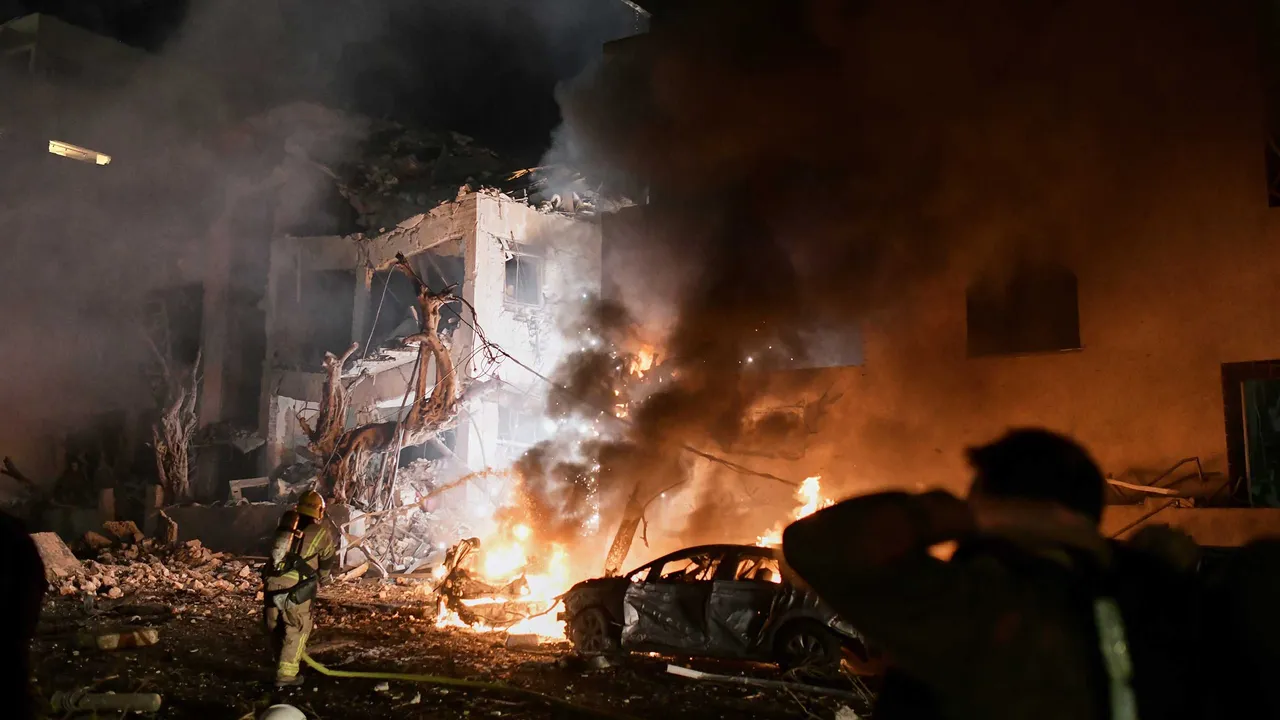
Israel and the U.S. don’t seem that interested in the rules of the game, either. They are launching bombardments across a wide swath of Iran, which have killed at least twelve hundred and thirty people, according to the Iranian Red Crescent Society. That includes dozens of schoolgirls in the coastal city of Minab, who were killed in an apparent bombing of their school, which was near a Revolutionary Guard naval base. Israel has already dropped more than five thousand bombs on Iran since the start of the conflict. The U.S. Secretary of Defense, Pete Hegseth, exulted in the punishing campaign, saying that Operation Epic Fury—as the Administration has named it—had unleashed twice as much air power over Iran than the “shock and awe” phase of the U.S.’s 2003 invasion of Iraq. The Department of Defense recently released a video of an Iranian frigate being torpedoed off the Sri Lankan coast by a U.S. submarine—the first torpedo launched in combat by a U.S. submarine since the Second World War. The sinking, which appears to have killed at least half of the roughly hundred and eighty Iranian sailors onboard, is legally dubious, and raises awkward diplomatic questions for India, which had hosted the Iranian vessel as part of a broader set of maritime exercises to which the U.S. was also invited. For Hegseth, it’s all part of the magic of what he likes to call American “warfighting.” The U.S. and Israel have eviscerated Iran’s Navy and Air Force, and are steadily degrading Iran’s command structure and military assets, including a network of subterranean missile “cities” housing Iran’s arsenal. On Wednesday, analysts at the Long War Journal said there had been a decline in Iranian ballistic-missile launches, likely owing to the efficacy of U.S.-Israeli strikes. “This was never meant to be a fair fight, and it is not a fair fight,” Hegseth said, at a briefing that day. “We are punching them while they’re down, which is exactly how it should be.”
What sympathy there may have been for a cornered, bruised Iranian regime among its neighbors has faded in the face of Tehran’s escalation. A Gulf official, who spoke to me anonymously, said Iran’s strategy was “counterproductive,” given recent attempts at rapprochement made by some Arab monarchies, and their support for Tehran’s diplomatic track with Washington. Now, whenever this conflict ends, those monarchies will instead focus on protecting themselves against future Iranian threats, and will deepen military partnerships with outside powers—take, for example, recent defense pacts signed between Saudi Arabia and Pakistan, and between the U.A.E. and India. “What’s happened to the Gulf will have long-term ramifications in terms of security realignment and relationships with Iran,” the official said.
“Iran has killed any chance of reconciliation with the Gulf,” Marwan Muasher, a former foreign minister and deputy Prime Minister of Jordan, told me. Before the war, some Arab interlocutors had been quietly lobbying the White House against such action, in part out of fear that a direct war against Iran would yield an even more unstable and chaotic status quo in Tehran. Better the devil you know than the one you don’t, the thinking went. “But now they know the devil and they know this devil has no red lines,” Ali Shihabi, a prominent Saudi commentator, told me, suggesting that the Iranian regime “had placed a Sword of Damocles over the Gulf.” The barrage of drones and missiles from Iran, Shihabi added, has “emboldened the voices of those within the Gulf who say that this regime should be degraded as much as possible.”
That degradation proceeds apace amid the U.S.-Israeli campaign, though much remains unclear about the final goal, and about the most plausible way out of the conflict. Though some Trump officials claim that they’re not engaged in a regime-change war, Trump told reporters on Thursday that he had “to be involved” in the appointment of Khamenei’s successor, which sounds an awful lot like regime change. Israel, meanwhile, appears content to keep battering the Islamic Republic, whatever the downstream consequences, while also mustering a new offensive into southern Lebanon against Hezbollah. Enabled by the U.S., Israel now bestrides the Middle East as a paramount hegemon: its military tool kit and reach is unmatched, its status as the region’s sole nuclear power is unchallenged, and its ability to strike with impunity at perceived threats far from its borders is unchecked. By midweek, Israeli officials were briefing reporters about plans to potentially balkanize Iran by boosting support to anti-regime Iranian Kurdish factions operating across the country’s western border with Iraq.