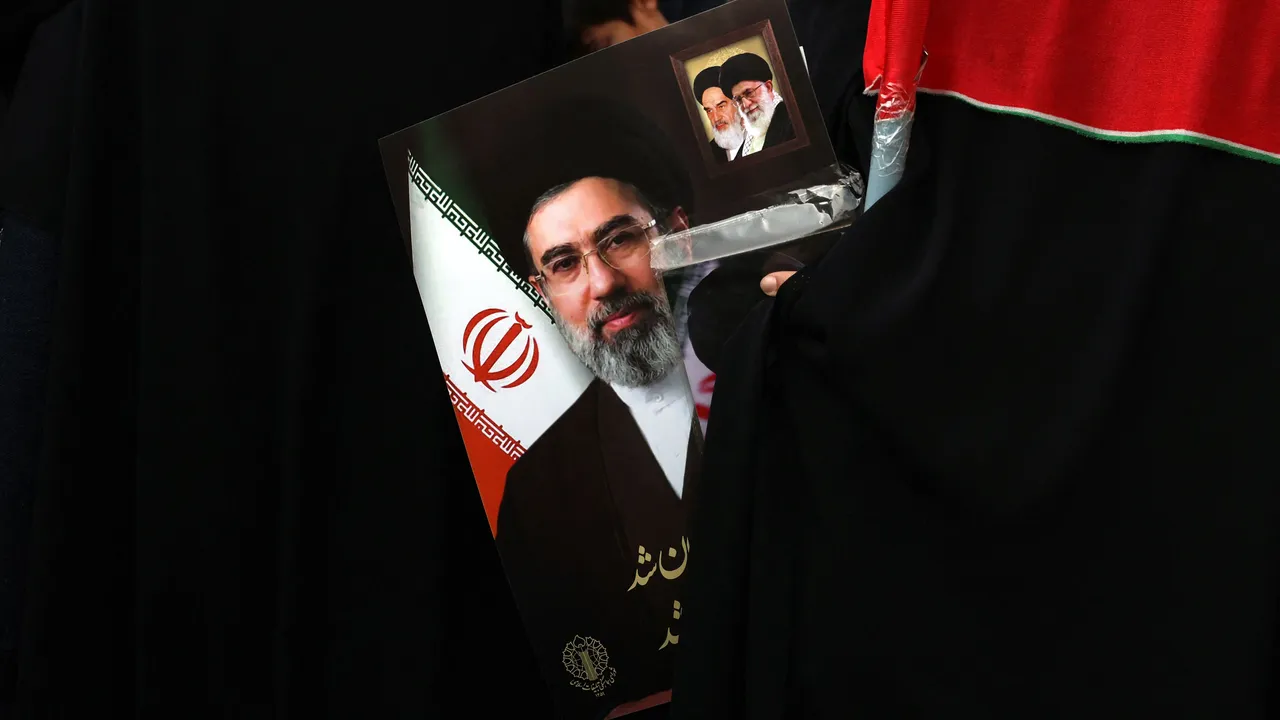
The selection—by eighty-eight aging scholars and jurists, who are popularly elected every eight years—was a defiant rejoinder to President Donald Trump, who recently demanded the right of refusal over Iran’s next Supreme Leader. Just hours before the announcement, Trump told ABC News, “If he doesn’t get approval from us, he’s not going to last long.” The President had previously dismissed Mojtaba as a “lightweight.” Late last week, he had said, “We want someone that will bring harmony and peace to Iran.” Instead, the Middle East is reeling from the war that Trump and Prime Minister Benjamin Netanyahu started, with countries across the region getting sucked into the conflagration. Thousands have been killed, air travel has been grounded, and oil-and-gas exports have been blocked from transiting through the Strait of Hormuz.
Mojtaba’s appointment “is a final act of resistance by the late Khamenei from his grave,” Ellie Geranmayeh, an Iran expert at the European Council on Foreign Relations, told me. “It also sends a strong message to Trump that his bombings and threats are not delivering the regime change he seemingly wants.” Before the war, in December and January, nationwide protests had pushed the Islamic Republic toward a political cliff. The regime ruthlessly cracked down on those protests, killing thousands and detaining tens of thousands who were shouting “Death to the dictator.”
So, this transition will not be the kind of change that the majority of Iranians had hoped for, or expected, especially after U.S. military intervention. John Limbert, a former diplomat who was held, for fourteen months, at the U.S. Embassy in Tehran during the hostage crisis in the Revolution’s early days, told me, “The same clique that’s been in charge since 1979 is neither going to leave nor pay any attention to the demands of eighty-five per cent of Iranians who are asking for a government that treats them decently and doesn’t lead the country into bloody disaster.” If the younger Khamenei does survive, he could have veto power over Iran’s political, military, economic, and social policy for decades to come. The message to other Iranians, and to the world, Limbert added, is “However much you hate us, we’re not going anywhere without a fight. We enjoy our power too much to give it up.”
The elder Khamenei had warned the past six Iranian governments to be wary of the United States, which the theocracy’s faithful dubbed the Great Satan. In 2015, as Iran was negotiating a nuclear deal with the Obama Administration, he told his diplomats “not to be fooled by their smiles, not to trust their promises because, when they have achieved their objectives, they will laugh at you.” In 2018, he may have felt vindicated, after Trump abruptly abandoned the nuclear deal and instead imposed sweeping economic sanctions. His son might feel the same way—and follow the same strategy, based on suspicion and enmity, in both domestic and foreign policy. Geranmayeh told me that loyalists will likely “expect Mojtaba to endorse a path of resistance, potentially with more defiance to restore deterrence against the U.S. and Israel.” More urgently, he will have to prove himself capable of saving the Islamic Republic, while “facing the lowest legitimacy from the ground up, and confronting a war against two nuclear powers. And he must do this while trying to stay alive.”
Shortly after Mojtaba was formally designated, Ali Larijani, the current head of the Supreme National Security Council, and a former speaker of parliament, called on Iranian factions to put aside past disagreements and unite under the new leadership. He also, however, put the country’s ninety-two million people on notice that Mojtaba will govern “with firmness” amid the war. Political and military leaders quickly pledged allegiance. The Revolutionary Guards heralded “a new dawn and a new phase for the revolution and the Islamic Republic’s rule.” On Monday, the Russian President, Vladimir Putin, congratulated the new Supreme Leader. “I would like to reaffirm our unwavering support for Tehran and solidarity with our Iranian friends,” he said. Iran provided thousands of Shahed kamikaze drones in Putin’s invasion of Ukraine.
In an analysis for the Washington Institute for Near East Policy, Patrick Clawson and Farzin Nadimi predicted that Mojtaba, “driven by raw, vengeful feelings,” may try to carry out purges that strengthen the theocracy’s “ideology of existential confrontation with America and Israel” and the I.R.G.C.’s central role in governance and the economy. The tentacles of the I.R.G.C. reach deep into politics and the economy, especially telecommunications and construction. Mojtaba reportedly served with the I.R.G.C. in the final phase of Iran’s grisly eight-year war with Iraq, in the nineteen-eighties, which claimed more than a million casualties. Many veterans of that war, including Larijani and Mohammad Bagher Ghalibaf, the influential speaker of parliament, have already risen to senior government positions.