
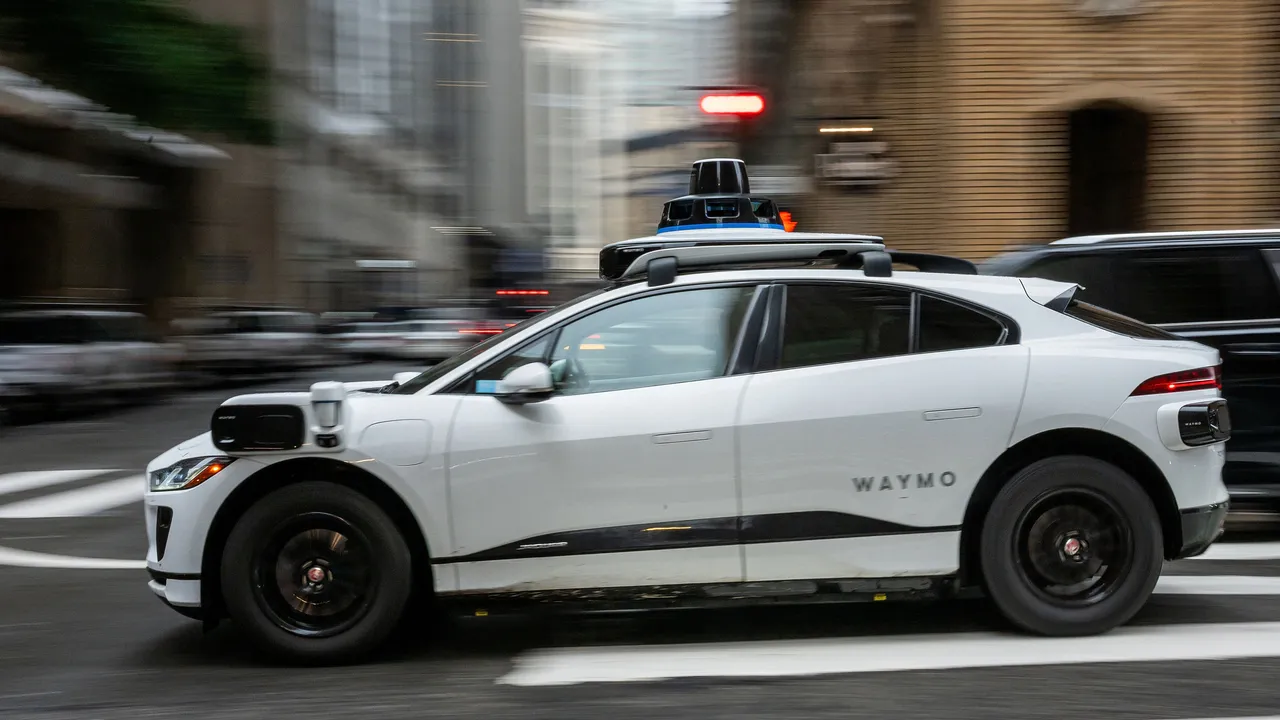
Is this Waymo a better person than you? You don’t want to make assumptions, but it did come to a complete stop at the stop sign. Not a California stop—a stop during which time actually passes. You feel this, and experience a slight internal recalibration, like when someone else puts their shopping cart back and you realize you’d been hoping that no one would notice that you hadn’t.
This Waymo seems comfortable with ambiguity. You are not. When a pedestrian approaches the crosswalk, the Waymo slows—even though the pedestrian hasn’t fully committed. They’re sort of hovering, looking at their phone. They might cross. They might continue scrolling. If you were driving, you’d have spent the rest of the afternoon experiencing low-grade irritation at the pedestrian.
And when the light turns yellow, this Waymo does not speed up. It does not calculate whether it could make it. It does not believe in “probably.” It waits. Behind you, a human driver honks. The Waymo absorbs this without flinching. You feel the honk deep in your shoulder muscles.
Another car cuts in front of you. The Waymo brakes. It does not then surge forward to assert dominance. It does not briefly consider engaging in Reddit-sourced novice witchcraft to place a curse on the person who has wronged you. You imagine honking in a way that would feel educational but is actually just rage with a thesis statement.
You frequently tell yourself that you don’t text and drive. This Waymo requires no such reassurance. What you mean is that you text at red lights because it “doesn’t count,” and also once while moving because there was an extenuating circumstance—you had to fire off a killer joke in the group chat before the conversation moved on. Timing is everything. Safety, you reason, is more flexible.
And what about the time it parked perfectly between two lines on the first try, despite you having spent your entire life contorting to fit in—socially, emotionally, and physically? You resent the Waymo for being able to execute maneuvers with a grace that you do not possess. This Waymo is not programmed to spiral into an existential crisis. It does not replay its performance in slow motion while imagining all the ways in which it could have done better. You, meanwhile, have already composed a running commentary on today’s failures, and it’s only 2:47 P.M.
This Waymo has never hit the road, having forgotten that it took an edible an hour ago. It signals before turning, even when no one is around to notice. It merges seamlessly into traffic, adjusting its speed with gentle confidence. You once apologized to a squirrel you didn’t even hit.
When you arrive at your destination, the Waymo pulls up with the effortless dignity of an elegant woman whose taste has been honed over decades, who swirls a giant glass of Bordeaux in bed while scrolling on her iPad, and doesn’t spill a drop. You step out, grateful, but vaguely ashamed. The Waymo remains where it is, having completed its task correctly and without ego.
Still, it’s worth noting that, when the power goes out, the Waymo stalls where it is, while you, somehow, keep going.