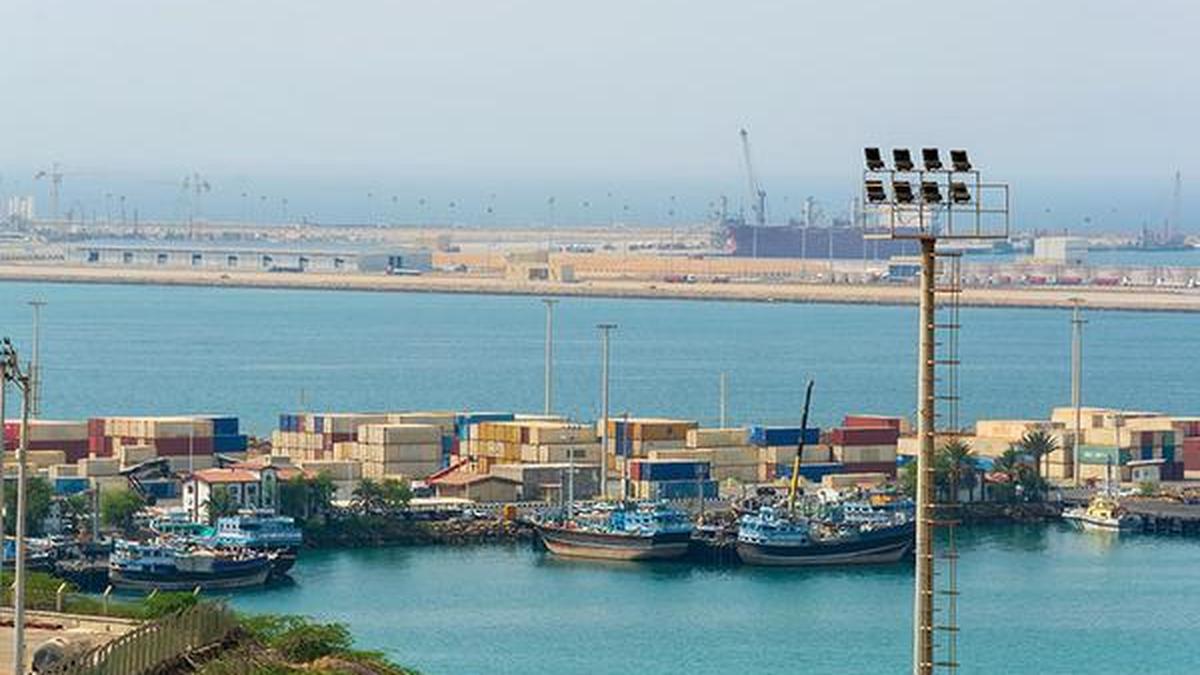
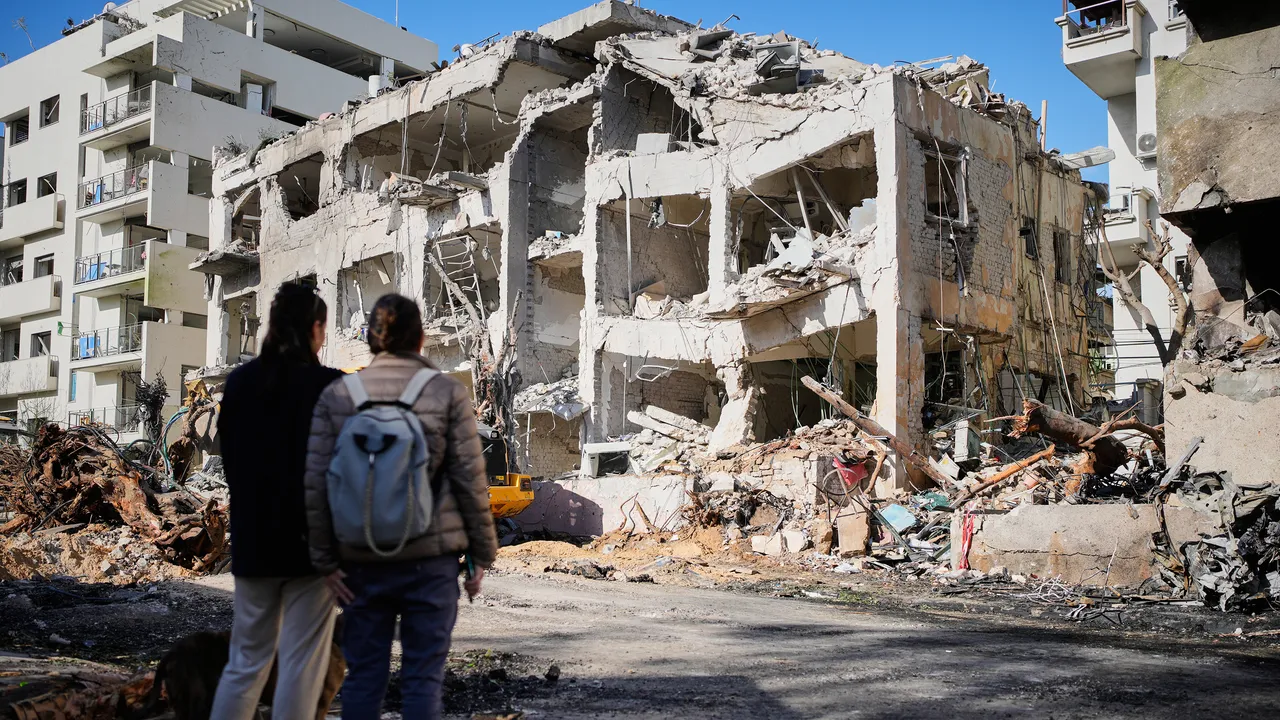
A close read of media reports suggests that Israeli officials are trying to publicly draw their Persian Gulf counterparts into aiding the anti-Iran coalition. Several days ago, the Jerusalem Post reported that the Emiratis had attacked a desalination plant in Iran, citing a source “familiar with the details.” An Emirati official quickly denounced the report as “fake news.” When Israeli media reported early in the war that Qatar had struck inside Iran, after an attempted attack on Doha’s international airport, the Qatari foreign ministry issued a denial, clarifying that his country had not joined the “campaign targeting Iran.”
Some experts believe that there is private coördination between the Gulf states and the U.S.-Israeli coalition, but the Gulf states clearly do not want to appear to be taking sides. Their caution is understandable, Podeh told me. Despite the bellicose language coming out of Washington and Jerusalem about the necessity of reshaping Iran’s government, Iran’s neighbors in the Gulf “have come to the conflict with the assumption that the Iranian regime will not disappear,” Podeh said.
The war does seem to be causing some realignments. Ehud Yaari, a well-sourced analyst at the Washington Institute for Near East Policy, has reported that Qatar intends to expel Hamas leaders from its territory over their refusal to condemn Iranian attacks. Whether or not that happens, a new landscape is emerging, in which Tehran’s proxies—in Lebanon, Syria, Iraq, and Iran itself—are in retreat. “If you look at it through a fifty-year lens, these Shiite organizations have suffered a severe blow,” Podeh said.
Rather than benefit from such changes in the Middle East, though, Israel risks establishing itself as a “regional bully that is out of control,” Guzansky, of the I.N.S.S., told me. He added that Arab countries see Israel asserting military dominion over the Middle East, “and they want to counterbalance it.” One way to do that would be to forge closer ties with Turkey, as Saudi Arabia did recently, much to Netanyahu’s consternation. The fear is that, by warming up to Turkey, whose leader, Recep Tayyip Erdoğan, has been increasingly hostile toward Israel, these states will be driven further away from it.
Dennis Ross, a longtime U.S. diplomat to the region, called the breadth of Iran’s attacks a “rude awakening” for the Gulf states. But, he said, “Does that mean that we’re on the brink of normalization? The answer is no.” He did predict that the strikes would encourage greater military integration between the Gulf, the U.S., and Israel. For one thing, the Gulf states are eager to acquire Iron Beam technology—a system, developed by an Israeli company, that uses high-energy lasers to intercept missiles and drones.
But Ross doesn’t believe that the current state of affairs will lead to a political opening. “In Israel, there is not sufficient appreciation for how this government is perceived,” he said. Many leaders in the Gulf once held a measure of respect for Netanyahu; they were pleased when he resisted the Obama Administration’s nuclear deal with Iran, and they supported his belligerent remarks against it before Congress, in 2015. “Bibi’s speech may have been a disaster in America, but in the Gulf states it was an enormous sign of respect for him,” Ross said. “That’s all gone.”
The Israeli government has not moved on the issue of Palestinian statehood, and it has “actively inflamed the West Bank,” Ross pointed out. After Netanyahu’s ruthless prosecution of the war in Gaza, in which more than seventy thousand Palestinians have been killed, the Gulf-state leaders who once respected Netanyahu no longer trust him, Ross said. “They think that Smotrich and Ben-Gvir”—another far-right minister in Netanyahu’s government—“define what Israel will do.” Netanyahu tends to play down the influence of these extremist figures, Ross said, but the impunity with which Jewish settlers have carried out attacks against Palestinian villagers in the West Bank demonstrates how beholden he is to them.
“The Saudis were very close to reaching an understanding with Israel,” Ross added. “Today that won’t satisfy them. They need more, and Israel can only offer less.” In a survey conducted by the Washington Institute last year, Saudis were asked how they would view the establishment of diplomatic ties and peace with Israel. Only one per cent viewed it as a positive step, compared with forty-one percent who had viewed it positively five years earlier.