
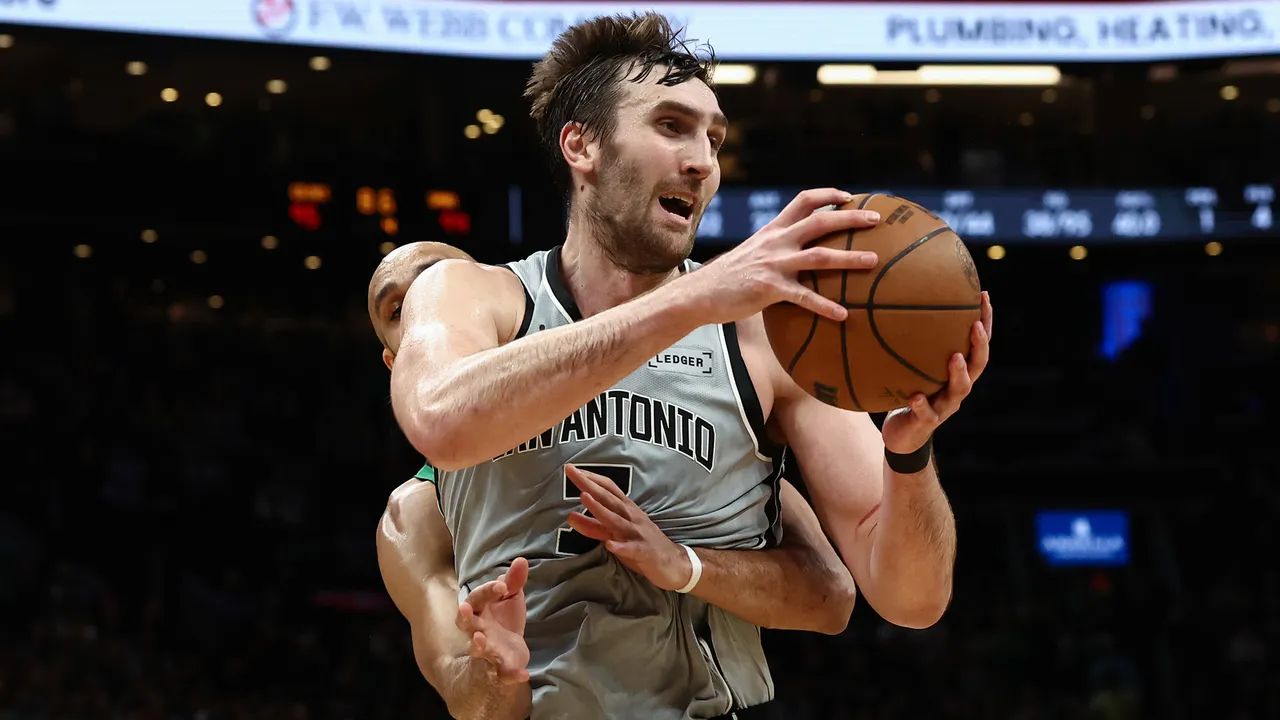
When Kornet started his blog, he imagined a practical guide, for fellow-players who sought succor on the road: Catholic churches in N.B.A. cities. But after a post about the Notre-Dame Basilica in Montreal (“Don’t Pass the Rock Episode 1: Montreal”), the blog abruptly ended. Another attempt, the following season, lasted two posts. “I was reaching the ends of my reflections on church design,” he wrote later. “Let’s just say that if I had to put all my money on my ability to consistently write about architecture, I’d be baroque.”
While his blog was on hiatus, Kornet spent time writing jokes and refining concepts for skits and sketches for the team’s platforms. “Those things would run in my mind so much that it would start being disturbing,” he told me. He put them down on paper in part just to get them out of his head. But through the process of returning to them, cutting and unpacking the stream of consciousness, he’d discover a structured thought. It was exhilarating.
And the sketches made people laugh. It reinforced his idea that writing, and particularly humorous writing, was a way of connecting with people. He still needed a subject, though, and ultimately turned, as many writers do, to the one he knew best: himself. It wasn’t a bad one, as subjects go. He had a lot of stories about the less glorified aspects of N.B.A. life. Kornet is not, of course, the only N.B.A. player who’s had this thought. Most players, these days, share those stories on podcasts. But a podcast is a record of only the mind’s “current moment,” Kornet pointed out. He wanted the chance to revise.
He wanted to try to figure out what was true and what was tangential, what was his best effort and what he could leave out. Kornet had taken A.P. classes in high school, and there had been a lot of English papers; his mother, who is a news anchor in Nashville, had given him feedback. She had a lot of patience, he said, and a sense for stories and how things flowed. Mostly, though, he learned to write as writers do—by reading. As he grew older, he found authors whose voices had begun “living” in his mind. He read Dostoyevsky and funny books about basketball players. His tastes were catholic, but also Catholic: Tolkien, Stephen Colbert.
At the end of January, the day after a loss to the lowly New Orleans Pelicans, Kornet relaunched his blog. “Although I’m a big fan of A. Catholicism B. Its Churches and C. Mike Conley off-hand floaters,” he wrote, “I think a more sustainable method of writing for me is a general, comedic account of my experiences, understandings of faith, and reflections on the world around me (with the occasional Taylor Swift lyric Lectio Divina, of course).” In the ensuing weeks, he praised the leadership of the New England Patriots’ coach Mike Vrabel, wrote a sermonesque chronicle of how hard and rewarding it had been to give up his sense of identity as a great shooter, and recounted the trials and tribulations of the team’s departure from Charlotte, North Carolina. He wrote about life as a player on the end of the bench, recalling a morning when, barely hanging on to an N.B.A. job, he had written a song to the tune of Billy Joel’s “Uptown Girl,” which ended with an account of taking the court in garbage time. “Missed my two shots, no I blew my chance / Do they pay well in France?”
Kornet didn’t plan to write about the Hawks’ Magic City event when he first heard about it. But days passed, and no one else expressed public disapproval. Privately, he found many people across the league who felt as he did, but they didn’t feel able to criticize the Hawks. Finally, he figured he needed to be the one.