
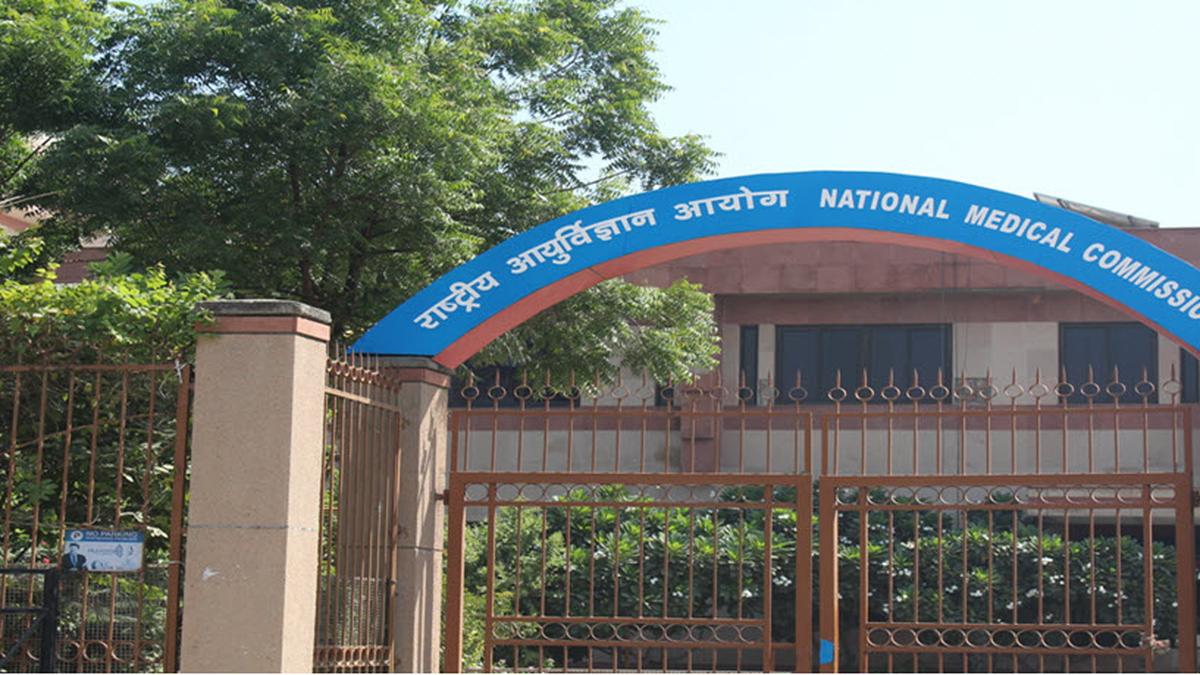
The National Medical Commission (NMC) has directed all medical colleges to generate and link the Ayushman Bharat Health Account (ABHA)-IDs of all patients.
In a big push for the nationwide linking of digital health records, the National Medical Commission (NMC) has directed all medical colleges to generate and link the Ayushman Bharat Health Account (ABHA)-IDs of all patients availing out-patient, in-patient, and emergency services at the hospitals attached to these colleges.
The aim is to weed out the fake patients that some institutions claim during NMC’s annual assessment and registration renewal process for all medical colleges, and to make the process more objective and transparent.
In its communication to medical colleges, the Commission said that the “generation and linkaging of ABHA-ID of patients visiting OPD/IPD/Emergency services in hospitals attached to Medical Colleges is an important prerequisite for objective verification of the clinical workload.’’
Linking medical records nationwide
It added that the National Health Authority, which is the nodal agency for the Ayushman Bharat Digital Mission, has simplified the ABHA-ID registration process to make it hassle-free for patients.
The ABHA-ID is a unique, 14-digit identification number assigned to Indian patients to create a secure, paperless digital health record ecosystem. It facilitates the linking of medical records — such as doctor prescriptions, lab reports, and diagnoses — across various hospitals, clinics, and insurance providers nationwide.
Integrated hospital software
The NMC has also asked all medical colleges to submit details of their hospitals’ Health Facility Registry (HFR)-IDs within seven days. Colleges have been asked to state whether their hospital software systems are integrated with the ABDM platform and the National Health Authority’s PM-JAY portal.
The HFR is a comprehensive, centralised digital repository of public and private healthcare facilities in India, including hospitals, clinics, labs, and pharmacies. Part of the ABDM, it provides a unique digital identity to each facility, enhancing discovery, improving trust, and enabling integration into the national digital health ecosystem.
The Commission maintained that the move is part of a gradual shift towards more objective, evidence-based assessment.
Published – March 05, 2026 10:31 pm IST