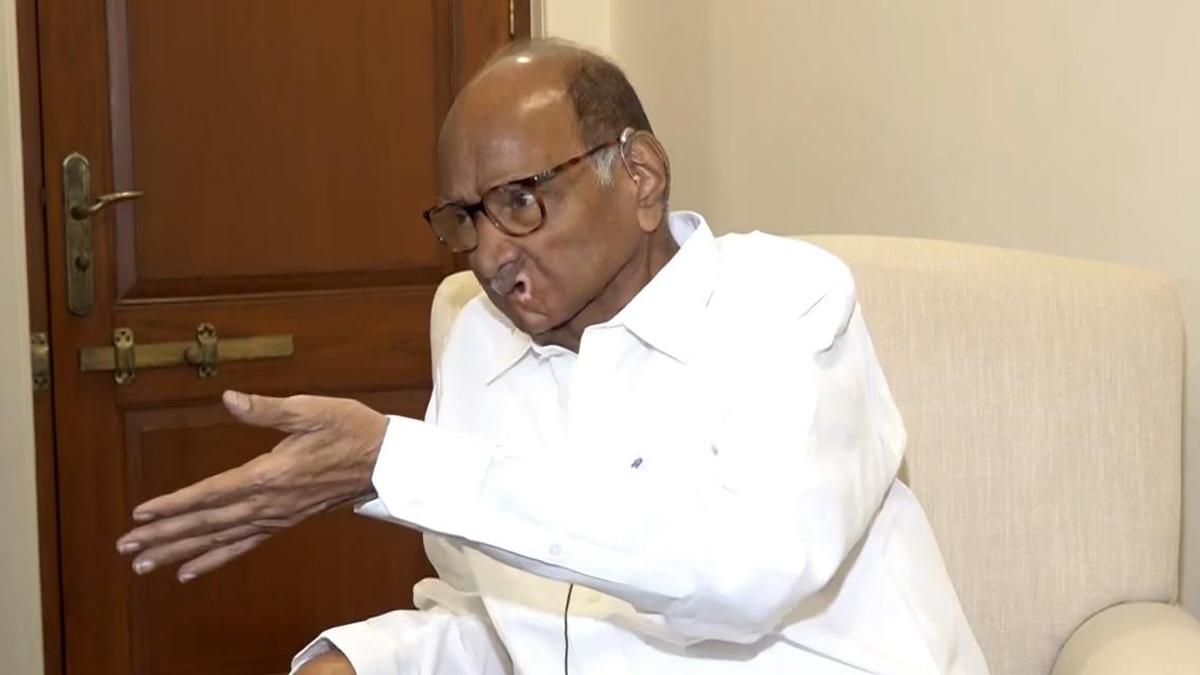
NCP (SP) supremo Sharad Pawar and Union minister Ramdas Athawale were among 26 candidates who were elected unopposed to the Rajya Sabha on Monday (March 9, 2026).
After the last date of withdrawal of candidature, elections to 11 seats of the Upper House — five in Bihar, four in Odisha and two in Haryana — would be held on March 16.
Bihar’s longest serving Chief Minister Nitish Kumar and BJP president Nitin Nabin are likely to be elected to the Rajya Sabha in the biennial elections.
As many as 40 candidates had filed their papers for 37 seats that fell vacant in 10 states, leading to a keen contest for one seat each in Bihar, Odisha and Haryana. Fourteen candidates now remain in the fray for 11 seats.
BJP president Nabin on Monday (March 9, 2026) appointed central observers for Rajya Sabha polls in Bihar, Haryana and Odisha.
Union minister Harsh Malhotra and Chhattisgarh deputy chief minister Vijay Sharma have been appointed as central observers for the polls in Bihar.
Gujarat deputy chief minister Harsh Sanghavi has been made observer for Haryana, while Maharashtra minister Chandrasekhar Bawankule will be central observer for Odisha, a notification stated.
Bihar will witness a keen contest for one seat as RJD MP Amarendra Dhari Singh, a businessman turned politician, has been renominated. Other NDA candidates from Bihar are Union minister Ram Nath Thakur seeking a hattrick, RLM president Upendra Kushwaha aiming for a second consecutive term, and BJP state general secretary Shivesh Kumar making his parliamentary debut.
Nitish Kumar announced his decision to enter the Rajya Sabha last week, bringing the curtains down on his 20-year tenure as the state’s longest-serving CM.
The RJD has 25 MLAs along with 10 others of the Mahagathbandhan, including the Congress and Left, and hopes to make up for the deficit of six votes with the help of the AIMIM and the BSP.
According to Bihar Vidhan Sabha secretary Khyati Singh, none of the six candidates withdrew their nomination papers, “necessitating voting for the first time in the state in more than a decade”.
Odisha too shall have a contest for one seat, as two candidates each of ruling BJP – State unit president Manmohan Samal and sitting Rajya Sabha MP Sujeet Kumar and opposition BJD’s Santrupt Misra and eminent urologist Dr Datteswar Hota, are in the fray while Dilip Ray filed as an independent with BJP’s support, sparking possibility of cross-voting.
Another keen contest is awaited for one seat in Haryana, which has seen cross-voting in the past too. The Congress has 37 MLAs and to win one seat, the opposition party needs only 31 first preference votes.
Satish Nandal, who had unsuccessfully contested the 2019 assembly polls as a BJP nominee, filed nomination as an Independent, becoming the third entrant in the contest after BJP’s Sanjay Bhatia and Karamvir Singh Boudh of the Congress.
The elections are being held to fill up seven seats in Maharashtra, six in Tamil Nadu, five each in Bihar and West Bengal, four in Odisha, three in Assam and two each in Haryana, Telangana and Chhattisgarh, besides one seat in Himachal Pradesh.
The BJP is set to increase its tally in the Rajya Sabha, where it will have the maximum number of seats after this round of election.
Among those who were elected unopposed to the Upper House include former deputy speaker of Lok Sabha M Thambidurai of DMK and noted lawyer Abhishek Singhvi of the Congress.
In Maharashtra, all seven candidates including six of the ruling Mahayuti alliance and opposition Maha Vikas Aghadi nominee Sharad Pawar, were elected unopposed.
Union minister Athawale and BJP leader Vinod Tawde were elected unopposed from Maharashtra. Besides, BJP’s Ramrao Wadkute and Maya Ivnate, a former mayor of Nagpur, Eknath Shinde-led Shiv Sena’s Jyoti Waghmare were also elected unopposed, along with former deputy chief minister Ajit Pawar’s son Parth Pawar.
In poll-bound West Bengal, ruling TMC’s four candidates – Babul Supriyo, former West Bengal DGP Rajeev Kumar, senior Supreme Court advocate Menaka Guruswamy and actor Koel Mallick were also elected unopposed, along with BJP’s former state unit president Rahul Sinha.
In Assam, three candidates of ruling NDA — Jogen Mohan and Terash Gowala along with UPPL’s Pramod Boro were also elected unopposed.
In Telangana, Congress candidates Abhishek Singhvi and Vem Narender Reddy were elected unopposed. In Tamil Nadu, all six candidates were elected unopposed.
AIADMK sitting MP M. Thambidurai and PMK leader Anbumani Ramadoss along with ruling DMK candidates Tiruchi Siva and J Constantine Ravindran were elected. Besides, Congress candidate M Christopher Tilak and DMDK treasurer L.K. Sudeesh were also elected unopposed.
In Chhattisgarh, BJP’s Laxmi Verma and Congress candidate Phulo Devi Netam were elected unopposed, as they were the only two candidates in the fray for two seats.
In the hill state of Himachal Pradesh, Congress candidate Anurag Sharma, a close confidant of chief minister Sukhwinder Singh Sukhu, was elected.
Published – March 10, 2026 01:00 am IST