
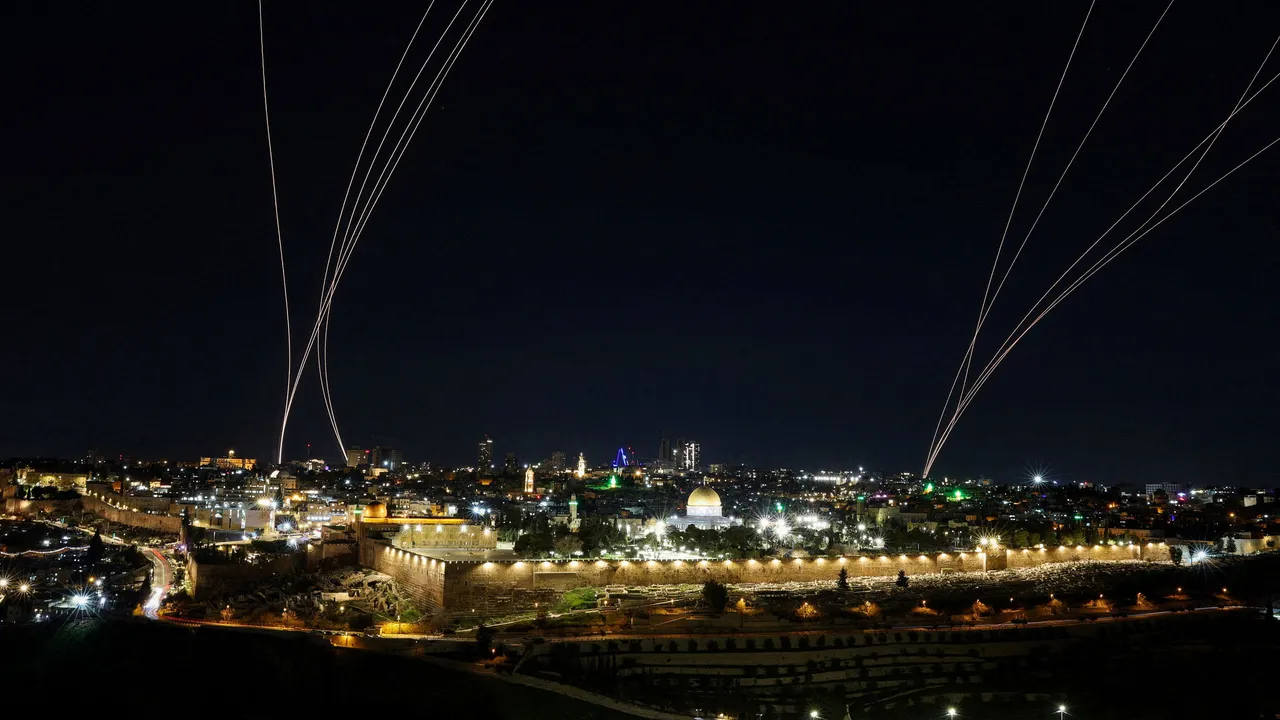
The missile program is another matter. Iran’s conventional warheads pose no imminent threat to the U.S., and their threat to U.S. bases and allies in the Gulf, which has become lethal since the start of this war, was only contingent before it. But, for Israel, their threat is tangible—and ongoing. Iran’s stockpiling of missiles portends wars of attrition, like the current one, in which each side tries to wear the other down. Thus, Israel—preëmptively or in response to attacks—aims to eliminate Iran’s missile launchers and vast production facilities; Iran aims to degrade Israel’s economic life and endanger international shipping. But neither side seems positioned to win a decisive victory.
Militarily, Iran appears to be at an obvious disadvantage. Its air defense was decimated in October, 2024—when Israel attacked after Iran fired missiles to retaliate against Israel’s aerial assassination of Hezbollah’s leader, Hassan Nasrallah, in Lebanon—and then again in June. As the Times correspondent Mark Mazzetti has noted, “Netanyahu began to see the costs of going to war with Iran as lower,” which helped to “sell the United States [on] getting involved.” The assassinations of the Supreme Leader, Ayatollah Ali Khamenei, and many top officials in this war’s opening days may have seemed to confirm an accelerating asymmetry
But Israel is at other disadvantages. Its high-tech economy depends on advanced global networks, which are seriously disrupted by wars. Israel’s attack on Iran in June shuttered Israel’s non-essential businesses; it froze trade, travel, and tourism for a month, forced the cancellation of conferences showcasing Israeli startups, and temporarily shut down the country’s natural-gas fields. Schools were closed, as they are today. The wars have hastened the departure of some of Israel’s most educated people for jobs in American, European, and Australian companies, universities, and hospitals. (During the past three years of Netanyahu’s government, beginning with his assault on the judiciary and continuing into the prolonged war in Gaza, some two hundred thousand Israelis have left the country.)
Moreover, with Iran, Israel must patrol the skies of a nation that has a population close to the size of Turkey’s and a landmass roughly the size of Alaska’s with about two hundred aircraft (the number that reportedly participated in the initial February attack on Iran) that need to fly to targets more than a thousand miles away and be refuelled in the air. Meanwhile, Israel’s home-front command must shoot down missiles and penetrating drones that cost as little as twenty thousand dollars each with intercepting missiles that typically cost four million dollars and take far longer to manufacture. Besides, much of Iran’s missile-production infrastructure is deep underground, where most Israeli and U.S. bombs cannot reach. So the highest priority of Israel’s Air Force is to destroy missile-launch facilities on the ground; on Monday, the I.D.F. claimed to have knocked out perhaps eighty per cent of them. But, over time, they can be rebuilt and installed in new sites.
Prior to the calamitous war following the attacks of October 7, 2023, Israel fought five wars with Hamas, between 2008 and 2021. Vexingly, the war with Iran is reproducing in macrocosm what those wars taught in microcosm. “Look how quickly” Iranian security forces in Tehran are “taking on characteristics that resemble the Gaza Strip,” Ohad Hemo, Channel Twelve’s Arab-affairs correspondent, said on March 3rd. “Revolutionary Guards and Basij”—the volunteer paramilitary civilian force under the Guards—“are evacuating their headquarters, leaving their bases, and looking for cover in mosques and schools.” And their firing of ballistic missiles across Israel recalls Hamas’s firing of rockets into Israeli border towns. Israel’s response to those earlier wars, periodically “mowing the lawn” (as I.D.F. commanders infamously put bombarding Gazan installations, tunnels, and command posts), seems mirrored in the Israeli Air Force’s Iran campaign, except that now it’s undertaking to mow a distant pasture. And although Netanyahu kept the post-October 7th war going far longer than even prominent voices in the security establishment believed necessary, resulting in thousands more civilian deaths and many more of Gaza’s buildings and infrastructure destroyed, Hamas is still in power, with little ability to attack Israel, for now—but enough to intimidate Gazans. There is a lesson here, too.
One might have concluded, given Israel’s predictable jeopardy, that a diplomatic initiative to prevent this war would have been tried long ago. In March, 2022, before Netanyahu regained power, then Israeli Foreign Minister Yair Lapid and the U.S. Secretary of State Antony Blinken hosted a summit in Israel with the Abraham Accord signatories Bahrain, the United Arab Emirates, and Morocco, reportedly with Saudi blessing. The leaders explored, among other things, something along the lines of a Middle Eastern NATO, to contain Iran. But a process of this kind has always meant engaging the Palestine Authority and entertaining a pathway to a Palestinian state, and that has meant abandoning annexation of the West Bank—a prospect that is anathema to Israel’s religious extremists, who are now settling what they call Judea and Samaria, and with whom Netanyahu has been allied since he began his career.