
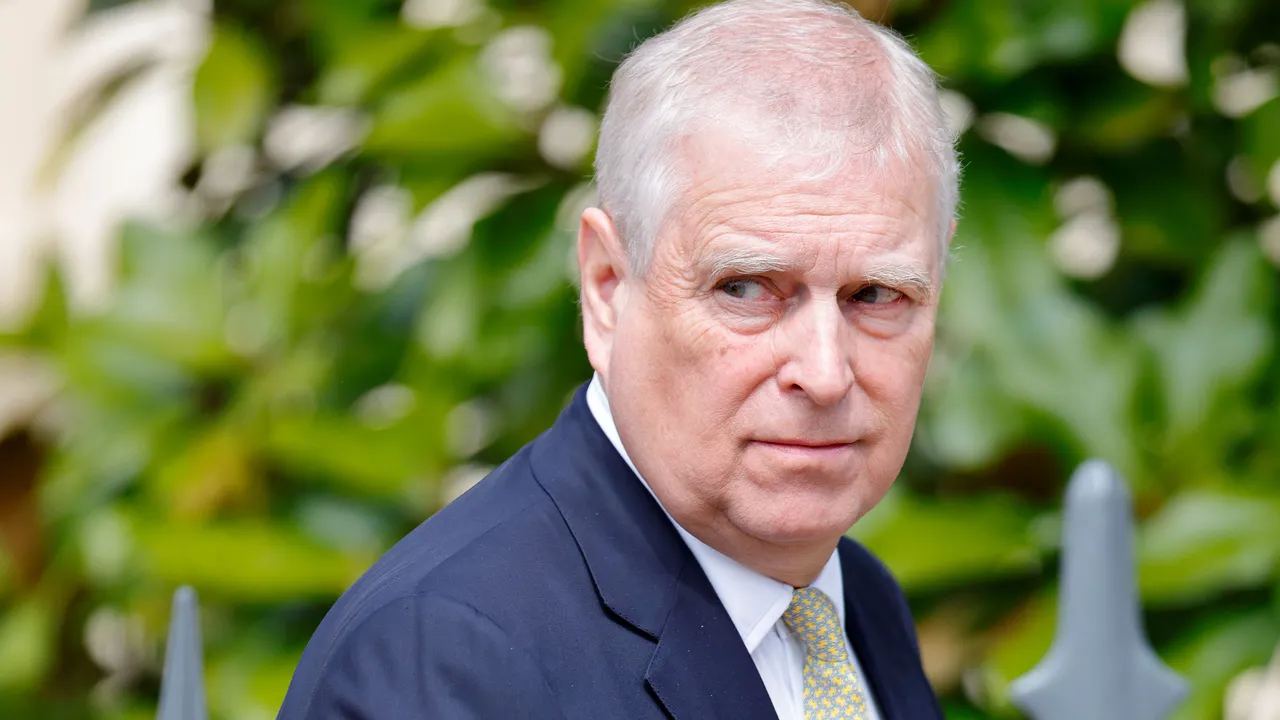
Photograph by Max Mumby / Indigo / Getty
At eight o’clock this morning, U.K. time, a detachment of unmarked police cars arrived at the temporary home of Andrew Albert Christian Edward Mountbatten-Windsor, the younger brother of King Charles III, to arrest him on suspicion of misconduct in public office. It is the first time since 1647, when Charles I was handed to the custody of the English Parliament by the Scottish Army, that a senior member of the Royal Family has been detained in this way. The former prince, who turns sixty-six today, is being investigated for his behavior as the U.K.’s trade envoy, between 2001 and 2011, when he is alleged to have forwarded confidential government briefings about investment opportunities to his friend Jeffrey Epstein. A statement from Thames Valley Police, which described Mountbatten-Windsor as “a man in his sixties from Norfolk,” said that the arrest followed a “thorough assessment,” presumably of the dozens of e-mails between the two men released in the latest batches of the Epstein files.
As I wrote earlier this week, Mountbatten-Windsor, who used to be known as the Duke of York, has been the subject of a prolonged and experimental de-royalling for the past fifteen years, after a photograph of him with Virginia Giuffre, who was a victim of sex trafficking by Epstein and died by suicide last year, was first published in the British media. Since then, the former Prince Andrew has been stripped of his royal titles, his military rank as Vice Admiral, his income, his homes, and his charitable and business associations; his standard was removed from St. George’s Chapel at Windsor. Nonetheless, his arrest—and the grimly common rendering as a man in his sixties from Norfolk—comes as a shock in what remains, even on days like today, a quietly hierarchical society. For there is no other institution like the Royal Family, which can summon ancient magic and modern sin, in the space of a single statement to the press. “Let me state clearly: the law must take its course,” the King said, at noon. “Meanwhile, my family and I will continue in our duty and service to you all. Charles R.”
Charles I, the last royal to be arrested, was executed two years later, in January, 1649. “I go from a corruptible to an incorruptible crown, where no disturbance can be,” he reportedly said, in his final moments. It reminded me of one of Mountbatten-Windsor’s e-mails to Epstein, sent in January of 2011, about six weeks before the photograph with Giuffre was first published. The then prince was heading for his annual retreat. “For one week of the year it’s great,” he wrote. “Time to put something back into me before the rest of the world starts sucking it out in all their greed and demands.” Royals are caged most of the time. The disturbance is constant. The attention is pitiless. Sympathy is basically zero. It shouldn’t be a surprise that they are corruptible. (Mountbatten-Windsor has always denied any wrongdoing in his relationship with Epstein and his victims.) Nor should it be a surprise that, of all the powerful men and women implicated by the release of the Epstein files, a former prince is among the first to be brought to book. Once you are cast out of the palace, you find that you have no friends at all.