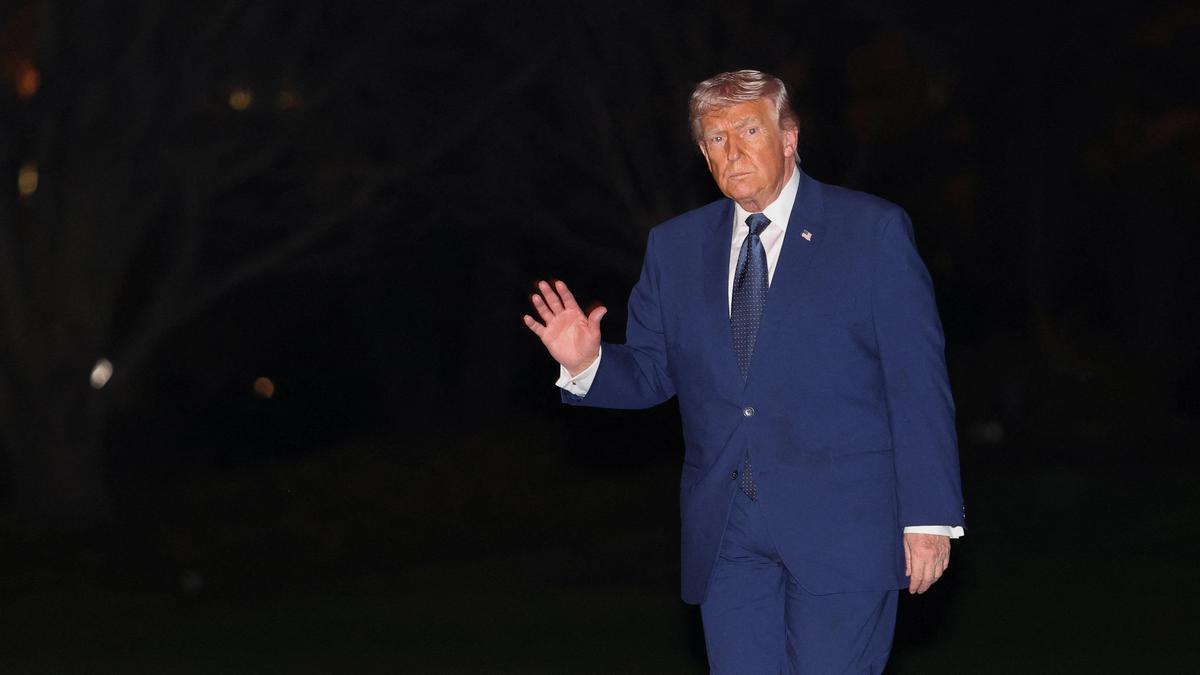
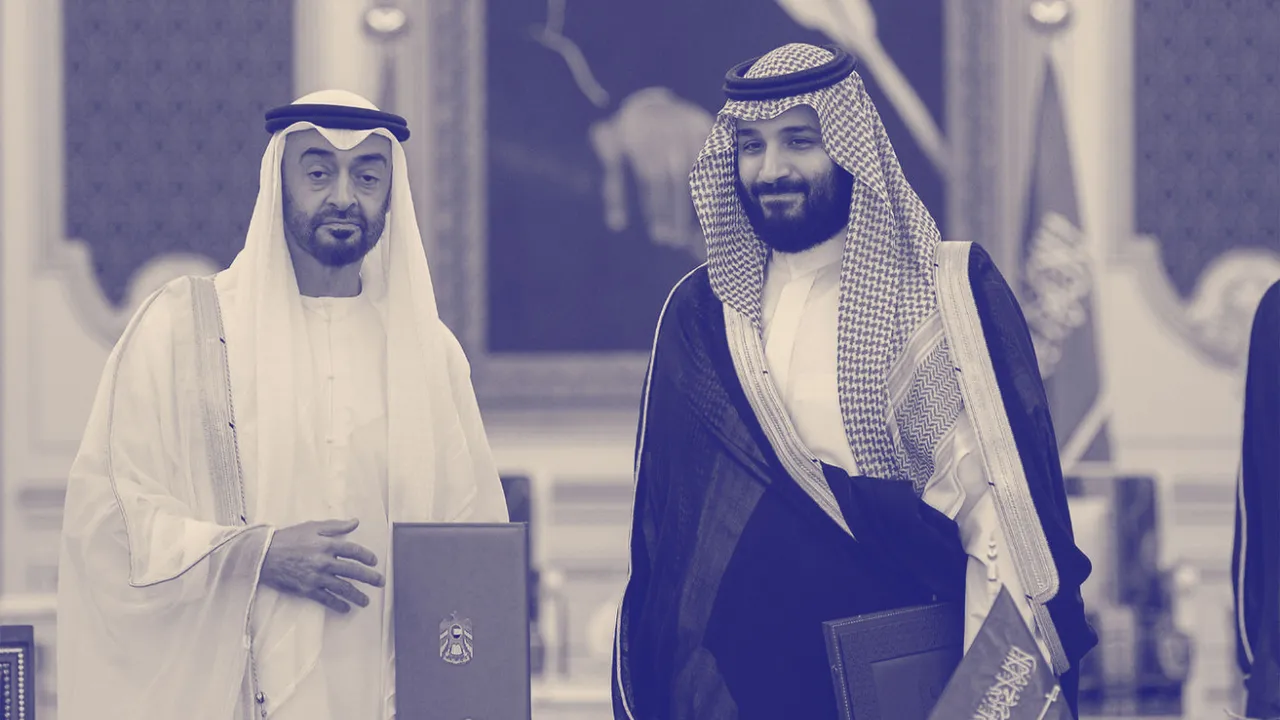
But what changed was the missile and drone attacks on Saudi oil infrastructure in September, 2019, which were assumed to be perpetrated by, but were never formally attributed to, Iran. And President Trump did nothing in response. He actually said, a couple of days after the attacks, “That was an attack on Saudi Arabia, and that wasn’t an attack on us.” And that sent shock waves through Riyadh and Abu Dhabi. The Saudis began to pull back immediately. They began to realize that they were perhaps on their own much more than they had thought. And so, in the twenty-twenties, they began to de-escalate tensions with Iran, improve ties with Turkey to reduce sources of geopolitical risk, and focus on internal issues and economic growth.
Meanwhile, the U.A.E. was still much more willing to take risks, including by identifying and backing sub-state networks in countries without functioning state institutions that could better support security and governance on the ground. That’s where that divergence really grew throughout the twenty-twenties.
And I assume you view Yemen as an example of this.
Yes. The Saudis feel that there has been a fragile but stable balance of power in Yemen since 2023, and that these moves by the U.A.E., or by the U.A.E.-backed S.T.C., are disruptive and unnecessary and threaten that balance of power.
You brought up M.B.S.’s visit to the White House in November, where he reportedly suggested sanctions against the U.A.E. Now we have a propaganda war on each side, with real anger from people in both governments, expressed on social media and elsewhere. I get that the two countries have different visions for the region, but does it seem like, given the speed with which this has spiralled out of control, there’s a deeper anger here?
I think this animosity is part of each side trying to insure their narrative is the one that wins out, especially vis-à-vis the Trump Administration. Clearly, what M.B.S. may or may not have said during his visit to the White House in November, and whether or not it was taken as an attack by the U.A.E., rather than just a call for sanctions on the R.S.F., is a matter of fierce debate on both sides. It could be that perceptions have been driving the respective responses to a large extent, as each side seems to believe what it wants to hear. And yes, the depth of feeling is indicative of much deeper issues at play. In Yemen especially, these splits have been increasing for years as the two countries approached the conflict in different ways, but both sides decided to ignore the ramifications of their different approaches, and now they’ve become too big to ignore.
In terms of economics and investments, the Saudis are having difficulties in attracting foreign investment. They’ve been forced to scale back on some projects. And they’re trying to move into some of the economic sectors, like travel, tourism, and entertainment, that the U.A.E. has had a twenty- to twenty-five-year head start in. So there’s increasing economic competition between the countries as well, which is part of the backdrop to this rivalry, even though, at this point, it’s more economic and security-focussed, and isn’t yet a political rupture like the one during the blockade of Qatar in 2017.
How do you think competing for the favor of the Trump Administration, which is uninterested in human rights and very interested in economic investments, changes the rivalry? There has been reporting about the U.A.E. buying huge stakes in a Trump family company.
I think Trump’s transactional approach to governing and policymaking has definitely created opportunities for the Gulf states, and both the Saudis and the Emiratis have made the most of those opportunities. In 2017, they felt that they had a once-in-a-generation chance to achieve their objectives vis-à-vis Qatar by enlisting Trump’s support. And after Trump was inaugurated in 2025, both countries reached out straight away with promises of investments, both in Trump-aligned companies and in bilateral investments. Both countries made separate pledges about investing in the U.S. economy. But they’ve done it separately. So they’re competing, I think, for the ear of the White House. Trump went to both Saudi Arabia and Abu Dhabi in May, last year. We’ve also seen the U.A.E. take the lead in A.I. over the past four or five years. In that sector, the Saudis are playing catch-up. So these things are all part of that competitive rivalry we see playing out, which now has much more of an edge to it than it did in the past.
Let’s turn to the U.A.E. specifically. We don’t know how many hundreds of thousands of people have died in Sudan, but the U.A.E.-backed R.S.F. seems to be the most brutal actor among many in this conflict. Have you been surprised by the U.A.E.’s enduring support for the R.S.F., despite the bloodshed?
I have been surprised by the fact that international criticism, even condemnation, of the R.S.F., and its pretty well-documented links to the U.A.E., including transfers of weapons under the guise of humanitarian support, hasn’t forced the U.A.E. to backtrack or to compromise its support. The U.A.E., in a way, has doubled down on the support for the R.S.F., and that, I think, has been a surprise. If you think back to Yemen in 2018, international criticism did ultimately lead to a change in approach. In Sudan, if anything has happened, it is that the atrocities committed by the R.S.F. have gotten worse. It may be that Abu Dhabi is now so entrenched and feels very defensive, even isolated in the region, that it has decided to double down on its support for the R.S.F., regardless of international criticism.
Do you view the U.A.E.’s increasingly aggressive actions in the Middle East and Africa as having some strong ideological component, or is this more about projecting regional power and securing practical ends, like port access and other business interests? Because, when we go back to the period after the Arab Spring when this approach started, there was a sense that the U.A.E. and Saudi Arabia were embarking on an ideological project that was in part about opposition to Iran, but also to a certain strain of Islamist politics, as represented by the Muslim Brotherhood in Egypt, Erdoğan in Turkey, etc.
I think there’s a bit of both. For example, the U.A.E. has intervened heavily in Libya in the past decade, in part because the Qataris were supporting what the U.A.E. views as Islamist groups in western Libya. In response, the U.A.E. intervened in eastern Libya, backing an authoritarian strongman. And, starting with that decision, you now find links between Libya and Chad and Sudan that show the networks the U.A.E. has built up in the wider regional arena.