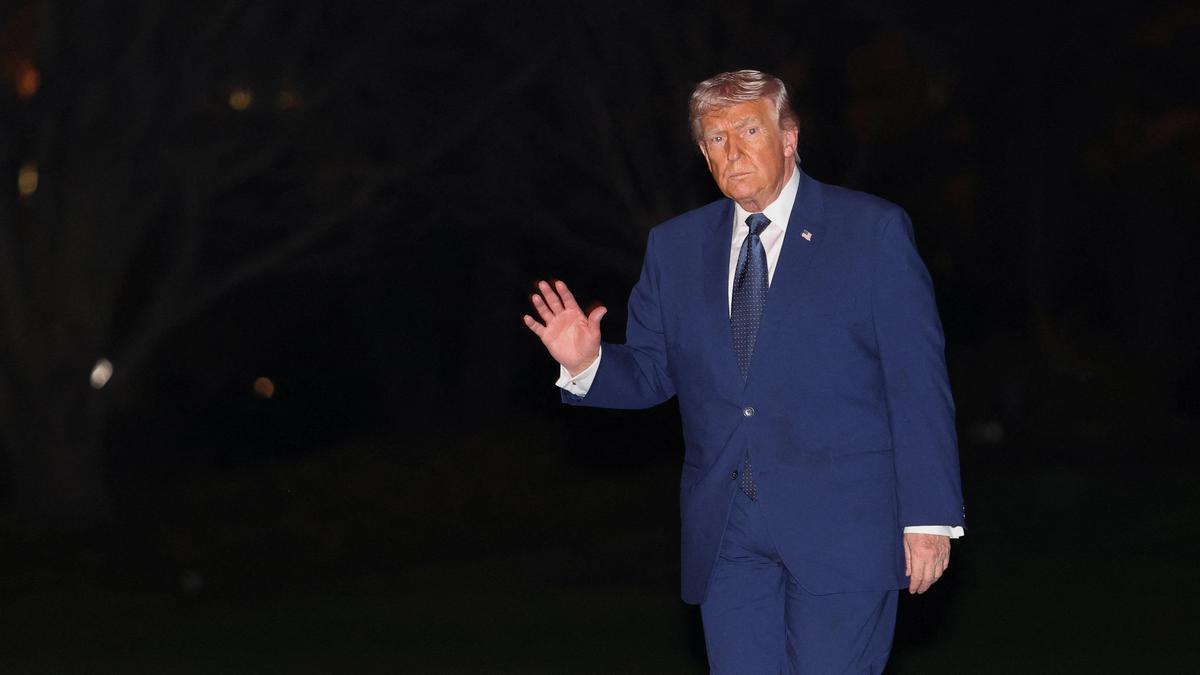
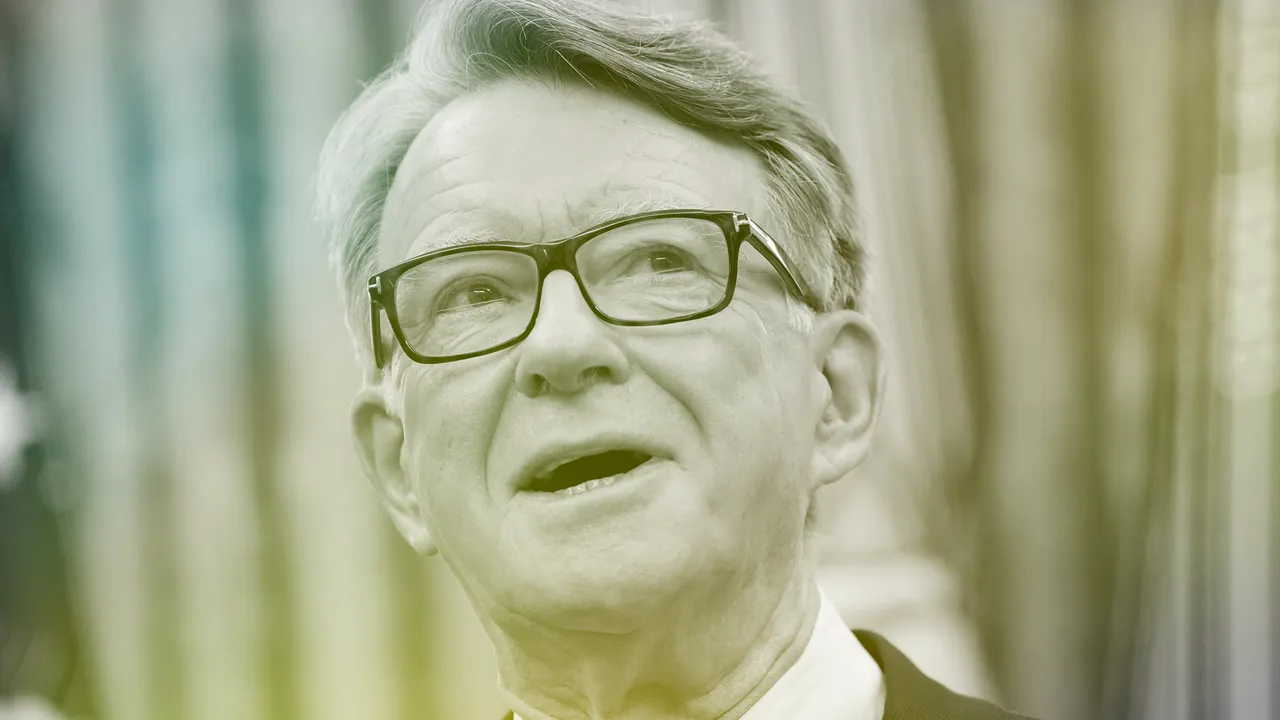
It’s not clear when Mandelson’s friendship with Epstein started, but in 2003 he contributed to a book of tributes compiled for the financier’s fiftieth birthday, describing him as “my best pal.” (This was the same book to which Donald Trump appears to have contributed his infamous note and sketch of a naked woman.) In the files, bank documents suggest that in 2003 and 2004 Epstein sent seventy-five thousand dollars, in three payments, to accounts thought to be connected to Mandelson and his longtime partner, Reinaldo Avila da Silva, whom he married in 2023. (After the documents were released, Lord Mandelson said that he has no record or recollection of receiving the payments and didn’t know whether the documents were authentic.)
In 2004, Mandelson went to Brussels as Britain’s commissioner for trade in the European Union. Many observers believed that his days as a major political figure were done, but in October, 2008, as the financial crisis was raging, Gordon Brown, who had succeeded Blair as Labour leader and Prime Minister the previous year, brought Mandelson back from Europe, granted him a life peerage in the House of Lords, and appointed him as business minister. Since Brown and Mandelson had clashed in the past, this appointment came as a surprise. Brown said that “serious people are needed for serious times”: commentators suggested that he valued Mandelson’s political savvy and experience in dealing with foreign governments. The following year, Brown further promoted Mandelson, expanding his department and giving him the honorary title of First Secretary of State.
At the time, bank bailouts, accompanied by emergency measures from central banks, eventually restored calm to the financial markets, but that didn’t curb the public anger at the bankers, who were rightly perceived to be in a no-lose position. When times were good, they made pots of money. When a crisis arose, taxpayers stepped in to save them. On December 9, 2009, Alistair Darling, the Chancellor of the Exchequer, announced a fifty-per-cent, one-off tax on bankers’ bonuses. Politically, this was a popular move, but in London’s financial district—where many big banks, including some based in the U.S., are situated—it sparked outrage and pushback. In a book about the great financial crisis and its aftermath, Darling recalled how a number of bankers called him up and complained about the bonus tax. The callers included Jamie Dimon, the C.E.O. of JPMorgan Chase. “He was very, very angry,” Darling wrote. “He said that his bank bought a lot of UK debt and he wondered if that was now such a good idea. I pointed out that they bought our debt because it was a good business deal for them. He went on to say they were thinking of building a new office in London but they had to reconsider that now.”
Reading Mandelson’s e-mails, it appears that Epstein, too, was a part of the pressure campaign. He had a long-standing relationship with JPMorgan Chase, which handled many of his financial dealings, and particularly with Jes Staley, who, as the chief executive of the J.P. Morgan investment bank, oversaw the London office. A few days after the announcement of the new tax, Epstein wrote to Mandelson, “any real chance of making the tax only on the cash portion of the bankers’ bonus.” Mandelson replied, “Trying hard to amend as I explained to Jes last night. Treasury digging in but I am on case.” Two days later, evidently referring to Dimon and Darling, Epstein wrote, “should jamie call darling one more time?” Mandelson replied, “yes and mildly threaten.” Later the same day, Mandelson wrote to Epstein again and appeared to indicate that he, himself, had spoken to Darling and got nowhere. “Crazy response from Chancellor. He appears unmovable.”
Darling and the U.K. Treasury resisted the pressure that was brought to bear against them and went ahead with an unmodified version of the bonus tax. Surprise, surprise, JPMorgan Chase and other big banks survived this outrageous assault upon their prerogatives. But as Faisal Islam, the economics editor of BBC News, wrote, the possibility that this backlash “may have been orchestrated partly via Epstein, with Mandelson emailing advice . . . is staggering.” A spokesperson for JPMorgan Chase declined to comment. In the past, Dimon has said that he never met Epstein and didn’t know of him before his arrest in 2019. In 2023, JPMorgan Chase sued Staley, who left the bank in 2013, claiming that he had failed to disclose information about his relationship with Epstein. The case was later settled.