
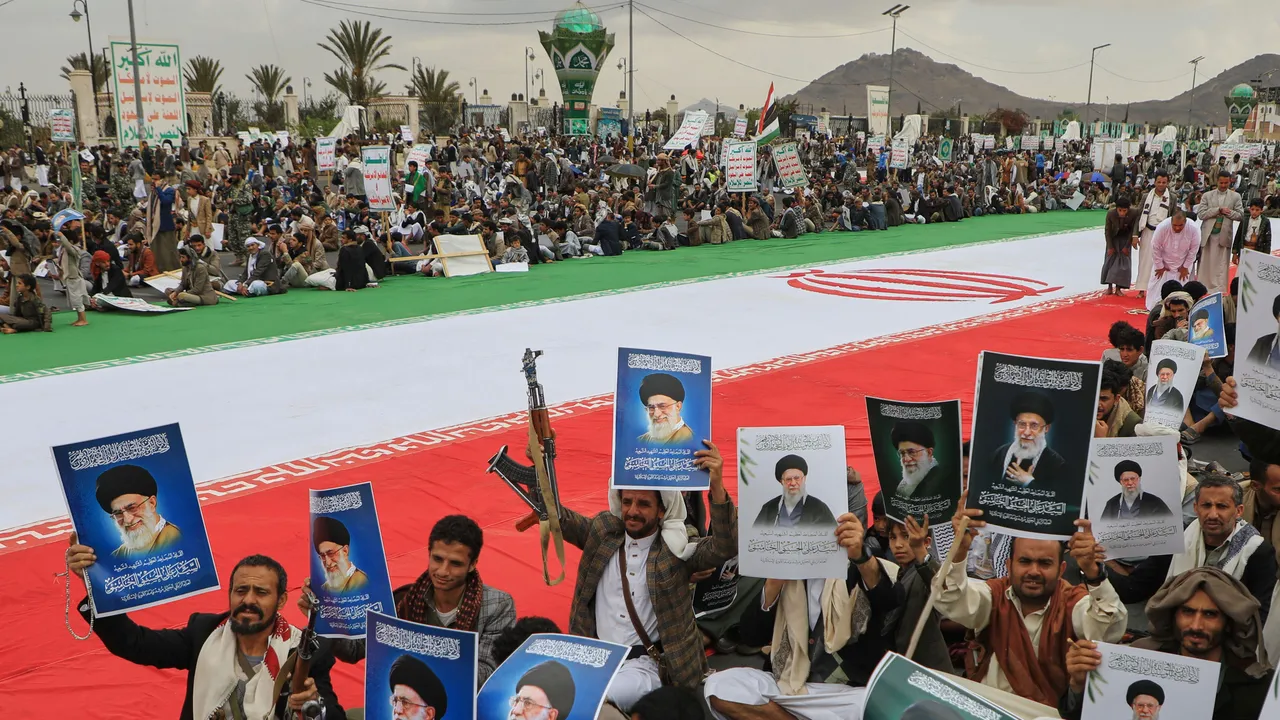
All of Iran’s proxies share a deep ideological hatred of Israel and America. “The logic of the proxies for Iran, primarily, was this idea of forward defense, which meant that, instead of fighting in Iran, let’s do our fighting in other areas,” Mansour explained. But now that Iran is engaged in “a direct fight against the U.S. and Israel and its interests across the region,” he continued, these allied groups are “less necessary.”
Still, the Houthis could be especially valuable to Iran during the current conflict, as the group has repeatedly demonstrated its ability to withstand U.S. and Israeli strikes. This includes two American-led campaigns against Yemen—first under the Biden Administration, in 2024, then under the Trump Administration, last year, which pummelled Houthi positions and weapons arsenals for months. Not only did the group remain intact but their survival may have bolstered their image in Yemen and their grip on the country.
Were the Houthis to get involved now, they could open several new fronts in the war at once. The group could fire drones and missiles at commercial ships in the Bab al-Mandeb Strait, as it has done before, shutting down a vital shipping lane that connects the Mediterranean Sea to the Indian Ocean via the Suez Canal and the Red Sea. Significant amounts of the world’s crude oil, liquefied natural gas, manufactured goods, electronics, and food flow through this passage. Shutting it down—coupled with Iran’s choking off the Strait of Hormuz—could suffocate global trade, cause oil and energy prices to soar even higher, and prompt stock-market crashes all over the world, putting added pressure on the Trump Administration and Israeli Prime Minister Benjamin Netanyahu to end the war. Already, some shippers are avoiding the Red Sea route, anticipating Houthi attacks. (Last spring, as the U.S. struck Yemen, the Houthis claimed to have launched missiles and drones at the U.S.S. Harry S. Truman, an American aircraft carrier in the Red Sea.) The Houthis could also fire long-range missiles at Israel, and target Saudi Arabia and other Persian Gulf nations—including their oil, energy, and economic infrastructure—from the south, as Iran strikes these countries from the north, in a joint pincer movement.
It’s possible that the plan is for the Houthis to join the conflict later on, if there is a long-drawn-out war, and if the Gulf countries, which so far have been focussed on protecting themselves from Iranian strikes, go on the offensive. (On Saturday, Masoud Pezeshkian, the Iranian President, apologized to the Gulf states for its strikes, but the attacks have persisted.) Mohammed al-Basha, a Middle East politics-and-security expert, told me that the Houthis have been readying themselves for action. In recent weeks, he and other analysts have been told that the Houthis have deployed missile launchers, drone-operating units, and military brigades throughout northern Yemen—from the Red Sea coastlines to the border with Saudi Arabia. The group is also said to be digging tunnels, building bunkers, and erecting barriers and other defensive structures in case of an attack by the United States and Israel. Ahmed Nagi, a senior analyst for Yemen for the International Crisis Group, told me that Iran and its proxies believe in “gradual escalation,” understanding that it is perhaps not “wise to use your wild cards all at once.” The Houthis are Iran’s biggest wild card. And so the fact that the group has not yet entered the war can only be seen as “a calculated choice,” one that has been “fully coördinated with the Iranians,” Nagi said. “They believe that Iran, for now, can manage the situation and face all these challenges alone.” But, if the conflict widens even more, he added, “the Houthis will jump in. They need some time to assess the situation before joining the fight.”