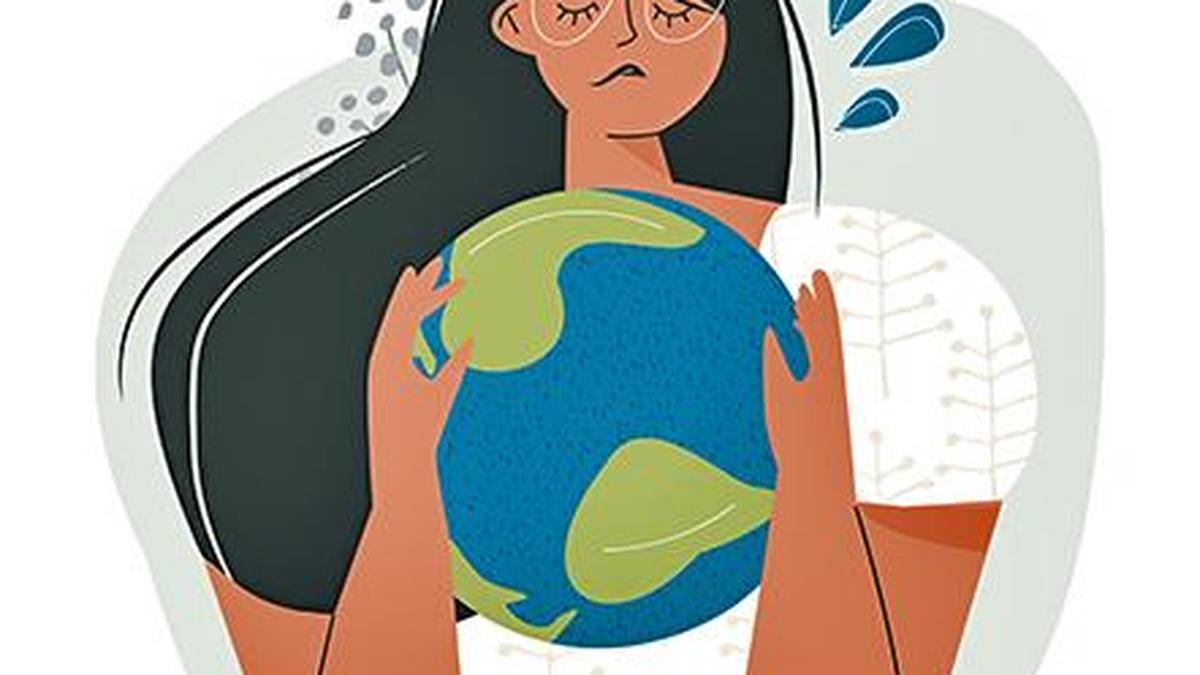
Over a decade ago, my journey toward climate consciousness began almost unintentionally. What started as casual sustainability courses and environmental surveys gradually deepened into a personal commitment to reduce my carbon footprint. As someone who advocates passionately for the planet, I cannot overstate the importance of more individuals embracing environmentally responsible actions—small steps that collectively pave the way for monumental change. Yet, even as awareness grows, India’s climate emergency is no longer unfolding at the margins of public attention; it has entered the emotional and psychological core of an entire generation.
Significant amount of research indicates that the attitude towards a societal concern, directly influences a person’s engagement in remedial social reforms. Extensive awareness campaigns have compounded awareness amidst people, positively influencing their attitude and consequent behavioural manifestations. However, in the last few years, over-consumption of information around being planet friendly has led to psychoterratic syndromes or ‘eco-emotions.’ The terminology eco-anxiety amidst the many other eco-emotions has gained significant traction, across social media platforms, eco-experts and planet advocates. Despite their popularity, the concept and terminologies remain under-researched.
What is eco-anxiety?
The term eco-anxiety, coined by philosopher Glenn Albrecht, refers to the incessant, intrusive rumination an individual experiences fearing environmental doom. Broadly, it has come to encompass mental distress in response to worsening environmental conditions or witness of ecological crisis. With rapid urbanisation reshaping the skylines of the world, contemporary architectural designs have gained extensive materialisation. This in turn drives the greenhouse effect with solar radiation becoming trapped inside glazed windows. With this now increasing regulatory focus, people who spend over 60 hours in their corporate towers experience mental distress specific to their setting. This, defined as solastalgia, is the distress that takes over people’s mental clarity as a response to their immediate living or working environment getting affected due to global warming.
Maslow’s motivational theory enlists safety needs and stability as one of the basic human needs. When individuals are faced with planet fragility, with slow desolation of places they once loved, their sense of stability is threatened. They often develop eco-angst, grappling with this unsettling feeling of instability and unpredictability.
These elements are further exacerbated in a very densely populous country like India. India is now faced with significant vulnerability in terms of an escalating cascade of enviro threats including heatwaves, landslides, flooding, air pollution, decline of biodiversity and reduction in overall quality of life driven by these factors. With frequent and recurrent exposures to unexpected environmental catastrophes, the Indian population is now plagued with pervasive hypervigilance. This is particularly high within the agricultural sector. Intensified research is currently underway to identify and understand the links between climate volatility and farmer suicides in the past two decades, in relation to the economic precarity that ensues this as well.
Climate uncertainty
The cultural fabric in India promotes intergenerational family systems: grandparents, aunts, uncles, cousins, siblings often living within walking distance, forming dense networks of care, obligation, a strong sense of shared community and identity. Could this in turn also lead to more eco-anxiety in India? An intriguing question that can only be answered with more socio-science research.
Planet-conscious activities are far from universal within the Indian community. A heightened emphasis on traditional, cultural practices too, may not always align with sustainable planet-friendly activities. Resource-intensive micro-community celebrations for instance, may sit very uneasily with younger generations. The generational gap also brings a gap in understanding risk and reforming attitudes towards enviro-friendly activities.
The younger generation, navigating generational divergence, is often faced with a dual allegiance of morally adhering to familial practices and responding ethically to the global planet crisis. This means that the younger generation could be facing more eco-guilt whilst trying to stay aligned with traditional practices. When inhibited from engaging and promoting sustainability due to societal hierarchies, internal conflicts can lead to eco-depression.
What young people feel
A group of researchers at Christ (Deemed to Be) University, Bengaluru, conducted a study in 2024, which was published in The International Journal of Indian Psychology. This study found that young adults aged between 18-24 were often quite vocal about eco-emotions. They were heard describing various forms of negative emotions including anticipatory grief and anxiety and existential dread linked to environmental degradation. Another study echoing this is in The Lancet Planetary Health, backed by the UN indicated that about 70% of Indian youth are worried to some extent due to climate change, often leading to feelings of hopelessness, inadequacy, and dismay. More environmental psychologists are increasingly recognising these as symptoms of eco-anxiety.
The data points neither an indictment of Indian families, nor a sign of diminished resilience. They just highlight the intricate social and cultural terrains that interact with the concept of climate distress in India.
Eco anxiety and decisions
The human process of decision-making is shaped by information stored through experience, conversations with people, as well as conventional and unconventional sources of wisdom. When these cognitive inputs are then enriched, entangled, and entwined with associated emotions, this can shape or distort the precision of the decision in either direction, leading to consequent behavioural manifestations. A study published in Frontiers in Psychology speaks about eco-anxiety as a practical anxiety that leaves people worried about the right thing to do. Whilst this mostly includes reactions or responses to ecological threats, it can also find its way into other areas of decision making.
Some of the questions this study highlights are – Should I have a child given the risk that climate change poses to my child’s future? Is my current profession or line of work working against the planet? Should I change careers and would this still sustain me financially? Am I meant to be engaging in more pro-social activities such as raising awareness in the community? Would this mean less time with my family? Does this make me selfish?
Can eco-anxiety help?
Both psychology and philosophy converge on a well-known universal principle, human beings worry about things they deeply care about. Thus, eco-anxiety can be a very positive indication and evidence for profound planetary concern. This level of moral and emotional investment from people towards the planet’s future is promising. Like other forms of anxiety, eco anxiety can cause departure from one’s baseline, which in turn can cause discomfort. However, research is growing to indicate that this can trigger people to think of the bigger picture, promoting moral attunement, reformative behaviours and agency. This can also compound compliance with sustainable development goals, as well as help people sustain this motivation even when it’s hard.
Many climate activists describe their endurance as stemming from eco-anxiety. Even when old habits crept in, this anxiety helped climate activists remain loyal to the new ones, despite the cognitive exhaustion.
Eco‑anxiety, then, is not solely a marker of distress. It is also a psychological engine capable of driving sustained, values‑aligned action—an emotional force that, when understood and supported, can help individuals and communities navigate the moral terrain of a rapidly warming world.
(Rashikkha Ra. Iyer is a multidisciplinary clinician working in the U.K., specialising in the delivery of clinical interventions in forensic settings. Rashikkha.RaIyer@outlook.com)
Published – March 21, 2026 12:24 pm IST