[ad_1]
Hite was not like other sexologists, with their academic affiliations and institutionally approved methods. She was not much like Alfred Kinsey, the primary author of the aforementioned reports and the founder of an actual institute, who died in 1956. Kinsey’s team of researchers conducted structured interviews about people’s sexual behavior, which famously revealed a far wider range of common activities and proclivities than had previously been acknowledged. (His research produced the so-called Kinsey scale, which proposed that sexual preference exists on a spectrum, rather than falling neatly into homosexual or heterosexual categories.)
She was even less like William Masters and Virginia Johnson, the husband-and-wife sexologists so often photographed in lab coats. Masters was a gynecologist, and the couple’s research centered on observing people’s physiological reactions during sex. Volunteers, initially sex workers, who came to, and in, their lab were connected by wires to monitors that measured heart rates and other metrics during partnered or solo sexual activities. Campbell writes that Masters and Johnson also deployed a dildo they called Ulysses, transparent and fitted with a miniature camera and a light, which allowed them to see inside the vagina during orgasm. In their defiantly bland textbook language, a couple in the throes was a “reacting unit.”
By contrast, Hite’s approach began with the survey she’d devised for her first study: some sixty pointed questions for women about how, when, and why they had sex. She printed them—at a gay anarchist print shop and commune in lower Manhattan—in rainbow ink on pastel paper, decorated with hearts and starbursts. As Campbell writes, they resembled a “teenage diary, not a clinical questionnaire,” a look that Hite hoped would invite unguarded replies, and probably did. Masters and Johnson, in their 1966 book, “Human Sexual Response,” defined orgasm as “those few seconds during which the vasoconcentration and myotonia developed from sexual stimuli are released.” Hite’s informants, precise in their own way, were more likely to offer a description like this: “a gradual tensing of my body which reaches a sharp peak then hits a thrilling plateau, a kind of screeching, sliding across a plane” that then “lets go in five to six fluttering convulsions.”
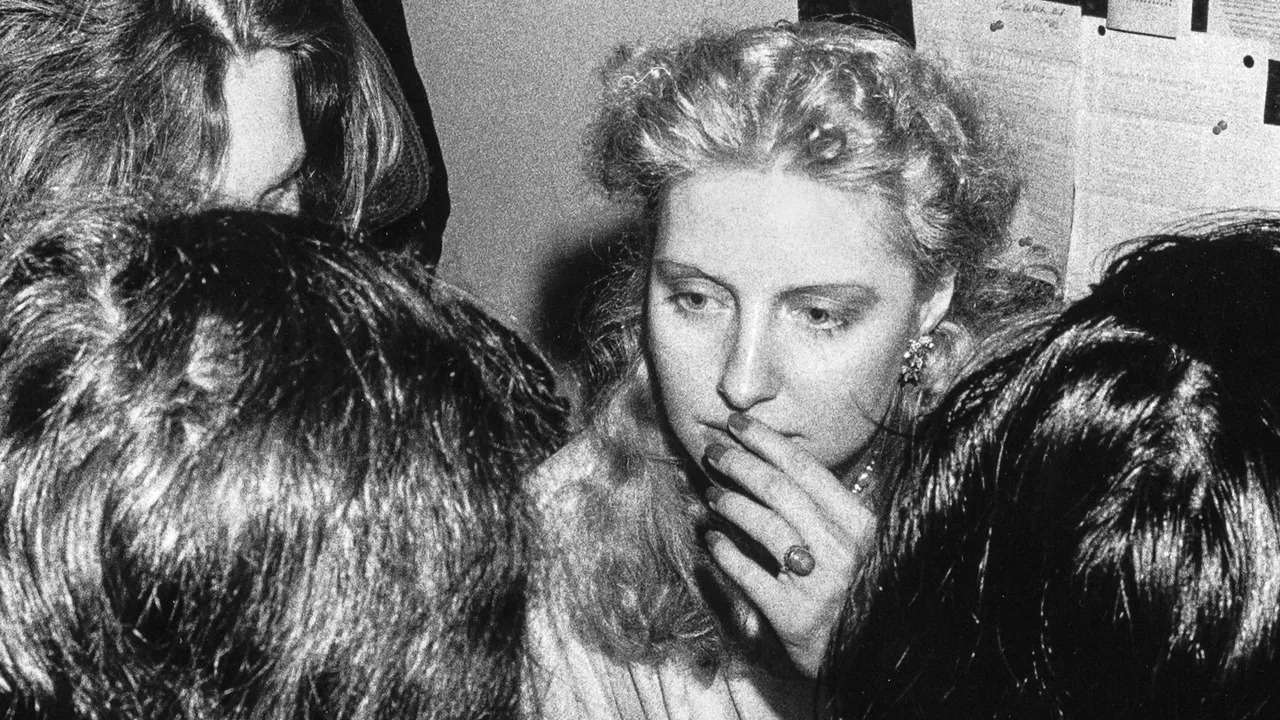
I remembered Hite, vaguely, as a slinky celebrity sexpert, a best-selling author of my youth, with Pre-Raphaelite hair and, I thought, a postfeminist brand. Until now, I had never read her books. I was surprised to learn, from Campbell’s account, how thoroughly Hite was formed by the women’s movement of the nineteen-seventies. Her books read less like sexology than like transcripts of the consciousness-raising sessions that were a hallmark of second-wave feminism—though the forensic specificity with which some of Hite’s respondents describe their orgasmic sensations and techniques remains pretty singular.
Hite argued, not always with analytical grace but with passionate sincerity, for a more egalitarian and empathetic world in and out of the bedroom. She published her most significant work at a moment when some of the fruits of second-wave feminism were newly visible: more women in the workforce than ever before, including in jobs long monopolized by men; a rising divorce rate, increasingly driven by women who had the financial wherewithal to leave bad marriages; a growing acceptance of the abortion rights then guaranteed by Roe v. Wade. Those shifts were also beginning to draw a backlash, including the rise of the Christian right and the conservative women’s movement led by Phyllis Schlafly, which Susan Faludi would later anatomize. Perhaps without meaning to, Hite’s first three reports, and especially the one about men, became messy, overstuffed real-time chronicles of intimate life being shaped by social change.
The future Shere Hite was born Shirley Diana Gregory in St. Joseph, Missouri, in 1942. It was not a promising or privileged start. Her mother was a restless teen-ager, and her father was an Army conscript who was out of Shere’s life from the time she was an infant. Shere spent most of her childhood in the care of her grandparents, fundamentalist Christians who had rejected their daughter when she got pregnant. Hite remembered their home as very quiet, decorated mainly by images of Christ on the Cross. (As an adult, she would surround herself with ornate beauty—oil paintings, grand pianos, silk and velvet—whenever she could afford it.) Her mother turned up now and then. At one point, she brought the nine-year-old Shere to live, briefly, with a stepfather (whose last name, Hite, she kept) and a baby brother. Campbell writes that Shere’s mother spent many of her subsequent years in and out of psychiatric institutions. After “The Hite Report” was published, she wrote to her daughter to apologize for “all my wrongs I’ve done to you personally,” and to ask for her help publishing a book of Bible stories for children.