
The Truth Behind the Dhurandar Storyline
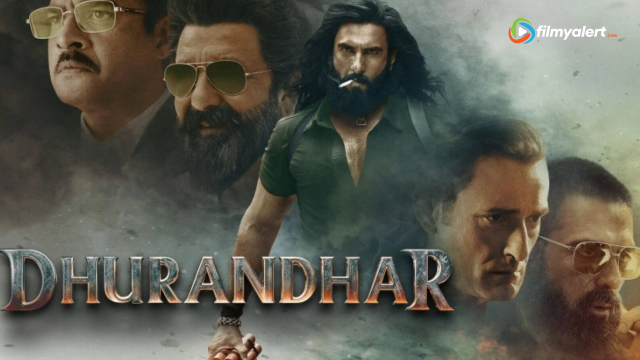
The viral trailer of the film Dhurandar has sparked curiosity across YouTube and social media. The film showcases gang wars, intelligence operations, crime networks, and brutal killings inspired by real events. While the movie doesn’t directly promote any real individual, its backdrop closely reflects the history of Lyari Town, a notorious area in Karachi, Pakistan.
Here is a complete, simplified, and factual story of Lyari’s dark past, its ganglords, political influences, and law enforcement officers who shaped decades of violence.
Lyari Town: A Dangerous Settlement Built Around the Dried Lyari River
Lyari Town is one of Karachi’s oldest and most troubled regions. The Lyari River, once flowing from the Kirthar Mountain Range in Balochistan, turned into a dry riverbed over the years. Today, only polluted sewage water flows through its last stretch.
Historically, dense mangrove trees surrounded the area. As Karachi expanded, these forests disappeared, but the region inherited a reputation of silence, crime, and poverty.
Lyari gradually became home to migrant laborers from Balochistan, Sindh, Gujarat, Kutch, and African-origin Siddis. Most worked at Karachi’s port, but side-by-side, a shadow world of smuggling, drug trade, prostitution, and illegal activities emerged.
Political Connections: How Lyari Became PPP’s Stronghold
In the 1960s–70s, Pakistan People’s Party (PPP) leader Zulfikar Ali Bhutto used Lyari as a political base, gaining support from locals and influential criminal groups. Several rebels and criminals were quietly accommodated in Lyari in exchange for votes.
This political shelter created an ecosystem where crime grew unchecked.
When Bhutto was removed by General Zia-ul-Haq, tensions escalated further, leading to the rise of Al-Zulfikar, a militant organization formed by Bhutto’s sons. Lyari became a crucial funding and recruitment base for them.
In 1981, Al-Zulfikar carried out one of the biggest hijackings in Pakistan’s history.
Many of the released prisoners had roots in Lyari, further strengthening its criminal network.
The Rise of Haji Lalu: Karachi’s Early Smuggling King
During the 1960s, smuggling flourished at Karachi docks. The most feared name then was Haji Lalu, also known as Haji Lala.
Protected by political leaders, he controlled trafficking of drugs, weapons, electronics, and even human trafficking.
His dominance laid the foundation of the mafia culture in Lyari.
The Birth of Rehman Dakait: Karachi’s Most Feared Gangster
After Haji Lalu grew old, the unexpected happened—he did not hand over power to his son, Arshad Pappu.
Instead, he passed leadership to a loyal member of his gang, Rehman Dakait, son of Dadal Dakait.
Rehman’s background was extremely violent. At just 13, he committed his first murder. At 15, he killed his own mother over suspicion of disloyalty. He quickly turned into Lyari’s most brutal gangster.
Rehman controlled:
-
Karachi docks
-
Drug trafficking
-
Kidnapping
-
Illegal extortion
-
Prostitution networks
Despite being a criminal, he portrayed himself as a “Robin Hood” figure among locals. He even formed a political outfit called Peoples Aman Committee, closely aligned with PPP.
Arshad Pappu vs Rehman Dakait: Karachi’s Deadliest Gang War
Arshad Pappu, the biological heir of Haji Lalu, never accepted Rehman’s rise.
This triggered Karachi’s most violent gang war.
Both gangs fought for control over:
-
Drug markets
-
Smuggling routes
-
Dock territories
-
Political influence
Violence spilled beyond Lyari into central Karachi. When political pressure increased, the Pakistan government deployed a special police officer to control the situation.
The Legend of SP Chaudhry Aslam: Karachi’s Encounter Specialist
To curb the gang war, police officer SP Chaudhry Aslam, known for his fearlessness and ruthlessness, was given charge.
Aslam had over 80 encounter killings to his name—an unmatched record in Pakistan.
He was as feared as the gangsters and was trusted with cleansing Lyari.
Chaudhry Aslam led massive operations, killed Rehman Dakait in an encounter, and weakened the criminal empire.
Terrorist groups like Tehrik-i-Taliban Pakistan (TTP), who had deep connections with Lyari gangs, targeted Aslam multiple times. He survived a major attack in 2011 but was eventually assassinated on 9 January 2014 in a suicide attack.
Uzair Baloch: The Most Dangerous Successor
After Rehman Dakait’s death, the gang’s leadership shifted to Uzair Baloch, a younger and equally dangerous figure.
Under his control, the gang became more organized and violent.
Uzair Baloch:
-
Imported foreign weapons
-
Strengthened drug networks
-
Built a brutal private army
-
Established deep ties with political and extremist groups
His personal hatred for Arshad Pappu led to one of the most horrifying incidents in Lyari’s history.
The Brutal Murder of Arshad Pappu: A Shocking Chapter
Uzair Baloch captured Arshad Pappu, his brother Yasar Arafat, and associate Shera Pathan.
The gang:
-
Tortured them
-
Beheaded them
-
Played football with their severed heads
-
Burned their bodies
-
Threw the ashes into the sewer
This incident symbolized the extreme level of brutality that once ruled Lyari.
Uzair Baloch was eventually arrested in Dubai in 2015 and remains in prison in Pakistan.
International Links: From Lyari to Global Terror Networks
The gangs of Lyari had deep connections with extremist groups.
Key Figures Linked:
-
Ilyas Kashmiri – a dangerous Al-Qaeda leader originally from Kashmir
-
Major Iqbal – an ISI-linked figure accused in the 26/11 Mumbai attacks
These links highlight why Lyari served not only Karachi’s gang wars but also funded terror operations in Kashmir and beyond.
Conclusion: The Lyari of Today
Lyari is no longer what it once was. Gang wars have reduced drastically, and government operations have weakened the mafia network.
However, crime still exists, though not as openly violent as before.
The dark history of Lyari remains a reminder of how political protection, poverty, and unchecked crime can turn a small town into one of the world’s most dangerous conflict zones.